Why I Teach: Conversations with ETSU Faculty
This podcast celebrates the faculty of East Tennessee State University by amplifying their stories. Faculty guests discuss why they are passionate about teaching and share what impact they hope their students will make on the world. The podcast is hosted by Dr. Kimberly D. McCorkle, ETSU Provost and Senior Vice President for Academic Affairs. Music for this podcast was composed by ETSU Professor Martin Walters.
Listen on:



Episodes
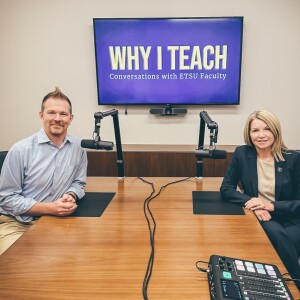
Thursday Aug 22, 2024
Thursday Aug 22, 2024
This episode features Dr. Scott Jenkinson, Assistant Professor in Clemmer College of Education and Human Development and a faculty fellow for Community-Engaged Learning at the ETSU Center for Teaching Excellence. He provides a wonderful snapshot of some of the ways in which community-engaged learning impacts our students and shares about his experiences with the ETSU Alternative Breaks program and some of the foundations for student success that he incorporates in his classrooms.
Podcast Transcript:
Dr. Scott JenkinsonAssistant Professor
So critical reflection is the linchpin. It's the linchpin in any sort of community-engaged learning experience. It really creates the learning. You know, we can have community engagement all we want, but the reflection is where it transitions from just an experience to actually something that changes who you are.
Dr. Kimberly D. McCorkleHost/Provost and Senior Vice President for Academic Affairs
Hi, I'm Kimberly McCorkle, Provost and Senior Vice President for Academic Affairs at East Tennessee State University. From the moment I arrived on this campus, I have been inspired by our faculty, their passion for what they do, their belief in the power of higher education, and the way they are transforming the lives of their students. This podcast is dedicated to them, our incredible faculty at ETSU. Hear their stories as they tell us "Why I Teach."
In this episode, we will talk with Dr. Scott Jenkinson, Assistant Professor in the Educational Foundations and Special Education Department in Clemmer College of Education and Human Development. Dr. Jenkinson earned his bachelor's, master's and Ph.D. degrees at the University of Tennessee-Knoxville. He joined the ETSU faculty in 2015 as a clinical instructor, teaching and supervising pre-service teaching students. He is a strong supporter for community-engaged learning, serving as a faculty fellow for community-engaged learning at the ETSU Center for Teaching Excellence. He was also instrumental in the development of our Go Beyond the Classroom QEP.
In this episode, we will hear about his work in the classroom and beyond the classroom through community-engaged learning opportunities he facilitates.
Enjoy the show.
Dr. Jenkinson, welcome to the show. I start my podcast with the same question for every guest. Take me back to your first day of teaching at ETSU as a faculty member. And looking back on that day, what is one piece of advice that you would have given yourself?
Dr. Scott Jenkinson
Well, Dr. McCorkle, thank you so much for inviting me to join you on your podcast. I appreciate the opportunity to talk about teaching. I talk about teaching all the time in my career with pre-service teachers, so I love to talk about it. So I apologize if I kind of go a little lengthy with some things. But taking myself back to that very first day, I think a couple things come to mind.
You know, presence, being present, being there to enjoy it, you know, being human and being not some artifice of what I think a faculty member should be, but actually being a real person in front of my students. I remember very vividly coming from the high school where I taught for 10 years, coming into the college classroom thinking that I was supposed to be one way. I was supposed to have the tie on, and I was supposed to be rigid, and I was supposed to be sarcastic, and that sort of -- I had this perception of what the faculty member was supposed to be, and I remember that causing me a lot of problems and causing me a lot of moments of identity and questioning who I was supposed to be and how I was supposed to be.
So if I were to go back into that first day, I would just say, "You know, relax, take a breath, be there, be present, be human, and make mistakes and talk about your mistakes." And I think that would have helped me and my students become -- have a better relationship and become more attuned to the space we were in.
Dr. Kimberly D. McCorkle
That's great. Kind of that authentic self, and they can connect to that, right?
Dr. Scott Jenkinson
They can, yeah. I think our students are really adept, and high school students and college students very much so are adept at seeing through that facade. And when we put it up, they know, you know, they're aware that that's not who you really are. So I think, you know, telling myself then to just be, be you, be who you are, and the dad jokes and the whatever comes out is part of you in that space. And so be that.
Yeah, that's great advice. Thank you. So will you share a bit about your journey to becoming an educator and tell us what inspired you to pursue a career in education?
Dr. Scott Jenkinson
Absolutely. So this question, I love thinking about it. I love thinking about those – it gives me a moment to pause and reflect on those experiences. So I never intended to be a teacher, ever. That was not the plan. The plan was biology. My father's a biologist, so I was going to follow in his footsteps. Anthropology was on the agenda for a little while. And then English, and I was going to be a writer. All of those things were kind of swirling. And it wasn't until my junior year of college that my partner, who's a wonderful, a mirror for me, she really just kind of said, "You know what? You've been teaching people all your life. You just have never acknowledged it." And then when she said that, it really dawned on me. That's really true.
I was a Boy Scout from age-- I was a Cub Scout until I was a leader at age 23. I was in the Boy Scout system for that long.
Wow, that's great.
Dr. Scott Jenkinson
And the ethos of being a Boy Scout in our troop was, once you learn something, you teach somebody.
Share it, yeah.
Dr. Scott Jenkinson
Yeah, and so that's really where it started. I remember vividly at age eight, you know, learning how to tie a knot. And someone taught me how to do it, and I turned to the right and taught somebody else how to do it. And that, as I think back on those moments, it just happened again and again and again, and that's how I ended up learning, interacting with the world. Feeling present in moments was by finding a piece of information and connecting it to a real experience and talking to people about it. So that just became where I felt grounded and where I felt at peace with who I was and the person that I was supposed to be. That authenticity was founded in that. Yeah, my partner gives me a hard time.
Anytime we go to the beach, if somebody catches something in the surf or an animal, I'm running over there like, "Oh, well, did you know this? Did you know that?"
Dr. Kimberly D. McCorkle
A teaching moment.
Dr. Scott Jenkinson
Exactly. A teaching moment even on vacation, you know.
Dr. Kimberly D. McCorkle
Right.
Dr. Scott Jenkinson
But again, that's just how I'm there, I think, is that. So it was never part of the plan, but it ended up being, I think, the place that I've really found a home.
Dr. Kimberly D. McCorkle
That's a nice story.
Dr. Scott Jenkinson
Yeah.
Dr. Kimberly D. McCorkle
I mentioned your role as a faculty fellow for community-engaged learning. What does community-engaged learning look like for ETSU students?
Dr. Scott Jenkinson
So ETSU, I think, has, ever since I heard of ETSU, the bonds that ETSU had in the community were apparent. So we moved, my partner, I moved up here so that she could go to school to become a physical therapist. And in the physical therapy program, they were engaged in the community. They were out there. So it was always part of the ethos of ETSU, always part of what ETSU was to be connected in the community. And so what it really looks like on our campus is that our students are intentional about taking what they learn and moving that beyond just the fixed confines of the campus to the community that they're in. So what it means is our students are out there. They're putting theory into practice. They're trying things out. They're connecting authentically with community partners. They are learning from our community members. They're taking in the nuances and the gray areas and the "weirdnesses" that are happening out in our community, and they're developing those further. They're using our community space as an opportunity to grow and change and be different and become engaged citizens and engaged individuals. And that comes through a process that is hard. It takes work to reflect. It takes work and time on the part of our faculty and our staff to facilitate that reflection. I have to admit, one of the greatest joys I have as the faculty fellow is I get to work with faculty who are and staff who are interested in their teaching and their learning doing something more. I've had, I can't tell you how many cups of coffee or tea I've had with faculty and staff that are just excited to get their students engaged and out and thoughtful about what it means to change and be impactful in their society. An example that comes to mind is I worked with a faculty member in our Sports Management Program who her students are working with Bristol Motor Speedway and Speedway Children's Charities.
Dr. Kimberly D. McCorkle
Yes.
Dr. Scott Jenkinson
And they're in a course around corporate responsibility. So what do corporations, how are corporations responsible for giving back to the community at large? And this group of students are working hard with Bristol Motor Speedway and Speedway Children's Charities to develop events and develop experiences that talk about that mission outwardly and try to get more corporations involved and get more people involved in charitable giving and developing connections to community. And seeing that happen in real time and seeing those students reflect on it and talk about how, "Oh, this thing I read in the book in week one, I saw reality right here in week 10 and now I can see a difference. I can see something I've done."
Dr. Kimberly D. McCorkle
Right.
Dr. Scott Jenkinson
With that. And I think that leads to just the importance of the critical reflection piece in community-engaged learning.
Dr. Kimberly D. McCorkle
Can you tell us a little bit more about kind of critical reflection and its importance?
Dr. Scott Jenkinson
So critical reflection is the linchpin. It's the linchpin in any sort of community-engaged learning experience. It really creates the learning. You know, we can have community engagement all we want, but the reflection is where it transitions from just an experience to actually something that changes who you are.
Dr. Kimberly D. McCorkle
Right.
Dr. Scott Jenkinson
And Patty Clayton, who we had on campus, has shared a lot about this idea of critical reflection as a pair of sunglasses. It creates a new lens for us to see an experience from.
Dr. Kimberly D. McCorkle
Yeah.
Dr. Scott Jenkinson
So with our students, what we're doing is we're providing them an opportunity to pause, pump the brakes a little bit, and look at what's happening in a real way and ask, "Why is it happening? How is this fitting in with the community? How is it fitting in with me as a person?"
Dr. Kimberly D. McCorkle
Right.
Dr. Scott Jenkinson
"How is it fitting in with the reality that I understand?" And then the most exciting question I think, is, "Okay, now what? Now what are you going to do with that? Who are you now?"
That idea of your change to something else, somebody else, that's exciting to me when I really think about it. And critical reflection is that tool that does that.
Dr. Kimberly D. McCorkle
Yeah. Great. That's a great explanation. You've also been involved in ETSU's Alternative Breaks Program. Will you please tell us about that program and its impact on our students?
Dr. Scott Jenkinson
Absolutely.
Alternative Breaks, I absolutely love. I've been able to go on four Alternative Break experiences now to Chicago and then three times to New Orleans with our students. And the Alternative Break experience really gives students the opportunity to lead. So we have student leaders that work with faculty partners. And then those faculty partners and the students work with our Office of Leadership and Civic Engagement under Joy Fulkerson to develop the experience.
Who are we going to meet with?
Which community partners are we going to work with?
What's it look like to travel in a 15-passenger van for 10 hours?
All the facets of the experience.
So the students really get to take ownership of creating an experience for their fellow students, for their peers. And then once the trip is developed, we go. We go to a location that's different from what they, the norm, different from what they know, to experience and look at a very particular topic in that place. So for example, when we go to New Orleans, we're looking at education and youth development. What does that look like in the Louisiana Delta? And how might that compare to the Appalachian Highlands? How are those environments similar? How are they different? How are their histories distinct? And how do those histories influence the experiences that youth and folks have in education there? And the students, I think one of the most powerful things for our students is the student leaders and then their peers they're working with are actively engaged in that process of reflection the whole time. The whole time. It starts at 4:30 in the morning when you get in the van and we're tired, but we're still driving 15 or 10 hours. It starts then. And seeing students progress through that experience and work through that experience and talk to each other in real powerful ways is really endearing and amazing.
Dr. Kimberly D. McCorkle
Yeah, that's great. What are some of the most rewarding teaching moments you've experienced?
Dr. Scott Jenkinson
Well, right off the bat, I would absolutely say that the Alternative Break experiences have been very rewarding. I have had the chance every time I've gone, I've had current or former students go with me, current or former students of mine go with me. To see those students really grow from where they began as undergraduate students to now in some cases graduate students and see them take the reins of challenging topics and facilitate those experiences so that they have objectives in mind and they're working with this idea and they're creating experiences and knowing those right moments to ask the right question that's tough, that's a little messy and a little uncomfortable, but they're identifying what it means to be engaged, to be there, to be present. And to see that happen, that is amazing. Two students I had this last time, Mallory McClelland and Taylor Cooper, are two students that are leaders in New Orleans most recently. And just both of them flourished as teachers, as leaders and learners, and they were engaged every moment of every day we were there and asking questions, but working with their peers to have a really amazing experience. That was fulfilling for me as an instructor to see students that I had worked with that I had helped facilitate their experiences to now share that on in the future. You saw the transformation of that.
Dr. Kimberly D. McCorkle
Absolutely.
Dr. Scott Jenkinson
Now we talk about, in community-engaged learning, we talk about transformational versus transactional learning. And the idea that the learning that I want to invest in is that transformational learning where students are becoming somebody new and they're changing and challenging themselves to be something new, someone new in a new world.
Dr. Kimberly D. McCorkle
I love those examples. So you teach or have taught several key foundation courses at ETSU, including "Foundations of Education" and "Foundations of Student Success." What are some of the most important foundations you try to establish for your students to help them succeed?
Dr. Scott Jenkinson
So, well, a couple of them I think we mentioned. Your presence, authenticity, you can't learn something unless you lean into it. And so the idea of being there, being in it, being in that moment is I think a big part of it. I think those times where I think back to educational experiences that I've had that I learned the most from, it's because I wasn't paying attention to other things. I was really there about that thing, whatever it was in front of me. I couldn't be distracted by it. So that presence, I think, is a muscle, something we train for. And so I think that's a big part of the foundational piece, is training yourself to be present. And I think as a tool for that, one thing that I want to encourage my students to do is reflect. Is take the time and take the energy and take the effort to think back and understand the why behind whatever it is you're doing. You may not like whatever that Gen Ed course is, but it's there for a reason.
I was an English major, so that first chemistry course that I took in college was like, "Whoa, no. What is this chemistry thing all about?" But understanding after time that, "Oh, that chemistry thing actually helps me understand some of the literature that I'm reading. Or helps me understand the world that I'm interacting with." Or this question that my eight-year-old has now around why this thing happens -- that comes back to that chemistry class that I got a C in, that I didn't really feel like was useful at the time, but it really was. Yeah, there's connections between the learning and...
Dr. Kimberly D. McCorkle
Absolutely. Can you share a book, a podcast, or another resource that has influenced your teaching philosophy?
Dr. Scott Jenkinson
Oh, man. You're asking an English major to recommend books about teaching. Well, the first one that comes to mind is a really...it's a heavy...I would say a heavy philosophy, but that's okay. It's Paulo Freire and Myles Horton. "We Make the Road by Walking" is what it's called.
Dr. Kimberly D. McCorkle
Excellent.
Dr. Scott Jenkinson
And one of the things I love about this book is they spoke the book, and they're very intentional about that. Paulo Freire traveled in to visit Myles Horton in New Market, Tennessee, and they recorded the book. So they recorded a conversation over three days, and then they edited it down to this really insightful, philosophical, and ultimately humbling kind of understanding of how their philosophies about interacting with people were similar and different all at the same time. I like that text because both Myles Horton and Paulo Freire bring such nuanced perspectives from their own lived experiences, and I think those perspectives and those experiences are really valuable.
And then the second book I would suggest is "Tuesdays with Morrie" by Mitch Albom. And I was so excited to get a chance to shake his hand and meet him at the Festival of Ideas last year.
Dr. Kimberly D. McCorkle
Delightful.
Dr. Scott Jenkinson
But the "Tuesdays with Morrie," I promise I've read that book 20 times in my life.
That's great.
Dr. Scott Jenkinson
I used to read it out loud to my students at the high school level.
Dr. Kimberly D. McCorkle
Did you really?
Dr. Scott Jenkinson
Yeah, every semester. That was the book we read over the course of the semester was that one. And I like that book a lot because it comes back to a lot of those same principles of presence and honoring the humanness that we have. And understanding our roles as teachers is more than just delivering content. It's about who we are as people. I tell my students every semester, teaching is an inherently human act. It's something that human beings have to take part in. And when we take that human out of it, we lose something. And so the "Tuesdays with Morrie" and Mitch Albom's writing really takes me back to that idea often.
Dr. Kimberly D. McCorkle
Thank you for sharing both of those.
Dr. Scott Jenkinson
Yeah.
Dr. Kimberly D. McCorkle
Finally, what impact do you hope you've made on your students?
Dr. Scott Jenkinson
I hope that my students see themselves as unfinished and see themselves as individuals that can evolve with the world. And should, I would argue, but can at least. And that they're questioning, they're curious. They seek out experiences that might make them a little uncomfortable, but they're ultimately things that they are learning from and taking from. I've been thinking a lot about the language I use when I think about myself as an educator. The word that comes to mind so much now is a "facilitator of experiences."
So I hope that out of my teaching, my students become their own facilitators of experiences. That they are empowered to think about how experiences can change them and impact them and really be embedded in the experience and be present and use the tools of reflection to really become something new after they have that moment. That's what I hope.
Dr. Kimberly D. McCorkle
Thank you, Scott. I really enjoyed our conversation today. And I also appreciate your commitment to community-engaged learning at ETSU and your work in student success. Thanks for listening to "Why I Teach." For more information about Dr. Jenkinson, the Clemmer College of Education and Human Development, or this podcast series, visit the ETSU Provost website at etsu.edu/provost. You can follow me on social media @ETSUProvost. And if you enjoyed this episode, please take a moment to like and subscribe to "Why I Teach" wherever you listen to podcasts.
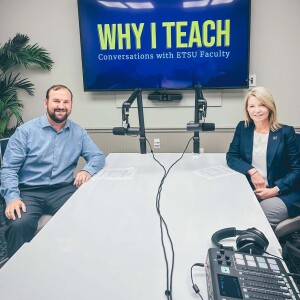
Wednesday Jul 10, 2024
Wednesday Jul 10, 2024
In this episode, Provost McCorkle talks with Dr. Colin Glennon, professor and chair in the Department of Political Science, International Affairs, and Public Administration. Dr. Glennon also serves as the faculty sponsor of ETSU’s award-winning Mock Trial Team.
Podcast Transcript:
Dr. Colin R. Glennon Professor and Chair in the Department of Political Science, International Affairs and Public Administration: I really feel like compared to so many other disciplines, we have an advantage here in political science, right? Our stuff's in the news all the time. Right. And it's out there. And that gives us a chance that I think is really neat to kind of explain what it means, how it fits in, and that can help get students excited.
Dr. Kimberly D. McCorkle Provost and Senior Vice President of Academic Affairs:
Hi, I'm Kimberly McCorkle, provost and senior vice president for academic affairs at East Tennessee State University. From the moment I arrived on this campus, I have been inspired by our faculty, their passion for what they do, their belief in the power of higher education, and the way they are transforming the lives of their students. This podcast is dedicated to them. Our incredible faculty at ETSU. You hear their stories as they tell us "Why I Teach." In this episode, we will talk with Dr. Colin R. Glennon, Professor and Chair in the Department of Political Science, International Affairs and Public Administration. Dr. Glennon joined the faculty at ETSU in 2013 after completing his PhD at the University of Tennessee, Knoxville and teaching at Fort Lewis College in Durango, Colorado. He teaches courses in public law and American politics, and also serves as the pre-law advisor and coordinator of the Legal Studies minor for the university. Dr. Glennon’s research focuses on judicial behavior and judicial legitimacy. He has coauthored texts in the fields of constitutional law, American government, and American political thought. Dr. Glennon also serves as a faculty sponsor of ETSU's award winning Mock Trial team. Go, Trial Bucs!
Dr. Kimberly D. McCorkle:
Enjoy the show. Dr. Glennon, welcome to the show. I start my podcast with the same question for every guest. Take me back to your first day of teaching at ETSU as a faculty member, and looking back on that day, what is one piece of advice that you would have given yourself?
Dr. Colin R. Glennon:
Alright. Great. Well, first, thanks for having me. I appreciate it, and I'm looking forward to our discussion today. Thinking back on that first day, I think I probably think two things. The first would be to plan a little bit less and maybe what the class free flow a little bit more now, based on students’ interest, right, and the subject matter that's really landing with them. I don't think you maybe as a young professor, you feel more need to show your brilliance, right? And yeah, fit it all in. And, I quickly learned, at least I think quickly learned that that wasn't the best approach.
It was better to see how a lecture was going, feel it out, and let the students kind of dictate the pace of that discussion. And then I think the second thing, maybe that or the biggest thing I've learned is that the most important class that I teach is the Intro to American Government class. And when I started, I probably would have told you it was an upper division course. Right? That that was most important in the discipline. Right. I think I had it backwards as a young professor. You know, our majors are politically engaged and politically knowledgeable. And in the Intro course, that might not be true. That's a Gen Ed course where we get students from everywhere, right? Right. And so, the way I think about it now is for so many of these students, that's going to be the only political science they ever get. And I take that as a kind of serious responsibility. Yeah. If I'm going to hopefully share a community with these students for 40, 50, 60 years. Right. This is our chance to kind of let them understand some basics, get a background right, get some kind of bedrock knowledge about how the systems work and things like that.
Dr. Colin R. Glennon:
So I think those would be the two kind of biggest things that I've learned since I got started, to let students dictate the pace a little bit more, but also that, that, that class that sometimes I think is thought of or treated as as less important really is the most important class in our discipline I think. It's great insight. Yeah.
Dr. Kimberly D. McCorkle:
Last fall, ETSU launched the inaugural Great Lecture Series, which features ETSU faculty who've recently been promoted to full professor. You were among our great lecturers last year, and the series allows our outstanding faculty to highlight some of the memorable moments throughout their academic journeys on their path to full professor. I really enjoyed hearing your lecture. For those of you who were not able to attend, could you please give our listeners a brief snapshot of your academic journey, including what brought you into this field?
Dr. Colin R. Glennon:
Yeah. That's great. That was a really cool event. I was really honored to participate in that. I had a lot of fun. I've enjoyed hearing what other folks had to say. And sometimes we talk about, you know, oh, do you know X? And they say, oh yeah, she's this or he's that. Right. But really, people are so much more than that. Right? So, it was kind of cool to learn about the backgrounds of other people I worked with that I just would have never known without the Great Lecture series. As for me personally, I really probably got into this really for two ways. I grew up in Columbia, Missouri, pretty much grew up on the campus of the University of Missouri. Yeah, my mother worked at the journalism school there. We would go to concerts and events and sporting events and stuff all the time. Right. And it was just sort of even as a young kid, you could wrap your mind around the idea that the, the university and the campus was really the center of the community. Right. And so I was always sort of intrigued by that notion. We lived in a place surrounded by professors and stuff, and they were all wonderful people. And so that maybe sounds a little Pollyanna, but in some ways that was my introduction. And then to politics specifically. Yeah. I grew up in and I think this is something that made a lot of people laugh at the event.
Dr. Colin R. Glennon:
But I grew up in a, a, ideological divided household, right, with, with, parents who are on the opposite end of the political spectrum and would engage in these political conversations all the time. And I didn't know everything about it, but I just, I was fascinated. Right. And then how can these two people feel so differently about this exact same person or event? And you know who's right? I don't know, I was piecing it all together, so I was really interested in politics, from an early age. And, I like telling that story to the students as well, to tell them it's possible. Right? You don't you don't only have to to date or hang out with people within your same ideological tribe. Right? My folks have been married about 45 years now, so, you can do it. So anyway, I combine those two experiences that led me to studying political science at Mizzou. Ultimately, I got my PhD down, down the road in Knoxville, and, it's been kind of kind of great. It's a good thing because I'm not sure I'd be good at anything else. I couldn't play sports past high school. I'm not very good at guitar. I worked at a grocery store and a construction site for a little while, but I don't think they want me back. So, this is good. And then I think the last thing is, I really enjoy trying to approach things from different angles and this really lets me do that and encourage others to do that as well. In that particular speech, we talked about the distinctions between statesmanship and partisanship. Yeah. And we use the example of of trying to change the electoral college. And one of the things I don't like about our current sort of political landscape is so much of it has become do everything you can do to get 50% plus one, and then punish the other side and power through what you got. And it's true of the right, and it's true of the left, and it's not what we should be doing. And I know that's kind of cliché. And this notion of statesmanship tells us that you have to make sacrifices, or if you have to make compromises, maybe that's a better word if people don't want to make sacrifices, but compromises. Yeah and, you know, we, we use the example of the electoral college and you, you're not going to get people to change their mind by yelling at them on social media, right. So, we've got to work better within that sort of statesmanship guidelines. And so that was that sort of gist of the Great Lecture series, which was again, really cool. And I appreciated being involved in that.
Dr. Kimberly D. McCorkle:
You gave an outstanding lecture.
Dr. Colin R. Glennon:
Thank you, thank you. Thanks for sharing that.
Dr. Kimberly D. McCorkle:
So, in addition to the Great Lecture series over the last couple of years, you've also been involved in another successful initiative at ETSU. And that's the founding of the Mock Trial team. Tell us about that group and your work with them.
Dr. Colin R. Glennon:
Yeah, that's been really neat. It's been, a different experience than really anything else I've done. First, I got to give all the credit, really, to the legal team and the students they they've done, especially Lindsay Daniel, has done so much there. It's a really hardworking group of kids, and I've loved to see their commitment in, in some ways, outside of the actual mock trial stuff. It's been real rewarding for me just to see that group and see the time they've put in and the effort in the energy. You know, there's there's so many negatives we use as a society in describing college students right now. Right? Right. And to be fair, they've collectively they've probably earned some of that. Right. But but not all of it. Yeah. And not all of them. So, it's great to see that it doesn't apply like across the board. Right. And these students are driven, thoughtful, enthusiastic, hardworking, committed to a goal that's hard. Yeah. And seeing it through right. And that's given me energy and in a lot of ways to see them do that. You know we were you knew what we were doing. But you might have been the only one when we were getting started. Right. And so, I was pretty naive to all of that. It's been a fantastic learning experience, to come out of advance out of regionals and only year two. Really awesome. Just really proud of them. The future's bright of the program and it's been it's been cool to be involved with. And, the students have just been wonderful.
Dr. Kimberly D. McCorkle:
Well, thank you for the time that you've dedicated to them. It's a huge lift and your support has meant everything I think, for the success of the team.
Dr. Colin R. Glennon:
Well, thank you. It's great.
Dr. Kimberly D. McCorkle:
How do you describe your approach to teaching courses in public law and American politics? And just as an aside, it must be a very interesting time to be a political science professor. It is, you know, we we say, I think it's a joke. That's not a joke, that every four years, sort of outside interest in what we do goes up. Right? Right. We get more, more requests for events and things like that. But that's okay. That's that's when the rest of society is focusing in, in a lot of ways. I really probably to answer the question specifically, take kind of two different approaches. Sort of the American politics class is, again, to reference something like the intro. It's more conversational. So of course, there's going to be foundational lectures, as we call them. But nobody likes to just be lectured at, you know, for an hour or an hour and a half. We got to have some stuff, establish the basics of, here's the difference between the House and the Senate. Here's the difference between Primary and General elections. But I really like to encourage discussions where we pull in real world examples. And yeah, election time sometimes makes that easier in a lot of ways, because students are more acutely aware of the events you're describing. So, I would say that approach is kind of conversational. If you were going to put it in one word. In the public law case, we rely on the case studies method predominantly, right, where we use Supreme Court decisions to help illustrate points and teach parts of the Constitution and things like that. And I think it's really a great experience. I fell in love with those classes, the students, because of that kind of thing. I'd I'd be remiss if I didn't give a shout out to Dr. Richard Hardy from Mizzou. He really got me involved in that kind of stuff. It's great. But it really those classes are also kind of a they're an extension of our pre-law services here. And those classes, not all of them, but several of them are structured in really what you might call like a JV law school class. Right. Which gives the students a really great way of experiencing that. I always tell the students that, that I think making informed decisions, the most important part of deciding to going to law school and they're going is great and not going is great, right? They've got to decide it's the right fit for them and make sure that it's the right fit for them. And these classes, I think sometimes they can provide some assurances to students on the fence, okay, I really like this. Or maybe they don't like that class, right? And I say, look, I understand that wasn't a great three months in that course if it wasn't your favorite course, but we just saved you three years and $200,000, right? That that is a fantastic win. That was a good investment. Yeah. All right. That was so we make use of that method case studies in the public law courses. Yeah. And that's been really, those classes are fun to teach. I think they're fun to take. We get great feedback. So, yeah, that's kind of how we approach those.
Dr. Kimberly D. McCorkle:
I always remember my Comm Law undergrad class was my favorite.
Dr. Colin R. Glennon:
Yeah, yeah. Me too. That's cool.
Dr. Kimberly D. McCorkle:
I see so many areas of your expertise play out in every day news headlines. How do you use current events and headlines to help your students better understand topics such as constitutional law and the judicial process? I really feel like compared to so many other disciplines, we have an advantage here in political science, right? Our stuff's in the news all the time. Right? And it's out there. And that gives us a chance that I think is really neat to kind of explain what it means, how it fits in, and that can help get students excited. It does require us to be committed to the idea that we're not going to shy away from kind of hard conversations or hard topics sometimes. But I think that's great. One of my favorite things is when we hear from a student. Right. I was really looking forward to class today so that I couldn't wait to see what you were going to say about "X" thing that just happened. Right? Right. What were you going to tell us this means? Because I think a lot of times what we end up doing now is educators in general, but especially in political science, right, is sort of filling in the blanks or filling in some gaps. You know, we we all, but especially young people, I think receive and consume information in kind of quick soundbite, quick, quick tweets, quit Instagram stories. Right. And that eliminates nuance from so many of these discussions. But that I think is largely viewed as a negative. Then I understand why, but I think it also provides us an opportunity. Right. So, for a quick example, when, the Supreme Court overturned Roe v Wade in the Dobbs case. Right, right. We spent a lot of time in class talking about, you know, what that means. But the big flash in everyone's mind and I and on all your screens is abortion, abortion, abortion. Right. And of course, that's an important part of the discussion, but it works is a really nice way of telling students, you know, this is why it's so important to pay attention to your State Legislators, right? Because that's who's actually doing this. The Supreme Court makes a decision. Right? But if you feel passionately about the abortion issue one way or another, the way you're going to get your preferred policies put in place is at the state level. So pay attention to lobbying for legislation and legislators at the state level. Those things that students maybe pay attention to less, right? Right. Not just students. Society pays attention to less. Right? I don't know if this is a question you were going to get into later, but one of the things that political scientists are always so troubled by is these stats everyone's familiar with, where only X percent of the population can name their senator, yeah, yeah and it's always very low number. Right. Yeah.
Dr. Kimberly D. McCorkle:
Distressingly low.
Dr. Colin R. Glennon:
Yeah. It is. And so, we're working on trying to overcome those kind of statistics. Right. And sort of I sometimes think of it as we can use events in headlines, to direct those conversations towards things where individuals and in our case, students can actually make the changes that they want to see where they can participate in the system. Right. And so it gives us a real opportunity to do that. That maybe isn't the way the first piece of information is digested. Right? But it's the way we roll with it after that. Yeah. How exciting. So related to that, how do you engage your political science students in community-engaged hands-on learning? Yeah, I think we kind of start at the very simple level, right. Encouraging them to participate in various ways. They can volunteer, they can vote. Yeah. They can work in community, right. They can work for, campaigns and things like that. I think there are other ways that our department with, Dr. Michelle Crumley leads, like study abroad programs that, think is ways of getting involved. We also make use of some class assignments. One of them we talk about is the Federal Register example. Right. And that any bureaucratic need for those listeners who are, unfamiliar, you can, visit the Federal Register and bureaucratic agencies who are considering new, directives that, of course, have the force of law. Yeah. Right. Right. You have an opportunity to comment on. Right. And, so many people don't do this, of course, or don't know. And I tell students all the time, you know, you guys should be dominating this. You guys love commenting on stuff online, right? Like this is right in your wheelhouse. Yes. So, you can visit in. And the other part is of course, if you if you're not participating, you know, think about who is, it's organized interest. Right. It's big business. And that's okay. I'm not anti-big business folks, but that if you just let them have the only say right, then they're going to have the only say, right. And so that's an example, I think, and we give an assignment, right. Go participate. Go visit the Federal Register. Right. Sort of following up on that, as are more, advanced students, it leads to things like internships in law firms. We've placed students in the DA offices, political campaigns with interest groups. Yeah. The Washington Center, one of the really cool programs we have in our department is the Tennessee Legislative Internship Program, where students would spend a semester in Nashville right now. The Legislature. That is that's cool stuff. Great. I'm jealous of our students to get to go do that. I think it sounds really neat. So, those kind of experiences that maybe don't come in your first year. Right? But once you've advanced a little further and we have a good idea about what you're interested in, right, we can kind of help facilitate those. What emerging trends in political science and public law do you find the most exciting or concerning, and how do you address these in your classes? Yeah, that's a it's an interesting question. I think to start with the positive, I think that a increase in interest in participation is exciting. Yeah. Sometimes we might think that other people's interest in participation is misguided in some ways, but that's okay. I think we can work with that in a lot of ways. Right. I love seeing stories about people who are politically engaged. Our students, others, right, that don't necessarily fit traditional molds. Right. I think it's exciting that this sort of next generation. And of course, you got to be careful speaking with these big broad brushes, but I think they're trying harder to break the like, binary Republican/Democrat thing than, than my generation did. Right. Or those before it. They're I don't know if it would be successful, but but they're trying right. They're trying to consider these other things are are not just fit in traditional molds. Right. And I think that's really neat. I think it's cool to read about small business-owning, gun-toting Democrats. Right. Like that. That's interesting to think about. Or, you know, young African-American gay Republicans. Right. It's interesting that and that this generation isn't putting themselves in the same political boxes. And I think that's exciting. What's going to come of it? I don't know. Right. Yeah. But but I think that's kind of exciting. Sort of politically in political science, I think we're at an interesting part, class kind of moment, maybe is the better word of trying to harness that. Yeah, right. And how do we help these students push forward with the things they want to do, while providing them with the foundation they need and the information necessary. Right.
Dr. Colin R. Glennon:
You always it's always fun to be outside-the-box thinker. But I think someone smarter than me came up with this idea that it could be an outside the box thinker, but you're still going to have to work within the box to get things to change, right? Right. And so, try to help kind of guide that from people who are trying to change up a system that many you find kind of stale, I think is exciting. Right, but kind of mysterious in some ways. Right. As far as what's discouraging, within our discipline and this is maybe a little wonky, that wouldn't be of too much interest to people outside academia or political, but there's a little bit too much, I think, working backwards from the desired result in terms of some of the research that's happening. I would like to see, personally, returning to the idea of emphasizing what science means, right? There's a lot of determining the result ahead of time, and then you come up with fancy methods that lay readers have no idea what it is. It doesn't mean anything to them. And then you argue that that quote unquote proves your result, right. We saw a lot of this really in the aftermath of the George Floyd situation. Right. And a number of studies came out that proved and putting "proved" in quotes for the listeners proved that there was or wasn't racial discrimination in policing. Right. And you saw both of those kind of sides come out and too much of that. And I don't mean to discredit all of that work by any means, but too much of it was a researcher who started from the end who started with, that doesn't sound right to me. I'm going to prove that it's wrong or prove that it's right. Right. And then they work backwards with their methods. And I don't think that's good political science. I don't think that's good science, period. And I think it it also it turns off the public, I think these very overly sophisticated models that, you know, there's there's a reason that that people read Time Magazine more than they read our political science journals. Right. It's interesting. Yeah, yeah. And so I'd like you you don't have to sacrifice research rigor, of course. In fact, you don't want to, right. I would argue that sort of returning to that real notion of science, right. Where we start with the question, not the answer.
Dr. Kimberly D. McCorkle:
Very interesting. Thank you. Do you have a favorite lecture or subject to teach?
Dr. Colin R. Glennon:
I think so, in the Comm Law classes, I would say to probably stand out right away. One is always going to be Marbury versus Madison, right? Sort of the foundational case of the Supreme Court, you know, power and authority, the notion of judicial review. I think it's really cool. It allows the story there is so rich. Right? Yeah. Let's start with the presidential election of 1800 and kind of that'll blow their mind, right? Yeah. That talk about all the crazy things that happened there, the problems that led to the 12th Amendment, right. All these kind of backstory of how we got there and then leads to really the great question of judicial review. Right. And yeah, I think it's a it's a great reminder that, you know, that that's still a great question today. When is this right for the court to make use of this great power of judicial review? When is it not doesn't go away when the court rules the way you like it. They're upholding the law. And when they rule in the way you don't, they're abusing their power, right, as unelected actors. But that foundation is there from this really fascinating case. And then I like the case of, Texas vs Johnson as well. I guess for a quick recap for the listeners, it's the flag burning case, right where the court ruled that it was, the burning the American flag was protected by the First Amendment. That sort of expressive speech. And it's a it's an interesting case because it shows the way that the Constitution will have these impacts on your life in ways that maybe you didn't think. And I also think it's an interesting case because it shows a phrase my students will tell you. Dr. Glennon says a lot is that upholding the Constitution is hard. And supporting the Constitution is hard. And we have to commit to that. And yeah, particularly in the free speech arena. Right. I know there are various opinions out there. I, I personally am supportive of the idea that supporting free speech means, supporting the right of people you disagree with to say things you find horribly objectionable. Right. And and Texas vs Johnson does that for a lot of people. There are people who are legitimately and sincerely offended by seeing the American flag burned. Right, right. And so that case works, I think, to demonstrate a couple of different components of why that matters. And then in the American government space, the electoral college lecture is fun, right? Especially where so many students, I think, don't know that. Yes. Don't understand that. They're kind of familiar with this concept. I don't really know how it works. So that's really kind of cool, especially like you referenced earlier in an election. I'm already looking forward to that lecture this fall. Right. Because they're going to be locked in real time. Wait a minute. What? That's how okay. So that that's kind of neat. And I always like that again with the back story is interesting and leads to a discussion of potential other options that could be out there. Right. So that's always kind of cool. And then I like talking about political media a lot. The idea that how we consume information, why it matters, right. How you can participate. We're so critical of our political media now, I guess is a similar to what I said earlier. They've done some things to earn some of that, right? Yes. Yeah, that's true. But when we have them lay it out as sort of a business proposition, right, there's people it's a great reflection and it leads to this discussion of public opinion. Right. Because when we poll the public and ask, do you want more television programs about public affairs, about policy? Yes, of course. Right. Everyone says yes, but the numbers we have tell us a very different story, right? When you actually look at what people watch, they watch NFL football. Yeah. And they watch reality shows. Right. And that's okay. I'm not here to down talk either of those. I, I watch a lot of NFL football and my wife watches a lot of reality. So our TV feeds into those numbers for sure. So, but it's an interesting disconnect from what we say we want, from what we actually want according to our actions. Right. And then when it doesn't go the way we want and we say the public's uninformed, we blame the providers, right? Right. We don't take we don't take any of that on ourselves. They're like, wait a minute. There were you could have watched that show. No one did. You watched the Kardashians rerun. Right. And that's why that show isn't on anymore. Right. And so those kinds of conversations I think are really interesting to have as well. So, I like talking about those subjects. Yeah. Thank you.
Dr. Kimberly D. McCorkle:
Finally, what impact do you hope you've made on your students?
Dr. Colin R. Glennon:
This is this is probably the hardest question you asked me in some ways. The first thing I would say is that I hope that they took away and this is similar to, I guess, what I was saying about our discipline earlier. The idea that understanding the right questions to ask is the most important thing, at least in my opinion. I can't give you all the answers because I don't know all the answers either. Right? But but if we can try to understand why someone did something, why did this interest group feel this way? Why did this party do this thing right? We can, then, we can try to get closer I think, to actual answers. And so I'm a big believer in trying to teach the idea. What are the important questions to ask? Right. Dr. Noland says all the time not teaching them what to think, but how to think. Right. And and I think that's really true. I think that's really important. So I hope that our students walk out of our classroom and out of our major with that kind of mindset. Yeah. I think the other part I would say that is maybe not only in the classroom, but the idea of I'm a big believer in the importance of showing up. Right. Yeah. That old cliche 90% of life is showing up. Right. But. Right. But I really believe it. I think it's true in the political arena. Yeah. Right. I think it's true in class or at work. Right. I think it's true in your life. I tell all the students I try to relay this story that, you know, I love my work and I care about it a lot. It might be possible that that the most important thing I've ever done is is coach Little League baseball, right? Like. Yeah, just showing up and being there for kids or doing something you believe in is really important. And and I hope that students understand that. So when you're on whatever side of an issue you're on, show up, right. Show up, be there. When your got to go to class. Right. Sometimes it's very simple. Show up right. Be there. And I think the combination of those things showing up and then going questions first, I think is really what I hope our students take away from, from my classes. That's great.Those are really nice lessons to impart.
Dr. Kimberly D. McCorkle:
Thank you. Collin. We have a common interest in law and judicial process, among other topics that we've covered today. So, it's been a real treat to have you on this episode. I appreciate the good work you've done with your pre-law students and your involvement with the ETSU Mock Trial team. I've really enjoyed watching several of your students shine in their competitions on SGA and across our campus. Thanks for listening to "Why I Teach." For more information about Dr. Glennon, the Department of Political Science, International Affairs and Public Administration, or this podcast series, visit the ETSU Provost website at ETSU dot edu slash Provost. You can follow me on social media at ETSU Provost. And if you enjoyed this episode, please take a moment to like and subscribe to "Why I Teach" wherever You listen to podcasts.
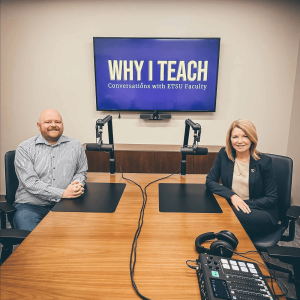
Thursday May 23, 2024
Thursday May 23, 2024
This episode features Stephen Hendrix, a tenured instructor in the Department of Computing in ETSU’s College of Business and Technology. Mr. Hendrix is a three-time ETSU graduate. In addition to teaching, he is actively involved in service at ETSU, where he has represented his fellow faculty members in various leadership roles.
Podcast Transcript:
Stephen Hendrix
The basic process of coding is relatively simple. But understanding the whys and the hows and the logics and all of those things, that's really where it's impactful. So for me, one measure of success in a successful day in the classroom is the "aha moment."
Dr. Kimberly D. McCorkle
Hi, I'm Kimberly McCorkle, Provost and Senior Vice President for Academic Affairs at East Tennessee State University. From the moment I arrived on this campus, I have been inspired by our faculty, their passion for what they do, their belief in the power of higher education, and the way they are transforming the lives of their students. This podcast is dedicated to them, our incredible faculty at ETSU. Hear their stories as they tell us "Why I Teach."
In this episode, we will talk with Stephen Hendrix, a tenured instructor in the Department of Computing and ETSU's College of Business and Technology.
Mr. Hendrix is a three-time ETSU graduate earning his Bachelor of Science and Master of Science in Computer and Information Sciences here, as well as an MBA. He's currently completing his dissertation to earn his Ph.D. in Information Systems at Dakota State University.
In addition to teaching, Mr. Hendrix is actively involved in service at ETSU, where he has represented fellow faculty members in various leadership roles. He has served as past president of the Faculty Senate, and he's the current chair of the Sub-Council for University Governance. He serves on various other university committees and councils such as University Council, the Budget and Strategic Planning Committee, the Strategic Resource Realignment Committee, and the Facilities Design Task Force. He also teaches a variety of computing and information systems classes ranging from health information systems to programing for data analytics. He's also taught ETSU 1020 Foundations of Student Success, which is ETSU's first-year experience course designed to help students on a successful path towards graduation. Enjoy the show.
Stephen, welcome to the show. I start my podcast with the same question for every guest. Take me back to your first day of teaching at ETSU as a faculty member and looking back on that day, what is one piece of advice that you would have given yourself?
Stephen Hendrix
Well, thank you for the opportunity to be here today. Looking back on that first day in 2013, coming to ETSU to teach full-time for the Department of Computing, there was this this feeling of excitement, nervousness, a lot of nervous energy. Thankfulness to be a part of the journey. And so, looking back, if I was to give myself a piece of advice for that day, it would be to enjoy the journey. Enjoy the journey that the students go on throughout the next ten plus years of my career, but then also enjoy the journey that I go on to grow as a faculty member.
Dr. Kimberly D. McCorkle
Yeah, that's great. So I mentioned in your introduction that you're a three-time ETSU graduate and last year I heard you share your story about how you came to ETSU as an Upward Bound student. Will you tell us a bit about that program and how it impacted your career and life path?
Stephen Hendrix
Absolutely. So the Upward Bound Program is a program that works with low-income students whose parents did not complete a four-year education. So low-income and what we call first- generation college-bound students. And it's a program it's a very intensive program. Students live on the campuses in which those programs reside. And it shows them the opportunity to be successful. Right. So helps to fill in the gaps for first-generation kids.
And my story is no different. As a first-gen child, I was all about sports, loved baseball, loved playing sports, but wasn't necessarily thinking about what was next. You know, what comes after high school. And so the Upward Bound Program, they aired a video on the closed circuit television network in my high school and talking about this program that gets kids ready and excited for college. And my buddy was sitting beside of me and he was like, "Who would want to do that?" And I was like, “I think I would, actually. This college thing seems intriguing, maybe.” And so I signed up for the program, and it was life-changing. It was an opportunity to shift my focus. I still played sports, but to shift my focus towards academics and to think about what were those next steps when I completed high school and so I got the opportunity to actually live here at ETSU during the summer months my sophomore junior and senior year the chance to take dual enrollment classes. So I became a college student while in high school here on campus, having incredible instructional opportunity from the faculty here. And ultimately it led to an exposure moment for me which was being exposed to this idea of creating websites which to that point a computer to me was playing Oregon Trail and having fun and never thought about what are the other uses. And so web design was a class that I took when I was in Upward Bound and fell in love with it. I came here to ETSU as an undergraduate student and kind of floundered around a little bit trying to figure out what I wanted to do with my life, and thought about psychology, thought about being a radio deejay at one point. And then I landed in an Intro to Computer Science class with Dr. Martin Barrett, and it affirmed to me that is what I wanted to do the rest of my life was to be in computer science.
Dr. Kimberly D. McCorkle
I'm certain that the experience you had in Upward Bound impacted the way you work with students.
Stephen Hendrix
Absolutely. The opportunities that were provided to me in Upward Bound, as I reflected on those as I began teaching full-time at the university, it became this sense of, okay, how do I make sure that all of my students feel welcome to my classroom? How do I use language that all students can understand that aren't just the academic terms that we sometimes get caught up in? And how can I make all students feel like they're important and valued and a part of this institution which sometimes is really important for those first-gen kids?
Dr. Kimberly D. McCorkle
Yeah. Who are some of your teaching role models and what did you learn from them that you continue
to use in your classroom today?
Stephen Hendrix
So I would definitely think there's a think about role models in the classroom, um, Marty Barrett was one - Dr. Martin Barrett, who was one of the first faculty members that I had in the Department of Computing. Dr. Barrett did an incredibly good job being able to share his content in a way that we could relate as we went topic to topic. And so connecting each of those topics together to form a bigger picture in the learning process. And so I try to model that to this very day. I try to build on things that students would come in with some understanding about and try to relate that to the topics that we're discussing in that class, whether it's our first-year kids and first-year experience courses or it's graduate students designing digital dashboards. Try to relate them to here are the fundamental concepts that are building on each other. Yeah. That will help you ultimately get to some type of goal. And oh, by the way, here's some of the theory and logic that goes behind all that. Uh huh. Yes. Kind of sprinkled in there a little bit.
Dr. Kimberly D. McCorkle
What is the successful day in the classroom look like to you?
Stephen Hendrix
So what I think of a successful day in the classroom, I think of things such as the "aha moments." Right. So when you're sitting in a lab and you're talking about web design and you're talking about how do we use this particular element and why we do this? And the student goes, "Oh, I completely get it now." I understand why that's so important. Yeah, we talk a lot to our students about we can teach almost anybody to code. The basic process of coding is relatively simple, but understanding the whys, and the hows, and the logics and all of those things, that's really where it's impactful. So for me, one measure of success in a successful day in the classroom is the "aha moments." The second would be the day that the students start exploring on their own and then start asking some challenging questions that make me go, "I don't know that I even know that. Let's take a look." I was teaching a web design class and was talking about creating an ordered list on a web page. And the student goes, "Well, can you do this?" And I was like, Well, yeah, here's how you do it. Can you do that? I have no idea. Why don't you go look it up and let us know? Tell us. And so, you know, having that engagement with the students, those make for successful days in the classroom.
Dr. Kimberly D. McCorkle
And always a great teaching strategy to be willing to say, I don't know, let's find out.
Stephen Hendrix
Right. Well, I think especially because that class is a freshman level class, there's this perception that the faculty knows everything and that we aren't open to learning or admitting that sometimes we just don't know. And so I think being able to say, yes, there are things that we don't know, but let's talk about how we figure it out together.
Dr. Kimberly D. McCorkle
Oh, that's great. Yeah. Computing is a rapidly changing field of study. So, how do you prepare your students for a career that's constantly evolving and developing?
Stephen Hendrix
It constantly changes. I remember having a conversation with a colleague of mine the other day and he was getting ready to give a lecture on a particular technical topic, and he had listened to an NPR broadcast that introduced something new that made his topic completely, like, obsolete. I was like, I can't believe this. So, you know, teaching in this field sometimes can be very challenging. You know, constantly for us as faculty, keeping up with the current technologies, understanding what industry is looking for. For us, I think the big focus is that at the end of the day, there are some core concepts. So, for example, an if statement, regardless of whether you got curly brackets or semicolons or whatever language, the idea behind an if statement is it's all the same. The logic of how it works. Yeah. So understanding those critical concepts and then expanding that into learning a new language or a new paradigm or a new way to develop technologies. It will always be changing. And we tell our students that. From a first-year experience forward, this field is a field you'll have to grow in, and be able to continually grow as the years go on. So, understanding that up front and understanding the process of learning and the process of making yourself better and investing in yourself is important.
Dr. Kimberly D. McCorkle
Well, you mentioned community partnerships. So tell us a little bit about the partnership ETSU has with Blue Cross Blue Shield and the BlueSky Institute.
Stephen Hendrix
Absolutely. So the BlueSky program is just absolutely an incredible program. It's, you know, program that works with students, 30 students in each of our cohorts to provide them the opportunity to earn almost a completely free degree in Chattanooga, a two-and-a-half-year program, where they'll walk out with an accredited Bachelor of Science and Computing, with a focus and Information Systems and with job opportunities available to them. So it's an immersive experience. The students are together in cohorts that entire duration, so they get to learn with each other and grow with each other.
We have dedicated faculty down there who are teaching those courses and providing instruction, and then they're also gaining some incredible experiences along the way. So like for next week or two weeks from now, they are traveling to San Francisco, as a cohort, for the opportunity to go to Silicon Valley and meet with folks from Google and meet with folks in the tech sector to better understand what's happening in that space. So just an incredible partnership. Blue Cross has been incredible partners with us as we've continued to develop and grow that program.
Dr. Kimberly D. McCorkle
Yeah, it's been a real model.
Stephen Hendrix
It really has been. It's you know, we hear from other corporate partners. How do we get involved? How do we bring this to X location? And I think that that speaks volumes to not only the need that that industry has for folks in Information Systems, but the quality of the program that we're offering. And the ability to deliver that.
Dr. Kimberly D. McCorkle
Yeah, I agree. Would you tell us a bit about how you are preparing students to address the use of AI?
Stephen Hendrix
So AI, of course, is new technology, generative AI in particular - new technology where we are seeing students coming with both excitement and concern at the exact same time. You know, there's always that that fear of will this replace me? Will this replace what I'm doing or what I'm going to be doing when I leave the institution. And we remind our students that AI is a tool in your overall toolbox. So, AI can help assist you in learning the exact syntax for a particular piece of code that you're writing, or to maybe understand a little bit more detail about a particular topic. But you were ultimately the experts. And so you're walking out of here both with the technical skills, but also the ability to logically and computationally think through these problems. And that's what employers are really hiring you to do, is to be more than what we're currently seeing out of AI and really go deeper. Now, that may change as a AI continues to grow. But but at this time, that's really where we're trying to help our students understand how they can use AI both in the classroom and as they move into the work world.
Dr. Kimberly D. McCorkle
Would you tell us a bit about the types of careers that our computing students typically pursue?
Stephen Hendrix
Absolutely. So in the Department of Computing, we have four concentrations, which would be our Computer Science concentration, our Information Technology, Information Systems, and our Cybersecurity. And so we're seeing students who are leaving the institution, who are heading into those traditional software engineering roles, where they go and they sit behind the computer and they type and write code and do all the fun things. But we're seeing a significant amount of our students heading into cybersecurity. We have a student who's heading to Oak Ridge in the next couple of weeks and he'll be working in cybersecurity down there. We're seeing students who are going into database administration and managing these large amounts of big data and how do we use them, which also leads into data analytics. We're seeing students, especially some of our graduate students who are heading into that data analytics space to help make meaning and sense out of these large quantities of data. And so we're seeing students go into a wide variety of different careers. And what's really interesting is that many of our students are not going to tech companies. So the jobs at the Facebooks and the Googles and Microsofts are there. And we see students go there, but we also see so many students who are going into industry. Right. Like Eastman Chemical or Ballad Health, or they're going to Oak Ridge, or they're going to other types of locations in which the computing and model, so computing and some other skill kind of come together.
Dr. Kimberly D. McCorkle
What hands-on community-engaged learning opportunities do computing students have while they're enrolled at ETSU?
Stephen Hendrix
So students in the Department of Computing, from undergraduate to graduate students, traditionally work in some form on a project. So our undergraduate students work in Software Engineering I and II, where they work on some type of project. Typically, those projects have been identified as projects that could assist in community partners. So the opportunity to maybe work with a nonprofit organization on developing a website or developing some technology. Our graduate students are required to do capstone projects, and some of their capstone projects can be anything from working with Public Health on creating visualizations to working with the International Storytelling Center to develop a solution for digitizing their stories and also to take their stories and translate them from spoken language to written. And so doing that is an automated process. So we encourage our students in every step of the way, and we value those opportunities. We do internships. But we go beyond just doing internships. We actually have a class that's dedicated to preparing them for college and for career success. So that classes a 3000 level class. We bring in industry partners. They actually go through the interview process. We talk to them about being good stewards in the community when you're working in these various fields.
Dr. Kimberly D. McCorkle
It's fantastic. As I mentioned, in addition to all the work you do inside the classroom, you've also represented the interests of your fellow faculty members on Faculty Senate and on several other committees and councils. Why is this service important to you and what impact do you think that it has on the university?
Stephen Hendrix
As somebody who has seen the mission, lived out in my own personal life - you know, Dr. Noland always talks about that you know, one of the missional parts of this institution is impacting the lives of the people the Appalachian Highlands region. And I can sit here today and just say that my life was impacted because of the work before me. Yeah. It has changed me forever for who I am, my friends, my wife. All of the things can be linked back to the work of this institution. And so for me, the opportunity to be a small part of that story, to be able to contribute and to serve and represent the faculty through the Faculty Senate, to be able to serve through the various committees at the department and institutional level - the opportunity to continue just to give back. And for me, I've also found that through those opportunities, I've been able to bring it back to my classroom, which has been phenomenal. I've had the opportunity to talk about the Voyager project, as enterprise systems is one of the areas in which I teach. We've talked a lot about how as Voyager went through the process, what are some of the pitfalls and challenges, success stories and how does that tie back to what our students are going to be doing one day?
Dr. Kimberly D. McCorkle
Right. Well, I can reflect that I think one of the things that I've recognized is what an outstanding and positive ambassador you've always been for faculty and for the university and as you say, for the mission of the university. So, thank you.
Stephen Hendrix
Thank you. Yeah.
Dr. Kimberly D. McCorkle
Finally, what impact do you hope you've made on your students?
Stephen Hendrix
At the end of the day, I hope for my students, I've had two ways of impact. One is being a positive influence, being a smiling face, someone that they can talk to, go to, have a conversation with. And then second, I hope that I've inspired them to go and seek careers in health care information systems or to seek careers in enterprise systems or to further their studies and come back and get their master's or doctoral degrees. So to me, it's about inspiring students having the opportunity just to be a part of their journey as they're going through their time here at ETSU.
Dr. Kimberly D. McCorkle
Thank you, Stephen. I appreciate your commitment to your students and to your fellow faculty members. Your passion for ETSU is clearly rooted in your history here, and your work is paving the way for our current students to follow their dreams here, just like you did.
Thank you for listening to “Why I Teach.” For more information about Mr. Hendrix, the ETSU Department of Computing or this podcast series, visit the ETSU Provost website at ETSU dot edu slash Provost. You can follow me on social media at ETSU Provost and if you enjoyed this episode, please take a moment to like and subscribe to “Why I Teach,” wherever you listen to podcasts.
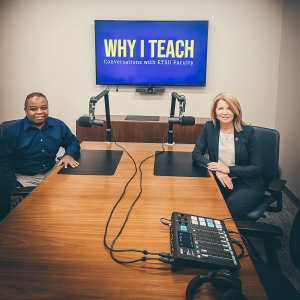
Friday Apr 26, 2024
Friday Apr 26, 2024
This episode features Dr. Elwood Watson, Professor of History, Black American Studies, and Gender Studies at ETSU. Dr. Watson is a prolific writer, the author and editor of dozens of journal articles, book chapters, and book reviews. He also authored several books, including a book of essays about race in contemporary America.
Podcast Transcript:
Dr. Elwood Watson
Well, I think history is highly important because, first of all, we reside in history, okay, whether we are aware of that fact or not; anybody can get a book and read the facts, just saying this happened in 1895, this happened in 19, people say, okay. And so what? That's like a "Jeopardy" question. I want you to be mini historians, at least through my class in a semester, the how, the why, yes, you know the whats and whens, but let's incorporate and why and how this came about; causation, the significance of the event, and the end result. To me, that's how you should teach history.
Dr. Kimberly D. McCorkle
Hi. I'm Kimberly McCorkle, Provost and Senior Vice President for Academic Affairs at East Tennessee State University.
From the moment I arrived on this campus, I have been inspired by our faculty. Their passion for what they do. Their belief in the power of higher education. And the way they are transforming the lives of their students.
This podcast is dedicated to them, our incredible faculty at ETSU. Hear their stories as they tell us, "Why I Teach."
In this episode, we will talk with Dr. Elwood Watson, Professor of History, Black American Studies, and Gender Studies at ETSU. Dr. Watson earned a bachelor's and master's degree at the University of Delaware and a Ph.D. in American history at the University of Maine. He began teaching at ETSU in 1997, and during that time, he has received multiple Distinguished Faculty Awards in the College of Arts and Sciences.
Dr. Watson is a prolific writer, the author and editor of dozens of journal articles, book chapters, and book reviews. He also authored several books, including a book of essays about race in contemporary America. He's a regular columnist and contributor to numerous national publications, where he applies his expertise in history to current events and issues. Dr. Watson's extensive research and expertise, spanning from history to popular culture, offer valuable insights that address numerous pressing issues encountered by Americans.
I look forward to hearing how he engages his students in these important conversations and helps them to discover ways to connect what they learn in their classrooms to their communities.
Enjoy the show.
Dr. Watson, welcome to the show.
I start my podcast with the same question for every guest. Take me back to your first day of teaching at ETSU as a faculty member, and looking back on that day, what is one piece of advice that you would have given yourself?
Dr. Elwood Watson
Yeah, that was in August of 1997. That was my first day of teaching here. And when I walked into that classroom for the first time, seeing students, it was interesting. The students were skeptical I was their professor at first because they said, "Well, you know, ETSU has a lot of nontraditional students as well." And one lady was like, "You're younger than my son, I think." So. And they're like, "Are you serious? You're the professor?" And I was like, "Yes, I'm the professor." And at that time, I was 30 years old. Yeah. And these kids were like, it was a gen ed survey class, so we're talking about 18, 19, you know, a decade older than they were, but not, you know, much, much older than they were. But, so it was a, but I think there was a little bit of skepticism the first couple of weeks. But when they saw, you know, that I knew my material and I was able to engage, and I think they were able to, you know, they really appreciate it. And then got fantastic evaluations and became one of the more popular professors in the department, you know, which I was glad.
So I learned a lot about, I don't know if I would change too much, but I think perseverance; I learned, you know, be your authentic self.
Dr. Kimberly D. McCorkle
Yes.
Dr. Elwood Watson
You know, and I think students will appreciate that more, as opposed to engaging and trying to be a persona that's not necessarily you.
Dr. Kimberly D. McCorkle
Yeah, that's great advice. Will you tell us a bit about your journey into academia, including how you became interested in the intersection of history, Black American studies, and gender studies?
Dr. Elwood Watson
Yes. At the University of Delaware, I was, I started off as an English major at that time. Delaware, this was the mid-1980s, I started college in the mid-1980s. Delaware at that time, it's the English department there, like many places, it's, you know, transformed considerably, at that time, was primarily European history, Shakespeare, Hawthorne, well Hawthorne's American, but, you know, it was pretty much, you know, to use that term, and I don't mean this derisively, but as some radical students would say, the dead white male, if you can.
Dr. Kimberly D. McCorkle
Right.
Dr. Elwood Watson
And by the nineties, the English departments were facing a reckoning. But at that time, for me, I decided to go to history. I took a history class with a man by the name of Dr. Jack Ellis, who has since retired. He went from Delaware; he eventually became the dean at the University of Alabama at Huntsville. But he was, I took a class with him, World Civilization since 1600. And it was one of the most fascinating classes I'd ever had and I didn't do too well on the first exam. But I did much better on the second and final exam. He was very, very impressed. You know, as you know, he said, you got this grade, but you got the hard way, but you got it.
Dr. Kimberly D. McCorkle
Right.
Dr. Elwood Watson
And then he asked me would I be interested in becoming a college professor one day. This is like two months later.
Dr. Kimberly D. McCorkle
Wow.
Dr. Elwood Watson
Well, that's, I had never given it much thought. I thought journalism, which I do on the side right now, is what, I'm a syndicated columnist, so I thought I might want to go and get my B.A., and just go straight to work. And but I said yeah, and he said “Well, come by my office in a couple of weeks, and we'll talk about it.”
It just so happened that he just became the brand-new chair of the department at that time, which didn't hurt. And so I learned, you know, a lot about academia. And he became my advisor. And I met with another professor who just retired last year, Dr. Wunyabari Maloba; he came from Stanford. He arrived there in 1988, and he was probably a little older faculty than average at that point, not much, but he was probably in his early, late thirties, early forties when he first started. And he, between the two of them and a few other faculty, Dr. Anne Boylan, all these individuals have retired by now. She got me interested in gender studies, and with that combination, she introduced me to people like bell hooks and Audre Lorde.
Dr. Kimberly D. McCorkle
Yes.
Dr. Elwood Watson
And Patricia Williams.
Dr. Kimberly D. McCorkle
Yes.
Dr. Elwood Watson
And I took a class with her, which was American Women since 1945. And that's a class I actually teach here.
Dr. Kimberly D. McCorkle
Is that right?
Dr. Elwood Watson
Yeah, at East Tennessee State University. And those factors alone, individuals at Delaware really got me started off into looking into gender studies, pop culture, you know, race. And, and I was able to, you know, combine those factors as well. And it was intersectionality. And to quote Paula Giddings, you know, she's coined the term the intersection of race and gender. So there was a combination of factors that got me interested in my passion for the humanities, my passion for, you know, academia in general. And I think I was able to, you know, propel that into my work as my work, my books and things are very multidisciplinary. Right. Even though I'm a historian by training, my work is multidisciplinary, and I incorporate a lot of dynamics into different fields into my work because I think that's what a liberal arts education is supposed to be about.
Dr. Kimberly D. McCorkle
Right. Well, so to follow on that, your expertise covers a wide range of topics. Do you have a favorite lecture or class that you teach?
Dr. Elwood Watson
I actually like all my classes. I think that I'm more, I've been doing a lot more contemporary classes. This semester, for example, I'm teaching American history through film. That's a class I teach sporadically. And this semester, we're focused on the 1970s. I look at that from a historical perspective. I focus on films that are Cold War. In the past, I focused on films of the fifties. Each time I do it, we focus on a decade.
Dr. Kimberly D. McCorkle
Right.
Dr. Elwood Watson
And we and also, I mean, there's obviously readings to supplement those films. But that's one of the classes beginning, I like that quite a bit. My Current Issues in American History, which I'm teaching this fall, there's such a popularity for that, and I get my classes because of the interdisciplinary nature, I am able to, a lot of non-major take my class as well as majors.
Dr. Kimberly D. McCorkle
Sure. Right. Tell us, in what ways do you see historical perspectives influencing contemporary issues, and how do you help your students make those connections?
Dr. Elwood Watson
Absolutely. History, I always tell students, and I've told people that confidence is the mother of all disciplines. And I had a person tell me one time, what about philosophy? I said, "There's a history to it." But I think history, I think in many ways, and that is how I mean that, is certainly respectfully; I respect all disciplines in academia.
Dr. Kimberly D. McCorkle
Yes.
Dr. Elwood Watson
But I think, you know, every discipline has a history, and you can certainly look at that, you know, whether it's literature, whether psychology, whether sociology, whether it's, you know, finance, you know, medicine, those dynamics and stuff as well. One of my colleagues actually does a course on history in medicine.
Dr. Kimberly D. McCorkle
Yes.
Dr. Elwood Watson
As well. So I think what I do is I try to compare, you know, what is going on today, and sometimes when I teach a gen ed class here and there, I tell my students, for example, you know, we're talking about high wages, we're talking about wealth gaps in this country during the Gilded Age, that sort of stuff as well. I said, is there any similarities to what's going on today? And several students raise their hand. Yes, yeah. Yeah. And I says one could argue we're in a second Gilded Age, right? You know, widening gaps, you know, the wealthier seem to be getting more wealthy, working class people seem to be struggling more. If we're at, the news we watch and listen to. So I'm saying there is a good example where there are a lot of historians who say themselves that we are in a second Gilded Age.
Dr. Kimberly D. McCorkle
Right.
Dr. Elwood Watson
So when you think about it, yes. I said, well, Mark Twain said it best. History doesn't exactly repeat itself, but it does rhyme.
Dr. Kimberly D. McCorkle
Right.
Dr. Elwood Watson
But to answer your question, yes, I always say, "Look, you know, these are not new issues?" They, you know, they may have different focuses and different things, but they're the more things change, that old saying, the more they stay the same.
Dr. Kimberly D. McCorkle
Tell us a bit about your most recent book.
Dr. Elwood Watson
Well, my most recent book was published was called "Talking to You, Bro" and that was published in 2021. And it looks at masculinity of, you know, it looks at the history of masculinity and looks at dynamics on how men can learn from past history and accordingly, you know, take advice here and there as well. My current book that I'm working on is about men who are members of Generation X. That was those of us who are born between 1965 and 1980, and I'm working on that. And I should be well into getting it, well into it this summer. And hopefully at some point next year it should be out on the market. So I haven't got a title for that yet. So I'm looking for a major publisher with that one as well.
Dr. Kimberly D. McCorkle
What are what are the initial themes from that book?
Dr. Elwood Watson
I interviewed about 40 men from different backgrounds. Some are very religious, so that's probably going to be a chapter. I might call that Judeo-Christian brothers, you know, a couple are Jewish, you know, a couple are Christian, and a couple of them were, you know, a number of men of color. So we might even, that could be a chapter. A few who are members of the LGBT community. So that could probably be a chapter. Also interviewed a couple of men who were born between 1981 and 1983. That chapter will probably be me, men on the cusp, maybe not exactly, you know --
Dr. Kimberly D. McCorkle
Gen X --
Dr. Elwood Watson
but they're not there so early that, you know, they can be, you know, considered, you know, maybe a lot of Millennial I mean, the Generation X, you know, behaviors and sentiment there as well. So that'll be a chapter.
Dr. Kimberly D. McCorkle
As you know, ETSU just introduced the Compass Core Curriculum, which is our redesigned general education curriculum. As a faculty member of the Humanities area, why is it important for students to take courses like history that might be outside of their major area of study?
Dr. Elwood Watson
Well, I think history is highly important because, first of all, we reside in history, okay. Whether we are aware of that fact or not. History has a major impact on our lives. Obviously, for someone like myself who is a Black American, the 1964 Civil Rights Act of that year, signed in legislation by President Lyndon Johnson, is one of the reasons I'm probably at ETSU today. Doesn't mean I would not have necessarily have been a college professor, but it would likely would have been much more at a historically Black college and university, a HBCU, maybe a Howard, a Morehouse, a Spelman as well. The Voting Rights Act for Blacks who particularly lived in the South. I mean, if you were prior to that time, that was an apartheid system like the old South Africa. I mean, you pay taxes, you worked for a living, but you had to go to war if you were male, but you still were not able to vote.
So those type of things have had profound impacts on America. The voting rights, you know, Title Seven of that was for outlawing gender discrimination. People don't realize that. You know, women, you know, I tell a lot of students I taught the honors program for a number of years to a lot of young ladies. You know they had SAT, well ACT scores mostly, but SAT scores. I said your score you could go to anywhere in the country that you want to go based on your, you know, academic records, phenomenal academic records, you know, and very impressive young women. And the men were, too. But I'm just saying. But the point I'm making is that but prior I said to 1969, you could not have went to any Ivy League school. I said, you could not go, you could not have went to Harvard. You could not have went to Yale. You could not have went to Princeton, you could not have went to Brown. You could have went to Mount Holyoke. You could have went to Pembroke. You could have went to Vassar, you could have went to Wellesley. You know, you could have went to Smith, you could have went to any of the “Seven Sisters.” I mean, I said, but because you're a female up to 1969, you were not allowed to go to the mainstream campuses.
My sister, my oldest sister, Marsha, when she was at Princeton University in the fall of 1973, she was like the fifth class of undergraduate women to enter that institution at that time. So that was not lost on that women, that generation of women, I mean, as well. And I think that I think a lot of times I try to hammer these type of things home because a lot of times I think a lot of, you know, women think the feminist movement, younger women, not all, feel that the feminist movement is too extreme. I said maybe you better be glad some of these women were so extreme. Okay. You know, extreme. You know how that based on what I said, because the opportunities that many of you have today.
Dr. Kimberly D. McCorkle
Right.
Dr. Elwood Watson
You would not have. I said prior to the 1970s, if you go back and watch the nightly news, Barbara Walters is one of the first women who was able to break into it on "The Today Show" in 1967. But by and large, you go back, and it was Chet Huntley, David Brinkley, Walter Cronkite. And this is not to say they weren't good at what they did, but there were no people of color, no other women, giving the news and nightly news. And I'm saying those are things, you know, today, Katie Couric, Deborah Norville, you look at news now, you'll see much more diversity. And I think that we're better for it. I mean, not even just Black, white, or women or men. You're seeing people from all nationalities giving the news. But that was not the case. And that was because of the Civil Rights Act. And, you know, the Voting Rights Act that gave these opportunities possible. And I try to teach history of those perspectives because I think people don't realize it could have a direct impact upon your life. So that's just one way that I try to hammer that home.
And I think students tell me at the end of the semester, some even went to my department chair and said, you know, I really appreciate Dr. Watson saying what he did. At first I didn't like it. It made me uncomfortable. Some of them say this, but I realized when I think about it and thought about it, it was important that I get this information.
Dr. Kimberly D. McCorkle
Yes.
Dr. Elwood Watson
And I actually get on mine this should be a required class, but I try to teach it to make that connectivity factor. I think it's important that we try to make history as personable because I mean, yes, you need to know the facts. That's a given, but you need to know more than the facts. Anybody can get a book and read the facts. Just saying this happened in 1895, this happened in 19, people say, okay. And so what? That's like a "Jeopardy" question. I want you to be mini historians, at least through my class in a semester, the how, the why, yes, you know the whats and whens, but let's incorporate and why and how this came about; causation, the significance of the event,and the end result. To me, that is how you should teach history.
Dr. Kimberly D. McCorkle
Yeah. And the power of the humanities to do that for students from all majors.
Dr. Elwood Watson
Yes. Yes. Yes.
Dr. Kimberly D. McCorkle
As I mentioned in your introduction, you are a prolific writer. How does your writing make you a better educator, and how does your teaching make you a better writer?
Dr. Elwood Watson
Oh, they both can complement one another quite well. My philosophy is that good researching, good research enhances good teaching. I think you can become very stagnant if you decide once you get tenure or a full professor for that matter, and do not necessarily engage in the level of research or just decide to maybe rest on your laurels or that comes along with that. I think that can make you stagnant, and I never want to be that type of professor. I'm always curious. I'm just, it's in my DNA. I can't help it. I just want to know about that. I'm always up to date about what's going on. I, that's why I like to go to conferences. I like to, you know, interact with others. I try to see what new scholarship is out there, you know, and I say who's doing what and connect with those individuals that are willing to connect. And many are. And because I think it just keeps you vibrant, which is one of the reasons I like working with graduate students so much. You know, grad students come up with interesting ideas. They keep you, you know, you could help them with ideas. I mean, and, you know, and I've you know, I've been able do some fantastic theses, you know, because these students are so interested as well.
And I try to do my graduate seminars a lot of times around what a lot of my students are working on. You know, they're working on gender issues, a lot of my seminars might be gender. If they're working on race issues, I try to put in race. If they're working on, you know, pop culture issues. But I believe in helping students, you know, working, you know, working them and trying to cultivate their, you know, their best skills. And, you know, and hopefully, you know, they decide to pay it forward.
Dr. Kimberly D. McCorkle
Yeah. You've prepared them well. And a good reminder to thank your mentors, how important that is.
Dr. Elwood Watson
Absolutely. Yes. Absolutely.
Dr. Kimberly D. McCorkle
Finally, what impact do you hope you've made on your students?
Dr. Elwood Watson
I try to live by example. I don't expect, I don't say anything. I'd let them know I'm very you know, I have strong opinions. I certainly expect them to be strong opinions. My classes are discussion oriented. I said, we're going to talk in this class, whether it's about issues of race, gender, pop culture, we're going to be honest about it. We don't sugarcoat it. I said we'll be respectful to one another, by all means, but I believe you don't get anywhere by dancing around the bush. And then, particularly in our current climate, I think we can be respectful, but we've got to be candid, I think. And I said, because the current climate is anything but timid, okay? And we have to really be mindful. We have to really be looking look at things for a reality perspective. I always believe in being a realist. I mean, I think that let people know where you stand. As students, I want you to know, I want to know your stand. Why do you feel this way? Let's go from there. I think, I think once we know what's out on the table, we may not convince each other, but at least we know where one another stand. And I think it's a lot better than just trying to dance around a bush, you know? And, you know, maybe you'll come to my opinion, and maybe I'll come to you. I mean, you know, we dance around those kind of things. I'm not sure that it gets anything done. So I think, you know, that honesty, transparency, and let's go from there. And I think that's highly important, especially when you're doing history. To me, history is about getting to the truth -- right -- no matter where it may lead.
Okay. A lot of history, well, I've had students in the past, years ago, well, don't you think we'd do better if we don't talk about the negative things in history? I said, Well, look, I'd love to say everything in history was blue skies and apple pie, but it was not, okay. Especially if you look at Southern history, you're looking at history of race and gender and immigration, labor. It was right ugly in some cases. Okay. And I don't think we do ourselves a disservice to try to not skirt around those issues. You know, I mean, I think we have to say this is what happened, that there were good things that came out of it. Yes, of course. But we have to realize it didn't happen overnight. Women didn't get the vote overnight. People were like women got out in the street and there were two marches and all of a sudden the 1920, no, that was almost a 100-year battle. They went forward. They went backward. Some states said no. Tennessee was the state here that made it possible for the 19th Amendment to be ratified. And I mean, so had it not happened, it would've had to start all over again. It may not have been to the 1960s with Title Seven.
My point is, you know, those are kind of things you have to realize. Martin Luther King Jr. and them, look at the dedication they had to go through their civil rights movements from Frederick Douglass to David Walker all throughout history, we had television, Martin Luther King Jr., the power of television was very, very instrumental. Point was, you know, Martin Luther King Jr., and he was 24 when he led the movement, you know, look how long it took, a decade before the Civil Rights bill was actually enacted. And these things don't happen overnight. Okay. And that's why I try, kids, you have to realize the sacrifices that these individuals are made for people of my generation, your generation as things as well. And I think, you know, we have to let students know that. A lot of people don't understand why, you know, maybe the opportunities they have today, don't take them for granted because they can easily be taken away from you. I know that sounds dramatic, and it sounds drastic, but it is true. And I don't think any of us should ever get to rest on our laurels.
So that's what I tell students about history. And that's what I tell, you know, you've got to be mindful of it, you've got to always teach it and pass it on.
Dr. Kimberly D. McCorkle
Thank you, Dr. Watson. I've enjoyed getting to know more about your research and your writing. I also appreciate the ways that you help to guide your students to important conversations and to an understanding of how they can use lessons from history that they learned in your class to make an impact on their communities.
Thanks for listening to "Why I Teach."
For more information about Dr. Watson, the College of Arts and Sciences, or this podcast series, visit the ETSU Provost's website at ETSU-dot-edu-slash-Provost.
You can follow me on social media @ETSUProvost, and if you enjoyed this episode, please take a moment to like and subscribe to "Why I Teach" wherever you listen to podcasts.
Wednesday Mar 13, 2024
Wednesday Mar 13, 2024
Dr. Tabitha Fair has a long history with ETSU’s Dental Hygiene Program, which celebrates its 55th anniversary this year.
She began as a student and this year she has been teaching for 20 years in the program.
In this episode, Dr. Fair describes the community-engaged, hands-on learning experiences students participate in as they offer affordable dental hygiene care to the community.
Podcast Transcript:
Dr. Tabitha Fair
We are really proud of our 55-year history of educating students and providing dental hygiene care to those in the community.
Dr. Kimberly D. McCorkle
Hi, I'm Kimberly McCorkle, Provost and Senior Vice President for Academic Affairs at East Tennessee State University. From the moment I arrived on this campus, I have been inspired by our faculty, their passion for what they do, their belief in the power of higher education, and the way they are transforming the lives of their students. This podcast is dedicated to them, our incredible faculty at ETSU. Hear their stories as they tell us, "Why I Teach." In this episode, we will talk with Dr. Tabitha Fair, assistant professor and program director for the Dental Hygiene Program at ETSU.
Dr. Fair has a long history with ETSU's Dental Hygiene Program, which celebrates its 55th anniversary this year. She earned her Bachelor of Science in Dental Hygiene at ETSU and then continued her studies here with a Master of Public Health degree.
She then completed a Ph.D. in Health Sciences at Nova Southeastern University. She began teaching at ETSU as an adjunct faculty member in 2004, and then joined the faculty full time in 2006. She served on editorial boards for several academic journals in her field, and she brings a combination of clinical, teaching, and research expertise to the classroom. In fact, the College of Clinical and Rehabilitative Health Sciences has recognized her contributions with several Distinguished Faculty Awards in interprofessional education, service, and teaching.
I look forward to hearing more from Dr. Tabitha Fair about how our Dental Hygiene Program is not only making an impact on our students, but also on our community that benefits from the clinical services that we offer. Enjoy the show! Dr. Fair, welcome to the show. I start my podcast with the same question for every guest. Take me back to your first day of teaching at ETSU as a faculty member, and looking back on that day, what is one piece of advice that you would have given yourself?
Dr. Tabitha Fair
Thank you so much for having me here today. It's really an honor, and this is a really interesting question, and there are so many things that I wish I could go back and tell myself because I was so incredibly nervous that day.
I don't really think I even remember what I said in class that day because I was just terrified. But if I could go back, I think the main thing I would say to myself is to believe in yourself. Just believe in yourself, and also believe in those people who saw potential in you. Because I never saw myself as an educator. I was the first person in my family to graduate from college. Yeah. I never even imagined that being a college professor was a possibility. That's just not something that was on my radar. Right. And so when Dr. Faust called me and asked if I would come back to teach in the Dental Hygiene Program, yeah, I was shocked.
And to be honest, I didn't have very much confidence in myself. So if I could go back, I would love to be able to say to myself that this is the beginning of a wonderful journey for you. Yeah. Enjoy it and believe in yourself and believe in those people who hired you because maybe they actually did know what they were doing.
Dr. Kimberly D. McCorkle
Oh, thank you. I love that. As you know, ETSU's Go Beyond the Classroom initiative focuses on providing our students with hands- on community-engaged learning experiences. Our Dental Hygiene Program has been ahead of this curve since its inception 55 years ago. Will you tell us how this program provides students with those invaluable experiences?
Dr. Tabitha Fair
Well, we're really excited about the Go Beyond initiative because community engagement truly has been the foundation of what we have been doing for decades. But this opportunity to designate some of our courses as community-engaged learning courses has really given us the opportunity to reflect on those courses and build in that critical reflection piece that's so important.
Dr. Kimberly D. McCorkle
That's great.
Dr. Tabitha Fair
So I would really like to brag on Dr. Laura Minton. She's one of our faculty members, and she actually was able to have our very first Dental Hygiene course certified or approved as a community- engaged learning course. Excellent. She's been working with Dr. Michelle Lee in the Nutrition Department to allow the Dental Hygiene students and the Nutrition students to work together. And that has led to some really great experiences for both sets of students and our patients in the clinic as well. But like you mentioned, we've been doing this for decades. We just haven't designated it as community-engaged learning, but every day, our students treat patients in the Dental Hygiene clinic, so they're interacting with people from the community.
We go to a lot of other clinics in the community, such as Keystone Dental Care, Healing Hands Health center. We're also affiliated with Remote Area Medical. We've been attending those clinics for years, and some of my most memorable experiences actually are from attending those clinics with students when I first came to ETSU. We work with Healing Hands in a lot of special events that they have, like their dental day for veterans, their children's dental day. We also are able to include a lot of community engagement into our didactic courses as well, though. I'm really lucky that I get to teach the geriatric dental hygiene course and also the community and rural dental health course. Right. And in both of those, the students are pushed out of their comfort zones. I think these are two courses that they are really afraid of. They dread them, to be honest.
But at the end of the semester, they're so happy and proud of themselves that they were able to get out into the community, get out of their comfort zone, and learn a lot throughout the process.
So in the geriatrics course, they actually work with a long-term-care facility. They go into those facilities, and they perform an in-service for nursing home staff. So they teach the nurses how to clean dentures, how to check the oral cavity for lesions, how to assess the patient as to whether they need a dental exam, those types of things. They also work with a resident who lives at that facility as well, and I think that is a very profound experience for a lot of those students. Many of them have never been to a long-term-care facility.
And many of them actually will go back and continue to visit that resident even after the course is completed. And I think that really says a lot for the experience that they have there. In the community and rural dental health class, they actually go out, and each individual student teaches a lesson to a classroom about dental health, and that can be any classroom that they choose from preschool age up to high school, depending on how brave they are and what they want to do. They also work as a group, and they get to choose an underserved population. And so they actually assess the needs of that group. They develop an intervention, and then they assess the success of that intervention afterwards.
So it's really great to see them grow and to become confident in themselves and their ability to do those things and to see that they can do anything they want to do. Maybe they don't want to work in private practice forever. They see that maybe they could go out and work in public health or education or some of these other areas.
Dr. Kimberly D. McCorkle
Wow. What a rewarding experience for the students.
Dr. Tabitha Fair
Yes. Yeah. Yes.
Dr. Kimberly D. McCorkle
Tell us about the impact this program has had on the health and well-being of our community and our region over the years.
Dr. Tabitha Fair
We are really proud of our 55-year history of educating students and providing dental hygiene care to those in the community. I feel like the Dental Hygiene Clinic and Lamb Hall has been so impactful on this community for several reasons. The first is that we are able to provide care to over 1,600 patients each year. Wow. And we provide services such as oral exams, oral cancer screenings, nonsurgical periodontal therapy, fluoride treatments, sealants, X-rays, dental cleanings cost $20, and they are free for ETSU students and anyone over the age of 55. So it's just a wonderful resource for the community.
Over the years we've also had the opportunity to open our clinic to various groups by having special clinic days for organizations like the Boys and Girls Club, Little Bucs, and Head Start. And those are always some of my favorite experiences, yeah, because we have the opportunity to help children have a positive experience in the dental office. And it also allows our students to experience that excitement. And helping children to not fear the dentist is so important to their oral health throughout their lives. Dental anxiety is very real, and a lot of the adult patients that we see are still very anxious about coming to the dentist because of negative dental experiences that they had as children. So I think the opportunity to help children have positive experiences is very valuable. Yeah.
So our clinic serves many in the community, from children to ETSU students, staff, and faculty to others in the community. But beyond that, our program has been training registered dental hygienists to serve the region for almost 55 years, and that's a lot of dental professionals. So you'll find our graduates in most offices in the region, and we're very proud to see them out there promoting oral health every day.
Dr. Kimberly D. McCorkle
Yeah, that's just, it's fantastic. And to think of this clinic being on our campus, it's just, it's wonderful.
Dr. Tabitha Fair
And I'm so excited to do this because a lot of people still don't know that our clinic exists.
Dr. Kimberly D. McCorkle
So last year I had the opportunity to join you and others in the college as we celebrated the renovation to Lamb Hall, including the Sturgill Family Dental Hygiene Clinic. Tell us how this space has evolved to meet the needs of students and patients.
Dr. Tabitha Fair
Well, I would just like to say first how beautiful Lamb Hall is now. It's just a gorgeous building. And when I have families who come to campus to see me, they come to visit the Dental Hygiene Clinic, they, they're so impressed by the building. And I always make sure that I take them up to the third and fourth floor, show them those student lounges, the patio, it's just a beautiful space.
And yes, I honestly feel like I grew up in Lamb Hall a little bit, honestly, between my dental hygiene degree, my public health degree, yeah, when I came back to teach, I was actually what's considered a full-time temporary employee. So I would work all day, get there about 7:30 and work all day, and then I would go upstairs for public health courses. So sometimes I would be there from 7:30 to 9:30, just depending on the day. And I'm actually in my fifth office in Lamb Hall now. I hope I get to stay put for a little while, but it's just amazing to see the change that has occurred in the building, yeah, and I'll be perfectly honest with you, when I first met with the architect, and he said to me, "We are going to take your dental hygiene student lounge and make it smaller, and they won't have eating areas and things like that."
I thought to myself, "Why would you do that?" Right? But now I get it, because now I get to go upstairs. I see all of the collaborative spaces that are there. Right. Right. It's so nice to see our students get out of their little silo and their little area, right, and eat lunch and mingle with other people from our college. So that's, that's been a really nice experience. And they all had to look back at that and say "Okay, they knew what they were doing." I get it. I get it. Why they did that. Yeah. So that's, that's beautiful. And like I said, everyone is always so impressed. And as far as the dental hygiene space, I'm so grateful for the generosity and support of the Sturgill family in working with us to update the dental hygiene space and continue our mission. As part of that project, we were able to renovate our patient reception area and student receptionist workspace to be more efficient and more comfortable as well as purchase new digital X-ray equipment, X-ray mannequins, and new nitrous-oxide equipment. Yeah. All of those things are vital to training our students for the current workforce and will positively impact the educational experience of our students in the treatment that our patients receive.
Dr. Kimberly D. McCorkle
It's, it's beautiful space. It really is. The Dental Hygiene Program has also had extremely successful job placement and licensure pass rates over the years. Tell us how you and your colleagues prepare our students for success.
Dr. Tabitha Fair
Thank you for those kind words. It really makes me proud to meet dentists who speak so highly of our graduates, and that happens quite often, which is great.
I think there are a lot of factors involved in that success. The first being that we have excellent students; we accept 24 students per year from many strong applicants. They're motivated. They've worked incredibly hard to be accepted into our program, and so they want to do well, and they want to make us proud. We also have dedicated and hardworking faculty who truly care about student success.
We are very student-focused, and we want to see them do well, and our faculty go above and beyond every day to guide and mentor these students. I see our clinical coordinators offer extra clinical sessions when students need them. I see our supervising dentists stay after clinical hours to help students in the dental lab.
And all of our faculty obviously have posted office hours, but I see the many extra hours that they spend when students are in need, when they need guidance; whether it be about their academics or about personal issues, they're always there for them. And I think at the end of the day, that truly makes a difference.
And when I think back to myself, I think of the faculty members who played an important role for me. One of those would be Dr. Charles Faust, who is retiring this year, and I can't thank him enough for all of the guidance that he has given me over the years. He was the program director before I took this position. Wow. Yeah. And so having him available to answer questions and be there for me has meant a lot. The other would be Dr. Debbie Dotson, who retired two years ago, I believe. Yeah, she had been my confidant and mentor and lunch buddy and shoulder to cry on for a really long time. And it's really funny.
I remember my very last semester in Dental Hygiene school, the Dental Hygiene Program. My mother came in to get her teeth cleaned, and Dr. Dotson actually was the instructor that day, and she checked my mom, and she made the comment that when I graduate, I should come back and teach with them. And my mom, after we left, she said, "Oh, that was really great. You should really think about that."
And I said, "Mom, she says that to everyone's mom. You know, she's just being nice. She didn't actually mean that." And so she really believed in me from the beginning. She taught a lot of our courses that were writing intensive and research based and oral intensive. And so she got me over my fear of public speaking, and she really made me believe in myself and the ability to go pursue a master's degree and later to pursue a Ph.D. So she has always been a great, great mentor.
And then Dr. Victor Hopson, he was our supervising dentist at the time. And I will say he was always my biggest cheerleader. I mean, that's a nice thing to have. I was really young when I started teaching Dental Hygiene courses. Yeah. And so I found out much, much later that he would always talk me up to the students and, you know, talk about how qualified I was and how smart he thought I was, you know, and all those things. And while embarrassing, looking back, you know, he, he was being my biggest cheerleader. And he really wanted to make sure that the students knew that I deserved to be there, I think is what he was trying to do. But, you know, those are people that made an impact on me. And if they had not been there for me to encourage me as a student, right, and then as an adjunct faculty member, I definitely wouldn't be where I am today. And so I think having all of those types of faculty members to guide you, that's really important. And I think we still have that, I know we still have that with the people that I see every day. So it's a great example of how exemplary mentors in our professional lives help show us how to be good mentors, right?
Dr. Kimberly D. McCorkle
Absolutely. Yeah. Well, I want to say if Doctors Faust, Dotson, and Hopson are listening, thank you for all you have done for ETSU, and congratulations on your retirements.
In your bio, I mentioned that you've been recognized for your commitment to interprofessional education. Why is interprofessional education important for your students and the other health sciences students across ETSU?
Dr. Tabitha Fair
A few years ago, I was approached about the possibility of some of our students participating in the asynchronous IPE program. And I thought, "What is that? I have no idea what this is." But as I learned more about the program, I was very intrigued and excited for our students to participate. So I went to our senior students at the time, and I explained the program, and I said, "Who would like to participate?" And each year, I've had several students, and each year, it became a little bit more who wanted to participate.
And now all of our students are, and that has been a really great progression to see, and I'm so grateful that we have been included because for too long the dental profession has been considered separate from many of the other health professions, and this has been a wonderful opportunity for our students to learn about the other health professions that our colleges have to offer, and also for them to realize the value that they have to a team and build their confidence in their ability to work as a part of that team. I think it's also been valuable for the students from other programs to learn about what dental hygienists do and how we can help improve patient outcomes. I think the reason that we're often seen as separate is the fact that we work in dental offices, and people see that as completely separate. But people, you know, I think would be surprised at how much time we spend on patient education about things like healthy lifestyle factors, nutrition, tobacco cessation, and the fact that oral hygiene also plays an important role in systemic health. The pathogens that cause periodontal disease have implications for diabetes, cardiovascular disease, and things like ventilator-associated pneumonia. And I want our students to realize that they can improve a patient's overall health. We aren't limited to scaling teeth and teaching people how to floss. Right. And unfortunately, that's what a lot of people still think of when they think of dental hygienist.
But I've been lucky enough to work with the IPE program as a facilitator for the asynchronous program for two years now. And I also serve as our college representative on the IPE working group, and I'm really grateful to have a voice within that group. They've been very welcoming of our students, and they've actively looked at each of the IPE experiences to build on opportunities for the dental hygiene students to participate and contribute. So I appreciate them for that.
Dr. Kimberly D. McCorkle
Yeah, that's fantastic. What sets ETSU's Dental Hygiene Program apart from others?
Dr. Tabitha Fair
I think our program is unique in that we offer a bachelor's degree in dental hygiene. Yeah. A lot of the programs for dental hygiene are still associate degree programs. And while all of those offer fantastic clinical education, I think we're fortunate to be able to offer courses that focus on interprofessional collaboration, writing, research, and communication skills.
Our students are known as strong writers, presenters, and communicators, so each year they participate in state table clinic presentations at the Tennessee Dental Hygienist Association annual session. Yeah, they seek out leadership roles in the national association. They participate in research activities, and they participate in community- service activities throughout the region. I think a lot of our students are also very active on campus in different organizations, and I feel like the culture at ETSU encourages that, encourages them to pursue those activities. I meet with students regularly who tell me that from the time they came to ETSU for the first campus tour, that it felt like home. Yeah. And I don't think that all universities can say that.
And so my favorite thing that I get to do in this role is participating in the Open House events and meeting with families that are here for their campus tours. Yeah. And they truly, truly love this campus. They want to be a part of the culture, and I think that significantly impacts their experience and their success while they're here.
Dr. Kimberly D. McCorkle
Do you have a particular student success story that that you'd like to share?
Dr. Tabitha Fair
There's so many students that I'm proud of. I think, again, like I said, my favorite thing is meeting new students, potential students, and their families. And so I get to know them, and I get to know their backgrounds. And I think there's so many of the students that I could talk about.
But one that comes to mind is a student that I interviewed. I met with her in the very beginning, and she came from a very rural background. And it made me think of myself, you know, as a first-generation college student who didn't really have the mentors, maybe to help me along the way, but I got those people here at ETSU, and to see the way that this profession has changed her life has been incredible. She now has a job that she absolutely adores, and she is getting to help people in public health. Yeah. So just to see that progression, it reminded me of myself, to be honest. Yeah. We also have so many other students who have gone on to do things that they love. Some of them teach, some of them work in sales. Yeah. You know, it's just really impressive to see the things that they go out there and do when they leave us, so, that's nice, I've always said my favorite thing about this job is just being able to watch the students grow.
And before I took the role of program director, I was the preclinic coordinator. And in that role, I really got to see that from the beginning, you know, from the day that the students showed up, so excited to be in their new scrubs. Right. And they got to open their brand-new cassette of instruments and just be, it's like their birthday, to get to see all of these things, to watch them progress from that to where they are at graduation is just incredible.
So I'm proud of all of our students, and I hope that they all know that.
Dr. Kimberly D. McCorkle
Thank you for sharing. Finally, what impact do you hope that you've made on your students?
Dr. Tabitha Fair
That's a really big question. Obviously, I hope they remember all the things that I've tried to teach them in the clinical setting, but much more than that, I hope they remember me as someone who truly cared about them, believed in their dreams, and treated them with respect. And I hope that they will be that for someone else. Yeah. I hope they always remember their why for becoming a dental hygienist so that when they receive a request from a student who wants to come in and shadow or observe them, that they will actually do that and guide that potential student. So I hope they never forget the impact that they also can have on others by encouraging them to pursue their dreams.
Dr. Kimberly D. McCorkle
Thank you, Tabitha. I really enjoyed our conversation today. Congratulations to the Dental Hygiene Program for its 55 years of service to our students and our region. And thank you for your 20 years of outstanding service to ETSU and your commitment to our students.
Thanks for listening to "Why I Teach."
For more information about Dr. Fair, the College of Clinical and Rehabilitative Health Sciences, or this podcast series, visit the ETSU Provost website at ETSU dot edu slash provost. You can follow me on social media at ETSU Provost, and if you enjoyed this episode, please take a moment to like and subscribe to "Why I Teach" wherever you listen to podcasts.
Wednesday Feb 14, 2024
Wednesday Feb 14, 2024
Dr. Brian Cross discusses the past decade of interprofessional education (IPE) at East Tennessee State University and plans to continue evolving the curriculum to train students for team-based care to improve patient outcomes. Cross is Assistant Vice Provost and Director of ETSU's Center for Interprofessional Collaboration.
Podcast Transcript:
Dr. Brian Cross
This thing that has been discussed within the university so much with "Go Beyond,” and we think it's really important to move our students now out into the community and to take these skills as teams and find environments where they can engage patients, communities, families to improve the health.
Dr. Kimberly D. McCorkle
Hi, I'm Kimberley McCorkle, Provost and Senior Vice President for Academic Affairs at East Tennessee State University. From the moment I arrived on this campus, I have been inspired by our faculty, their passion for what they do, their belief in the power of higher education, and the way they are transforming the lives of their students. This podcast is dedicated to them: Our incredible faculty at ETSU. Hear their stories as they tell us "why I teach.”
In this episode, we will talk with Dr. Brian Cross, Assistant Vice Provost and Director of the Center for Interprofessional Collaboration at the East Tennessee State University Academic Health Sciences Center.
Dr. Cross has 30-plus years of clinical experience in many ambulatory areas, including the Indian Health Service, the VA health system, endocrinology and cardiology, academic practices, and multispecialty private practice medical groups. For most of the last 23 years, Dr. Cross has created advanced collaborative practice environments, mostly in primary care, integrating clinical pharmacy services within both large private practices, as well as academic practice models. Such collaboration will not only greatly assist our students, but it will help those they serve for generations to come. He has been awarded multiple teaching award from colleges of pharmacy, nursing and medicine at multiple universities, and he has spoken on the connection between collaborative practice and learning and training at national and international meetings. In 2018, he was a Fulbright Scholar at the Royal College of Surgeons of Ireland, focusing on the bridge between interprofessional learning and collaborative practice. This year, he will be awarded fellowship status at the National Academies of Practice, the only interprofessional group of health care practitioners and scholars dedicated to supporting affordable, accessible, coordinated, quality health care for all. Dr. Cross has been an ardent supporter of the interprofessional education at ETSU, and I look forward to learning more about its progress and its future in our conversation today. Enjoy the show.
Dr. Cross, welcome to the show. I start my podcast with the same question for every guest. Take me back to your first day of teaching at ETSU as a faculty member, and looking back on that day, what is one piece of advice that you would have given yourself?
Dr. Brian Cross
I've thought about this question for a while because first I listen to the podcast, and so I know that I was supposed to prepare this way. But second, I think this is the kind of question that causes you to pause and ask, like, so what do I really think to the answer to this question? So I actually wrote down the answer because I want to make sure that what I was thinking is clear. Yes. And so what I would say to myself back then is that teaching is not simply giving students facts that they give back to you on an exam. It is the connection between inspiration, challenge, wonderment, and giving enough time and space for them to be able to answer the “why" questions more than the "what" questions. And that learning is a journey, not a destination, that should be filled with joy and fun.
Dr. Kimberly D. McCorkle
Well, Dr. Cross, as we get started, why don't we start with you sort of telling us what is IPE and how does it function?
Dr. Brian Cross
Yeah, I think that's an important foundational kind of… So what is this and why are we doing this? I think one of the things to appreciate is this: This word has probably been in existence for 40 years, started in Europe, Canada. The United States, was actually slow to kind of take this this word up. For the people who do work that is called interdisciplinary, I would tell them this is a similar kind of thing. Interprofessional specifically came out of the health professions. And so that word is typically aligned with health professions, either practice or education. But at its core, it comes from a report that came from the from the U.S. government called "Crossing the Quality Chasm.” And specifically, it took them 250 pages, but basically what they said after they were done is that we should train together as health professions and we should practice together as health professions.
Fast forward 15 years, a second thing is published from The Lancet that says medical error is the number three reason for mortality in the United States. That kind of ups the game on… It's clear that the system that we currently send our graduates into is not one that is open, let's say, for team-based processes of care consistently. Right. And so at its foundation, what we are trying to do in interprofessional education, and then preparing them for interpersonal practice, is is breaking down these walls of hierarchy in practice and explaining to them the value, the reason, and the data that supports team-based care to improve outcomes of their patients, their families and the communities that they live in.
Dr. Kimberly D. McCorkle
Tell us about the colleges that are involved in IPE at ETSU.
Dr. Brian Cross
As we said, the word interprofessional kind of is aligned with health professions. And so the educational process here at ETSU is specifically focused on the five colleges in the Academic Health Sciences Center— so the College of Pharmacy, Medicine, Nursing, Public Health and Clinical and Rehabilitative Health Sciences. Within that is approximately 18 different programs that are touched in some form or fashion by the IPE program here at ETSU. It's great. And all of this takes place in Bishop Hall, right on the VA campus. All of the face-to-face gatherings.
And Bishop Hall, we jokingly say, that 2018 was sort of the “big bang" of IPE at ETSU. 2018 was when the building officially opened. This is a state-of-the-art simulation building, about 36,000 square feet, two full floors of simulated space that is both ambulatory in nature. So there are clinic rooms that look like a primary care office, an apartment living space, and then high-fidelity spaces like an emergency room and ICU, those kinds of things, as well as soon-to-be nine debrief spaces, where after this simulated experience, there is a safe space for the team of students to come and kind of debrief what just happened to them from an educational process. It's great. And you have community volunteers who participate in this process. We do. So within those days when there are, when the teams are going through this training simulation, we will Zoom active, engaged teams across the Tri-Cities, both in academic practices as well as private practices, around particular themes. So this coming spring, we will be bringing folks in from the community specifically to talk about communication and conflict resolution within their practices. And so while the students are going through that training, we then bring in a group of practitioners to talk about the very same stuff that they were just going through that day. That's great.
Dr. Kimberly D. McCorkle
Your bio focused on your work in collaborative practice environments and interprofessional education, or IPE, as we call it. But your career began in pharmacy. Tell us about your background and how it has led you to your current role at ETSU.
Dr. Brian CrossYeah, it sort of reminds me of the Grateful Dead, song, "What a Long, Strange Trip it's Been.” Right. So I grew up in West Virginia. I have a B.S. in pharmacy, which is a degree that's not even offered any longer. I did a residency in Boston. I went to the Indian Health Service in Arizona. That's where I met my wife on a very small San Carlos Apache reservation in Central Eastern Arizona. And then did a stint in the VA in Florida, then went back for my PharmD at UT in Memphis, did a second residency at the Med in in Memphis, and then joined faculty at the University of Tennessee in family medicine and primary care. Mm hmm. After that, moved up here to Northeast Tennessee, took a collaborative position with a large medical group here in the Tri-Cities, in collaboration with the University of Tennessee. And then in 2010, came to ETSU and joined the College of Pharmacy. I will say that I think those early years, being in environments where we had to collaborate because of the nature that we found ourselves in, say, in the Indian Health Service, we were in a single-wide trailer and the team total was five people. Everybody had to be good at a lot of different things. I think it made me appreciate the importance and value of team. But I will say I think I was more selfish in figuring out how I would be a more important member of the team then. And only as I went through more environments and realized that nobody was supposed to be more important than any other person on the team. And I guess I say all that to say I'm only now at a place where my head and heart are in the right place that I could be leading something like what we're trying to accomplish with IPE now. It's great.
So it's clear that there's been a shift toward a greater appreciation for interprofessional practice and education among health care professionals. In what ways have you seen that manifested in health care and also education settings?
Dr. Brian Cross
I'd say in the early days, so and I'm not even sure what that means anymore. But, you know, 20- or 30-plus years ago, where collaboration was happening more commonly was in the clinical spaces and so on rounds or in the clinic or things like that, learners of different backgrounds may be accidentally in the same space and maybe accidentally learn from one another. Fast forward a while. There's some government reports that say we need to do better both in practice and education. And then, like with most things, regulations come down and accreditation standards begin to change. And you then have standards that say you must do X, Y and Z. And then you begin to see the training moving into the curricular spaces instead of just in the clinical spaces. And so now I think our challenge is creating the bridge between the foundational curriculum like we are trying to establish here, with a bridge from that to the clinical space and being intentional in taking the team training we do in a simulated environment, making sure that that stays with them and moves into the clinical spaces consistently. Does that help? It does.
Dr. Kimberly D. McCorkle
So related to that, tell us how IPE has developed here at ETSU.
Dr. Brian Cross
Yeah. IPE is a strange thing to talk about in our country. It developed over time. For ETSU, the journey, we're now in our 10th year or so. So in 2013, a former vice president and the deans in the Health Sciences Center kind of came together and said, "we need to do something.” That led to a small cohort of students going through a volunteer process, and we began to refine experiences and curriculum and things like that. And then over that journey of now ten years, moving from something that was a volunteer, small group of students to now a group of students of more than 700, and faculty of more than 90 or so from all five colleges. and the Academic Health Sciences Center.
Dr. Kimberly D. McCorkle
So will you tell us a bit more about the current IPE processes and models that are in place here at ETSU and how those help prepare students who are going to work in health care?
Dr. Brian Cross
Sure. Right now we have two foundational models. The first one is the synchronous model. That is an on-ground, in person two-year, four semester experience. The four core domains of interprofessional education are the thematic processes by which we do all of our teaching. So on each day there is a theme. Those domains are communication, roles and responsibilities, teams and teamwork, and values and ethics. The second year is sort of the application, if you will. These same teams of students with faculty facilitators follow a patient longitudinally over the year, and then we end the entire experience with a formal reflection period where each of the teams give a pseudo-TED Talk to the other teams about the patient and the team process that they’ve learned. The second model that we used beginning in 2019 is the asynchronous online. So this is for learners who may never be physically in Johnson City, but they still receive training through our online process. We incredibly lucky that we opened this model in 2019 and learned in a year what we needed in 2020 when our synchronous model went to online. It was still synchronous and people gathered real time. But we used Zoom for all of the gatherings. And unlike many IPE programs in the country, we actually expanded our program during those two years that we were online and not face to face and actually grew by about 150 students at that time. In another six months or so, we hope to open a third model, and I think we'll talk about that maybe a little bit in the future.
Dr. Kimberly D. McCorkle
Well, so tell us a bit about what the challenges and opportunities have been for faculty and students as you've developed the IPE curriculum and the models.
Dr. Brian Cross
I think the challenges would be not a surprise. So when you are trying to teach students from five different colleges, schedules are an amazing task. So to gather students from five different programs, from five different colleges, 18 different programs into a common space for a two-hour period of time to do something requires an inordinate amount of gathering around tables and taking people to lunch and convincing people of value. I think the next thing is the convincing of value of it within and inside of a curriculum. And I think the third thing is how is it valued at the faculty workload standpoint? So that when we are asking faculty to be faculty facilitators in these small groups, so these are groups of 8 to 10 students and they are with the same group for an entire year. It's not a huge ask, but for all faculty I think workload is always a major issue. And so we have spent the last several years integrating the ask into the workload model for all of the colleges. And so now these are, they are given credit for teaching just like they would for anything else. I would say those are the major obstacles that most people describe. I think the benefits are the ability for both faculty and students to come together in a common space and learn from, with, and about students and faculty from other places. And therefore realize, just like all the conversations that are like this, we have way more in common than we don’t. But we don't realize that if we don't come and have these conversations.
Dr. Kimberly D. McCorkle
Do you have a favorite story about a student who seemed to really benefit from this model — that being able to observe that sort of aha moment?
Dr. Brian Cross
I don’t have one, but I would say I would I have a collection or collective. I continue to get, as we have graduates now heading out into the world, these emails and texts that will come in and say, it’s not that I didn't realize the value and importance of this when I was in it. but we were in simulated environments, and so I just want you to hear that all of this stuff that we were doing, I'm now in residency, I am now in practice, and all of these things that you were planting, I keep seeing them returning. And the things that many people will describe as soft skills, I’m clearly realizing these are actually the foundational skills that make me a better clinician. I say to all of the students, "Our job isn't to make you a pharmacist or a physician or a nurse, etc.. It's to make you the best version of whatever that thing is that your home college is making.” So I guess that's my favorite story. We do have several marriages that have come out of the IPE. So we have … I wouldn't claim to be an interprofessional matchmaker, but we do have some interesting stories over the years of people coming together and still having a marriage and family gathering. And I think that's kind of humorous as well. Sort of teamwork taken to … Expanding that concept of teamwork.
Dr. Kimberly D. McCorkle
Tell us what's on the horizon for IPE at ETSU.
Dr. Brian Cross
So one of the things I mentioned when we were talking about models is starting in the fall of 2024, we will open the third model, which is a self-directed, online one semester focused specifically at the undergrad learner level. And we are excited to announce that over the next two years of that being open, we will have now engaged all of our BSN students in the College of Nursing, the largest college in nursing in the state of Tennessee. And it has been a major task to get all of those students accounted for in this training. So that's one of the things that's happening curricular-wise. It's fantastic. We're also really excited about being involved in more programing and things on Main Campus. So things like the Basler Chair that has just been announced here in the last week or so on main campus. The chair this year brings a very interesting and unique background of the bridge between the performing arts and healing. And so we are engaging her in a couple of different events where we will bring students from arts and sciences and the health sciences into a common space to have conversation about that. And then a similar event that we will host with faculty and practitioners in the community around the same kind of discussion of does the arts have a role to play in the healing? Yes. A couple of other things on the horizon. This is our 10th anniversary, so we're going to have a graduation ceremony the first week of March. This is going to be the largest graduation we've ever had. Probably upwards of 300 students will come through that event. Congratulations. And we're also really excited that our featured speaker this year is one of our initial faculty from ten years ago who is now at the University of Michigan and returning to give kind of a just from where I've come to where I am, and kind of coming back to the roots of where he started and the initial faculty group. We hope to have all of them at that event and sort of have some wonderful pictures and just some time to reminisce about all of the stuff that's happened in IPE in the last ten years. Yes. I think the last thing that I would mention is just that bridge we were talking about and this, this thing that has been discussed within the university so much with go beyond. And we think it's really important to move our students now out into the community and to take these skills as teams and find environments where they can engage patients, communities, families to improve the health. And so we are with small projects looking for opportunities to take. In the same way we started IPE. So in a small way, there's a couple of things that we’ve done so far engaging in RAM. So having some of our interprofessional student teams involved in service to the underserved. And then there is a model that has been in practice now for about four years called ETSU Health Bridge, and this is engagement we use a interprofessional group of students to provide service to the unhoused in Johnson City.
Dr. Kimberly D. McCorkle
What has been the response from our community partners in the program that we've offered here for our students in the ways that we're preparing them in this space?
Dr. Brian Cross
I'm glad you asked that. So one of the things that I forgot to mention that is really important is when we gather in Bishop Hall several times a year, we will Zoom in community teams that are in practice. Yes. And we think it's really important for the students to meet real teams and we don't pick them on purpose so they'll say this. But we hear them say a lot is we wish we had received training like this when we were going through a process. We have learned this kind of on the street, but our lives would have been so much easier if there was an intentional curriculum to create this foundational skill set before we were in practice. And so I think every time, so we've had leaders from the Chamber come to our building and do team training. I think it's reassuring that every time we engage with folks in the community, there is a clear realization there's a need for this. And the question is, why are we not more intentional in it from a community standpoint, from a nation standpoint? I think this is just another example of these feel like soft skills and things that people assume we just do naturally. Right. I think we continue to see that they don’t necessarily come naturally to everybody. Right. Thank you. Finally, what impact do you hope that you have made on your students? So when we begin every IPE event, I ask the students to make sure that their heads and their hearts are aligned before we go into our training. I think it's really important that both of those organs are used and aligned in care. We talk about those numbers that we recite all the time. 34727, 250,000. That's the mantra of ETSU, IPE, which just simply is them being understanding, being able to understand why we’re doing this. And that is for the people who are harmed in our current health care system from medical errors as a direct result of lack of communication in the team. I hope that they understand that care from a team is always better outcomes for patients. And then I, I hope the last thing is that, that every member of the team appreciates and realizes the importance that every other member of the team is equally valuable to the team. The picture that I would draw for them, is this a round table, not a rectangular table. There is no head. Everyone has an appropriate voice. We say many times in our training, if you see something, then I hope you have the confidence within and the trust within the team, that you feel like your voice can speak up and say something about harm that you're afraid is about to happen. Yeah. Hope. I think our challenge to them is being the change agents of a system that still needs a significant amount of work. And so what I, what I hope what we've made on them is giving them confidence that they can speak up in a system that still needs some work.
Dr. Kimberly D. McCorkle
Yes, that’s wonderful. Thank you, Brian. I really enjoyed our conversation and I appreciate your commitment to interprofessional education at ETSU and the way that you inspire students and faculty with the clear passion you have for this work.
Thank you for listening to Why I Teach. For more information about Dr. Cross, the ETSU Center for Interprofessional Collaboration, or this podcast series, visit the ETSU Provost website at ETSU dot Edu slash provost. You can follow me on social media at ETSU Provost and if you enjoyed this episode, please take a moment to like and subscribe to Why I Teach wherever you listen to your podcasts.

Friday Dec 15, 2023
Friday Dec 15, 2023
In this episode, Dr. Josh Reid, Associate Professor of English, talks about how he engages his students with classical and early modern literature. He also shares his favorite books of the year.
Podcast Transcript:
Dr. Josh Reid
There's a certain way that encountering these stories from the past help us read our present. As Emily Dickinson puts it, Tell all the truth, but tell it slant. So that kind of slant-wise approach of going to the past to encounter our present is an effective way.
Provost Kimberly D. McCorkleHi, I'm Kimberly McCorkle, Provost and Senior Vice President for Academic Affairs at East Tennessee State University. From the moment I arrived on this campus, I have been inspired by our faculty, their passion for what they do, their belief in the power of higher education, and the way they are transforming the lives of their students. This podcast is dedicated to them, our incredible faculty at ETSU. Hear their stories as they tell us, "Why I Teach." In this episode, we will talk with Dr. Josh Reid, Associate Professor of English and Associate Department Chair in the Department of Literature and Language. Dr. Reid earned his bachelor's degree from Virginia Tech and master's degrees in English and art history, as well as a Ph.D. in English, from the University of Kentucky.
He joined the ETSU faculty in 2012. His areas of specialization include early modern literature, Italian romance epic, literature and visual art, translation studies, and textual editing. Dr. Reid has authored numerous publications and is the general editor for "The Manchester Spenser," Manchester University Press' monograph series on the life and works of Edmund Spenser. In addition to his research and writing, Dr. Reid is committed to teaching excellence. In fact, he is a 2019 recipient of the College of Arts and Sciences Distinguished Teaching Award.
Enjoy the show. Dr. Reid. Welcome to the show.
Dr. Josh Reid
Thanks so much for having me.
Provost Kimberly D. McCorkle
I start my podcast with the same question for every guest. Take me back to your first day of teaching at ETSU as a faculty member. Looking back on that day, what is one piece of advice that you would have given yourself?
Dr. Josh Reid
I would say to myself that you're not alone. When I started in 2012, I was a lecturer at ETSU at Kingsport, which is a wonderful place. I love the faculty, students, and staff, faculty, staff there, so shout-out to them, but it is a bit separated from the main campus and from the department. So, and the classroom itself can feel quite insular. It's wonderful to have control over the class that you have. But also you feel like you're alone there and in that space. And so learning to reach out to the broader teaching community and what it has to offer and the resources that it has has been transformative for me. So, for instance, working with, and cross discipline too, in my department and in other departments and colleges as well. So for instance, Drs. Amy Johnson, Patrick Brown, Alison Barton, some of whom have been on this podcast, and Dr. Susan Epps, we worked together on an instructional development grant to start the Conference for High-Impact Teaching Practices, or CHIIPs. Yeah. And so every August, there's this teaching conversation that happens before the start of it, and that's a way of sharing and opening up the classroom borders. And just recently for me, just this year, I've started co-teaching. So that was not something that I've done before. It feels, you know, it's kind of hard to make that leap and to open that classroom and that control. And it's been a transformative experience. I'm teaching with Dr. Chelsea Wessels in my department, my film colleague. We're teaching a class on monsters in film and literature. And I'm learning so much from what she's bringing to the classroom. She's wonderful at group work in ways that I'm not. In assessment, she's a much faster grader, so that's improved my grading speed as well. And so I just wish I had started that sooner. And so and then, you know, you're not alone in the classroom, either. Right. Your students are there, and they are teaching resources waiting to be tapped and utilized. It's a learning community that you can start from day one, and they have something to teach each other and us over the process of the class. So it's, yeah, we're not alone.
Provost Kimberly D. McCorkle
Such great advice, really comforting and a nice way to think of it. Can you tell us a bit more about your background and how you became interested in teaching literature?
Dr. Josh Reid
Yeah, so I was a townie in Blacksburg, Virginia, so went to Virginia Tech, and I came in wanting to write fantasy novels and to be a journalist actually. I wanted one of those options, to be a writer. And then I you know, this happens. This is kind of the same trajectory as many teachers. Yeah. I was in a class that just opened my eyes to what was possible. It was Dr. Tony Colaianne's medieval and Renaissance class. Yeah. And just there was an electricity, kind of magic, an ensorcellment to what he was doing, the way he was leading us, the way he was opening us up to the text, to the material. It was ways of writing and thinking that I hadn't encountered before. And I wanted to, I thought, this is something I want to replicate. And then I took another one of his classes at a very difficult point in my life and realized that literature can be both a solace as well as entertainment, right? It can provide solace and entertain. So in my senior year, I went to that professor and asked him, you know, what made him decide to become a teacher of literature. And he said that, you know, Josh, I these are these texts have given so much to me that I want to give them something in return. And so I thought and so that's basically what he's like, a caretaker of these texts in the classroom. And that's what I've been trying to do ever since. That's kind of how the quest started.
Provost Kimberly D. McCorkle
Are there specific teaching methods or approaches that you find particularly effective in engaging students with classical and early modern literature?
Dr. Josh Reid
Oh yeah, because it's a challenge, especially students coming in like, "Why are we reading 'Beowulf'?" "Why are we reading Homer? Dante." Yeah. So I tried to emphasize both what is foreign and what is familiar. And so in terms of what is foreign, this is an opportunity to be kind of like time travelers to a distant place, a foreign land in a foreign time, sometimes even a foreign language. Yeah. And as much as possible, I try to get them exposure to that, the materials of that time. So we use maybe for instance, online facsimiles and online editions. I actually have personal copies of some of these texts. So I will bring in, for instance, a 17th century English translation of an Italian romance epic when we're doing early modern printing or talking about it, and to feel that text, not just the text, but the texture of it. Yeah. The rag pulp, that's different from the way we make paper now. The way it smells, the way the text is set up so different from the way we're familiar with it. There's something again, it's something ensorcelling about it, something magical about it. But also I try to find what's familiar and try to engage with that. So, you know, Spenser's House of Pride in "The Faerie Queene," this is a 1591 poem, the way that it has these kind of, it's a culture of surface and preening surface. And students see a connection to the social media constructions that they make. We make, we connect, we find out how these texts are the foundation for what they read and value now, from Harry Potter to The Witcher video games, and I try to have fun in class. We bring in memes, we do serious play, we, I try to make connections to areas that they're familiar with. So we're talking about an epic simile. They're familiar with CGI and movies. Well, what about SGI, a simile-generated image? And so, and maybe a lot of dad jokes mixed in makes it go down there. But, and I have a background in art history, as you mention, too, and so I like to bring in illustrations and art as an entry point for those texts. Yeah. But through it all, I'm trying to recapture a questioning state of mind. So, you know, Neil Postman has this great quote, an unfortunate quote about education that often students come in as question marks and come out as periods. And so how do we open up the questioning again, where they're looking at these texts and they find it has something to offer them through the questions that they ask and recapturing that sense of wondering about them. And so in a related way actually, and this connects to the you're not alone, we've started this Appalachian premodernist group that -- this is Dr. Brian Maxson, Dr. Julie Fox-Horton, Dr. Crofts, and Dr. Michael Fowler -- we've all worked together, and now it's over 144 strong of regional faculty, students, and kind of international now, too, who are all dedicated to promoting premodern studies. So we bring in speakers to campus. We talk about teaching strategies and ways to reach students. And this semester, the monsters course I mentioned was part of that initiative. We decided the four of us are now teaching monster courses in art history, history, literature, and we have students that are, who we are sharing between the classes. So it's a way, again, of using a community to kind of make these texts live for students.
Provost Kimberly D. McCorkle
What's the most rewarding part of teaching for you? Oh, well, I mean, it's probably a cliche and probably what everyone says, but sometimes truisms are true. It's that spark, that spark of learning and discovery that students have when they surprise themselves. Yeah. So I love teaching general education courses because I often have students coming in who just want that green check on Degree Works -- right -- for this survey that they didn't want to take coming in. And they have a lot of trepidation about writing essays and about reading literature with a capital L. They have what you might call a fixed mindset about it. They think that that's not their thing. "I'm not good at English," they might say at the beginning. Right. But every semester there are these kind of learning sparks that happen because of the nature of the material we teach. Literature speaks to us all; it reads us all. It is, everyone has an entry point to it, and everyone has something to say about it. And the more diverse viewpoints, the better. And as soon as they start realizing that they have something to say about the material, that it's not just something inert that they're hearing me talk about, that they actually can contribute to the class content -- yeah -- there's a there's kind of a shift with the student and with the class community in general. So just like a couple of weeks ago, we, I learned something new in terms of a nuance about John Donne's "The Flea," which I've been reading and teaching for years. And this was something a student said in class. And there's just like this ripple of recognition through the class of, "Wow, this is, and we're learning from each other." As one student said once, the best part of class was, we're learning from each other. And, and it was, there was a, they didn't even mention me in it. So they're part of the content, they have something to bring, and I get so much out of that. I'm kind of like almost a pedagogical vampire. Like the more they bring, the more sustenance I get. And I had a mentor once tell me that we're our best selves when teaching. And I feel that in those moments, I'm never more present, I'm never more engaged, I'm never more attentive and receptive as in those moments when students are, and I feel like students feel that way as well.
Provost Kimberly D. McCorkle
As you know, ETSU's annual Festival of Ideas brings speakers and guests to our campus to connect the campus and community through conversations and dialogue. In fact, you've been part of the planning committee for Festival of Ideas before. In what ways do you believe the study of literature, especially classics, contributes to our understanding of contemporary society?
Dr. Josh Reid
Yeah, and I'm hearing Mitch Albom is coming next in 2024. So yeah, I've just loved what the Festival of Ideas has brought to campus, I think it's been since 2019, and we've had some unforgettable speakers. I still think of Doris Kearns Goodwin when she came, Mandy Harvey. I got to bring my children to that. They still talk about it. And with election season coming around the bend, I think a lot about last year's last February's Pantsuit Politics, and their advice for navigating a kind of acrid world of partisanship. Yeah. So and I love how, you know, you have this kind of featured speaker too, but how it radiates out into the roundtables that we have with the campus and community and then outward. Yeah. And so I think that's again, that's a model for, for what we're talking about here in terms of what literature can say about culture. And I think literature has a central role into how we understand and operate in society. Jonathan Gottschall has this wonderful book called "The Storytelling Animal," and he says that we should really be called homo fictus because we always tell stories. We process the world through the stories that we tell. Yeah. I mean, obviously we start as children. I mean, my kids just this morning, we were trying to get into the van quickly, and they started talking about, well, a zombie's chasing us. And, you know, that kind of fixing that in a kind of associate narrative, we all get a new sense of urgency and having fun doing it. But we don't stop telling stories. We continue to tell them -- yeah -- about our lives, about each other. When we pass away, we are the stories that we tell about each other. And so given the centrality of stories, it makes sense that studying the oldest stories that we have and most impactful ones that that's essential. You know, they say that history is what happened, but literature is what happens. It taps into what's human in us and what drives us and what we continue to do. Homer is new every morning, but nothing's as old as yesterday's tweet is another way of putting it. And studies have shown that fiction can help improve our empathy because we're walking in another person's shoes from another culture, another time period, another gender, another perspective. They can provide solace and healing through what's called bibliotherapy. In fact, when we were just coming into the COVID pandemic, we had a poetry Zoom event, and President Noland came to that, and it was just reading these poems, many of them classical, helped us provided some resilience and some solace in that moment too. And even a disparate field, seemingly disparate fields, like medicine benefit from stories as well. There's fields like narrative medicine that have shown that the more attention given to analyzing stories and to writing stories by health care practitioners, that their health outcomes have actually improved from that. Yeah. And so it's because the skills that you get from reading and analyzing literature become the skills that you use to analyze and process the world around you. And I'll give just two quick examples from my classes. My monsters class, for instance, we've been looking at a lot about how monsters, how we create monsters through a language of dehumanization and othering. And my students automatically are seeing that happen today in political arena and in, coming out of conflicts. And so they're making that connection, even if these are distant texts from them. And then recently in British literature, we looked at the moment in "Paradise Lost" when Satan enters into Eden and how when he sees Eden, he doesn't see it as a place that he can be in harmony with. He sees it as a place he can dominate, not something he can see as his domicile or home, but something that he sees that he can extract from and take and I had a student, I think the student is a changemaker and interested in environmental issues. She saw that kind of satanic gaze as kind of the seed for the kind of imbalance with their environments that we're dealing with today. So the seeds of all our woe are in these classic texts, and students, when they encounter them, they see a kind of mirror on our contemporary event, and there's a certain way that encountering these stories from the past help us read our present, as Emily Dickinson puts it, Tell the truth, but tell it slant, and so that kind of slant-wise approach of going to the past to encounter our present is an effective way.
Provost Kimberly D. McCorkle
Yeah. I had the pleasure of participating in a fun event that you organized last year, the Milton Marathon. Could you tell us a bit about that and the ways that it engages our students and the campus community with literature?
Dr. Josh Reid
Thanks so much for asking about it, and thank you again for coming to it last time. It was fun; thank you. Yeah, it was in November 2022; it happens every two years in even years. And you know, I love hearing, I've heard a few ask, "Is it happening this year?" So it will happen next year. Those listening, please come. Yes. In November 2024. But it was just wonderful seeing President Noland and you and our Dean in College of Arts and Sciences, Joe Bidwell, all in a row opening the poem -- yes -- for us. So this is a public reading of Milton's "Paradise Lost," his 10,565-line work of Biblical fanfiction, the greatest work of Biblical fanfiction ever. And my students in my Milton in His Age class help organize it, promote it. And it's a wonderful experience for them. They're coming up with well, here's a bookmark. I don't know if you have this one. Oh, nice. Yeah. And then they make bookmarks. They create short films to promote it. They write poems and do art. In fact, I had two students publish the poems that they wrote from that experience. It's something about Milton that just unleashes their creativity. And so they put on this event. It's a one-day event. It takes about nine and a half hours to read through the whole poem. But everyone is contributing. The whole community is coming out, both campus and abroad. It's become a kind of a homecoming for former students, former Milton Marathoners, who I had some come down from Ohio last time. Right. We had about 350 come to the event. It's just wild. It's a good example of what we were talking about earlier, is that these classical texts still have life. Right. And we can reanimate them if we find the right approach. And Milton works particularly well in this kind of oral format, reading it out loud because he was blind when he composed a poem, so he sculpted it in sound. So in some ways we're recomposing the poem as we read it. And there's something about that Miltonic blank verse, even if you're not understanding every word that he's saying, I don't understand every word he's saying, that just captivates you. I've looked out and seen individuals in the audience that just stay there for an hour just listening. Yes. And so and it's -- oh, yeah -- and it's I think it's a perfect example of, you know, the QEP has been emphasizing this going beyond the classroom. And this is an initiative that is birthed in the classroom from the content of the class. But it's something that they put out into the world. And when you build it, they come. And I just really want to applaud the ETSU community, my department, as well as everyone here, because the kind of numbers we get for an event like this is unheard of for Milton Marathons. Yeah. In fact, I put in for a Guinness Book of World Records for it, but they came back and said it was too specific. So, but it was, but it says everything about the kind of way that it's been embraced by this community. So it's, I can't wait to see what fall 2024 will bring. That's outstanding. I was thinking you're going to need a bigger room.
Provost Kimberly D. McCorkle
Yeah, exactly. Well, and you could probably spend the whole podcast talking about this, but what are some lessons from Milton that still resonate today?
Dr. Josh Reid
That's a fantastic question. There's, I feel like every time I teach him they're new lessons that I learn along the way. But I'll say that, you know, I mentioned, for instance, the something that I've seen more and more because I'm thinking more and more about these issues, I already mentioned the Satan example and with my student the changemaker is is that he's a wonderful early poet dealing with these issues of how we respond to our environment and what we take from it. And he, another example that I didn't, that I mentioned Satan, but there's another example of a demon named Mammon, right, wealth, and he's building Pandemonium, which is a word Milton made up, means all demons. And he's building this home for them, and it's in hell, and he's extracting it from the earth. And it's this wounding process that's compared to kind of like the creation of Adam because he's digging out, spacious, out of this spacious wound, he's digging out ribs of gold. But Milton is criticizing this process as something that is extractive in nature, that it's taking from the earth, and it's damaging it. And my students often think of things like mountaintop removal, for instance, because mountaintops don't grow back. Yeah. And it's, and opposed to that, he gives us an example of Adam and Eve living in harmony with the environment. So how does one live in a space? How does one live within it? How does one thrive within it? That's one thing I often think about, too. But he's such a powerful advocate for liberty, liberty of thought, liberty of expression, his prose work Areopagitica was kind of foundational for our First Amendment. The Founding Fathers found that. And so he is his first itself, he says, is liberated from rhyme. He's a poet that is insists on us taking ourselves seriously and for us to take our liberty seriously and the importance of that and to not take what we've heard and what we've received from what just because of where we were born or where we grew up receiving that for truth, we have to kind of earn it ourselves. Yeah. That's something I've taken from him as well. And finally, and this is I always find this is a beautiful moment in "Paradise Lost" is that we learn from Satan that hell can be a state of mind. You can take it with you wherever you go. He takes it with him to Eden, which is why he can't live within it. But at the end of it, even in the tragedy of Adam and Eve being expelled, they learn that paradise, that you can have paradise within you too. Happier, still. Happier far. And it's a sense of that, you know, we, our state of mind is something that we can construct. And sometimes in that state of mind is something we construct through things like reading, literature, through consuming it. Milton is very fond of digestion metaphors and and eating and changing through what you eat. And in many ways I think he thinks of his works as something we eat, and we mull over, and we are changed through it. So that's a few, those are a few items. I mean, I could go on and on. I'm sure.
Provost Kimberly D. McCorkle
Thank you. Excellent. Do you have a favorite lecture or a subject that you teach? Oh, that's hard. That's almost like picking a favorite child. I've been very fortunate in Literature and Language to get to teach a lot of different courses like European and British Literature Surveys, Bible is Literature, Literature and Medicine, I really enjoyed teaching that, Milton in His Age, as we've mentioned, a Renaissance grad course, Literature, Ethics, and Values, the monsters course. But I guess I if I had to pick one, I think it's a Dante course that I've offered three times now. It's a kind of replica of that Dante course that I took as an undergrad at Virginia Tech that meant so much for me. Yeah. And from that professor meant so much for me, too. And I just try to replicate that experience. They read Dante's "Divine Comedy," the "Inferno," "Purgatorio," "Paradiso," so hell, purgatory, heaven. We go through it twice with two different translations. So I get to work with students on what translation means and how that affects the text. We also look at illustrations. The Reece Museum has a full suite of Salvador Dali illustrations, so they can look at those and other illustrators as well. In fact, last time in 2021, I worked with Spenser Brenner, the wonderful Spenser Brenner, on doing a an exhibit on Dante to celebrate his cultural impact. And we had a little "Inferno" reading, kind of like a little Milton Marathon. We call it the Dante Dash. Yeah. So and I find that that's the course that I think students have been responding the most to. There was a Hozier -- Do you like that album, that that artist Hozier? I don't know the artist; Oh, "Take Me to Church." That's one of his songs. Yes, yes. So he made a new album called I think it's "Unreal Unearth." And I got so many emails from former students because it's based on the "Inferno." Oh I didn't know that. Yeah. And it's so wonderful. I'm going to use it next in class, but it just showed the kind of impact that that text had on them. There's something about the journey Dante's making -- yeah -- that connects with our journeys and our stories going back to what Gottschall says and that it can be a guide for us, just as Virgil was a guide for Dante.
Provost Kimberly D. McCorkle
I'm certain that I have shared this with you, but since I was an English major undergrad, Dante's "Inferno" was one of my favorite works. Yeah, it still speaks. "Canterbury Tales," Chaucer's "Canterbury Tales" is the other, but Dante's "Inferno" was an impactful work for an undergraduate student. It's unforgettable.
Dr. Josh ReidYeah. Yes, it really is.
Provost Kimberly D. McCorkle
I am always seeking good book recommendations. And so since I have an English professor here as a guest, I have to ask you, what are you reading now, and what have been your favorite books or book that you've read in 2023?
Dr. Josh Reid
So, well, the joke here is that English professors don't have time to read what they want. And so that, well, we have this list that we're accumulating that we'll be able to read when we retire. But we, and you know, I have, I'm very fortunate to have a job where I get to reread and teach texts that I love every day. But so I don't get it because I'm an early modernist, I don't read as many contemporary texts. That said, I've been able to fit some in. I'm still reading right now the kind of rereading and reading the works of Jeff VanderMeer because he came to campus. I can't believe we brought him in, this New York bestselling Jeff VanderMeer, the Bert C. Bach Written Word Initiative, and Dr. Jesse Graves, thanks to him bringing in Jeff VanderMeer to speak and talk about his work. He's one of my favorite living authors. So I you know, after that, he came in October, I've been kind of revisiting his work. And so I'm reading right now one of his wonderful, harrowing novellas called "The Strange Bird." So it's part of his Borne universe. And I think it's going be on AMC. It's been optioned for AMC. So someday down the line you can see it on television. But he writes these strange, wondrous, kind of weird fiction they call it about a kind of possible future, and they're very environmentally focused these texts are, and "The Strange Bird" in particular has a lot to say about the way we treat animals and about the resilience of the environment and how it will live on. Even if it's, if it's damaged, it will live on. So those are very powerful. And the, in terms of the best book I've read in 2023, I mean, there's probably a lot of people would say this so it's not a surprise, but I have to plug it. If I get an opportunity, it has to be Barbara Kingsolver's "Demon Copperhead." Yeah. It's the Pulitzer Prize-winning novel. And if anyone hearing this has not read it, give it a try. You have to, I think, obligated to because it's, you know, a wonderful author, of course. But this is a master work, I think a modern classic, built off a classic, "David Copperfield." "David Copperfield" by Charles Dickens. And it's it takes place in our region. In fact, I was just driving home for Thanksgiving, and you drive through, and we drive through Jonesville in Virginia. And that's where he's growing up. You can see locations that she used, and he's traipsing around eastern Tennessee and southwest Virginia. But it's, there's just something about - I think you've been reading it too -- I read it. Yeah. Yeah. And there's just something about that narrative voice, that demon's. Narrative voice. It's, you're just instantly enthralled. You're connected to him, you're rooting for him to get this kind of exit velocity from the opioid crisis surrounding him; even as it pulls him down, you're just hoping that he can get through it. And it says a lot about our region. It says a lot about the universal human struggle, really just beautifully written too. And if you're into English and have read Charles Dickens, then it's even more wonderful seeing how she's layered on and adapted his the characters and the plots from that novel too -- yeah -- but you don't need to have read "David Copperfield" too; ideally, maybe read "Demon Copperhead" and then go back to "David Copperfield." So you like that one as well? Yes, I did. But I found myself in reading the text laughing and crying at the same time. Yes. You don't think is possible, but also finding the need to read passages out loud because they were so beautifully written that I wanted to hear them. Oh, that's that's lovely; that's a wonderful way to in speaking of strategies for classical texts -- yeah -- listening to them, there's something about making it auditory. Yeah. And hearing the language, tasting it, and the crying and the laughing. That's definitely that, I had those experiences as well. Yeah, yeah. Those are the best texts that can do that, can give you that diversity of emotion in the same moment.
Provost Kimberly D. McCorkle
So I have to ask, this might be a hard question, but again, since I have an English professor here, if you had to name the top three or four books that you think every college student should experience or read during the college years, what might make that list?
Dr. Josh Reid
I'm going to give a terrible answer to this because I think every every English faculty member would give a different list and would probably give a better list because I was I think, so what I decided to do is lean into me. So this is probably not going to be surprising here already hearing my answers so far, is these are texts that, yes, they are difficult. Yes, initially they don't seem like something that students would be receptive to on day one, but they have been the most transformative to me and the most transformative way, have transformed my way of thinking. And when students give them a try and fully commit to the experience, they, they come out changed on the other end, and, you know, to adapt C.S. Lewis, I've never met someone who has fallen out of love with these texts. Sometimes it's harder to fall in love. It's a longer courtship period. So these would, of course, be it would be Dante's "Divine Comedy," which you you said you loved Dante's "Inferno." Right. And Milton's "Paradise Lost." I still say this is Milton's world, we're just living in it. And then it's kind of an oddball, bizarre one. I, well, not so much given my experience. Spenser's "Faerie Queene." Yeah. So again, these might be texts that one needs a guide to get through or encouragement to get through. But I've still met students who read these on their own and come to me and have found something out of them. And they're kind of standing for these texts. Yeah. So I have to give a, I guess an answer that's personal to me. I mean, that's been my experience with them. And I really again, I haven't met anyone who that who has taken the journey with them, who hasn't had their capacities enlarged in some way by -- right -- by that experience. It's a great list. But yeah, it's not that contemporary. Others can write in and disagree with those.
Provost Kimberly D. McCorkle
That's right. Exactly. Finally, Josh, what impact do you hope that you've made on your students? I really hope that I've made them more fully themselves after my courses. I always say to them that we don't just read literature. Literature reads us, they find us. You know, if you're open to it, you're asking the questions. As a student, you're open to the experience. The literature finds us where we are in the story, in our ongoing story of our life, and can help us actualize our potential and take us places if we're receptive to that message. So I'll give a recent example. I had a student, I have a student currently in my British Literature class, and we were reading this wonderful poet called Hester Pulter. She's a 17th century poet whose works have only just now been really discovered and read. She had a manuscript of about 120 poems that was found rediscovered in the '90s and now is in the digital edition. So people are actually finally reading them. And this writer who never had a real chance of publishing these works writes so evocatively of her experiences as a just creative woman who, in the strictures of her time, she writes, "Why must I thus forever be confined against the noble freedom of my mind?" And that speaks to readers today. So I had this student who was responding to her and some of the other women writers, and I'll just read what she said. "Women, however, were silenced for so long in society that I think all the time they spent not speaking beautiful and heartbreaking messages set brewing within them. And meals are often the most delicious when they've had time to marinate." So this is a freshman student thinking about her, what place she has in the world, the challenges she'll face, and what stories she can tell in it. And then she reads Pulter and thinks, "I'm not alone." You know, someone's been there, someone's, you know, faced that. And so her story, her voice joins with Pulter's, and hers won't be silenced. The student’s won't be silenced. And so, and I can't wait to hear her voice in the world.
Provost Kimberly D. McCorkle
Thank you, Josh. As an English major, I've really enjoyed the opportunity to talk to an English professor and to hear more about your philosophy of teaching and the ways that you're inspiring our students to study and appreciate and connect with literature. Thanks for listening to "Why I Teach." For more information about Dr. Reid, the College of Arts and Sciences, or this podcast series, visit the ETSU Provost's website at ETSU dot edu slash provost. You can follow me on social media at ETSU Provost, and if you enjoyed this episode, please take a moment to like and subscribe to "Why I Teach" wherever you listen to podcasts.
Friday Dec 01, 2023
Friday Dec 01, 2023
This episode features Dr. Sharon Bigger, Assistant Professor in the College of Nursing. Dr. Bigger is a career hospice nurse and former medical interpreter who uses the lessons she has learned with her patients and her research to inspire our undergraduate and graduate students in the classroom and in their research endeavors.
Podcast Transcript:
Dr. Sharon Bigger
I would say I take more of an empowerment approach in education. It's one thing to dispense information to the students, but it's another thing to present issues and problems to the students and say, "What do you think about this given the tools that you have, given the readings that you have done? What's meaningful here, and what's going to work?"
Provost Kimberly D. McCorkle
Hi, I'm Kimberly McCorkle, Provost and Senior Vice President for Academic Affairs at East Tennessee State University. From the moment I arrived on this campus, I have been inspired by our faculty, their passion for what they do, their belief in the power of higher education, and the way they are transforming the lives of their students. This podcast is dedicated to them, our incredible faculty at ETSU. Hear their stories as they tell us, "Why I Teach."
In this episode, we will talk with Sharon Bigger, Assistant Professor in the College of Nursing. Dr. Bigger is a career hospice nurse and former medical interpreter. She holds bachelor's degrees in nursing and sociology with a minor in Spanish, a master's degree in philosophy and religion with a concentration in women's studies, and a doctoral degree in nursing. She completed her Ph.D. in nursing at ETSU in May of 2021 and became a full-time faculty member in the ETSU College of Nursing in August 2021. She now serves as the research representative on the College of Nursing Council. Her program of research focuses on communication about goals of care with diverse populations with chronic illnesses, with specific focus on transitions between home health and hospice. She has presented her research findings at the local, regional, national, and international levels. Dr. Bigger is a member of the Hospice and Palliative Nurses Association's Research Advisory Council and is co-chair of the HPNA Emerging Scholars Special Interest Group. She serves on the editorial board of the American Journal of Hospice and Palliative Medicine. Enjoy the show.
Dr. Bigger, welcome to the show.
Dr. Sharon Bigger
Thank you for having me.
Provost Kimberly D. McCorkle
I like to start my podcast with the same question for every guest. Take me back to your first day of teaching at ETSU as a faculty member. And looking back on that day, what is one piece of advice that you would have given yourself?
Dr. Sharon Bigger
My first day of teaching at ETSU was in fall of 2021. And even though I teach primarily in the graduate program online, they like to have us teach across programs. So about one class per semester, I'm teaching to undergraduate students. And that is the memory that's coming to mind. I got to come to campus; it was during COVID. We were all masked in a pretty small room. There were about 18 students. So I had the chairs spaced out as much as possible. And I was very excited and both, yeah, both excited and nervous because I had taught first-generation students in Appalachia before, but never at ETSU. I had been a student at ETSU, but never an undergraduate student. So there I was. It was my first day teaching first-generation, primarily first-generation undergraduate students at ETSU. I felt very nervous and excited. And the piece of advice that I would have given myself would be to enjoy it. Enjoy the excitement. Enjoy it.
Provost Kimberly D. McCorkle
As I read your bio, you had a successful career as a hospice nurse before you arrived at ETSU. Can you tell us a bit more about your background and what inspired you to pursue a career in nursing?
Dr. Sharon Bigger
Well, as you can tell by my background, I have pursued many different courses of study. And what inspired me to pursue nursing was the one common thread in all of those things was that I've always been interested in where people find meaning. And nursing was a path that allowed me to be of service to people from all walks of life, particularly hospice nursing. It's the, it sounds a little morbid to say, but it's the one thing that we all have in common; it's the ultimate statistic. 10 out of 10 people will die. And it's just an honor to be invited into people's homes, to be of service to them in that time, and selfishly, it allows me to continue that exploration of where people find meaning while I get to be of service to them.
Provost Kimberly D. McCorkle
What made you decide to transition into nursing education? And now that you're at ETSU, what courses do you usually teach?
Dr. Sharon Bigger
So much of nursing is about education of the patient and the family through the avenue of health promotion. At any level of the life course and at any level of health, we could be involved in prevention; we can be involved in screening; we can be involved in helping people to maximize and optimize their quality of life. So I found myself doing a lot of teaching with patients and families. I then, after completing my master's degree, I then transitioned into the role of a clinical nurse educator for a hospice agency and wound up doing education with professionals. Found that very rewarding as well. It also turned me on to the academic side of things, the looking into the literature and finding best evidence. And I began to question where did this evidence come from? And that's what led me to pursue a Ph.D. in nursing. Because the Ph.D.s are ones who do the research and generate the new evidence that then gets put into practice. So the courses that I teach at ETSU, one is for Ph.D. students, the Philosophy of Nursing Science; it's exploring the philosophical underpinnings of the theories and the methods that we use in research. Again, it's an exploration of where people find meaning and how they find meaning. Another course that I teach is Health Policy Leadership. That's a very rewarding course as well, because it's for students at the master's level, as well as who are in the DNP program, doctorate of nursing practice, and the Ph.D. program. And they all come to the table and find that we have in common. There are things that we are passionate about that affect us and our patients and families, and here's how we can exercise our voice and have an influence to help shape those policies that affect us all. And then finally, at the undergraduate level this semester, I'm teaching Health Promotion and Research. It's really a combination of two main themes. About half the course modules focus on research, so teaching the undergraduate students, sort of the anatomy of a research article, as well as how to critically appraise; just because something appears online or just because something appears in a peer-reviewed journal doesn't make it high quality evidence. So empowering them and teaching them how to critically appraise and not just simply consume evidence. And then the other half of the course is how to use that evidence for the purposes of health promotion with patients and families.
Dr. Kimberly D. McCorkle
Those sound like really rewarding classes.
Dr. Sharon Bigger
They are.
Provost Kimberly D. McCorkleSo you're also quite involved in research, as I said in your introduction, both your own, as well as the research representative for the College of Nursing Council. Could you share some details about your current research interests and projects?
Dr. Sharon Bigger
Well, I'll say that from my dissertation, I wound up getting published five manuscripts because there were 10 hypotheses in the dissertation, and five of those results were significant.
Provost Kimberly D. McCorkle
That's fantastic.
Dr. Sharon Bigger
Yes. So five publications came out of that. And the topic of that research was advance care planning and hospitalization, rehospitalization and emergency department use among home health patients. So advance care planning involves talking ahead of time, having conversations ahead of time about values, goals, and beliefs, what's important to you in life, and then helping your health care decisions be guided by that. It can be very intimidating to people to say, "What kind of treatments would you want and not want?" Well, who knows ahead of time? And so what we're finding in the research is that it's more helpful to start that conversation with "What's important to you? What does a good day look like to you? And if you couldn't do those things, would you want to be kept alive and breathing, and perhaps maybe that's the only thing that you could do?" Some people say yes. Some people say no. Some people are somewhere in between. So I was looking at advance care planning a little bit more upstream than hospice because advance care planning truly happens in advance of a health care crisis and to see how a new policy from Medicare that mandated that home health agencies report, not the contents, but the fact that they were doing it to see what kind of effect that had on acute care services use. So that was, that was my dissertation. And that was really the launch of my research career. And since then I have broadened that to communication in general about goals of care among populations, diverse populations with chronic illnesses with specific focus on transitions between home health and hospice.
Provost Kimberly D. McCorkle
Yeah.
It's fascinating research.
Dr. Sharon Bigger
Thank you.
Provost Kimberly D. McCorkle
Can you tell us more about how your clinical experience has influenced your
approach to teaching and research? So in hospice, we are all about autonomy. What, what do you want your life to look like in the time that you have left to live and supporting and empowering people and their families to live the kind of quality of life that they want to given the circumstances that they are in. And so I've always held that passion for where people find meaning and then supporting them in their autonomy. And I have to say that has influenced my approach to education as well. I would say I take more of an empowerment approach in education. It's, it's one thing to dispense information to the students, but as another, it's another thing to present issues and problems to the students and say, "What do you think about this? Given the tools that you have, given the readings that you have done, what's meaningful here, and what's going to work?"
Provost Kimberly D. McCorkle
That's great. Can you share a memorable experience from your time working in a clinical setting that has shaped your perspective as an educator?
Dr. Sharon Bigger
Yes, I can. I was invited into the home of a hospice patient and family one time, and it was an adult, older adult father and two adult sons who were his care partners. And they were not parents themselves. They did not have jobs that involved any kind of caregiving. And so this was brand-new to them, and their father was becoming more and more debilitated, but he really wanted to live at home until he died. And his sons really wanted to support him in that. And as his father became, um, their father became more and more debilitated, he was losing mobility, and the sons were having a really hard time making sure that his personal needs were taken care of. So I was called into the home. My job as the hospice educator was really to educate the staff, but for this particular situation, I was called into the home to work with the patient and family. And I taught them some very simple transfer techniques that I myself had learned as a nurse from a physical therapist. Before I became a hospice nurse, I had worked in the hospital on the neurosciences unit. And so I was in close collaboration with many different disciplines, professions. So physical therapists, occupational therapists, speech therapists. I learned as much from them almost as I did in nursing school. And it was a physical therapist who taught me, you know, if you have a, if you have a, a gait belt, you can do anything. So I provided this patient and family with a gait belt. I taught them some safe transfer techniques, and this older gentleman was able to live at home until he died. You know, equally as important, his sons were able to feel successful in taking care of him.
Provost Kimberly D. McCorkle
So how do you think interprofessional collaboration benefits both nursing students and professionals?
Dr. Sharon Bigger
Yes. So the patient is at the center of everything we say and do. I forgot to mention the other course that I teach in, which is the IPE simulation, interprofessional education. And I love that because it's all I've ever known. And I love bringing students to the table, students of medicine, of pharmacy, of public health, of nursing, of nutrition, of social work, audiology, so many different disciplines coming together. And, and if we truly honor that the patient is at the center, then we can acknowledge that each one of us brings a piece of the puzzle. And not only that, but the dynamic of our working together can only benefit the patient. I can give an example from my own life. And that is when my mother had a stroke and was in the ICU for about two weeks. And I was on the other side of things. I wasn't thinking like a nurse. I tried my hardest, but it was really hard because I was the daughter in that situation. But I witnessed all the many disciplines coming in, all the specialties of medicine, but all the many disciplines coming in. And they truly were multidisciplinary. They didn't seem to really be communicating with each other. And so I'm sorry to say, I, I, I saw what it should not be like. And it was ultimately when I requested that we get the palliative care team on board, that the palliative care team was the one who took the leadership and getting all the disciplines together and saying, "Here is the plan." And only when we had someone saying to the team, "Let's all get on the same page," did they really start to work as an interprofessional team. And my mother received better care.
Provost Kimberly D. McCorkle
That's a great example. And I'm sure one that helps demonstrate to students the power of interprofessional education. In your opinion, what are the most
significant challenges facing the nursing profession today? And what is the ETSU College of Nursing doing to help our students prepare for those challenges?
Dr. Sharon Bigger
Well, we're all aware of the nursing shortage, but I think equal on par to that is the ability for nurses to practice at their full scope of practice. That is sometimes limited by legislation, but sometimes it's limited by internal policy at an organization or even a nurse's own beliefs about what they are capable of. So I'm very proud that ETSU is the largest college of nursing in the state of Tennessee, and we have a very robust LPN to BSN program. So the baccalaureate level of nursing is a very powerful level of nursing because it involves leadership. It involves an awareness of research and using best evidence and practice. And it involves an awareness of population health and community health and how that impacts each individual. So what I see ETSU doing is, for lack of a better word, producing more baccalaureate-prepared nurses, as well as in part through the Health Policy Leadership course, but through other avenues as well, empowering the master's-prepared and doctorally-prepared nurses to advocate for policies that really allow them to practice at their full scope of practice.
Provost Kimberly D. McCorkle
Finally, what impact do you hope that you've made on your students?
Dr. Sharon Bigger
This actually comes from my background in the liberal arts. It's critical thinking. I really try to empower the students. As I mentioned before, it's not just a piece of knowledge or a fact for you to memorize and regurgitate and incorporate. It's a piece of information that you get to have thoughts and opinions about. And the structures and policies that exist, you also get to help shape them. So I try to role-model that receptivity as an instructor. I'm not just here as an authoritarian. I'm here because I have some experience. I have some expertise, but I also welcome your feedback, and I use it. So I try to give them that experience right away of that continuous process improvement that what they say matters, their experiences matter, and that they are empowered to help shape the future.
Provost Kimberly D. McCorkle
Thanks for listening to "Why I Teach." For more information about Dr. Bigger, the College of Nursing, or this podcast series, visit the ETSU Provost website at etsu.edu/provost. You can follow me on social media. And if you enjoyed this episode, please take a moment to like and subscribe to "Why I Teach" wherever you listen to podcasts.
Friday Oct 20, 2023
Friday Oct 20, 2023
In this episode, Dr. Blair Reece, Assistant Professor in the ETSU Quillen College of Medicine, talks about how medical education has changed since she was a student at Quillen and her favorite subjects to teach her medical students.
Podcast Transcript:
Dr. Blair Reece:
Students don't want to come to class and be spoon-fed information. Students want to learn that information on their own. They want to learn the physiology and the pathophysiology and the pharmacology on their own time. And then they want to come to class and they want us to challenge them and to help them integrate all of that information and learn how to really truly be a physician.
Dr. Kimberly D. McCorkle:
Hi, I'm Kimberly McCorkle, Provost and Senior Vice President for Academic Affairs at East Tennessee State University. From the moment I arrived on this campus, I have been inspired by our faculty, their passion for what they do, their belief in the power of higher education, and the way they are transforming the lives of their students. This podcast is dedicated to them: Our incredible faculty at ETSU. Hear their stories as they tell us "why I teach." In this episode, we will talk with Dr. Blair Reece, Assistant Professor in the Quillen College of Medicine's Department of Internal Medicine. Dr. Reece earned her medical degree from the Quillen College of Medicine in May 2012. She completed her residency in Internal Medicine at the University of Florida in Gainesville, Florida. Prior to coming to ETSU Health, Dr. Reece was employed as a hospitalist with Forsyth Medical Center in Winston-Salem, North Carolina. She also worked as an assistant professor of medicine with the University of Florida and as a teaching assistant with Johns Hopkins University in Baltimore, Maryland. Dr. Reece is board certified in internal medicine and specializes in the diagnosis and treatment of acute and chronic medical illnesses that affect adults. She also serves as clerkship director at Quillen and has been nominated by her students and selected for multiple Caduceus Awards, which recognize those at Quillen, who consistently go above and beyond in medical education. Enjoy the show. Dr. Reece, welcome to the show.
I start my podcast with the same question for every guest. Take me back to your first day of teaching at ETSU as a faculty member, and looking back on that day what is one piece of advice that you would have given yourself?
Dr. Blair Reece:
Well, first of all, thank you so much for having me on the show. It really is an honor. And I think for me, that first day when you're in front of students and they're looking at you to have the answers, I think I felt like I was supposed to have the answers. And and that's really not the case in medicine. As a physician, I often don't have the answers. I look things up every single day. I call consults. I call my colleagues every single day. And and whether I'm in front of students in a classroom or in an exam room with a patient, that's all still true. And I would have reminded myself that my job as a teacher, teaching future physicians, is to teach them what they don't know and how to find the answers, not to have the answers myself all the time.
Dr. Kimberly D. McCorkle:
Excellent advice. And modeling that behavior. Yes. What inspired you to become a physician, and why did you choose internal medicine as your specialty?
Dr. Blair Reece:
So my grandfather was a physician. So growing up, I always watched him and admired him and wanted to be like him. I saw him helping people, helping our community. Former patients of his would come up to me randomly on the streets and tell me stories about my grandfather and how he helped them. And and that was very inspiring to me. And so from a young age, I always knew I wanted to be a physician. And then when I was in medical school at Quillen, that's when I decided that internal medicine was the field for me. I love taking care of adults. Adults have you know, they're so complicated and have so many different life experiences that that play into their health conditions. And so you can take a simple problem like high blood pressure, but it's different in every single patient that I take care of. They have different life experiences, different things that are important to them, different ways they want to be helped. And I love the complexity of that.
Dr. Kimberly D. McCorkle:
It's wonderful. So you work in a college where you practice medicine and serve patients, but you also have the wonderful opportunity to teach and prepare future physicians. What do you enjoy most about teaching?
Dr. Blair Reece:
The students inspire me every single day, and the students are really why I'm here. They remind me why I wanted to become a doctor in the first place. Sometimes practicing clinical medicine can feel, sometimes it's challenging fighting with insurance companies, trying to get patients the medication they need or the tests they need, their paperwork. But when the students come into the clinic and they are bright eyed and excited, and and they remind me why I'm here, why we're all here. We're here to take care of the patients. And I can't imagine being a physician if I didn't have the opportunity to teach.
Dr. Kimberly D. McCorkle:
What's your favorite thing to teach?
Dr. Blair Reece:
I love teaching students just how to talk to patients and how to, honestly even how to have difficult conversations. I think that's a really important part of our job, especially as internal medicine physicians. I have to have difficult conversations all the time. And you don't just wake up knowing how to have those conversations. You have to be taught. And I really enjoy helping students navigate those difficult conversations, helping them have the courage to have those. And it's hard, but it's inspiring.
Dr. Kimberly D. McCorkle:
As a Quillen alumna, you have likely seen changes in medical education, right, while you've been practicing and since graduation. In fact, I know the college has recently introduced a new curriculum. Talk about some of the curriculum changes that have been enacted and how they're preparing our students to better meet the needs of patients.
Dr. Blair Reece:
So I think the students demand more of us as faculty members these days than perhaps myself and my older colleagues demanded of our professors. And I think that's really wonderful. Students don't want to come to class and be spoon-fed information. Students want to learn that information on their own. They want to learn the physiology and the pathophysiology and the pharmacology on their own time. And then they want to come to class, and they want us to challenge them and to help them integrate all of that information and learn how to really truly be a physician. And that's what the new curriculum is doing. We're bringing students together in smaller groups, talking through patient cases that may involve lots of different material that we expect them to have learned themselves, and we help them integrate it. And I really think that it's going to make them -- I know it is making them better physicians and it's a better way of education.
Dr. Kimberly D. McCorkle:
So it's different than the curriculum you had, right, as a student?
Dr. Blair Reece:
Yes, it's very different. As a student, we came to class and we listened to lectures for 8 hours a day and were just sort of given the knowledge and then went home and tried to memorize it. But now we are expecting our students to come into class and apply the knowledge.
Dr. Kimberly D. McCorkle:
Right. So it's a difference in pedagogy and not so much a difference in content.
Dr. Blair Reece:
Yes, exactly.
Dr. Kimberly D. McCorkle:
Yeah. In the introduction, I mentioned that you've been recognized by your students for mentorship and teaching. What are some of the most memorable classroom and clinical experiences that you've had with your students?
Dr. Blair Reece:
So over the years, every year or two, there will be a time in the hospital where a student makes a diagnosis for a patient that none of the resident physicians or myself as the attending has made. And that is such an incredible moment. And oftentimes we encourage the students, go spend time with your patients. Our patients are our greatest teachers. And, you know, the students will really take that to heart. And the students typically have more time to spend with patients. They have fewer patients, and a few times a year, every year, a student will go and spend potentially an hour or two with a patient and just talk to them and collect more history. And something will come up in that conversation and they'll bring it back to the team and say, "Hey, did you know that this patient has X, Y, Z or was exposed to this or that?" and will make the diagnosis. And we say, "Oh my goodness, we did not know that." And, you know, to see a student who doesn't yet have M.D. behind their name to potentially save a life or at least impact the care that the patient receives is really an incredible experience.
Dr. Kimberly D. McCorkle:
I bet. Quillen has become nationally recognized for its commitment to preparing physicians to serve in rural and underserved communities. What are some of the innovative ways that the college is working to do this?
Dr. Blair Reece:
So I think Quillen, from even as far back as when I was a medical student, really focuses on getting students out into the community, meeting patients from day one. And that has a huge impact. You know, when I look at my graduating class, just in my graduating class alone, when I think of the Quillen alums that are in our area -- internal medicine, radiology, dermatology, general surgery, multiple orthopedic surgeons, all practicing medicine here, taking care of patients in the Appalachian Highlands. And many of us didn't grow up in Johnson City. We grew to love this area during medical school, and that was through going to Rogersville, going to Mountain City, meeting patients in the Tri-Cities, doing health fairs. And and I think that Quillen does such a great job really fulfilling its mission. And it does that just by showing us the beauty of this area and the people that live here. And many of us want to come back and practice and give back to the community that taught us how to be physicians.
Dr. Kimberly D. McCorkle:
Yeah. As you know, ETSU has a robust offering of programs in the health care disciplines, including pharmacy, medicine, nursing, clinical and rehabilitative health sciences, public health. In what ways do you see your medical students benefiting from this interprofessional collaboration opportunity?
Dr. Blair Reece:
Practicing medicine these days is a team sport. You know, it's not a doctor out in a clinic all by themselves, doing everything for the patient. And I depend on my physical therapy colleagues, my pharmacy colleagues, my nursing colleagues every single day. And Quillen teaches the students early on who all of the different players are and what their roles are in caring for the patient. And and I think that also encourages students to know, hey, I can just pick up the phone and call a pharmacist when I don't know, the medication interactions or a patient, you know, isn't responding well to this. And that interprofessional education really helps students hit the ground running in residency and then after to know how to take care of patients as a team.
Dr. Kimberly D. McCorkle:
Mm hmm. Do you have the opportunity to work in Building 60 with some of the IPE collaborations?
Dr. Blair Reece:
I do, and that has been a really fun experience, getting to see students in those other fields. You know, I work with nurses and physical therapists and pharmacists every single day. I don't have a ton of opportunities to work with the students in those disciplines, except for my experiences in Building 60. And so that's really fun.
Dr. Kimberly D. McCorkle:
It's great. We know that the best teachers are those who continue to learn. What are some of the most important lessons that you've learned from your students or from your colleagues?
Dr. Blair Reece:
My students challenge me every single day. The students say, "Oh, we're going to add this blood pressure medicine." And the students, the next thing they always say is, "Well, why?" And so I appreciate that so much. And sometimes I don't know the why right then and there. And so we'll go together and look up the reason. Or sometimes I do and say, "Okay, well, let's look at this trial. This is why we do what we do." And so the students are always keeping me on my toes, keeping me at the forefront of modern medicine. And and I think it's important as a physician that I do know the why. I know why we're adding medicines, recommending treatments, and the students are the ones really that that push us, all of us clinical faculty.
Dr. Kimberly D. McCorkle:
So as a graduate of Quillen, you have the opportunity to work alongside some of your former faculty colleagues. Can you tell us what that's like?
Dr. Blair Reece:
It was a very strange experience when I first came back to Quillen, and many of them told me that I was supposed to call them by their first names now, since we were colleagues and not Dr. So-and-so. Five years later, and I'm starting to get the hang of that. But it's really been such a great experience for me. Many of my former faculty members were mentors to me during medical school, helped me figure out where I wanted to go to residency, what kind of physician I wanted to be. And they are still mentors to me today. I still will call them up and say, Hey, you know, I'm not sure if I should take this opportunity or that opportunity or I'm struggling with this item in the classroom. And to be able to go to them and still look to them as mentors has been such an incredible experience that I don't think I'd have if I worked anywhere else.
Dr. Kimberly D. McCorkle:
What are your thoughts about the ways that students of today will be impacted by the role of advances in technology on the practice of medicine?
Dr. Blair Reece:
You know, I think we already are seeing advances right now that are really wonderful. You know, we're seeing telehealth opportunities. There are some artificial intelligence that we see in some fields of medicine that kind of lend themselves to that, such as, you know, radiology, to help pick up cancers. And and I think that students practicing medicine or when the students are practicing medicine 10, 20 years from now, I do think that things will look different. But I think that they'll be better for patients and better for patient care and hopefully will have even better outcomes.
Dr. Kimberly D. McCorkle:
That's great. Earlier this year you became one of the inaugural members of the ETSU Health Professional Leadership Academy. Congratulations.
Dr. Blair Reece:
Thank you.
Dr. Kimberly D. McCorkle:
Tell us a bit about that experience and why you chose to be part of it.
Dr. Blair Reece:
That was such a great opportunity and I'm really grateful to Dr. Block and Dr. Pierce, my chair, for giving me the opportunity to participate in that. It was an experience. We brought lots of different faculty members from different colleges together, and we had the opportunity to hear from leaders in our community, both at ETSU and the community at-large, and they really shared with us so many of their successes, but also maybe more importantly, their failures and what they learned from that. And it was such a powerful experience and to hopefully gain some wisdom from that. I also met a lot of colleagues in other colleges that I didn't know before this, and many of us have kept in touch and we've talked about, "Hey, how can we better collaborate?" You know, the Department of Medicine and Physical Therapy, for example, and other services. And so I think that just the networking part of that was also a wonderful opportunity and it's moving ETSU Health forward.
Dr. Kimberly D. McCorkle:
That's great. Finally, what impact do you hope that you have on your students?
Dr. Blair Reece:
So I hope that my students remember always to put the patient first. Medicine, being a physician is a is a really hard job, and there are so many pressures that are put on us at all different times. But I hope that I have inspired them in some small way to remember, always remember the patient. It's not, you know, the this person in room seven with the diabetes. It's a person, and every person matters. And how they feel about their health, their ability to pay for medication-- all of those things are important. I hope that they always remember that and take the extra 5 minutes to talk to their patients and you know, what's impacting your health? Why are you not able to take your medications? Maybe it's money. Maybe they're taking care of a sick relative. Maybe they don't understand the importance. And if we all just take a few more minutes with each person, I really do think we can make a difference.
Dr. Kimberly D. McCorkle:
That's wonderful. That's a great lesson. And it reminds me of the campus read and some of the lessons there about building empathy and the ways that that will help our students and learning how to do that. Thank you so much for sharing that. Thank you, Blair. It's been a pleasure. Learning more about how you connect with your students and prepare them to continue. Quillen's mission to educate future physicians, especially those with an interest in primary care to practice in underserved, rural communities. Thanks for listening to Why I Teach. For more information about Dr. Reece, the Quillen College of Medicine or this podcast series, visit the ETSU Provost website at ETSU dot edu slash Provost. You can follow me on social media at ETSU Provost, and if you enjoyed this episode, please take a moment to like and subscribe to Why I Teach wherever you listen to podcasts.
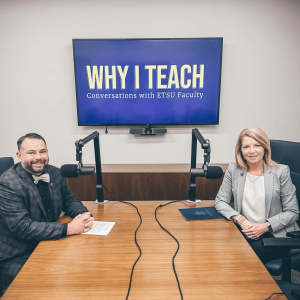
Thursday Sep 14, 2023
Thursday Sep 14, 2023
Dr. Patrick Brown, Associate Professor in the ETSU College of Public Health’s Department of Health Sciences, is a past recipient of ETSU’s Distinguished Faculty Award in Teaching and has received national recognition for his work with the Process Oriented Guided Inquiry Learning (POGIL) method of instruction.
In this episode, he discusses online learning, ETSU's Center for Teaching Excellence, high-impact instructional practices, and more.
Podcast Transcript:
Dr. Patrick Brown:You know, we focus so much, rightly or wrongly, on career preparation -- yeah -- in higher ed. And are we, are we preparing them for their 21st century careers? But, you know, the purpose of higher ed is so much more than that. We're not just training students for a career. We are ideally preparing informed, compassionate citizens.
Dr. Kimberly D. McCorkle:Hi, I'm Kimberly McCorkle, Provost and Senior Vice President for Academic Affairs at East Tennessee State University. From the moment I arrived on this campus, I have been inspired by our faculty: their passion for what they do, their belief in the power of higher education, and the way they are transforming the lives of their students. This podcast is dedicated to them, our incredible faculty at ETSU. Hear their stories as they tell us Why I Teach. In this episode, we will talk with Dr. Patrick Brown, Associate Professor in the ETSU College of Public Health's Department of Health Sciences. Dr. Brown is a past recipient of ETSU's Distinguished Faculty Award in Teaching and has received national recognition for his work with the Process Oriented Guided Inquiry Learning, or POGIL, method of instruction. He earned a Ph.D. in cellular biology from the University of Georgia and a B.S. in biology from the University of Tennessee, Chattanooga. His research includes studies of the application of student-centered, active learning pedagogies in undergraduate science curricula. In 2015, Dr. Brown was ETSU's keynote commencement speaker, and he shared his inspiring insights with graduates. Today, I am pleased to have him here to share his expertise on teaching and preparing our students for graduation and success beyond the classroom. Enjoy the show. Dr. Brown, welcome to the show.
Dr. Patrick Brown:Thank you.
Dr. Kimberly D. McCorkle:I start my podcast with the same question for every guest. Take me back to your first day of teaching at ETSU as a faculty member, and looking back on that day, what is one piece of advice you would have given yourself?
Dr. Patrick Brown:Probably slow down. Yeah, I'd already been teaching for a while.
Dr. Kimberly D. McCorkle:Yes.
Dr. Patrick Brown:I started out at what is now King University up in Bristol, and I was teaching A & P, Anatomy and Physiology I, for the first time. When I was at King, I'd only taught the second half of the course.
Dr. Kimberly McCorkle:Yeah.
Dr. Patrick Brown:And so I was trying to prepare materials. And I don't just stand up and talk. I put my students to work. And so I was putting together materials. I had a toddler at home, and I was just so anxious and wrung out. And I wish I could go back and just say, "Slow down; it'll be okay. You know what you're doing."
Dr. Kimberly D. McCorkle:Right.
Dr. Patrick Brown:You know, looking back 12 years later, yeah, this is my 13th year at ETSU.
Dr. Kimberly D. McCorkle:Yes.
Dr. Patrick Brown:I do know what I'm doing, at least to some degree, but, but just slow down and trust yourself. And trust the students.
Dr. Kimberly D. McCorkle:Yeah.
Dr. Patrick Brown:You know, I've been overwhelmed with how supportive our students are of us as faculty and how forgiving they can be.
Dr. Kimberly D. McCorkle:Yes.
Dr. Patrick Brown:When we're not, when we're not our best from the second we walk into the classroom. So, yeah, I would have just told him, "Slow down; it'll be okay. You're going to get through this just fine. The students are going to learn, and everything is going to be okay. Slow down."
Dr. Kimberly D. McCorkle:Right. So as you said, you've been teaching here at ETSU for more than a decade now. So what's changed the most since you began teaching?
Dr. Patrick Brown:I tell you, I've noticed it a lot more because of the pandemic.
Dr. Kimberly D. McCorkle:Yes.
Dr. Patrick Brown:But it is the students' willingness to approach remote learning.
Dr. Kimberly D. McCorkle:Yes.
Dr. Patrick Brown:And kind of the normalization of online, especially online asynchronous learning. When I'd gotten, you know, when I got here, that was a really rare thing.
Dr. Kimberly D. McCorkle:Yes.
Dr. Patrick Brown:You didn't have a lot of online courses. And then over the course of my time here, you know, MOOCs were a big thing, those massive online -- what did that stand for?Massive open online courses MOOCs.
Dr. Kimberly D. McCorkle:There you go. Yeah.
Dr. Patrick Brown:You know, we were afraid they're going to destroy you know, they're going to destroy higher education. Everybody's afraid AI's going to destroy higher education. It's always something. But I think the, the normalization of learning online, I have learned so much about teaching and learning online. I'm very fortunate to be good friends with two of ETSU's certified Master Online educators.
Dr. Kimberly D. McCorkle:Yeah. That's great.
Dr. Patrick Brown:And so I've been able to lean on them and not just for the courses that I teach that are completely online, but even in my in-person courses. The lessons I have learned over this time about online learning are translating to resources that I can make available through our course management system.
Dr. Kimberly D. McCorkle:Right.
Dr. Patrick Brown:Like D2L, or Desire to Learn, you know that. But the people listening might not. You know, so if you look at the structure of my course web presence, even for my in-person classes, it's very different now than it was 10 years ago. And, you know, the goal there is so that I don't I'm only in their presence for 3 hours, 3 to 5 hours a week.
Dr. Kimberly D. McCorkle:Right.
Dr. Patrick Brown:So I can kind of make myself present outside of the classroom using those digital tools in a way that I wouldn't even have thought of 12 years ago.
Dr. Kimberly D. McCorkle:Oh, it's really good insight. And it provides such resources to students.
Dr. Patrick Brown:It really does.
Dr. Kimberly D. McCorkle:Yes.
Dr. Patrick Brown:And some of the feedback I get, you know, in our end-of-course student assessments of instruction is that you know they appreciate having all of this stuff available for them outside of class. So you know, whatever we do in class, I've captured it digitally somehow.
Dr. Kimberly D. McCorkle:Right.
Dr. Patrick Brown:And that resource is available for them, even though, you know, a lot of what I do requires student interaction, a collaboration for maximum effect. But that doesn't mean there isn't some benefit to completing some of those activities on their own. But it's really just like a, you know, an ability to project what we're doing in the classroom outside of the classroom. So, if a student has to miss because they're ill or they have family emergency or something like that, they can still access the course resources and course materials. The technology has given me flexibility to, you know, to be responsive, to be accommodating.
Dr. Kimberly D. McCorkle:Yes.
Dr. Patrick Brown:So there's, there are things that I can do now that I would have liked to have done when I first started here, but it wasn't possible.
Dr. Kimberly D. McCorkle:So you have been involved with the Center for Teaching Excellence since its inception at ETSU and have served as a Faculty Fellow for a long time. In that work, I know you assist in training your peers in teaching strategies. Tell us about the work that you've done with the CTE.
Dr. Patrick Brown:So this actually goes back to my time when I was in the Faculty Senate. So Virginia Foley was the President of the Faculty Senate, and we had been without any kind of Center for Teaching for a whole lot of years.
Dr. Kimberly D. McCorkle:Yes.
Dr. Patrick Brown:And so she created a committee of Faculty Senators to kind of explore what's out there, what are other universities that kind of have a similar makeup to ours, what are our peers doing? And I chaired that committee. And we put together a report and submitted it to our then Provost, Dr. Bach, and there was some interest, and then the Committee for 125 convened, and they had an education subcommittee, a teaching subcommittee, and they recommended creation of a Center for Teaching Excellence. And so then at that time, Dr. Amy Johnson had been leading our Quality Enhancement Plan in top form, and that was kind of winding down. And so they transitioned her into the first Director of the Center for Teaching Excellence, and I was on the initial advisory board for the CTE when it first started, and then four years ago, so this would have been winter of 2019, Dr. Johnson invited me to her office, and she said, "Hey, you know, we're getting we're getting bigger." I had done some stuff, you know, little things, but mostly I had been serving for those first two years as an advisor.
Dr. Kimberly D. McCorkle:Right.
Dr. Patrick Brown:You know, on the faculty advisory board. And she said, "I want to bring you in as a Fellow; at the time, Dr. Alison Barton was the Faculty Fellow, and she was like, "The Provost is agreed; we're going to have a second Fellow. And, you know, I have some things I want you to do." And so that was all great. And the first thing I was going to do is we were gearing up for this international year. And she was going to send me to Korea. And that was supposed to happen in March of 2020.
Dr. Kimberly D. McCorkle:Uh-oh.
Dr. Patrick Brown:And then the world turned upside down.
Dr. Kimberly D. McCorkle:Yes.
Dr. Patrick Brown:And I was very, I was very fortunate to have just, you know, just started this fellowship when in March of 2020, we got the word, "Oh, by the way, you're not coming back to school after spring break."
Dr. Kimberly D. McCorkle:Right.
Dr. Patrick Brown:And so then it was kind of all hands on deck. So I, you know, Amy had just brought me on board, and so she and Phil Smith, the assistant director of the CTE, and Alison and I were just scrambling to put together programming for our faculty who, some of whom had never even populated their their D2L page, their course website, and were now going to have to be teaching online full time.
Dr. Kimberly D. McCorkle:Fully online. Right.
Dr. Patrick Brown:I had a colleague who's since retired who used to tell his students on the first day of class, "I know there's a D2L site for this class, but if you see anything on there, I didn't put it there." Right. He just was not about it. And he had to go teach fully online.
Dr. Kimberly D. McCorkle:Fully online. Right.
Dr. Patrick Brown:And so for my first, for the first year of my fellowship, really, because I started in January of 2020, so for that first year, it was really transitioning people to online.
Dr. Kimberly D. McCorkle:Right.
Dr. Patrick Brown:And, and helping faculty be as effective as they could be in this new modality and getting them ready for that '21-22 school year where we were going to be, you know, kind of mixed methods.
Dr. Kimberly D. McCorkle:Right, right.
Dr. Patrick Brown:I remember I taught my lectures online, and then I had an optional in-person lab, but with half capacity. I had the students split over two rooms, like it was, it was, it was something else. But I've also been very fortunate to have you know, I've worked for Amy Johnson, and then when she stepped down as Director, Alison Barton came in as the Director. And both of those women are not just gifted educators and gifted programmers of faculty development, they're also my friends. And so they, they have really tried to lean into my strengths, and I guess probably avoid my weaknesses and let me develop programming and the things that I think are really interesting. So of course, I'm doing a workshop this afternoon for the Biology Department in active and collaborative learning, which is my jam. I'm doing another workshop for them tomorrow morning that I developed with Dr. Sarah Melton over at the College of Pharmacy initially, but it's on item writing, writing multiple-choice items, which almost everybody, especially if you teach large classes uses.
Dr. Kimberly D. McCorkle:Right.
Dr. Patrick Brown:But very few of us are trained in how to do it well.
Dr. Kimberly D. McCorkle:That's right.
Dr. Patrick Brown:And there's, there's, there are mistakes you can make that can reduce the validity of your assessment. And so that's something I really enjoy helping people learn about.
Dr. Kimberly D. McCorkle:Yeah.
Dr. Patrick Brown:And then I also am very interested in the ways in which we measure learning not just through multiple-choice items, but in doing instructional design and starting at the end point.
Dr. Kimberly D. McCorkle:Yep.
Dr. Patrick Brown:What Wiggins and McTighe called backwards design.
Dr. Kimberly D. McCorkle:Backwards design. Yeah.
Dr. Patrick Brown:So if you start with where you want them to be and then you figure out how you're going to get him there and how you're going to measure it. So those are the kinds of things that I've worked on.
Dr. Kimberly D. McCorkle:So in your introduction, I mentioned your nationally recognized work with POGIL, the POGIL method of instruction. So with that in mind, what impact has this method had on your teaching? And tell us more about the method itself.
Dr. Patrick Brown:So I don't think anything has transformed what I do in the classroom more than POGIL. POGIL was an NSF grant to Rick Moog and Jim Spencer, who are both chemists, and they had kind of independently come up with this just like super- Constructivist method of teaching. So Constructivism is the idea that learning is, learning occurs when we construct our own understanding of concepts and integrate this new understanding with what we already know.
Dr. Kimberly D. McCorkle:Right.
Dr. Patrick Brown:You know, as pioneered in the early 20th century by French psychologist Jean Piaget. But she she was like, I loved using this in my chemistry class I'm starting to use it in my medicinal chemistry classes in pharmacy. You should check it out. And because they were NSF-funded, their workshops were free. And so they had this three-day workshop at Guilford College in Greensboro. And so I went out there and met some people who are, to this day, dear, dear friends, and who have been wonderful mentors to me, Andy Brissette, Suzanne Ruder, Megan Hoffmann; I can't list them all. We'd be here all day. But I can remember during the, and it was an intense three days, I mean, we worked from first thing in the morning until pretty late in the evening, all three days. And I can remember being in that first day. And one of the great things about the POGIL project, you know, the people who train folks to use POGIL, is that you learn it by doing it. You know, a lot of educators who are listening can, can commiserate with this. You go to this workshop on active learning, and you're going to learn how to do this active-learning thing. And then you get lectured at for three hours.
Dr. Kimberly D. McCorkle:Right.
Dr. Patrick Brown:And that's not how these people roll at all. They, you were doing the whole time. If you go to a POGIL workshop whether it's a three-hour workshop, a one-day workshop, or a threeday workshop, you're working.
Dr. Kimberly D. McCorkle:Yes.
Dr. Patrick Brown:Right. And I remember we were doing this activity called the Nuclear Atom. And we were about halfway through it, and I was like, "Oh my gosh; I just learned what makes an element." And nobody told me; nobody used the word "element." But I just realized that the reason, you know a student doing this for the first time would realize that the reason that hydrogen's hydrogen and helium's helium is because hydrogen has one proton and helium has two. But they you, you, you construct your understanding first.
Dr. Kimberly D. McCorkle:Right.
Dr. Patrick Brown:Then they put the word to it. They're like, "Oh, by the way; that thing with one proton, that's hydrogen. And that thing with two is called helium."
Dr. Kimberly D. McCorkle:Fascinating.
Dr. Patrick Brown:And because and those are different elements.
Dr. Kimberly D. McCorkle:Right.
Dr. Patrick Brown:Right. And so I was floored. I had never realized this. And then, you know, when I try to explain Constructivism to somebody now, I say, "Find me a toddler." And you show that toddler a picture of a Maine Coon and an American, a domestic shorthair, and a tiger, and they'll know that all of those are cats. And you show them a picture of a Rottweiler and of a Chihuahua and of an Australian Shepherd, and they'll know that those are dogs. No one has ever defined cat or dog for that child. But by seeing examples of them and making those comparisons -- oh, kitties have long whiskers, doggies have shorter whiskers, kitties have that cute little lip thing, and doggies don't do that. The child constructs a concept of what is a cat and what is a dog.
Dr. Kimberly D. McCorkle:Right.
Dr. Patrick Brown:And as new information comes in, they adapt that concept. And that's what's going on with Constructivist education.
Dr. Kimberly D. McCorkle:Wow. Yes.
Dr. Patrick Brown:And that's so the thing that makes POGIL really neat, though -- so that's the guided inquiry learning, the GIL part of POGIL so the activities are created very carefully so that the students are guided through questions. Right. We ask them questions. So if I'm wanting them to say, okay, how many protons are in hydrogen, how many protons are in a helium, how many neutrons are in each thing? How many electrons? Okay, which ones? What has a charge? And I do an activity very similar to this on the third day of my Anatomy and Physiology course, because we need to know about some different elements and stuff. And so you guide them through inquiry to learning.
Dr. Kimberly D. McCorkle:Right.
Dr. Patrick Brown:But the thing that makes POGIL really unique is the PO, the process-oriented bit. When you survey educators -- employers, sorry, not educators -- when you survey employers, and you ask them what do you want people coming out of university to know, what do you want them to be able to do?
Dr. Kimberly D. McCorkle:Yes.
Dr. Patrick Brown:Content knowledge is always near the bottom of the list.
Dr. Kimberly D. McCorkle:That's right.
Dr. Patrick Brown:The thing that people want college graduates to be able to do is to communicate.
Dr. Kimberly D. McCorkle:Right.
Dr. Patrick Brown:To manage, to manage themselves, to manage others, to process information, to think critically.
Dr. Kimberly D. McCorkle:Right.
Dr. Patrick Brown:And very often, although well-meaning, few of us intentionally, so to say, bake that into our instruction. And the thing that makes POGIL really unique is that those are called process skills, right? Information processing, critical thinking, management, those are process skills, and POGIL activities are constructed so that we target one or two of those process skills in every single activity.
Dr. Kimberly D. McCorkle:Yes.
Dr. Patrick Brown:So when I write a POGIL activity, I'm thinking, okay, in this one we're going to focus on information processing. Can the students find what's relevant, what's not relevant? Use the relevant information to collaboratively reach a conclusion?
Dr. Kimberly D. McCorkle:Right.
Dr. Patrick Brown:Where in this one we're going to work on teamwork. Teamwork is an important process skill. So on this one, we're going to have the students acting in different roles as part of this team,and through fulfillment of their role, they're going to learn some lessons about teamwork, but it's cooked right in.
Dr. Kimberly D. McCorkle:When you use these methods, do you tell them, we're working on teamwork today? We're working on...
Dr. Patrick Brown:Sometimes -- yeah -- sometimes I do. But when, so when I published my activity collection as a textbook, the instructor's guide, or the facilitator's guide, tells the facilitator, all right, here's the targeted process skill. Here's what we're working on. And I give them tips for facilitation. So as you're facilitating, make sure that you're enforcing the roles so that the student who's acting as the team manager is managing, and the student who's acting as a spokesperson is the only one who's allowed to speak for the group. And so it's in the instructional materials. Sometimes I'll tell the students flat out, but my favorite thing to do with them is to point out when they've done it, you know?
Dr. Kimberly D. McCorkle:Yes.
Dr. Patrick Brown:It's almost like I'm tricking them into learning.
Dr. Kimberly D. McCorkle:I like that.
Dr. Patrick Brown:This happens every semester because a student will say, "Is this right?" I'll be like, "You tell me." I never answer that question, "Is this right?" Most of the students I'm training are going in health care.
Dr. Kimberly D. McCorkle:Yeah.
Dr. Patrick Brown:And I tell them, "You're going to have to come to a time where you can't seek validation from an expert, a supervisor, whomever."
Dr. Kimberly D. McCorkle:Yeah.
Dr. Patrick Brown:"Because you're going to, you're going to be making decisions where minutes count."
Dr. Kimberly D. McCorkle:Right.
Dr. Patrick Brown:"And seconds matter. And so you need to get to a point where you can gather information, make a decision based on that information and defend your decision using that, using that information."
Dr. Kimberly D. McCorkle:Yes.
Dr. Patrick Brown:That's critical thinking. And so sometimes they'll be working, and they'll say, "Hey, Brown; is this right?" I'm like, "You tell me." Like, "What?" "Well, why did you say A and B are similar?" Like, "Well, if you look up here, you know, in the model you gave us, we see A and we see B, and I see the similarities here, but D and E, you know, they don't look quite the same. And C is, you know, similar but not quite the same. So we said A and B go together."
Dr. Kimberly D. McCorkle:Yeah.
Dr. Patrick Brown:And I'll be like, "What did you just do right there?" Like, "I don't know." It's like, "That's critical thinking."
Dr. Kimberly D. McCorkle:Mm-hmm. Yes.
Dr. Patrick Brown:"You just used"-- right -- "data to reach a conclusion, and you backed up your conclusion using those data. That's critical thinking. You just did that." And I'll ask them, "How many times has somebody told you that critical thinking is a really important skill to have?"
Dr. Kimberly D. McCorkle:Right.
Dr. Patrick Brown:And they'll all -- how many of you have been told this? -- the whole class will raise their hands. I'll say, "All right. How many of you have ever been told what that actually means?"
Dr. Kimberly D. McCorkle:Right.
Dr. Patrick Brown:Two, three hands out of 110 will go up.
Dr. Kimberly D. McCorkle:Right.
Dr. Patrick Brown:And so I love it. It's not really a gotcha moment, but it kind of is for me as an educator, because I'll be like, "Ha ha; you learned something."
Dr. Kimberly D. McCorkle:Right. And you point it out; that's so affirming.
Dr. Patrick Brown:Yes. And it's really, if I wasn't teaching the way I teach with POGIL I wouldn't have those opportunities. So that's one of the real, real gifts of this teaching method is that I get to see the learning happening in real time.
Dr. Kimberly D. McCorkle:Right. Patrick, you are known for your engaging teaching style. Can you share a particularly rewarding or memorable experience that you've enjoyed as an educator?
Dr. Patrick Brown:The vast majority of my student population are first-semester college students. So here in three weeks, I'm going to welcome 216 first-year students.
Dr. Kimberly D. McCorkle:Yes.
Dr. Patrick Brown:And while a lot of them are not first-generation, quite a few of them are, but very few of them had to work as hard in high school as I'm going to make them work. And so I love telling them I don't just teach you anatomy, I get to teach you how to college. And that's really fun.
Dr. Kimberly D. McCorkle:Right. That's great.
Dr. Patrick Brown:I have a late colleague, Chris Dula.
Dr. Kimberly D. McCorkle:Yeah.
Dr. Patrick Brown:Unfortunately passed away several years ago, but Chris really did this, you know, he really took that to heart as well -- because he taught in the first-year curriculum, he taught Intro Psych.
Dr. Kimberly D. McCorkle:Yeah.
Dr. Patrick Brown:And those of us who teach in that first year, you know, we're really privileged in that we're not just helping our students learn whatever our subject is, we're also helping them learn how to study, how to manage their time.
Dr. Kimberly D. McCorkle:Yes.
Dr. Patrick Brown:You know, I remember when I was a college freshman, I was very much intoxicated with the freedom. And so helping them learn how to manage that and self-regulate, it's just a really special part of my job.
Dr. Kimberly D. McCorkle:That's great. That's a great story. So let's talk about Lamb Hall. I know that our faculty and students are so excited about a major change that's happened to Lamb Hall over the last several years, and the building has been renovated and will finally reopen this fall with new labs, classrooms, and common spaces. Can you tell us how you think this renovation will impact the student experience, especially in the programs that you teach in?
Dr. Patrick Brown:Yeah, I think one of the biggest things is we're all going to be in one spot now.
Dr. Kimberly D. McCorkle:Yes.
Dr. Patrick Brown:One of the, I wouldn't say frustrating, but, you know, one of the minor irritations prior to this was there were no classrooms that could accommodate my class.
Dr. Kimberly D. McCorkle:Right.
Dr. Patrick Brown:I generally have between 100 and 110 students per section, and the only classrooms that could accommodate them were not in Lamb Hall.
Dr. Kimberly D. McCorkle:Yes.
Dr. Patrick Brown:So the students would, the first week of class, they would show up to Brown Hall looking for their lab, but their lab wasn't in Brown Hall, their lab was in Lamb Hall. Their lecture was in Brown Hall. So one, having everything in one spot, which is also the building where my office is, now the students know if it has to do with anatomy and physiology, or if it has to do with microbiology, you're going to come to Lamb Hall. Everything's going to be there.
Dr. Kimberly D. McCorkle:Right.
Dr. Patrick Brown:Another thing that I'm excited about, you know, I lobbied hard for a particular kind of classroom for our new, we have a new large, I think it seats over 150 students, classroom. It's lovely. And I advocated for a thing called a scale-up classroom, which is it's designed from the ground up to be for small-group active learning. But it's very expensive, and you can't fit as many people in the room. So the people who were in charge of the renovation were like, "Yeah, that'd be nice, but we've only got the one room." But what they did was they still managed to design a learning space that is going to accommodate active learning better than any classroom I've been in since I've been here.
Dr. Kimberly D. McCorkle:Oh great.
Dr. Patrick Brown:Because there's tables with movable chairs.
Dr. Kimberly D. McCorkle:Yes.
Dr. Patrick Brown:Although the tables are fixed, the fact that the chairs move means that I can be very flexible. So the students, for the past two years I've been teaching in a theater.
Dr. Kimberly D. McCorkle:Right.
Dr. Patrick Brown:I've been with thick seats, with thick seats, you know, those horrible little, tiny desk things that fold out, and it's very hard to facilitate collaboration when the person with whom you're supposed to be collaborating is behind you and above.
Dr. Kimberly D. McCorkle:Right. You can't move closer.
Dr. Patrick Brown:Right.
Dr. Kimberly D. McCorkle: Yes.
Dr. Patrick Brown:And so now, that's one of my tasks for this week is to figure out how I'm going to seat the students in their groups so that, you know, they're going to be able to collaborate a lot more efficiently. And when I say, "Okay, now I need everybody to go," because one of the things I like to do is have them go to another group and compare answers and see, okay, did they reach the same conclusions we did? And if not, you know, we discuss it and hash it out. But because of the the open design of that space, there's so much more room for them to move around. I think it's going to be a lot of fun to teach in that classroom.
Dr. Kimberly D. McCorkle: Yes. The science labs are also just impressive, and the collaboration spaces that didn't exist before for students and faculty.
Dr. Patrick Brown:And I've even noticed, I moved back into Lamb Hall back in the spring, but I've noticed the collaboration space that's on the third floor has been steadily populated by Audiology students all summer long.
Dr. Kimberly D. McCorkle: That's great.
Dr. Patrick Brown:So it's fun. I would go up to the third floor to kind of unpack some of our laboratory stuff, and I'd see, there's movable whiteboards in that collaboration space, and you would see very cramped, multicolored writing and little, little diagrams of action potentials in the hair cells in the ears. You know, they're diagramming this stuff out. So it's all over. I'm already seeing that. So I'm really excited to see, you know, what those collaboration spaces look like when, you know, when my students are there.
Dr. Kimberly D. McCorkle: Yes.
Dr. Patrick Brown:And because in the past they've always had to go to the library.
Dr. Kimberly D. McCorkle: Right.
Dr. Patrick Brown:That was the only place that they could study together. So now that there's going to be some spaces that are just, you know, one floor up from me so that now, one of the nice things of during the Lamb Hall diaspora of the last two years was that my temporary office space was in the library. So a lot of times if the students were studying, they could come up and bang on my door, and be like, "Hey, Brown, can you come help us?" And I could pop right downstairs and help them.
Dr. Kimberly D. McCorkle: Yes.
Dr. Patrick Brown:So the fact that I'll be able to continue doing that because they'll be probably be studying in the same building that I'm my office is in will be very nice.
Dr. Kimberly D. McCorkle: Yes. Finally, Patrick, what impact do you hope that you've made on your students?
Dr. Patrick Brown:You know, we focus so much, rightly or wrongly, on career preparation in higher ed. And are we, are we preparing them for their 21st century careers? But, you know, the purpose of higher ed is so much more than that. We're not just training students for a career. We are ideally preparing informed, compassionate citizens.
Dr. Kimberly D. McCorkle: Yes.
Dr. Patrick Brown:And, you know, I hope more than anything else that my students leave my classroom not just learning stuff. I tell them on the first day of class, say, "Thank you, Dr. Brown," and they'll be like,"Thank you, Dr. Brown. Why? Why are we saying thank you?" Because there's 206 bones in the adult human body, and I only make them learn 205 of them. So I'm a sweet man, but the point is, I want them to have learned more than just the names of those bones. I want them to learn how to engage with one another, how to be respectful and kind, even when you have a difference of opinion with someone. And if I do just even a fraction of that work, if I have just a tiny little impact on creating someone who is a better teammate, a better colleague, a more compassionate citizen, then I'm a very happy guy.
Dr. Kimberly D. McCorkle: Yes. Thank you, Patrick.
Dr. Patrick Brown:Oh, thank you. It's been a pleasure to be here.
Dr. Kimberly D. McCorkle: I really enjoyed our conversation and learning your insights. I also appreciate your deep commitment to teaching excellence and to cultivating active-learning experiences for our students. I hope you have a wonderful and rewarding fall semester.
Dr. Patrick Brown:Thank you.
Dr. Kimberly D. McCorkle: Thanks for listening to "Why I Teach." For more information about Dr. Brown, the ETSU College of Public Health, or this podcast series, visit the ETSU Provost website at ETSU dot edu slash Provost. You can follow me on social media at ETSU Provost, and if you enjoyed this episode, please take a moment to like and subscribe to "Why I Teach" wherever you listen to podcasts.