Why I Teach: Conversations with ETSU Faculty
This podcast celebrates the faculty of East Tennessee State University by amplifying their stories. Faculty guests discuss why they are passionate about teaching and share what impact they hope their students will make on the world. The podcast is hosted by Dr. Kimberly D. McCorkle, ETSU Provost and Senior Vice President for Academic Affairs. Music for this podcast was composed by ETSU Professor Martin Walters.
Listen on:



Episodes
Thursday Aug 03, 2023
Thursday Aug 03, 2023
Not only has Dr. Jessica Burchette taught at Bill Gatton College of Pharmacy since 2012, she also has the distinction of being a proud member of the college’s inaugural graduating class in 2010. In this episode of “Why I Teach,” she shares how community-engaged learning and interprofessional education are preparing ETSU’s student pharmacists to address the needs of their future patients.
Podcast Transcript:
Dr. Jessica Burchette:
Medicine and health care turn over so quickly. And so the information that we teach in the classroom could be outdated before they even graduate. So we really want to, you know, to use the old adage, we want to teach them to fish. They have to know how to go out and teach themselves and keep up with the information and digest that information for their own lifelong learning and also for the benefit of their patients.
Dr. Kimberly McCorkle:
Hi, I'm Kimberly McCorkle, Provost and Senior Vice President for Academic Affairs at East Tennessee State University. From the moment I arrived on this campus, I have been inspired by our faculty. Their passion for what they do. Their belief in the power of higher education. And the way they are transforming the lives of their students. This podcast is dedicated to them, our incredible faculty at ETSU. Hear their stories as they tell us Why I Teach. In this episode, we will talk with Dr. Jessica Burchette, Associate Professor of Pharmacy Practice at ETSU Bill Gatton College of Pharmacy. Not only has Dr. Burchette taught at Gatton College of Pharmacy since 2012, she has also had the distinction of being a proud member of the college's inaugural graduating class from 2010. Upon her graduation from Gatton, she obtained further postgraduate training with a pharmacy practice residency at the University of Tennessee Medical Center, followed by an internal medicine residency with a secondary focus in academia at Gatton College of Pharmacy. She maintains a practice site at Holston Valley Medical Center, working with interdisciplinary inpatient family medicine teams. In addition to her practice, Dr. Burchette enjoys teaching students about pulmonary disorders and basic critical-care concepts in the classroom. Enjoy the show. Dr. Burchette, welcome to the show.
Dr. Jessica Burchette:
Thank you so much for having me, Dr. McCorkle.
Dr. Kimberly McCorkle:
I start my podcast with the same question for every guest. Take me back to your first day of teaching at ETSU as a faculty member, and looking back on that day,
what is one piece of advice that you would have given yourself?
Dr. Jessica Burchette:
You know, that is such a great question and something that I think about as I grow further in my career and the things that I've learned over the years. And I think I would probably tell myself on that first day to be okay in the chaos. Learning to balance all the roles of being a faculty member with a clinical practice and realizing that just because a task isn't completed, it doesn't mean you're not making progress. And so those incremental steps forward, it doesn't always feel like a big win, but that can become overwhelming if you don't look at the steps. And so that's one thing I had to teach myself as I got into my first few years as a faculty member. And I feel like I've gotten better at that, but always a work in progress.
Dr. Kimberly McCorkle:
Such important advice. So as a practicing pharmacist, much of your work takes place outside the walls of the traditional classroom setting. How does your continued work with patients shape the way that you teach your students?
Dr. Jessica Burchette:
There are so many ways that my patients help me teach and shape my students. Starting in the classroom actually is where I'm able to use my patients to give the students some context and relevance. Many of our students have never practiced or been in a hospital pharmacy setting, and they may have not worked with patients at all prior to starting our program. So as we're talking about diseases and disorders and different medications to treat those, they often don't have the context to know why that matters. And so using those patients' stories and those patient experiences to give them a little anchor to hold on to with that information really helps with their retention. When I'm in my practice site at Holston Valley with the students that, students on their fourth-year rotation, I'm able to then reinforce what they know and show them how all the knowledge they've gained over those three years in the classroom are coming to fruition and they're able to use that with their patients, and they can really see what their role is and how they can make a difference for patients' lives. I think ultimately one thing that my patients are able to really help me with is teaching my students that you can't know everything. So it's really important to me to be honest with my students that I don't know all the answers, but we can find them together. I think that gives, you know, as a faculty member, oftentimes they feel like you're invincible and you must know it all because you're a faculty member. And that's far from the truth. So giving that little bit of humanization to where they feel more comfortable with you and asking you questions, my patients are able to do that a lot because we encounter different situations that we need to look things up and figure out the best plan and approach.
Dr. Kimberly McCorkle:
What a valuable lesson for your students.
Dr. Jessica Burchette:
It really is.
Dr. Kimberly McCorkle:
So you get to work with them in the patient setting early in their programs and then later in their programs as well?
Dr. Jessica Burchette:
I do. I'm very fortunate. I have the chance to work with what we call our IPPE students, that's introductory pharmacy practice experiences. So after the second year, the students do a two-week clinical rotation where they really get to put their toes in the water and see how some things are coming together. And I really enjoy that because they're so eager, and they're so excited. Sometimes they're nervous. But I think just seeing how it works really helps them hold on to the information and also feel like they can see their purpose as they move forward. And then in that last year, as fourth-year students, honestly, one of my favorite things about my job is watching the lights come on for those fourth-year students, when they realize, oh, this is how this works, and this is how I can impact patients, and getting to know them as people, you know, on those fourth-year rotations because in the classroom, oftentimes it's hard to get to know them one on one.
Dr. Kimberly McCorkle:
Right.
Dr. Jessica Burchette:
Unless they decide to come up to your office or they reach out. So the chance to spend one-on-one time with small groups on rotation is really special to me. And I take a lot of memories, and I've made a lot of connections and actually lifelong friendships with some of my students based on that experience.
Dr. Kimberly McCorkle:
So I understand that you've been working to streamline the curriculum in Gatton to prepare student pharmacists for the evolving health care environment. What is that new curriculum going to look like for our students, and how will it prepare them better to sort of understand the needs of patients as you've just talked about?
Dr. Jessica Burchette:
That's a great question, and we have been feverishly working at Gatton over the last 18 months to really look at how can we best prepare our students to be graduate-level pharmacists and to go out and impact the community from day one.
Dr. Kimberly McCorkle:
Yeah.
Dr. Jessica Burchette:
So one thing we looked at was the number of credit hours in our didactic curriculum, and in an honest assessment, we, we felt like it was probably too much. We were packing too much into the day, and we weren't giving students time to digest and really build the material, scaffold the material over time so that they were able to put the pieces together.
Dr. Kimberly McCorkle:
Yeah.
Dr. Jessica Burchette:
The first tenet or principle that we looked at with our curricular philosophy for revision was essentialism and efficiency. Being efficient with a student's time, making sure that the essential concepts they need to carry forward for patient care are at top priority.
Dr. Kimberly McCorkle:
Right.
Dr. Jessica Burchette:
The other benefit of cutting those didactic hours is we have freed up time for students to have more hands-on experience.
Dr. Kimberly McCorkle:
Right.
Dr. Jessica Burchette:
Which is so important. That's really where the majority of their learning is going to come from and the retention of that knowledge and information. So we've been able to add more IPPE experiences where students are going to have the chance to really solidify some basic concepts prior to going into their fourth year, and then really excited about the fact that we're adding a fourth excuse me, a fourth-year additional rotation. So currently our students do nine four-week rotations, so they get 36 weeks of hands-on experience. And with this, they're going to have the opportunity to add four more weeks to their experience in a direct patient-care environment.
Dr. Kimberly McCorkle:
Yeah.
Dr. Jessica Burchette:
So they'll be working directly with patients and really impacting them one on one, working with other providers. So those benefits of realigning our didactic curriculum have been beneficial. The last thing I'll say about that is medicine and health care turn over so quickly. And so the information that we teach in the classroom could be outdated before they even graduate. So we really want to, you know, to use the old adage, we want to teach them to fish. They have to know how to go out and teach themselves and keep up with the information and digest that information for their own lifelong learning and also for the benefit of their patients. So that's also the accountability piece of our curricular philosophy, is allowing us to hold the students accountable for some of their own learning and really teaching them how to do that efficiently.
Dr. Kimberly McCorkle:
That's really interesting that you were able to do that with the curriculum realignment, and I'm certain that that additional hands-on learning will help build their confidence and their skills before they go out to practice.
Dr. Jessica Burchette:
Yeah, we really think so. And we're seeing some of the fruits of that already. So the IPPE curriculum, we were able to revise that curriculum starting in the fall of 2022. So we have, we're one year into that revision, and we've had really great feedback from both the preceptors and the students on what they see as ways that we can better impact their education and their learning. And luckily, those, the things that we heard from the students were the things that we were thinking as faculty. So having that reinforcement that we were on the right track from a student perspective was really important.
Dr. Kimberly McCorkle:
At ETSU, as you well know, we prioritize the importance of community-engaged learning, and you've just described some of the work that you've done in that space as a faculty member. So tell us more about some of the hands-on community-engaged-learning experiences that our student pharmacists participate in during their time at Gatton.
Dr. Jessica Burchette:
One of the things we really pride ourselves on is the chance for students to impact the community from day one; from the very beginning, they receive their training to administer immunizations. So from day one, they're able to go out and actually give patient care to patients through flu-vaccine clinics.
Dr. Kimberly McCorkle:
Yeah.
Dr. Jessica Burchette:
COVID vaccine clinics have been a large staple of our community engagement over the last few years. But there's so many other ways that they engage. We participate with RAM, Rural Area Medical. Yeah. And the students help out with that. We have several underserved clinics that we volunteer with, such as Appalachian Miles for Smiles and the Health Wagon. Yeah. We also participate in drug-take-back events. One thing that we feel like plagues our area and is a concern is unused and expired medications that are in people's homes, and they oftentimes don't know how to safely dispose of those.
Dr. Kimberly McCorkle:
Right.
Dr. Jessica Burchette:
So we have partnered with the Johnson City Police Department and the Fire Department, and we actually set up at various times throughout the year, and the students go out and help take those medications back for safe disposal. It's also a chance to actually educate the students in that and the patients on proper and safe use of medications. The best part about going back to the curricular piece that we just talked about is that because of that streamlining of the didactic curriculum, we're opening up so much more time for students to be engaged with the community.
Dr. Kimberly McCorkle:
Right.
Dr. Jessica Burchette:
So we're starting a new core series that I'm so eager to see. It's called Personal Development and Community Engagement.
Dr. Kimberly McCorkle:
Okay.
Dr. Jessica Burchette:
And that will run across all three of the first didactic years. And students are going to have a menu approach. So we're going to have a menu of opportunities and activities that we think students could benefit from. And then our goal is to encourage them to pick the things they feel passionate about and get involved with the community in that way and really see how they can fit in, even if it's not pharmacy related. We do a lot of philanthropy with area elementary schools, doing Christmas gifts and food baskets and other type of activities like that. So just empowering them from day one to realize that you can make a difference in your community is really important. And we're really excited about the direction that we're able to move with that.
Dr. Kimberly McCorkle:
That is so exciting to hear about the expanded opportunities, I think to continue the work that Gatton has done from the beginning. And I know that the students and faculty have been recognized at a national level for some of this work, right?
Dr. Jessica Burchette:
Absolutely. We've won several national awards. Dr. Sarah Melton Thomason has been instrumental with some of our national awards with Generation Rx, and that really focuses around educating the community on opioid use disorder and how to reverse opioid overdose.
Dr. Kimberly McCorkle:
Yeah.
Dr. Jessica Burchette:
So, we do naloxone training and administer free naloxone to the community and to health care providers to have available in case they run into a situation and they find that they're within a medical emergency. We've had other awards through our student organizations that have been recognized at the national level for their work and for giving back to their communities.
Dr. Kimberly McCorkle:
Yeah.
Dr. Jessica Burchette:
We recently were awarded the Lawrence Weaver Award, which is a recognition of how we as a college have impacted our community at large, and we were selected nationally for that recognition.
Dr. Kimberly McCorkle:
That's outstanding. The work that you've described in expanding the number of community-engaged-learning opportunities for students certainly requires a considerable time commitment by faculty. Can you talk a little bit more about that?
Dr. Jessica Burchette:
Absolutely. One thing I will say about Gatton, and I really feel like ETSU as a whole, is we are a family, and we treat each other in the faculty and the staff as family. And we also see our students as an extension of that family. And when they're with us for four years, they're our family, and they're always our family, even upon graduation. But the chance to really watch them grow and see the opportunities and the ways that they can get engaged, it does take work on the part of the faculty.
Dr. Kimberly McCorkle:
Yeah.
Dr. Jessica Burchette:
Our faculty are passionate about engaging the students and also engaging in the community. And so while it is a workload, it's also a labor of love because it really is something that we feel passionate about and we want to do for our community as well.
Dr. Kimberly McCorkle:
Yeah, and as teachers.
Dr. Jessica Burchette:
As teachers, exactly. You know, teaching people to just be good humans and be good stewards of your time and of your wisdom and the things that you can provide to other people.
Dr. Kimberly McCorkle:
As you know, ETSU has a robust offering of programs across the health care disciplines, including pharmacy, medicine, nursing, clinical and rehabilitative health sciences, and public health. In what ways do you see your students benefiting from these programs and the opportunities for interprofessional collaboration?
Dr. Jessica Burchette:
That is such a great benefit to our students, and I feel like we could do an entire hour series talking about all the benefits of the interprofessional collaboration, and lucky for our students, it starts from day one. They have an interprofessional communications course that they start out with learning how to talk to patients with the other disciplines, so the medicine, the nursing, the psychology students are there. They also work with the interprofessional program that's located in Bishop Hall, and they have several different activities that they perform; they are learning how to work in teams, learning how to manage conflict, and learning how to also look at patients and social determinants of health to figure out how can you best impact them. I think what I see for my students most often is they don't always know their value and how they can be valuable to patients. And so sometimes working with the medical students, especially on those clinical rotations, they're a little intimidated at first because they're like, "Oh my, oh my goodness, this person's going to be a physician, and how on Earth could I help them in any way?" And so watching them work together and fill in those knowledge gaps for each other, watching the medical students and the nursing students teach my pharmacy students about the diagnostics and understanding what's going on with the patient, knowing how to read a chest X-ray, or looking at interesting findings on labs, and then my students to be able to say, "Oh, I know how I can fix that. I know how I can help you fix that for this patient with these medications" and educating them on how medications work and the side effects, educating the patients. So, it really gives our students a chance and I think students across all the disciplines to know their role and their value and how it really takes a village to take care of patients.
Dr. Kimberly McCorkle:
Yeah. We know that the best teachers are those who continue to learn. What are some of the most important lessons that you have learned from your students or your colleagues, and how do you continue to learn as a teacher?
Dr. Jessica Burchette:
That's, that's a great question. I think I'll start with my students because I think as a young faculty member, I underestimated how much I would learn from them over the years and how much I continue to learn. One thing I feel like it's very easy to fall into as a faculty is to take credit for high-performing students, but then be like, oh, well, this student didn't do so well, but that can't be my fault, right? That must be the student's fault. Right. And so really looking across the continuum of your learners and saying you can't pick and choose which of those learners you impact. So meeting the student where they are and helping them grow in whatever area they need to grow in to get to the next step, that's so important, and my students teach me that all the time. I may be standing in the classroom, and I think, "Wow; I really knocked that out of the park. They all know it so well. There's no way they'll get this wrong. And then we talk about it later, and I realize I missed the mark. We need to review that, and I need to review the way that I've covered that for you. So my students teach me that I always have to be on my toes, and I'm so thankful for them. They also give me such encouragement.
Dr. Kimberly McCorkle:
Yes.
Dr. Jessica Burchette:
You know, there are days where you think, "Hmm, what am I doing here?"
Dr. Kimberly McCorkle:
Right.
Dr. Jessica Burchette:
Should I, should I do something else? And then you have that moment with a student or with a group of students, and you realize this is exactly where I want to be. And these are, these are the people, these are the reasons why I want to do this.
Dr. Kimberly McCorkle:
It's the best, right?
Dr. Jessica Burchette:
It is the best. It is. It is really the, you know, it's that soul fuel that you need to really continue on with your journey.
Dr. Kimberly McCorkle:
Yeah.
Dr. Jessica Burchette:
My colleagues have been so generous with their knowledge and with their encouragement as well. We have a joke at the College of Pharmacy; there are four faculty, including myself, who all started at the same time. And so we were all what we call junior faculty.
Dr. Kimberly McCorkle:
Yeah.
Dr. Jessica Burchette:
So we call ourselves the junior faculty for life because we really, you know, we work as a team, and we encourage each other, and we're there to help each other. But it expands beyond that group. You know, all the faculty have been so generous. I think one thing that the late Brian Odle, he passed away a couple of years ago, and he was so impactful for me. He was also my clinical partner.
Dr. Kimberly McCorkle:
Yeah.
Dr. Jessica Burchette:
So I got a lot of time to work with Brian one on one, and he taught me to be yourself. You know, you really have to be comfortable in who you are -- right -- and how you can move forward in that and not try to be anybody else. That was really important. And I would also say that Dr. David Stewart specifically has been a huge mentor for me. He was my residency program director. He's mentored me through faculty. And now we work very closely together with the curriculum.
Dr. Kimberly McCorkle:
Yeah.
Dr. Jessica Burchette:
And he's really taught me a lot about contentment and knowing that there's always going to be an opportunity. So you're, you may in the moment, you may feel overwhelmed, you may not be able to see the vision of where you're going, but you just keep marching forward with that, and that door will open up, and it will be there, and it will all fall into the places that you hope to see it fall into. So he's really taught me about being content in the place I'm at, but also striving for more. And I think that's a really important balance as especially a mid-level faculty.
Dr. Kimberly McCorkle:
Yeah.
Dr. Jessica Burchette:
You know, so.
Dr. Kimberly McCorkle:
What a valuable lesson from a colleague.
Dr. Jessica Burchette:
So valuable.
Dr. Kimberly McCorkle:
That's lovely.
Dr. Jessica Burchette:
I'm very fortunate to the group I work with. I'm extremely fortunate.
Dr. Kimberly McCorkle:
So the Gatton College of Pharmacy has a wonderful tradition called Prescription for Success, where the graduates choose faculty members to share their wisdom with the class. And this year, the class of 2023 chose you for this honor, and I had the honor of being able to attend that event. I think it was one of my favorite events throughout the entire academic year that I got to attend. Can you talk about what that event meant to you and the connections that you've made over the years with your students?
Dr. Jessica Burchette:
Absolutely. I agree. That is my favorite day of the entire year.
Dr. Kimberly McCorkle:
Yeah.
Dr. Jessica Burchette:
It's our last chance to really be just as a as a college with the graduating students. The next day they graduate, and that's really about their families and them celebrating with their families and their friends. And we don't always get the chance to give them those hugs on graduation day because it's very busy.
Dr. Kimberly McCorkle:
Yeah.
Dr. Jessica Burchette:
But that Prescriptions for Success day is really our chance to see their final product and to tell them how proud we are of them and to hear what their plans are for moving forward. So it is a very special day, and being asked to speak is one of the most thoughtful things that happens as a faculty member. It's one of our highest honors at the college because you get a few minutes just to say a last bit of advice to that graduating class and to look out on their faces and remember all the journey that have gotten you there. So it is by far my favorite event. And it's also the thing that I get most nervous about every year.
Dr. Kimberly McCorkle:
Yes.
Dr. Jessica Burchette:
Because it, you feel like I've got three minutes.
Dr. Kimberly McCorkle:
Right.
Dr. Jessica Burchette:
I really need in this three minutes to give them some good advice. And I usually spend several weeks thinking about it, and may have an epiphany, and it you know, it just kind of just comes up.
Dr. Kimberly McCorkle:
Yeah.
Dr. Jessica Burchette:
But other times, it's, it's a big, it's a big responsibility. So.
Dr. Kimberly McCorkle:
Every one of the presentations was outstanding, including yours. It was amazing.
Dr. Jessica Burchette:
Thank you so much. Everyone always does such a wonderful job, and I leave inspired.
Dr. Kimberly McCorkle:
Every example was different. Every story was different that faculty shared.
Dr. Jessica Burchette:
Yeah, it's great.
Dr. Kimberly McCorkle:
Yeah. So my last question is what impact do you hope that you've made on your students?
Dr. Jessica Burchette:
Oh, goodness. That's, that's a big one.
Dr. Kimberly McCorkle:
Yeah.
Dr. Jessica Burchette:
I think if I look back on my life and if my students were at my funeral, I would hope the last thing they say about me is that she was a good pharmacist.
Dr. Kimberly McCorkle:
Hmm.
Dr. Jessica Burchette:
I would hope that they would say that she cared about me, that she wanted me to succeed, that she encouraged me, that she was a good friend. You know, those are the things, those human qualities that you really hope people carry forward. I hope that they would say, she always treated me with respect.
Dr. Kimberly McCorkle:
Mm-hmm.
Dr. Jessica Burchette:
So the pharmacy degree is just the avenue that I have to interact with the students.
Dr. Kimberly McCorkle:
Mm-hmm.
Dr. Jessica Burchette:
But really teaching them and learning about them as people is what's the important part. And I hope that they remember that about me as they graduate and move on into the world and that they're able to pay that forward to future pharmacy students and future patients and colleagues that they're going to interact with.
Dr. Kimberly McCorkle:
Yeah. Thank you, Jessica. I appreciate your commitment to our students and your work in the classroom, in the clinical setting, on the curriculum committee, and throughout your college. It's wonderful to see a member of Gatton's inaugural class come full circle to prepare the next generation of pharmacists. Thanks for listening to "Why I Teach." For more information about Dr. Burchette, the Gatton College of Pharmacy, or this podcast series, visit the ETSU Provost website at ETSU dot edu slash Provost. You can follow me on social media at ETSU Provost, and if you like this episode, please take a moment to like and subscribe to "Why I Teach" wherever you listen to podcasts.
Friday Jul 14, 2023
Friday Jul 14, 2023
Karen Brewster, professor and Chair of the Department of Theatre and Dance, has shared her love of theater with ETSU students for almost 25 years.
Podcast Transcript:
Professor Karen Brewster:
It is a magnificent space. It is a state-of-the-art space. The tools that the students need to learn to use. We now have the appropriate tools for them to learn.
Dr. Kimberly D. McCorkle:
Hi, I'm Kimberly McCorkle, Provost and Senior Vice President for Academic Affairs at East Tennessee State University. From the moment I arrived on this campus, I have been inspired by our faculty, their passion for what they do, their belief in the power of higher education, and the way they are transforming the lives of their students. This podcast is dedicated to them, our incredible faculty at ETSU. Hear their stories as they tell us Why I Teach. In this episode, we will talk with Professor Karen Brewster, chair of the ETSU Department of Theatre and Dance. An ETSU alumna, Professor Brewster studied under the esteemed Daryl and "Bud" Frank while earning her undergraduate degree. She then earned an MFA in costume design from Michigan State University, followed by years of working in professional theater companies.
After honing her talents as a professional artist, she joined the faculty at ETSU in 2000, where she now inspires students in her Theatre History and Theatrical Design courses. In 2017, Professor Brewster was named one of ETSU's Notable Women for her leadership, creativity, and commitment in the classroom and the community.
Enjoy the show. Professor Brewster, welcome to the show.
Professor Karen Brewster:
Thank you.
Dr. Kimberly D. McCorkle:
I start my podcast with the same question for every guest. Take me back to your first day of teaching at ETSU as a faculty member. Looking back on that day, what is one piece of advice you would have given yourself?
Professor Karen Brewster:
That's a great question and thank you Provost McCorkle for inviting me today. And yeah, it's to think back, it was August from 2000. So that's been a while ago. But yeah, I think the advice I would give myself is maybe trust yourself. If I'm talking to myself, "Trust yourself. You'll be fine. And also trust the students." I have learned that trusting the students is really an important aspect to remember.
Dr. Kimberly D. McCorkle:
That's wonderful. So, at ETSU, as you know, we place a premium on getting hands-on experiences for students. You, like so many others in your department, bring real-world experiences to the classroom. Tell us how that shapes the way that you teach.
Professor Karen Brewster:
It's everything we do. Everything we do is hands-on. We have, as you know, our residence currently is in the Bach Theatre there in the Martin Center for the Arts. And so it's essential for us, the hands-on. It really is what we're all about.
Dr. Kimberly D. McCorkle:
And I'm certain that those hands-on experiences enhance their learning, prepare them for the what's next, right?
Professor Karen Brewster:
Absolutely. Absolutely. And as you mentioned in the intro, I had worked in professional theater for years before I came to ETSU, and I'm very happy to be here. And most of the people who work on the faculty and staff in our Department of Theatre and Dance have done substantial professional work outside. And so it's that, our experiences are hands-on, and so we bring that hands-on perspective to the classroom and to those laboratories that we work in.
Dr. Kimberly D. McCorkle:
Yeah. So congratulations are in order to the Department of Theatre and Dance: All of your theatrical performances sold out last year. Audiences enjoyed the performances in the Bert C. Bach Theatre in the new Martin Center for the Arts, which you just mentioned. How has the space at the Martin Center transformed the educational experience for our students and also for our community?
Professor Karen Brewster:
It is impossible to overstate this. It is a magnificent space. It is a state-of-the-art space.
The tools that the students need to learn to use. We now have the appropriate tools for them to learn with. And so they are working in a state-of-the-art facility. And so they'll be ready because they're working in this space to go out and work in any, any place that they end up working in. Often I give tours of the facility to potential parents and potential students.
Dr. Kimberly D. McCorkle:
Yes.
Professor Karen Brewster:
And what the space does, in addition to giving us a state-of-the-art facility to work in, is it signals to those potential parents, because they have said it to me repeatedly, that this is the support for the arts that the university provides, and it states, it really shows, the priority that the arts have for ETSU and for the administration. And we're greatly appreciative of that.
And that's important as well. But we can't overstate the importance of that space and that facility to us and to our program.
Dr. Kimberly D. McCorkle:
Well, that's wonderful. And I know you had the unique experience as a faculty member of helping to design that space.
Professor Karen Brewster:
We did.
Dr. Kimberly D. McCorkle:
Talk a little bit about that.
Professor Karen Brewster:
Oh, that's wonderful. Yeah. And we feel very privileged. Again, thank you to the ETSU leadership to allow us to have a seat at the table when the building was being planned. Because that has made all the difference for us. And when again, when I give those tours to parents and students, I talk about, you know, we had input in the way this is arranged, the way the scene shop is, the placement of the scene shop next to the performance space. We had input for that, and it was very important, and it makes it a very functional space. The fact that the end users had input there is really impressive, and we're thankful for that.
Dr. Kimberly D. McCorkle:
Well, I've had the wonderful pleasure of attending many performances in the Bach Theatre with Dr. Bach in attendance.
Professor Karen Brewster:
Always thrilled to have you all. He's been such a wonderful supporter of the programs and of the arts. It's great for him to be able to see the facility. He's such an enthusiastic theater audience member, and he's very, very knowledgeable. Yeah. I'm always impressed with him.
Dr. Kimberly D. McCorkle:
Me too.
Professor Karen Brewster:
And appreciative of him.
Dr. Kimberly D. McCorkle:
Can you share any insights on the role of theater in society and its potential impact on students' lives?
Professor Karen Brewster:
Well, you know, we've seen it with this COVID thing we've just been through, how critical the arts are for society and for our students. The arts give us an opportunity to kind of make sense of what's happening around the world. All the arts too, not just theater, but all the arts that we have here on campus. And we have tremendous units that practice arts and teach arts here on campus. And what the arts do is they provide a way for us to make sense of the world. And when you think about the critical events that are happening currently and what we've just been through, the arts are central, and our students enthusiastically go, come to us, go to the arts, and want to participate because it's necessary, it's needed. And as audience members, as art makers, but also as audience members.
Dr. Kimberly D. McCorkle:
Yeah.
Professor Karen D. Brewster:
We really need the arts, and I'm thrilled that ETSU supports it.What teaching methods or techniques do you find most effective in engaging students in the study of theater? Well, it really is that hands-on thing, and the students really respond to it. And again, what we do is such a collaborative hands-on art form, and we are, theater, particularly, and dance as well, we are a collaborative art form. And it's transient, meaning it, what you see tonight, if we have a run of a show, tonight's performance may be very different than tomorrow's performance. You know, we have plans that are hoping this to be similar, but each one is transient and its own thing. And so I think that that hands-on experience that we provide students and the way we teach in a hands-on manner is essential for making them ready, making them ready to go out into the world and be theater makers on their own.
Dr. Kimberly D. McCorkle:
So when we watch a show in the Bach Theatre, students have designed all those sets, right?
Professor Karen Brewster:
Absolutely.
Dr. Kimberly D. McCorkle:
Yeah. And the costumes?
Professor Karen Brewster:
Yes, we are, we are student, we always say that we're student-focused and student-driven and student-centered. But yeah, we have faculty mentors, but we, everything that is done on stage and behind the scenes is really student-driven.
Dr. Kimberly D. McCorkle:
That's great. So there have certainly been changes in the way that people produce and consume art and entertainment in recent years. Has that sort of impacted the way that you determine which shows that you want to bring here? Are you thinking about what that might mean for audiences, for our students who are presenting the shows?
Professor Karen Brewster:
Absolutely. And we have actually a play-reading committee that is comprised of students
as well as faculty and staff. And we read a lot of plays every year as we're making our decisions on what we're going to do for the following year.
Dr. Kimberly D. McCorkle:
Yeah.
Professor Karen Brewster:
And we take a lot of things into account, like what's good for our students coming up, what is doable in the Bach Theatre? Because we have to consider the space. But also what do audiences want to see, what is relevant to our times because we want to be relevant. And so we have a lot of things we want to take into account.
Dr. Kimberly D. McCorkle:
Yeah.
Professor Karen Brewster:
It is a challenge because theater is, it's time, a time-consuming process to create a theatrical production. And I think that actually we see this in our students, that the students appreciate and are really kind of hungry for that kind of process because we live in a digital age, right? And so theater is really a little more, you know, if we're doing it right, and we're taking our time to put that together. And so that can be a challenge. But also, I think that once people understand that, they embrace it because I think we do have a hunger for that kind of experience.
Dr. Kimberly D. McCorkle:
Yeah.
Professor Karen Brewster:
We're kind of missing that, I think. Yeah, we think about that very deeply.
Dr. Kimberly D. McCorkle:
Are you able to share a preview of what's to come this upcoming year?
Professor Karen Brewster:
Well yes, actually, the shows that are coming up, we usually, actually what we're doing that's different this year or kind of a signal of growth for us, we have our new Musical Theatre program, which started in fall 2019, headed by Dr. Brad Fugate. And of course, it started just before the pandemic. And so we we are a little bit slow out of the gate just because we initiated the program just before the pandemic. But now we are seeing it, which I knew it would, grow, starting to grow very quickly. And Dr. Fugate's done a wonderful job with that. And where we in the past, we did one musical a year, and now we're going this coming year, we're going to do two musicals, a musical in the fall and a musical in the spring.
Dr. Kimberly D. McCorkle:
Wonderful.
Professor Karen Brewster:
And so we have two straight plays, as they're known, or nonmusical shows, next year, and then two musicals. And so in the fall, we're doing "These Shining Lives," which is a straight play about, it's also the story of Radium Girls. Some people might be familiar with that.
Dr. Kimberly D. McCorkle:
Yeah.
Professor Karen Brewster:
Young women, based on a true story, that painted the clock faces using toxic materials, and it ended up causing them to lose their lives as a result or have drastic problems with health.
Dr. Kimberly D. McCorkle:
Yeah.
Professor Karen Brewster:
And so that's the first story. And the second one is "James and the Giant Peach," the musical.
Dr. Kimberly McCorkle:
Oh, wonderful.
Professor Karen Brewster:
Which is a theater for youth. We try to maintain theater for youth presence on our stages, and we have a close relationship with University School, and they usually come over to see what we do, but we also invite other area schools to come to see the show. And so that's for fall. And in the spring we're doing "Eurydice," in the winter, which is based on Greek mythology.
Dr. Kimberly D. McCorkle:
Yes.
Professor Karen Brewster:
And that will be directed by Dr. Ante Ursic, our new Physical Theatre professor, and he has some very interesting things planned, including wire walking and maybe aerial silks use.
Dr. Kimberly D. McCorkle:
Is that right? Wonderful. How exciting.
Professor Karen Brewster:
And then the final musical is "Heathers," which I think a lot of students are excited about doing, and that will be directed by Melissa Shafer.
Dr. Kimberly D. McCorkle:
Wonderful.
Professor Karen Brewster:
And Dr. Brad Fugate will be doing musical direction for both of our musicals. So we're looking forward to it. We did "A Little Shop of Horrors" last spring, and it was very well-received.
Dr. Kimberly D. McCorkle:
Yes, fantastic. Oh, I'm really excited. It sounds like a great set of performances. Can you share an example of a particularly memorable or transformative teaching moment that you've had while at ETSU?
Professor Karen Brewster:
Maybe not a particular moment, but I can talk about, I'll be happy to talk about, as you said in the introduction, I had worked in professional theater before I came to ETSU, and when I first came, I was the costume designer. Our department was in a unit in the Department of Communication, and now we're our stand-alone department, as you, as you stated. And so I was a costume design professor and also did theater teaching. But I ran the costume shop, and it was the first time we actually had a producing costume shop on campus.
Dr. Kimberly D. McCorkle:
Yes.
Professor Karen Brewster:
And we see that as a learning laboratory. And at that time, it was located in Brooks Gym. And so that was every afternoon from 1 to 5, I was overseeing that costume shop. And so I'd come from doing professional costume shop supervision. And then I came onto campus and created a professionally modeled costume shop and spent my afternoons overseeing that shop. And so we have all of our students that come through the program, and we currently have our shops in the Martin Center that are run by wonderful people. The costume director is Beth Skinner, and the technical director is Zach Olsen, and they run it full time. But at the time with Melissa Shafer, we were running shops side-by-side in Brooks. And so I, I just spent my afternoon with the students, and every student came through there.
Dr. Kimberly D. McCorkle:
Yes.
Professor Karen Brewster:
They were either work study or they were laboratory students or they were taking classes in other ways. And so just that experience working hands-on with the students and utilizing that professional experience that I'd just come from was very special time.
Dr. Kimberly D. McCorkle:
I'm certain that stands out.
Professor Karen Brewster:
It does.
Dr. Kimberly D. McCorkle:
Yeah. Great memory. As I noted in the introduction, you had the opportunity to study under Daryl and "Bud" Frank while you were earning your undergraduate degree here. Can you tell us a little bit about that experience?
Professor Karen Brewster:
"Bud" and Daryl Frank, even though I call them Mr. and Mrs. Frank, even now. I can't, I never call them by their first names. But, but they had such an impact on every student that they had contact with. Every student I've ever spoken to since I've become chair of the department, I sometimes talk to alumni who were here with them when I wasn't here, at other times, everyone has the same response when they talk about those two. Mrs. Frank, who I call her Mrs. Frank, they're no longer with us; they both have passed on. But I kept contact with her all the way until she passed away just a few years ago. And Mr. Frank as well. They were just, just so interested in their students. We believe in the students so greatly, and we have such interest in our students currently. And they were great models for that. And they did that as well. They would open up their homes to students, their home to students. They would, you know, actually took students in when they needed it, fed students when they needed to be fed.
Dr. Kimberly D. McCorkle:
Yes.
Professor Karen Brewster:
And they were tremendous theater artisans themselves and were great role models for the theater. I couldn't have asked for better mentors.
Dr. Kimberly D. McCorkle:
But what a great legacy for the department here, right?
Professor Karen Brewster:
Yeah.
Dr. Kimberly D. McCorkle:
Thank you.
Professor Karen Brewster:
Thank you.
Dr. Kimberly D. McCorkle:
So I have to ask, of all the performances that you have been a part of here, is there a favorite? Do you have one or a couple that stand out?
Professor Karen Brewster:
It is so, a lot of times I know my colleagues and I will talk about this. It's a common kind of question that people will ask. What is the favorite thing you've ever done?
Dr. Kimberly D. McCorkle:
Yes.
Professor Karen Brewster:
And it's really hard. And we all kind of agree it's hard to pick one because as theater professionals, we see each one as a kind of a unique entity in itself. Yes. I will definitely say that the one we just completed, "A Little Shop of Horrors," that was because of the success of it.
Dr. Kimberly D. McCorkle:
Yes.
Professor Karen Brewster:
And every aspect of it seemed to work well.
Dr. Kimberly D. McCorkle:
Yes.
Professor Karen Brewster:
And also the audience response to it. I certainly would put that high on the list. It's great.
Dr. Kimberly D. McCorkle:
So, related to that, is there a play that you would like to do that you have on your planning or hope list that you hope that we get to that that we haven't done yet?
Professor Karen Brewster:
With time. Yeah. We, we would like to, and it will take some time when we're ready to do this. We would love to do a large musical in the Grand Hall. You know, currently we're in the Bach Theatre, which we love; we love working there. But if we could mount a larger musical in the Grand Hall for the sake of our students, that would be wonderful. And that's going to take some time and planning, working with the Department of Music and others. And with time, we're going to hopefully do that.
Dr. Kimberly D. McCorkle:
That's exciting. That's great. Finally, Karen, what impact do you hope that you've made on your students?
Professor Karen Brewster:
When I think of contact with students that I have here at ETSU, what I'd love for them to take away is not just from myself, but from the whole department, is I want them to, we believe in them. We believe in our students. And I want them to understand that we do believe and value them. That's first and foremost. And we want also want them to understand the arts and the value for the arts and to go away from that, no matter what they end up doing in life, to take that value of the arts and to take what they can do artistically into their lives in whatever way that means and just believe in themselves. So they take that belief that we have in them and personalize it and take it away and just believe in what they can do and the impact that they can have on the future.
Dr. Kimberly D. McCorkle:
That's great. Thank you, Karen. I have thoroughly enjoyed watching the creative work of you and the Department of Theatre and Dance and all of your colleagues on stage at the Martin Center in the Bach Theatre, and I appreciate your leadership and commitment to the students at ETSU. Thanks for listening to "Why I Teach." For more information about Professor Brewster, the Department of Theatre and Dance, or this podcast series, visit the ETSU Provost website at ETSU dot edu slash Provost. You can follow me on Twitter at ETSU Provost, and if you enjoyed this episode, please take a moment to like and subscribe to "Why I Teach" wherever you listen to podcasts.
Tuesday Mar 28, 2023
Tuesday Mar 28, 2023
ETSU alumnus Dr. Daryl A. Carter returned to his alma mater to teach in 2008. Over the past 15 years, he has instilled in his students an appreciation for history and the humanities and has led ETSU's Black American Studies Program for the past three years.
Podcast Transcript:
Dr. Daryl Carter
Well, one, I think that students need to understand that STEM is important, but critical thinking is important too – soft skills are (as) important as hard skills – that they need to have the ability to engage the world around them, to ask smart questions, to study and research and discover truth, and that the humanities allows us to really make sense of who we are, what we are, where we were, and where we're going.
Dr. Kimberly McCorkle
Hi, I'm Kimberly McCorkle, provost and senior vice president for academics at East Tennessee State University. From the moment I arrived on this campus, I have been inspired by our faculty, their passion for what they do, their belief in the power of higher education, and the way they are transforming the lives of their students. This podcast is dedicated to them: Our incredible faculty at ETSU.
Hear their stories as they tell us Why I Teach. In this episode, we will talk with Dr. Daryl Carter, who in 2021 became the ETSU College of Arts and Sciences’ first associate dean of Equity and Inclusion. An ETSU alumnus, Dr. Carter joined the ETSU faculty in 2008. He serves as a professor of history and director of ETSU’s Black Americans Studies Program. In addition to his work at ETSU, he is a member of the Tennessee Historical Society board of directors and served as chair of the board of directors of Humanities Tennessee. Enjoy the show.
Dr. Carter, Welcome to the show. I start my podcast with the same question for every guest: Take me back to your first day of teaching at ETSU as a faculty member, and looking back on that day, what is one piece of advice you would have given yourself?
Dr. Daryl Carter
Well, good morning, Dr. McCorkle. Thank you for having me today. I would say that my first memory... my biggest memory was being here on August 25th of 2008, which was 11 years to the day after I came here as a freshman. So that was really heavy on my mind that day. I was extremely nervous because I was in the classroom basically on my own for the first time.
I had served as a graduate assistant here and at the University of Memphis, but this was my first class and I wanted to do well, and I didn't sleep well the night before, and I was still working on my Ph.D., so I was a little insecure about that. So those first memories were jitters, they were insecurity, I wanted to do well, and then just thinking, you know, just 11 years ago, I was here walking on the campus as a freshman going to English class. So.
Dr. Kimberly McCorkle
Wow. So, what would you tell yourself about those jitters, and sort of what to... what to make of that?
Dr. Daryl Carter
Well, one, I would tell myself to relax, not to take myself so seriously. Number two, that, you know, as you go into the classroom, you have this feeling that everything needs to be perfect. Everything has to be just right. And that you have to have all this detail, all this information. But your students, they really don't know as much as you think that they do. So if you're just a little bit ahead of them, you're usually in a good space.
And what I mean by that is if they knew as much as I had thought they knew, they wouldn't be here, right? They’re here to learn from me, and so I would tell myself: Give yourself some grace. Relax and realize that they're here to learn and they don't know as much and just enjoy the students. And I've been able to do that my entire career, and not just in teaching, but learning, because I learn so much from my students about life, about history, about black American studies, about the country.
Dr. Kimberly McCorkle
That's great advice. So there's a quote from Dr. Martin Luther King Jr that says: “We are not makers of history, we are made by history.” How do you impress upon your students the importance of understanding the past and how it relates to the present and to the future?
Dr. Daryl Carter
Well, I talk about that in several ways as I go through the course of a semester. One, I explain to the students that when you study history, you are studying people; not just dead people, not just events, not just long-past types of situations, but you're studying yourself. So everything that we do, from our love lives – romance – work, health care, everything has a history to it.
And if you don't know some of the basics of American history, you're really vulnerable to a lot of negative things, whether it's disinformation and misinformation, whether it's political propaganda, whether you do not understand the basics of labor history in the country and how we got to this place here in 2023. So getting students to understand that this is not just about other people, it's about themselves and it's about them taking ownership of themselves and their own future by engaging the past to inform their decision making.
Dr. Kimberly McCorkle
You are a strong advocate for the humanities here at ETSU and statewide. How do you share and instill the passion for the humanities in your students?
Dr. Daryl Carter
Well, one, I think that students need to understand that STEM is important, but critical thinking is important too – soft skills are (as) important as hard skills – that they need to have the ability to engage the world around them, to ask smart questions, to study and research and discover truth, and that the humanities allows us to really make sense of who we are, what we are, what we were, and where we're going.
And you don't get that in engineering. You don't get that necessarily mathematics or business. You get that from the humanities. You get that from programs like History; or Black American Studies; Women, Gender, and Sexuality Studies; Literature and Language; Theater and Dance. The humanities help teaches us about ourselves in a way that makes us versatile, that makes us attractive to employers, that makes us better citizens, better community partners, and it also helps us to hopefully not reengage in behavior that has been destructive in the past. So we're using those lessons to make sense of our present.
Dr. Kimberly McCorkle
Dr. Carter, as you know, we recently launched our community-engaged Quality Enhancement Plan that's called “Go Beyond the Classroom”. How do you think the humanities will fit into our QEP, helping to involve more students in community engaged learning?
Dr. Daryl Carter
I think it's absolutely critical that our students have a strong humanities experience on our campus. I think it's critical to the QEP. When we're talking about a community-engaged learning, there's nothing in my mind that's more important in that regard than our students being able to take what they learn in the classroom and apply it outside the classroom; whether it's service learning projects, whether it's nonprofit, whether it's the corporate sector, business sector, whether it's entertainment – they need that experience. And so taking humanities education and the humanities values out into the real world and applying them is very, very important. I think that's why humanities should be at the center of all talk about QEP.
Dr. Kimberly McCorkle
Yeah. Well, that's great. Dr. Carter, your area of expertise really focuses on the intersections of race, class, and gender and how they impact American political history. Some chapters of our nation's history are quite painful and difficult to discuss. So how do you guide these conversations in your classroom when they come up?
Dr. Daryl Carter
Well, number one, we have to start with a floor of respect. I will respect you, you will respect me and you will respect your fellow classmates. The topics that we discuss are going to be sensitive. They could be around racism or xenophobia or the Holocaust or sexual assault or something else. And we have to be sensitive to that.
We also need to engage in rigorous and vigorous debate. And so that means we don't attack individuals. We may attack ideas, though. We may say: That's a really bad idea. But we never say you're a bad individual. And so we acknowledge that on the front end. This is difficult. This is challenging. This is not going to make you feel comfortable.
But this is why it's important that we have these conversations. And to that end, we use the safety of the classroom to engage in conversations that sometimes we're not always able to have in the public spaces and the public squares because of the intensity of the moment, the intensity of the feelings and emotions surrounding it. And so guiding these conversations has to have respect.
It has to have, you know, this is compassion for others, a recognition that somebody may be wrong, but they have a right to feel the way they want to feel about a situation. And that we are there to keep them as a part of the conversation, regardless of how they feel about the issue, to keep that conversation going.
And so dealing with difficult and painful issues in the classroom is part of what we do. If we're not making the students feel uncomfortable from time to time, we're not really doing our job. And I think if we would take these types of lessons into the public square, we would be better served as a country.
Dr. Kimberly McCorkle
Thank you. The Black American Studies Program has recently hosted quite an impressive list of guest lecturers, writers, and artists. We welcomed the former poet laureate Natasha Trethewey to campus last spring, and I was honored to introduce poet Nikki Giovanni, who visited campus in the fall. There have been many other well-known guests who have provided engaging educational experiences for our students and for the broader community. In what ways do you see the Black American Studies program making an impact upon our students and the university?
Dr. Daryl Carter
Well, one, I think that the program is interdisciplinary, and that is absolutely vital to understanding what we do. We engage with Appalachian Studies; the Department of History; the Department of Literature and Language; Women, Gender, and Sexuality Studies; and others across campus. And so bringing that interdisciplinary vibe to it is very important. Secondly, I would also say that the program is vital in terms of preparing students for the world that they're about to inherit.
We are not a majority country anymore in terms of “White America”. We are now right there in a majority minority country in which people identify as something other than white, or biracial, or tri-racial, etc. Having understanding about the African-American experience gives you understanding about the women's rights movement, about the Latin rights movement, about welfare rights, about Native American rights, about others, because a lot of them followed black Americans in terms of tactics, strategies, language, rhetoric, etc.
And so I think we play a vital role there. We also play a role in engaging the community. And that's important, getting them to events, but also having conversations. So I give a lot of discussions about the black American experience from various perspectives. Later this afternoon, I'll be at the Langston Center Wall, where I will talk about Dr. King; where I've talked to their young children, you know, school age children. So I think we play a vital role in helping our own students, but also the community-facing aspects of the university.
Dr. Kimberly McCorkle
Yeah. So what are some of your goals for the Black American Studies program moving forward?
Dr. Daryl Carter
Well, obviously we want to grow. So we started – three years ago when I took over the program – with four students. We're now up to around 15 and we're continuing to grow. I just got an email last night from a student wanting to talk about enrolling in the program right after spring break. So we're real excited and we're about to reach out to our academic advisors to talk about promoting the program for students who are getting ready to register in April.
Secondly, we want to have a graduate component of it in future years, where students can either get an MA in the program or they can get a graduate certificate in the program. And we also want to explore partnerships with the Department of History and Appalachian Studies in particular, in those two departments, where we are making excellent use of our resources, faculty and otherwise, to give a diverse experience and to give them a really good understanding of blacks in Appalachia, which is critical for getting rid of these myths, that Appalachia is monolithic, which it is not. And so those are some of our goals. We also want to do more with the community. We want to do more mentorship with the community.
We have a student group, the W.E.B. Du Bois Society, which is just getting off the ground. We got about 15 or so students, not all of whom are minors in the program. And so we want to grow that as well. So there's a number of things we're working on.
Dr. Kimberly McCorkle
That’s great. I look forward to hearing more about all of that. As you look back over the figures who have shaped our country, who inspires you the most?
Dr. Daryl Carter
Oh, that that is a tough question. Outside of – you know, I'll give you example – outside of baseball, which is my favorite sport, my favorite team is the New York Mets, which means I spend a lot of time disappointed. But I say that because almost everything else, I have like 20 different favorites. But I will throw out a few here.
One: Senator Edward Kennedy of Massachusetts. One, I'm writing a book on him now, but secondly, the man lost all three of his brothers violently, lost nieces and nephews, lost his own dignity by his own fault. But the the sheer willpower to keep at it, to keep going when all the shine of the Kennedy name went away, when all the scandals started to emerge in the seventies, and he kept going away and was able to retire – from life literally when he died in 2009 – is arguably the top two or three United States senators.
He authored hundreds and hundreds of bills that were vital to the country's welfare, everything from the Civil Rights Act and Voting Rights Act to Title Nine to children's health insurance – so much more. So he's one. And I like the fact that he was so badly flawed in key ways, whether as the womanizing, the drinking, all those kinds of things.
And still he was able to move forward. Ida B. Welles would be another one. The great risk that she took to describe lynching in the South – and particularly when she was in Memphis – eventually drove her away and out of Memphis for safety reasons, it was incredible. For society to claim that they were doing nothing wrong, they sure got violent when people described what they were doing. And so the great risk that she took to do that was important. W.E.B. Du Bois is another one. He lived almost 100 years, was an original member of the NAACP, one of the original editors of the Crisis magazine, and a premier American intellectual. So he's– he's another one.
I would also say that James Baldwin would be another personal favorite of mine. He some scholars would say that the lion's share of his work in terms of great importance came early in his career in the fifties and sixties, but his career lasted 30-plus years, and he was one of the most prominent black intellectuals in the country.
So I find him to be particularly valuable in terms of inspiration – he’s doing at a time where it is very taboo to be male, black, and gay. And that I find particularly noteworthy. When he takes on William F. Buckley, when he takes on some others who are basically justifying segregation and racism and things of that nature was fascinating to me.
And recent years, young people have become a big fan source of inspiration to me ,because they're looking around them at people like us who are much older than they are, who are not necessarily preparing the country for the future in the way that we should, and they're saying: Nno, there are things we can do to improve the country.
We can get involved locally, we can get involved with the community, we can do education programs, food drives, we can engage business locally. We can create our own businesses. Seeing that is important because it means that there is a bright future coming, in part because the young people are not following in the same mistakes that earlier generations made. So that's important to me.
Dr. Kimberly McCorkle
All of your examples remind me of a recent opportunity I had to visit, in Memphis, the Civil Rights Museum, and thinking about that experience and how impactful that could be for students to sort of observe the history, but also to view it as a call to action about things that can be done now to address societal issues. What's been your experience with the Civil Rights Museum and thoughts about bringing students there to experience it?
Dr. Daryl Carter
I think it's a great idea, and I'm currently– I just had a meeting with my student group last week and I said that may be on the agenda for 23-24; if not there, then somewhere else that we can go. I did my stay at the University of Memphis, and so I'm very familiar with the Civil Rights Museum, and we had relationships there, one of my main advisor’s wife worked there, and my main advisor lived across the street.
So I spent a lot of time there. I think it's a wonderful place, in part because of what they were able to do with it, but also because of the history that's there. Part of the problem that I see now is that people do not want to discuss what happened.
Not just with King, but with race and gender overall. You cannot discuss American history without talking about African-Americans. It just doesn't happen. Beyond that, we watched as a lot of white Southerners – for example – were exploited, because others, particularly political elites, were exploiting their racial grievances. And so going to these places and saying: Okay, yeah, that happen, how do we not repeat that? is important. How do we give everybody dignity and respect? How do we bring everybody to the table? And last but not least, we talk about business all the time, especially here in the South, that tends to be allegedly more business-friendly, but at the same time, I will simply say when we exclude men, women, people of different races, whatever, there's a human cost to that.
There's a financial cost to that. What are you loseing in terms of productivity because you did not hire this person or you excluded this person or because you created policies that drove others away? And so we have to look at this holistically and say: Are we getting everything we can possibly get out of people? By making sure that we are giving those two things dignity and respect.
Dr. Kimberly McCorkle
Do you have a favorite topic or lecture that you like to present to your students?
Dr. Daryl Carter
I have a couple. I love talking about the Kennedy administration. I like talking about the assassinations – John Kennedy in particular. My students get a kick out of some of the more salacious parts of that, both with the assassination and President Kennedy's private life. And I get all kinds of questions about, well, how could that possibly happen, and where was CNN during all this?
I have to explain to them, CNN didn't exist. You know, totally different environment. And so I enjoy giving that lecture. I like talking about reconstruction. Not because it's a pleasant topic, but because it's an important topic. All that hope, at the end of the war, over 12 years just goes away. And by 1900, Rayford Logan talks about the nadir of black life, because it's all gone there. And that's why Ida B. Wells and other women, particularly black women, are coming forward, because it's so dangerous for black men to go into the public square at that point. They're being lynched, they're being arrested, they're being put on convict lease systems, chain gangs, you name it. And I don't think you can talk about the 20th century or the 21st century without talking about that. Some of the response to President Obama was almost identical language to what we would have heard 140 years ago. And so that's another important lecture for me to give.
Dr. Kimberly McCorkle
That's great. Finally, what impact do you hope to make on your students?
Dr. Daryl Carter
I hope that when my students leave my classroom, that one they'll feel that they had a faculty member who truly cared about them, who wanted them to succeed, who was inclusive and open to them and their ideas. A professor that they felt they can trust. That gave them valuable tools in terms of analysis and interpretation and critical thinking that is going to allow them to pursue their dreams, their goals, their life's mission. So I want students to feel that they were, in a sense, loved here. And when they go away that they have fond memories of that and that they want to pay that forward when they're in positions of authority in their own lives, whether it's their children or their workplace or graduate school, or they go into the profession themselves as academics, I want them to pay that forward. So I'm really big on not replicating the types of mistakes that you and I learned in graduate school and professional schools, and that the students coming away are healthier than what they were in previous generations.
Dr. Kimberly McCorkle
That's great. Thank you, Daryl. I really enjoyed our conversation, and I appreciate the work that you do to promote equity and inclusion at ETSU, and the impact that you make on your students every day in the classroom. Thanks for listening to Why I Teach. For more information about Dr. Carter, ETSU’s Black American Studies Program, or this podcast series, visit the ETSU Provost website at etsu.edu/provost. You can follow me on Twitter @ETSUProvost. And if you enjoyed this episode, please take a moment to like and subscribe to Why I Teach wherever you listen to podcasts.
Thursday Feb 23, 2023
Thursday Feb 23, 2023
Dr. Mary Mullins, chair of the Department of Social Work at East Tennessee State University, knows the value of ETSU’s commitment to interprofessional education. Before she joined the faculty at ETSU, she practiced social work in medical environments, where she saw the benefits of social workers practicing alongside other health professionals to improve outcomes for patients. In her classroom, Dr. Mullins shares her experiences from clinical practice, as well as her personal stories of advocacy to inspire the next generation of social workers.
Word Transcript:
Dr. Mary Mullins
And I love working with students when they're in their internships because it’s really fun to just watch them blossom. And for some students, they land in the right spot and they find find their area. They sometimes find their home and get offered jobs there. So for other students, they find, you know, where they're going to be challenged as social workers. And so either way, it's a really powerful learning experience.
Dr. Kimberly McCorkle
Hi, I'm Kimberly McCorkle, provost and senior vice president for academics at East Tennessee State University. From the moment I arrived on this campus, I have been inspired by our faculty, their passion for what they do, their belief in the power of higher education, and the way they are transforming the lives of our students. This podcast is dedicated to them: Our incredible faculty at ETSU. Hear their stories as they tell us Why I Teach. In this episode, we will talk with Dr. Mary Mullins, one of two recipients of the 2022 Notable Women of ETSU Award. Dr. Mullins serves as an associate professor and chair of the ETSU Department of Social Work. In 2021, she received the College of Clinical and Rehabilitative Health Sciences Distinguished Faculty Teaching Award and was nominated for the ETSU Distinguished Faculty Teaching Award. Enjoy the show.
Dr. Mullins, welcome to our show. I start my podcast with the same question for every guest: Take me back to your first day of teaching at ETSU as a faculty member, and looking back on that day, what is one piece of advice you would have given yourself?
Dr. Mullins
Oh, that's a really good question. When I think back to that first day coming on to a new campus, I really (wanted) to do a great job. I would say now: Just relax and enjoy the time with the students. I spent so much time feeling like I needed to be just overly prepared, and being prepared is important, but really just relaxing a little, allowing a little more flexibility in the flow of classes and learning from the students is where I am now.
Dr. McCorkle
I love that image of learning from your students. Why did you decide to become a social worker? And then from there, what led you to become a faculty member?
Dr. Mullins
Well, that was quite a journey. I think I always knew I wanted to work directly with people and throughout college I tried different majors and just kind of bopped around. I think it was really an intro to psychology class where I really started to connect with the human behavior element. And then that led me on to learn about social work. I worked as a social worker for several years in Southwest Virginia, and then later, many years later, went back to school and pursued a Ph.D. because I decided by that point I wanted to teach. I had worked with students who were pursuing a degree in the agencies I worked in, and I was just fascinated by that experience of working with students. So after the Ph.D., ETSU... I'd actually worked at ETSU back in nine... It was in the 1900s. But I had worked as a research assistant shortly after my undergrad experience, and for me, when the opportunity came to be a faculty member, it felt like I was coming home to ETSU, as ETSU had been just a really good place in my career at that point.
Dr. McCorkle
As a faculty member, how do you draw on those professional experiences? Being a licensed professional in the field, how does that impact your teaching?
Dr. Mullins
I still have so many stories. I worried, you know, as the years passed, you know, that I wouldn't have relevant stories. But even yesterday I was able to share a story with students and it's so vivid in my mind, those times in practice. And so I try to use those personal stories, whether it was a positive story or a negative story, to kind of help students understand the realities of being a social worker and what they might face.
Dr. McCorkle
So one of the important roles for social workers is in the work of advocacy; advocating on policy, social change. Can you talk to us a little bit about your experience in advocacy and the ways that these experiences help you prepare students?
Dr. Mullins
Unfortunately, I had a really negative experience in my life that was... that is when I really learned about advocacy and the importance of that. I was a social worker in practice. My brother passed away suddenly, and shortly after his death we found out that he had really been treated very poorly at the time of his death. He had a heart attack while he was driving. There was a police officer responded (sic). He was denied CPR on the scene because the police officer knew that he identified as gay, and as it came out, the police officer actually assumed that he was HIV positive, and apparently had little education around universal precautions and that sort of thing. So that was... that was horrific. I had lost my brother, but then to know that he had been treated that way at the time of his death, it really – just for my whole family, (it) wasn't just me – but I didn't know what to do. But I was a social worker, so I wrote a letter. One letter. (It) turned out to be a very, very powerful letter telling the story of what had happened to my brother and just asking for help, asking for help in addressing that. It turned into... I heard from lots of legislators, the governor, lots of different people. But most importantly, several advocacy agencies reached out to me and were prepared to offer to represent our family in a legal case related to this. And at the time I wrote the letter, I wasn't thinking about that. They knew what we needed. So we ended up working with the ACLU, who filed a lawsuit around that. It was kind of a... definitely a transformation for me. Again, I was learning about advocacy and I was given a voice. And I used that voice. I participated in press conferences. I went to... presented at a reception in New York City and told this story. And there was just... Really, the challenge – and I think personally, that's how I was working through some of the anger and the grief around that – was to just really try to raise awareness around that, and that, that whole process, you know, took a while. At the end, the the city involved were required to do a lot more training with their employees, because that's what I wanted. I just wanted people to be educated. There was nothing to bring my brother back or to take away, you know, what he heard, the last... right before he passed away. But I'm just really educating and advocacy and that that whole experience led me into the research with LGBTQ. You know, I had to to kind of funnel that someplace and it was like, What can I personally do? I'm spreading the word. We're participating in this legal case. But there's... I really learned there was more for me to do around that. So being able to do research and use that in teaching with students... And for a lot of years I didn't share that story with my students. But these past few years I've been sharing that story, because... I really make the point: It was one letter. Take the time to write the letter because you really never know who's going to pick that up and listen and the impact that you can have from that one letter.
Dr. McCorkle
Thank you for sharing your story. We know that overall employment for social workers is projected to grow faster than the national average for all occupations over the next decade. How has this influenced the way that you teach and the ways that we offer the program here?
Dr. Mullins
We definitely... Our faculty, our department, is very committed to our profession and to the public, to the community, addressing their needs. We have worked really hard within our department to make our programs accessible across the region and beyond. So most recently, we have been able to offer our master's program online, which has really made a huge impact on students being able to complete their degrees, those with families and– or maybe live some distance from ETSU. And we're in the process of approval for our BSW program to do the same thing because we really want the programs to be accessible. There's such a demand, as you said, across the board for social workers, and we really want to do our part to prepare competent social workers.
Dr. McCorkle
I've been reflecting on that, and I know that we're all aware of the mental health epidemic in our country. It's well-documented and there's a lot of unmet need for mental health services across the board. Talk to us a little bit about how the social work profession kind of fits in to meet that unmet need.
Dr. Mullins
The majority of social workers actually work in mental health, and that's kind of not a well-known fact. Most people, when they think of social workers, they think of child welfare. But social workers are really on the forefront with mental health, particularly in our community mental health centers, both bachelors-level and masters-level clinicians in those settings. They provide direct services to individuals through case management by our BSWs, where they're helping to make sure they're getting all the services that they need. And just being that extra support up to our master's level clinicians that are providing psychotherapy. A lot of that relates back to... often times there's substance abuse involved. We train our students to be able to address substance use along with a dual diagnosis with other conditions as well. So definitely we're very proud of our students out there. Our program has a very high success rate for licensure. It's actually above the national average. So we are really trying to address those mental health needs.
Dr. McCorkle
So in your multiple roles as department chair, professor, mentor, you have the opportunity to help prepare the next generation of social workers. What characteristics and teaching style do you bring to the classroom to help inspire students?
Dr. Mullins
I try to bring, I think, curiosity. I never come in as the “all-knowing”. I tell students on the first day of class, I'm here to facilitate your learning experience, not to, you know, impart you with great wisdom. So it's very much, I challenge students to think critically. And I try to present them, you know, with enough evidence that they're challenged to think outside the box. Like you said, with the challenges that we're facing, our students need to be able to be creative in finding solutions or finding resources. And so critical thinking is just, to me, one of the most important. And, to really... I try to inspire them to have passion, to challenge adversity and equity issues as well.
Dr. McCorkle
I think related to that, I know that your current research focuses on work quality and integrity in social workers who serve the LGBTQ+ community. So what are some of the challenges and opportunities that you have identified through this research?
Dr. Mullins
I think over time with that research, the biggest thing that I have identified was when I first started that research, I was like, So what do I do with this information? There were some obvious biases among practitioners that I found in the research, so, bringing that back down to the classroom of what I could do each day, and that's really been about teaching the students about implicit bias, encouraging them to become more self-aware or to challenge themselves, but doing that in a safe environment where there's not, you know, a level of shame, and just really educating them about how, you know, we're all socialized and receive different messages and now we have an opportunity to learn better and do better. And I think my biggest takeaway from that research and how I've been able to use that day-to-day with, with my students.
Dr. McCorkle
Yeah. So as you're aware, ETSU has had a long history in interprofessional education. And last year, to kind of advance that, we actually announced the formation of the ETSU Center for Interprofessional Collaboration, which we hope will strengthen our commitment to interprofessional education across the health sciences colleges; and your college – and your department in particular – have been major contributors to our interprofessional education program. Can you talk a little bit about social workers’ roles in interprofessional teams, and how you work with that center with our students to help prepare students for for working in this team environment?
Dr. Mullins
Actually I think I have an assignment today to do with... I'm actually one of the asynchronous facilitators this year. So this is very near and dear to my heart. When I was a social worker in practice, I was mostly in medical environments. So coming into this, I was just really excited to have an opportunity for students to participate because I think it completely strengthens the whole team for them to be educated in this manner. So for our students, they have an opportunity to really educate the other professions, so, while they're learning about the other professionals as well. But our students primarily are – on that interprofessional team – are addressing the social indicators of health. So looking at, you know, what resources that person may need, but then also they're able to address the mental health issues that oftentimes come up that the physician or the nurse may not know exactly how to respond to that. So to me, the wonderful thing about the interprofessional team is to have everyone present working closely together to better serve the patient. And I've really enjoyed participating in that. I've been a facilitator I think for five years now, and we are now moving toward all of our students participating. But I have always encouraged our students to take advantage of that because even if they're not going into health care, those skills are so translatable to the other settings where social workers may work in a interprofessional environment.
Dr. McCorkle
Yeah, and that's what I was thinking, you've actually infused it in the curriculum now, both the bachelor's and master's levels, right? Yeah. So as you are aware – because you've participated in this initiative – that we've recently launched a major initiative in ETSU that we're calling Go Beyond the Classroom and it's focused on community-engaged learning broadly. Tell us about some of the ways that your social work students are going beyond the classroom to engage in experiential learning in the community and beyond.
Dr. Mullins
So our students are out there in the community all the time. I think the biggest way that they're going beyond the classroom is through internships and practical terms. Our bachelor's level students complete 480 hours of time in an agency. Our graduate students, up to 1000 hours over a two-year period. So I feel like our students are really contributing in the region. They're working directly with people supporting agencies. And of course, it's a very mutual situation. Those agencies are hosting our students. They're continuing to educate them beyond the classroom for us or in collaboration with us. But it's a really powerful thing to see because a lot of the smaller nonprofit agencies really depend on our students to be there to provide services that maybe a paid employee would normally be paying, but under– with low resources, they're not able to fully fund the staff. So our students really are able to provide a lot of really good service in the community while they're also learning. And we're very appreciative of all the agencies that we work with.
Dr. McCorkle
And I always think about the impact that – particularly for social work students – that this experiential learning, at such a high level as you've just said, hundreds of hours required for the degree conferral, the way that that impacts their future decisions, career path interests. Can you talk a little bit about that?
Dr. Mullins
Oh, absolutely. It's a... And I love working with students when they're in their internships because that's really fun to just watch them blossom. And for some students, they land in the right spot and they find find their area. They sometimes find their home and get offered jobs there. So for other students, they find, you know, where they're going to be challenged as social workers. And so either way, it's a really powerful learning experience. I had a student last year who came in that year telling me she was dead set on doing something else with her career, but there was an internship available, and through that internship, she realized that she loved working with teenagers and it was just such a fun thing. And she wouldn't have learned that probably for a really long time had she not had that experience of the internship, so.
Dr. McCorkle
Finally, what impact do you hope you've made on your students?
Dr. Mullins
Well, that's that's a tough one. I think overall, just as a social worker, thinking about the profession, integrity is so important. And so I've always tried to model that for my students and encourage them to walk a path of integrity. So I would hope that they always remember that, because I think that's one of the most important things when we're dealing with vulnerable populations is that we're trustworthy and competent along the way. And also more recently, I guess, making sure that they are taking good care of themselves. That aspect, there's a lot of potential for burnout in the profession. So I really encourage them to continuously stay well, stay healthy, because they can't do good work if they're not. So that's hopefully some of the things that my students will remember from, from being with me here.
Dr. McCorkle
Yeah. Thank you, Mary. I am so impressed with the work that you're doing. Congratulations on being named a Notable Woman at ETSU. And thank you for your commitment to our students and preparing them to serve in their communities.
Thanks for listening to Why I Teach. For more information about Dr. Mullins, ETSU’s of Social Work, or this podcast series, visit the ETSU Provost's website at etsu.edu/provost. You can follow me on Twitter @ETSUProvost, and if you enjoyed this episode, please take a moment to like and subscribe to Why I Teach wherever you listen to podcasts.
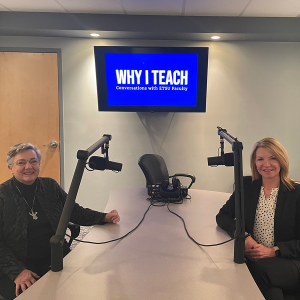
Tuesday Jan 10, 2023
Tuesday Jan 10, 2023
Dr. Virginia Foley has decades of experience in education, first as an educator and administrator in the K-12 setting and then transitioning to higher education in 2007. As a faculty member in ETSU's Clemmer College, she prepares students to make a difference in the classroom. She is also making an impact in the boardroom, where she serves as the Faculty Trustee on the ETSU Board of Trustees.
Podcast Transcript:
Dr. Virginia Foley
The big idea for our program is that leadership is a moral craft. And so I hope our students assume that responsibility for the moral purpose of leading schools and caring for students.
Provost Kimberly D. McCorkle
Hi, I'm Kimberly McCorkle, provost and senior vice president for academics at East Tennessee State University. From the moment I arrived on this campus, I've been inspired by our faculty, their passion for what they do, their belief in the power of higher education, and the way they are transforming the lives of their students. This podcast is dedicated to them: Our incredible faculty at ETSU. Hear their stories as they tell us why I teach.
In this episode, we will talk with Dr. Virginia Foley, a professor in the Department of Educational Leadership and Policy Analysis in the Clemmer College. Dr. Foley joined ETSU in 2007 after serving many years as a K-12 educator and administrator in Georgia. She is a past president of the ETSU Faculty Senate. As a faculty member, she has chaired over 100 doctoral dissertations. She also serves as the faculty trustee on the ETSU Board of Trustees. Enjoy the show!
Dr. Foley, welcome to our show.
I start every podcast with the same question for each guest: Take me back to your first day of teaching at ETSU as a faculty member. Looking back on that day, what is one piece of advice that you would have given yourself?
Dr. Virginia Foley
I think the biggest piece of advice I would give myself is that you have time. Most of my students that I teach, I will work with over two years and so I don't have to hurry up and try to dump everything in them. I have time to watch them grow. I have time to grow myself. Starting here, I frequently said I was fluent in K-12, I understood the K-12 education world very well, but I was learning higher ed, and so I had to give myself time with that also.
Provost Kimberly D. McCorkle
That's wonderful.
So you spent several years as a public school counselor and a principal in Georgia before you began a second career as a faculty member here at ETSU. Talk about how your previous professional experiences have shaped your career in higher education.
Dr. Virginia Foley
I was a couns– school counselor for 20 years, and I think that those experiences and the training I received as a school counselor prepared me well for leadership roles because it's about building relationships and it's about listening – deep listening. As a school principal, I would not have been able to do the job I'm in currently if I hadn't served in that capacity, because everyone who teaches in our licensure program either is or has been a school principal. So we're preparing school principals; we want people who are teaching them to have walked that walk. I retired from the central office and that probably was the best preparation for my career here because it was things I learned while there that really shaped the way I teach.
We were bringing some work into our district and training our teachers in understanding by design. It's a framework by Grant Wiggins and Jay McTighe, and had I not had that framework, I would not be teaching the way I'm teaching now. So it's identifying what are the big ideas you want students to walk away with, and how are you going to know what evidence do they have to provide you that they understand those concepts bone-deep, and then how do you structure experiences to give them that deep understanding? Had I not had that opportunity in that training before I came, my students probably would have been reading a lot, writing a lot, taking tests. And as it is now, the experiences are structured very differently.
Provost Kimberly D. McCorkle
Yeah, they... they've transformed the way you teach.
Dr. Virginia Foley
Definitely.
Provost Kimberly D. McCorkle
So most of your students are current teachers, as you mentioned. What is it like for those teachers to return to the classroom as students?
Dr. Virginia Foley
The hardest thing for them is to get used to the fact that grades are not what drives things. They’re teachers and they are always used to being successful and getting good grades. So they want to know, am I doing what you want me to do? That's a big adjustment for them because I tell them it's about the learning and we're not going to worry about the grade and that if they do what they need to do and they're learning and they're giving me evidence of learning, they'll get the “A” that they want. But other than that, they get a lot of detailed feedback. And if they're not on track for that grade, then I'll let them know and let them know what they need to do to get the grade they want to get.
So that huge adjustment, but it’s also them writing your first paper again after you've been out of school for a while and giving your first presentation to your peers after you've been out of school for a while, so there's some adjustment there, but we do a lot of developing and laughing and we are all learning together.
It's always interesting when professionals become students again.
Provost Kimberly D. McCorkle
Because your students are working full time, how do you structure your programs is it online, in-person, a mix of those?
Dr. Virginia Foley
Ours is a mix of both. When I first came to ETSU, we were teaching night, so I taught on Monday night from four, supposed to be from four to 10. It was technically about four-thirty to nine-thirty; after they'd worked all day. And then I taught on Wednesday night, same time. After I'd been here a couple of years, we switched to Saturday classes.
And so when we meet face to face, we meet on Saturdays from nine to about three-thirty. We go to lunch as a group, so we're eating together. Sometimes it’s an extension of conversations that happened that morning; sometimes it's just getting to know each other. Breaking bread is a great way of building relationships, and so that's how we structure our Saturday.
An unintended benefit of the change to Saturday classes was that we didn't have to be regionally-based anymore. We were using a cohort model, but people could come from everywhere. So we weren't driving to Morristown for a cohort and people coming from that area. In our first cohort on Saturdays, we did have people from Morristown, from Maryville, from Asheville, and then from our Tri-Cities area. But now with our cohorts, it's not uncommon for me to have people from Nashville, from Memphis, from Jackson. So they're coming from everywhere. And that just makes the cohort experience that much richer because of the diverse perspectives and experiences that people bring.
Provost Kimberly D. McCorkle
That’s great; and I would imagine that the Saturday format is in some ways preferable to the weekly meetings?
Dr. Virginia Foley
It is so much better. And we don't– we meet– we don't meet every Saturday, you know, we have a certain number a semester, but the Saturday also helps because they're not fatigue after having taught all day long. We get there with energy and then I think we all leave tired. But it does make a difference.
And then the remainder of the coursework is online, but it's structured pretty tightly with weekly discussions. And then there are papers and there are presentations that are both virtual and face-to-face.
Provost Kimberly D. McCorkle
And I would imagine that part of the benefit is that they're building those professional relationships with each other – with you, but with others.
Dr. Virginia Foley
With each other also, yes. I think our students will tell you that the internship that they get in our program and the cohort structure are two of the biggest things they take away – and lunch; they’re one of their favorite things is lunch on Saturday.
Tell me a little bit about the internship model then that you mentioned.
Dr. Virginia Foley
We have the most extensive internship in the state. We have a minimum requirement of 540 hours, and 100 of that is at elementary, 100 at middle school, 100 at high school, 100 at central office, and then 140 that are split between community and diversity which... a minimum of 40 in one of those. But students could get 70 and 70, they could get 90 and 50. But most of our students finish the internship with over 700 hours.
We tell them, Don't stop counting, because when you're interviewing for jobs and you say, Well, my internship requirement was 540, but I was able to get 700 hours.
And the internships experience are documented, they're aligned to standards. If you're a student in Tennessee, they're aligned to our Tennessee instructional leaders standards. If you're a student from another state, then we're aligned to the professional standards for educational leaders, which are national standards. And that's what our licensure exam is based on.
So everybody gets exposure to those standards also. Students are getting a very rich internship experience. They have mentors that they identify. Our requirement for their mentors are that they have to either be or have been a school principal. And then we have an internship supervisor who makes regular visits with interns and their mentors.
Provost Kimberly D. McCorkle
And every student has to experience every level.
Dr. Virginia Foley
They do have to experience every level because... your license is K-12. And one of the people who begged for no elementary, her first principalship was in a K-8 school. Another person who was an early childhood person, his first assistantship was at a high school, and he became a K-8 principal, and now he's a high school principal.
Provost Kimberly D. McCorkle
Is it true that middle school principalship is the hardest, or is that just a myth?
Dr. Virginia Foley
If you love middle school children, students, it's not hard. And that was where the majority of my principalship was, was in a middle school. And I love those kids, that aged kid. If you don't like them, it can be really hard because they are just all over the place. One minute they're a kid, the next minute they think they're 28. And they're trying on different identities almost daily. It's just them trying to figure out where they belong as they separate from family and form their own groups.
I think my counseling experience prepared me well for that principalship.
Provost Kimberly D. McCorkle
So I noticed under your current research on your bio page that you noted that your research interests are, “everything that my dissertation students are currently researching”. Talk about your process of mentoring doctoral students and some of the most interesting things that you've learned from your students.
Dr. Virginia Foley
Well, when it comes to mentoring doctoral students in dissertations, one of the most important things about teaching is know who you're teaching. And so different students need different approaches and different things. Some are just ready to get it done. They love this part of the education and they are just marching on. And some need that... all of a sudden they feel abandoned. It's like they've had coursework, they've had deadlines, and then they're they're kind of on their own, so I've learned to help build in deadlines, especially for those who need it.
And if I say, this is due to me then some of those students will not miss deadline. Some of them just, Well I know it's a guideline; so they just keep going on. So I nag, I cheer, I encourage, I celebrate. So it's just different approaches with different students.
But some of the topics have been really fascinating. I had within the same time frame, within two or three years, I think I had four different students that did their dissertations research on freshmen academies because that was a movement for a period of time.
And then I had a student who was looking at female leadership. And a serendipitous discovery was the role of mentors. She uncovered this network of women who were all mentored by the same woman. And it was a total surprise, but this woman knew that females needed mentors. So she started a book group, and then out of that book group then mentored people.
I had a student who was studying teacher development in Malawi. And the definition of rural in Malawi was if you had to walk more than two and a half hours from the town center to get to the school, that was a rural school.
And one of my students really looked at money and per pupil expenditure and then its relation to student success on typical measures. And basically what he found was it doesn't matter. And so these schools that have low per pupil expenditure but are very successful, we all need to go find out what they're doing.
Provost Kimberly D. McCorkle
How do you help students sometimes who are struggling in identifying a topic?
Dr. Virginia Foley
I tell them that by the beginning of their fourth semester they really need to be firm. And so we've talked throughout on things they're interested in, but they really need to get clear. And then recently our P-12 part of our department has really built in some checkpoints along the way.
And even with all that, you have students who change their mind. But I believe that if you're doing something that you're interested in that matters to you, it makes the work a lot easier.
So you're now in your second term as the faculty trustee for the ETSU Board of Trustees. Will you tell us about your role on the board?
I have thoroughly enjoyed the privilege of serving on the board, and I didn't mean to run for a second term, but the pandemic occurred. I was six months into my first year of my first term, and then we all went remote and then our meetings were remote. I just really felt like that I could learn more if I were able to serve a second term. And so I ran again and was elected.
I think my job on the board is to first read thoroughly all the board materials, even on the committees I'm not serving on because I feel obligated to faculty that if there's something that might impact faculty, I just need to point that out.
I attend every committee meeting. The people that are on the other trustees are so committed to the success at ETSU and we're all pulling in the same direction.
My role on the board really is to talk about... just every now and then say, But this is how this rolled out, because of information I have that they don't have, because they don't live here. I mean live at ETSU.
Bottom line, my role as a trustee is the same as anybody else's; is to make decisions for the university that make the university stronger and better.
Provost Kimberly D. McCorkle
Can you share with us maybe one of the most rewarding experiences you've had in serving as the faculty trustee?
Dr. Virginia Foley
I think I always like to welcome faculty back at Convocation. I love the new ceremony for tenure and promotion. I think the Heroes ceremony that we had last year that honored the people who just stepped up during the initial stages of the pandemic was probably the most moving experience that I've had.
Provost Kimberly D. McCorkle
Finally, what impact do you hope that you have made on your students?
Dr. Virginia Foley
The big idea for our program is that leadership is a moral craft. And so I hope our students assume that responsibility for the moral purpose of leading schools and caring for students. You cannot delegate responsibility for that moral purpose. You can delegate other aspects of the job, but not keeping the focus on the vision and moving the school in that direction.
Provost Kimberly D. McCorkle
Thank you, Virginia. From your work in the classroom to your service on the ETSU Board of Trustees, your work is truly making a difference in the lives of our students.
Thanks for listening to Why I Teach.
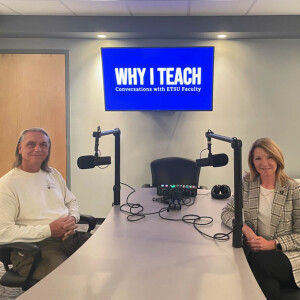
Monday Dec 12, 2022
Monday Dec 12, 2022
ETSU College of Public Health's Project EARTH, located at the ETSU-Eastman Valleybrook campus, has received national recognition for its curriculum. Dr. Mike Stoots describes some of the hands-on learning opportunities taking place there and why he enjoys teaching in this innovative program.
Podcast Transcript:
Dr. Mike Stoots
So Project EARTH started off making products. Now we have classes; we have community experiences. People come in and it's still centered around solutions to low-resource health challenges, but it focuses on team building, innovation, and resilience.
Provost Kimberly D. McCorkle
Hi, I'm Kimberly McCorkle, provost and senior vice president for academics at East Tennessee State University. From the moment I arrived on this campus, I have been inspired by our faculty. Their passion for what they do. Their belief in the power of higher education. And the way that they are transforming the lives of their students. This podcast is dedicated to them, our incredible faculty at ETSU. Hear their stories as they tell us "Why I Teach." In this episode, we will talk with Dr. Mike Stoots with the ETSU College of Public Health. Mike is one of the longest-serving faculty members in the College of Public Health and is also the director of operations for the award-winning Project EARTH, located at the ETSU Eastman Valleybrook campus. Enjoy the show.
Dr. Stoots, welcome to our show.
Dr. Mike StootsThank you.
Provost Kimberly D. McCorkleI start my podcast with the same question for every guest. Take me back to your first day of teaching at ETSU as a faculty member. Looking back on that first day, what's one piece of advice you would have given yourself?
Dr. Mike Stoots
Well, I can certainly remember the first class. Not so much about the first day, but the first class I taught was in the ground floor of Lamb Hall. It was a – back then, it was a personal health course. So I had my book, my notes. I walked in. There were probably 40 people in the room. I remember going to the podium, opening the book, laying my notes out, grabbing both sides of the podium, and starting to talk. I think I looked up one time at the back wall, looked down, looked at my watch, and said, "Okay, that's it for the day." And walked out. First one out the door. Terrified. Yeah.
If I could go back and be in the hallway that day, I would have one piece of advice with three parts. The first one I would tell myself is "Just relax." And treat all students with respect and appreciation that they're there.
The second one would be there are sort of three ways to talk to a group. The first one is to talk at a group, and that's certainly what I did that first day. I was talking at people, and more, really, I was talking to the back wall, wasn't really talking to anyone. And I work with new faculty now, and I tell them that this is a process that takes time. So you can start off talking at people, and then you can talk to people. This is when we have good eye contact. We express ourselves well.
But then the third way is talking with people. Now, this is when the instructor isn't the center of attention anymore, and you give the students more time in the classroom to interact. This is a challenge because you give up control. And sometimes students may not provide the comments that you're looking for. And it's a real art to be able to steer the conversation back in the right direction without becoming a dominating force. So I'm not sure I would have listened back then, but that's what I would say now to that person clinging to the podium.
Provost Kimberly D. McCorkle
Great advice. Yeah.
So I know that you're also an ETSU alumnus. And as someone who's relatively new to the ETSU community, I'm fascinated to hear about how the campus has grown and changed. What's changed the most since you first joined ETSU?
Dr. Mike Stoots
The student population was much lower then, and there was room. I remember people being in the front yard of Brown and around the center of campus, and people just were outside. And then over the years, as the enrollment grew, those spaces became smaller and smaller, and it became almost an industrial feel. There were buildings, there were parking lots, and not a lot else. But now with the new green space all over campus, you see people outside more. It's really a full circle from being a nice, quaint little college back in the day to now a university that is very student-centered.
Provost Kimberly D. McCorkle
Yeah. Did you take classes in Brown?
Dr. Mike StootsI did. I had classes in every building, I think. I had a couple of undergraduate majors and my master's in public health and almost a master's in exercise science. Wow. So I’ve been all over campus.
Provost Kimberly D. McCorkle
I always think it's neat to think that you took classes and later you taught in those same spaces. Did that happen to you?
Dr. Mike Stoots
Oh, it did. Yeah? Several times.
Provost Kimberly D. McCorkle
That's great.
During your time at ETSU, you have helped to develop a curriculum that sets the ETSU College of Public Health apart from other universities. For those who have not heard about our nationally award-winning curriculum and public health simulation lab, please tell us about Project EARTH and the Niswonger Village.
Dr. Mike Stoots
Project EARTH began with two of our students – our master's students – returning from Africa after a semester-long internship, and they both had worked in clean water in different countries, and they put in bios and water filters. After they presented on these topics, Dean Wykoff and I were in the back of the room, watching their presentations, and when it was all over, we said, "That is a wonderful thing they're doing." Clean water is a foundational element of public health and health around the world. But we were talking about that and said it's a real shame we didn't teach them how to do that. They picked that up and educated themselves on biosand water filters. And we were discussing it further, and we thought, "Wouldn't it be great if we could teach them that?"
Well, then the stars aligned, and Eastman Chemical was gracious in donating the Eastman Valleybrook campus to the university. And we had a small space there, one room, and we started teaching a select group of students how to make biosand water filters, indoor cookstoves, how to build with adobe. And from that, it started to grow, and we were centering on product development. But then we started noticing and the students started telling us that while learning the products was great, they were learning teamwork, innovation, and resilience. Yeah.
And at the same time that was happening, again, the stars aligned for us, the workplace, all the different workplaces, they were telling us that we need graduates who are good team members, who can be innovative and creative and who are resilient, can maybe work in an environment they're not used to, and get through that and excel in something they're not quite used to.
So once this got started, we spent years developing individual programs where students participate in activities, develop team building, innovation, and resilience. We put them in a situation outside the classroom: no tables, no chairs, no fluorescent lighting. They may be in a workshop; they may be outside. And we have activities that community members come in and do, maybe an hour activity, or it could be a three-day activity.
So Project EARTH started off making products. Now we have classes, we have community experiences where people come in, and it's still centered around solutions to the low-resource health challenges. But it focuses on team building, innovation, and resilience.
Provost Kimberly D. McCorkle
And you've built this hands-on kind of curriculum into many of your classes and programs across the college, haven't you?
Dr. Mike StootsYes, we have multiple undergraduate classes, one of the doctoral seminar classes, they participate in it, and the students are given a challenge, a health challenge. And with that challenge, they have to learn certain basic tools, the skills. It may be driving nails; it may be reading a tape measure, sawing lumber. But then they take those new skills, and they make adobe molds. Then they make adobe bricks, and then they make an adobe cookstove.
But it's really not about whether a student can drive nails or read a tape measure. It's about can a student come out and see a challenge, come up with a solution for the challenge, and then find out what the skills are required to meet the challenge and go learn those skills and implement them. We can't tell the students what the challenges are going to be in the next 20 years, what the next pandemic will be. But if they have a very rich method of thinking and being creative and they're resilient, I think they're going to be prepared for those challenges.
I had the opportunity to visit the facility, and when I was there, the students showed me some crops they'd grown in the garden, and some shoes that they had made. These hands-on experiences seem to be so impactful. It seems to be. And we call it the great equalizer, too. We may have a student who doesn't excel in the classroom with typical lecture and exams, and they'll come out and possibly excel in the workshop. Or a student who is not as confident in themselves as we would like. And they'll learn to do some of these things they've never done before. And some of them have been told they can't do it. So they develop this confidence, and then when they're in our computer lab doing a project or something else, that confidence follows them into the classroom.
Provost Kimberly D. McCorkle
Yeah.
So I've heard both you and Dean Wykoff describe the importance of this approach, and I believe you've also published about it. Can you tell us a little bit about that?
Dr. Mike StootsYes, we published “Ten Years of Teaching Hands-On Public Health.” And what we did was a summation of lessons learned. And one of the lessons was to get out of the way; give the students the task and the challenge and let them fail.
Now, in higher education, when you talk about a student failing, it usually sends off red flags and reports and ... but without the ability and the opportunity to fail, creativity doesn't happen. So we actually give them challenges sometimes that are extremely difficult, knowing that they probably won't succeed, but then they'll come back and do it the second time or the third time or the fourth time, and then succeed.
Which sometimes when you tell a group of students that we're going to do this five or six times, they're like, “No, we're not; we're going to do it one and turn it in.” But it's that process. It has to be the process.
Provost Kimberly D. McCorkle
What do you see as the future moving forward for Project EARTH?
Dr. Mike StootsWell, as I said, we started off with products, cookstoves, water filters, and we are now back to those things and other issues. And we've always had a desire to involve more community members and organizations, and we are doing that now. So we have different projects within Project EARTH, and we have involved different groups, and those are starting to stand up on their own, be it with beekeeping or agricultural products or other areas. We have AdaptoPlay, our bike program, so it’s standing up.
When we first started, we were focusing a little more than I think we needed to on the international health and the low-resource challenges. There's low-resource health challenges in Unicoi County, where I live. You don't have to fly across an ocean to find these challenges, but the dean and I were talking about what if we could create something so that our students who will never travel abroad, what if we could show them how people live? And we sketched some things out on the back of a napkin.
And Dr. Stanton, when he was here, had mentioned the idea to Scott Niswonger, and he came out and walked around the property and talked to us about it and then, very kind and gracious, Scott and Nikki Niswonger donated – underwrote – the village for us, so we built the Niswonger Village at Valleybrook.
And that consists of homes from around the world. And these aren’t Google images that we found; we've had students in almost every home. They come back with stories of the families and the kids. Even one home, we built the front door based on a picture of the student standing in the front door of the house in Rwanda.
And that program is growing now. We have mock epidemics where our doctoral students go from house to house and interview the actors in each house to determine what's going on in the village. We're working on a day program right now where you would come out to the village, and you would live the life of the people from that home. You would cook the way they cook; you would wash your clothes the way they wash theirs. You would live without Wi-Fi – I know I just lost students there – but you would participate in that day. And we're not – that's not going to be like living in that situation. But it's certainly a glimpse.
Provost Kimberly D. McCorkle
Yeah. I love how you described it as an idea on the back of a napkin. I think sometimes those are the best ideas, right?
Dr. Mike Stoots
Yes.
Provost Kimberly D. McCorkle
At the Eastman Valleybrook campus, I understand that public health was one of the first academic programs to kind of move out to that space. Can you tell us a bit about that space and how it's developed over time?
Dr. Mike Stoots
It is – and I've said this a hundred times – the Eastman ETSU Valleybrook campus is the world's greatest classroom, from the acreage that it sits on to the wonderful facility indoors. We have a computer lab in the facility downstairs. We have a workshop that we can put 25 students in. It has allowed Project EARTH to develop. Without that facility, we could not do what we're doing.
Provost Kimberly D. McCorkle
It's such a unique space, right, for the work that you're doing. It is really the perfect space for what we're doing. And it has allowed us to grow and to continue to grow. And you bring all public health students out to that space at some point during their curriculum, don't you?
Dr. Mike StootsYes. All public health students come out and participate in either a class or one of the day programs.
Provost Kimberly D. McCorkle
Mike, as you know, ETSU has recently launched our Quality Enhancement Plan, which is designed to encourage our students to go beyond the classroom and to strengthen our community-engaged learning opportunities for them. I see this as already taking place with your students through several programs such as the recycling program and AdaptoPlay. Please tell us about these programs and how they're connecting our students with the community while helping them build that valuable skill set that you've mentioned.
Dr. Mike Stoots
The recycling program is a little different than when you hear “recycling.” Ours is about re-engineering, contributing to youth charity, new-idea generation. And this program started with a meeting with the OmniSource professionals in town. They're a metal recycler, and we were actually talking about a different project. And the fact came up that they have lots of bicycles that they recycle every month, and they asked if we could do something with bicycles. And of course we said, "Well, we'll try." And that led us to creating a bike shop.
Now, in our bike shop, originally, we would take all these different bikes and find parts that we needed and put together bikes. And then they would go to the local Boys and Girls Club. And our students, our Public Health Student Association, they would teach CPR as a fundraiser, and they would buy helmets. So we would give bikes and helmets away. And then the Boys and Girls Club would distribute as needed.
So that program went on for a few years, very successful. And then we met some educators with the Kingsport City Schools, and they have a program where they find students jobs. And some of these students had no transportation to get to the workplace. So now we're working with Dobyns-Bennett High School, and we provide bikes, we put fenders on the bikes, we put a basket or a rack on the bike so the students can carry their belongings to their job and back. And we give them a bike helmet. That's been going on for a couple of years.
Another program, AdaptoPlay, started with a conference that Aimee Rowe and I attended in Nashville, and we saw the Go Baby Go presentation, and we had heard about this, and we talked about how it would fit within Project EARTH. And then we were approached by a couple of local physical therapists, and the key behind AdaptoPlay or the Go Baby Go movement is working with kids – mostly under 6, but not necessarily – who are differently abled. They have some sort of physical issue, and the best way it was explained to me was try to do physical therapy on a 2-year-old, tell the 2-year-old to do 15 reps of two sets turning your head or something. It just doesn't work.
So a gentleman at the University of Delaware had the idea of using small six- and 12–volt cars for these kids. So we started working with our community partners and worked with adapting cars. And you would take the little Jeeps, if you will. And the first example I was shown was a little girl, and she had trouble turning her head and couldn't use her hands. And the Jeep was then taken, the accelerator was put behind her head, so she moved her head to make the Jeep go. And then the steering wheel was altered so she could use it.
So you fast-forward two years from then, and now this little girl's looking forward. She's holding the steering wheel. That means that this person will use both eyes. She can now close her mouth so she can feed herself – you know, eat normally. And all this was accomplished with a Jeep that had $600 in it. We have electronic wheelchairs that were donated to us that were $50,000 new. So for $600, we changed someone's life. Yeah.
One of the great things about AdaptoPlay is when the child comes out and they've been fitted for the car and our maker team has made the car, and we have engineers who volunteer from the community, occupational therapists, physical therapists. So they've gotten the car ready, and the child comes out and gets in the car. When they first push the joystick or the accelerator, scares them to death. Because it moves.
Well then, a few minutes later, they sort of figure it out, and now they're moving. And when you watch that child move in that car, it may be 10 feet, that's enough. Because you have to realize that that is the first time that that little person has ever been able to move themselves on the earth. And you think, what would ... and now that's opened up their whole world. Yeah. Wow. And that, those five minutes make everything we've done worth it.
Provost Kimberly D. McCorkle
I love the way you describe it. I had the pleasure of meeting a couple of students who had been involved in that project, and they felt so connected to the work, but also so impacted by it.
Dr. Mike Stoots
And I think that's the best part, that you're involving our students in being able to do this. Yeah. Anymore - and I tell everyone this - I unlock doors, and I get people started, and then I just get out of the way, which is, that's how it should work.
Provost Kimberly D. McCorkle
What are you most proud about in terms of the teaching that you have developed, the style of teaching and through the work with Project EARTH and incorporating that across the public health curriculum?
Dr. Mike StootsThat the teaching and the outcomes and the end users are all made real to the student. It's not theoretical. It's not something that you will do in the future. It's something that you're doing today, and it's going to help someone this afternoon or tomorrow, that we're trying to help people on campus and in the community every day.
Provost Kimberly D. McCorkle
So my last question: What impact do you hope that you've made on your students?
Dr. Mike StootsIf I can teach one thing today that will improve the life of one kid that one of these students will have, it's a really good day. And our major is wonderful for seeing impact. I've had former students call me and talk about how they've lowered hospital infection rates or that they've reduced teen pregnancy in a city, county, or state. Or I remember one call that they've developed, this one student developed a program for a long-term-care facility. And when they did the program, she said, "That's the only time some of these people smile." And I thought, "Okay; that's good enough."
Provost Kimberly D. McCorkle
Yeah.
Thank you, Mike. I'm so impressed with the work that you're doing with Project EARTH and the community-engagement opportunities that you're offering to our students. I wish you all the best as you continue the next decade of what's next at the Eastman Valleybrook campus.
Thanks for listening to "Why I Teach." For more information on Dr. Stoots, Project EARTH, or this podcast series, visit the ETSU Provost website at etsu dot edu slash provost. You can follow me on Twitter at ETSU Provost. And if you enjoyed this episode, please take a moment to like and subscribe to “Why I Teach” wherever you listen to podcasts.
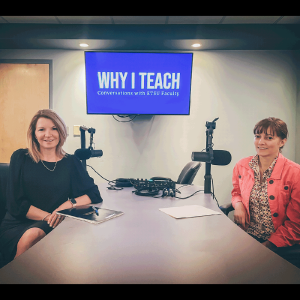
Tuesday Sep 27, 2022
Tuesday Sep 27, 2022
Dr. Alison Barton is the new Director of the ETSU Center for Teaching Excellence and an award-winning faculty member from the Clemmer College. Hear her discuss the importance of faculty members seeing their courses through the eyes of their students. Dr. Barton also talks about her use of specifications grading as well as the exciting and innovative resources offered by the center.
Podcast Transcript:
[Music]
Dr. Alison Barton
Teaching isn't finite. There is just never an end point to it, and I think that's one of the challenges with being a faculty member. Is you don't have the article that's published at the end to show you've done something worthwhile. You just have this ongoing set of activities that you do to try to get better and better, and sometimes you try something and it's a step backwards.
Provost Kimberly D. McCorkle
Hi, I'm Kimberly McCorkle, Provost and Senior Vice President for Academics at East Tennessee State University. From the moment I arrived on this campus, I have been inspired by our faculty, their passion for what they do, their belief in the power of higher education, and the way that they are transforming the lives of their students. This podcast is dedicated to them, our incredible faculty at ETSU. Hear their stories as they tell us why I teach.
In this episode, we will talk with Dr. Alison Barton from the ETSU Clemmer College. Dr. Barton is an award-winning faculty member at ETSU and recently was appointed Director of our Center for Teaching Excellence. Enjoy the show.
Dr. Barton, welcome to our podcast. I want to first again by congratulating you on your new role with the Center for Teaching Excellence. Sounds like you have an exciting fall coming up.
Dr. Alison Barton
Thank you. Yes, I most certainly do. This fall I've actually put, hit the pause button on teaching so that I can get my feet under me as I learn more about the role of the Director for the Center for Teaching Excellence, and as we put together several new initiatives that we're rolling out from the center this fall.
Provost Kimberly D. McCorkle
It's great, that sounds like a good plan. I start my podcast out with the same question for every guest. Take me back to your first day of teaching at ETSU as a faculty member, and I think that was back in 2005. Looking back on that day, what is one piece of advice that you would have given yourself?
Dr. Alison Barton
That's hard to answer because there are so many pieces of advice I would give myself knowing how much I know now about teaching versus then. But probably the biggest piece of advice I could give myself at that time would be to look at my course and at my teach through my students’ eyes. Is the teaching engaging? Are the students allowed to be active in the class? Is the professor inviting versus suspicious of students? And you can see that in I'm sure syllabi that I wrote 100 years ago versus now. Are the assignments drafted in a way that feels purposeful to the mission of the class, or do they feel like busy work that are included just to feel like the course is rigorous?
Provost Kimberly D. McCorkle
I just think that's outstanding advice. Think about looking at your course through your students eyes. That's really very helpful.
So you teach courses that are part of the general education curriculum all the way through graduate level. Are most of your students preparing to become educators?
Dr. Alison Barton
I would say probably most of them are, especially for the classes that are educational foundations level classes. We are preparing our educators to go out and become teachers in the K12 school system. But the general education course that I teach EDFN 2310 is developmental psychology, and I get a range of students in that class. Some of them are going to become educators in that class as well, but I see a range of students including a lot, and nursing students seem to take the course quite a bit as well. So I get quite a diversity in that general education class.
Provost Kimberly D. McCorkle
I imagine that means you have to think about the way you develop and deliver that course.
Dr. Alison Barton
Yes, but I have a luxury in that class. It's about human development and everybody in that class happens to be a human, so we have an easy way to apply a lot of what we're learning in there.
Provost Kimberly D. McCorkle
That's great. So you've spent many years teaching courses in the online format. As I understand it, you're actually a pioneer of online teaching at ETSU, and you've been really successful in this. What advice do you have for faculty who are teaching in online formats in terms of keeping students engaged online and achieving their student learning outcomes?
Dr. Alison Barton
Well, I would precede my answer by saying I don't have all the answers, and if I did, I might be making a lot of money. So as with all teaching it is an iterative process and I'm continuing to learn about best online delivery methods as I continue to teach in online venues.
I would say one of the most important things to do to keep your students engaged is to make sure that what you're including in the online environment keeps your students active. Students won't be learning if they are not cognitively engaged with the material and being asked to do things with that material in some way. So it's really important that the activities are not nominal and that they're not passive. Can't just have a video and have students watch that video and then take a test on it. We want them to be working with the information that they're receiving in some way.
For making sure that learning outcomes are achieved, that's a really tricky question. I think when we're teaching on ground we have a little more luxury of captive audience there to do little activities that may not feel in the moment like they're related to learning outcomes but do eventually lead to those learning outcomes. When you're teaching online it's easy to overwhelm students with the sense that there is too much to do in that class. So I think we have to be a little more judicious about the activities we choose for students to do and take a look at which ones are going to be the most value added for meeting those learning outcomes so that whatever you assign is going to give students and you as an educator the most bang for the buck on their time that they're investing in that activity.
I think it's also important, and this actually is true no matter what modality you're teaching in, but it's really important to tell students how this activity aligns with the learning outcomes. There's really good research that demonstrates that when you're very intentional about sharing that linkage with your students, the students are much more motivated to complete the activity and in some ways that I think people are still trying to find out it actually closes achievement gaps between underrepresented students and other students in your classes.
Provost Kimberly D. McCorkle
So I think for me what that reminds me of is that teaching online just requires a different approach and intentionality in ways that are really important.
Dr. Alison Barton
Yeah, I think you have to spend a lot more time thinking ahead and planning ahead for an entire semester to make sure that everything that's done is done with some intention.
Provost Kimberly D. McCorkle
I think that's a great way of putting it. One question that I wanted to ask you, you use a method that's called specifications grading in your courses. Can you tell us about this?
Dr. Alison Barton
I can try. It's a little challenging to explain without visuals and it's a little challenging to explain in a nutshell. But to just precede that a little bit I want to say that I have been learning that grading is actually an activity that can be placed on a continuum from something that's highly managed to something that's almost not managed at all. And that doesn't mean that there isn't feedback going on or teaching going on. This is just about the grading behaviors and grading approach that you're taking in the class.
Specifications grading goes more towards the less managed side of grading, but it's certainly not all the way at the end that's ungrad and we are talking about that at the center as well. Specifications grading is when you decide as an instructor, again this is frontend and intentional, you decide which assignments are required for each letter grade that is assigned at the end of the semester to a student. So students see what's required of each letter grade right at the beginning of the semester and you ask them to decide which grade they're going for. Now that can change. They're allowed to change their minds midway through the semester and aim higher or lower.
But this way you know that they know what they're aiming for. Those bundles of assignments that go with each letter grade will vary. The higher you go, so the higher the letter grade, the higher the quantity of assignments that are required. And sometimes you may add some qualitatively more challenging assignments for higher letter grade as well.
Each of those assignments comes with a set of specifications, that's where that word comes in, and it's a set of make-or-break criteria for that assignment. Students must meet all of the specifications in order for the assignment to count towards their letter grade. And if they don't then they are told this does not yet meet specifications.
The beauty of this grading system and what my students have really resonated with is that they are permitted additional attempts to try again. And the way that's typically done with spec grading is to give tokens to students at the beginning of the semester. They can spend a token to try again on an assignment or if they've missed an assignment deadline they can get an extension. Those are typical ways that we use tokens in the class.
Provost Kimberly D. McCorkle
Well, of course, I have so many questions, but I'm going to ask what about students who sort of, from the beginning of this process, just say I want to get a C. Is that okay? Is that rigorous enough? How do you approach that?
Dr. Alison Barton
I love that question because I actually studied this method with an eighth-grade teacher who did it in her eighth-grade class, and we talked in our article about the ethics of accepting a C. I think at the higher education level, we may want to honor that. I very, very rarely see it. It's typically in my gen ed class where they have other priorities that they're going to focus their time and energy on instead of in my class. I typically reach out and encourage them to do better, but I do try to honor their autonomy in that choice.
Provost Kimberly D. McCorkle
It's fascinating. How long have you been using this process in your classes?
Dr. Alison Barton
I think it's been three or four years now that I've been trying it. I heard about it at the conference for higher education pedagogy up at Virginia Tech and was motivated to start trying to use it right away.
Provost Kimberly D. McCorkle
Well I love the involvement of students at the beginning in sort of weighing in on how they're going to engage with the course.
Dr. Alison Barton
Yes, I think it's a little intimidating. I've learned to do a lot of front-end education and assurances for my students because they're a little bit, they're always a little bit trepidacious about this new grading system that most of them have never encountered before. But the vast majority at the end of the semester will give very positive feedback and a preference for this grading method over traditional grading methods. The only students that don't like it are those that wanted to coast by with substandard work and not have to redo it for it to count, and that's a rare student but they I sometimes get comments about that.
Provost Kimberly D. McCorkle
Thank you for sharing that Dr. Barton. I want to talk to you now about your new role in the Center for Teaching Excellence. You've worked with the center for many years now since you've been at ETSU. Please share with us the mission of the center and how it supports ETSU faculty.
Dr. Alison Barton
Our advisory committee is actually actively working on our mission right now so it's a great question to be asking and we are still in the process of refining our mission in a more formal statement. But it's centering around the idea that education needs to be equitable for everyone here on campus. Our students learning is important and our students deserve to have good teaching and as part of that our Educators here on campus our instructors deserve to have the tools they need in order to provide that good education to our students.
So there are a number of ways the center supports our faculty learning about good teaching. We try to give them the knowledge and the tools and ongoing assistance and even encouragement to continue that teaching development trajectory. Teaching isn't finite. There is just never an endpoint to it, and I think that's one of the challenges with being a faculty member, is you don't have the article that's published at the end to show you've done something worthwhile. You just have this ongoing set of activities that you do to try to get better and better, and sometimes you try something and it's a step backwards and you have to go back to the drawing board.
But we offer a lot of things to try to support our faculty including workshops where we cover things from very the kind of the basics of what's important for good teaching there we call those the four Essentials and so those four Essentials workshops are the best place to start if you haven't done anything with the center before and we go all the way up to some Cutting Edge and innovative ideas that we like to share out with faculty who have been around the block a few times and are looking for something a little different and new to try out with their teaching.
We offer consultations and that can be with our CTE staff but we've also rolled out something I'm very excited about called TLC's or teaching and learning consultations. We spent some time in the spring training peer Consultants from across campus. These are other faculty members in how to do consultations with their peers across campus. So when a request comes in from a faculty member will assign that person to a peer and the goal is to not do an evaluation and not do something that's summative but instead focus on something that the instructor wants a little bit of feedback on and make this a really supportive informative process where the consultant will have a look at what the instructor is currently doing maybe an in-class observation it may just be looking at course materials or syllabi and providing feedback on what things are going well and where there could be additional new things that the faculty member might want to try but it's meant to be an extremely supportive cooperative process.
Provost Kimberly D. McCorkle
That sounds like such an effective way to bring in your peers to provide some valuable feedback without it being threatening as you say.
Dr. Alison Barton
I agree. I think it's really important that our teaching is valued and supported and not critiqued all the time and so I think that's a really helpful approach. I also like that we're pairing people from across campus because I think when we cross-pollinate we get interesting takes and different ideas than if we just kind of stuck to our own disciplines.
Provost Kimberly D. McCorkle
I always heard that it's great to have someone from outside your discipline come into your class to make sure that they can understand from a student perspective what you might be lecturing about.
Dr. Alison Barton
Yeah, I think that that is definitely part of what's helpful, and the other thing is they may be doing something in their classes instructionally that feels discipline-specific but actually could transfer over into this other faculty member's discipline.
Provost Kimberly D. McCorkle
So I'll ask you one other question about the work that you've done with the CTE. Can you tell us what do you think stands out most to you about ETSU faculty and the ways that they approach their teaching?
Dr. Alison Barton
I have seen from many of our faculty a real interest in trying to find ways to motivate their students. Really want them the desire for their students to care about their material is really prevalent among a lot of our faculty on campus and so there's a real thirst for that and I think of very very much a willingness to try new ideas and think of new ideas themselves for how they can tweak their activities to resonate with students and get them to understand the meaning the purpose behind an activity as well as to genuinely get interested in the content of what they're learning.
Provost Kimberly D. McCorkle
I love that and it reflects for me what I've seen is just a real deep commitment that faculty have to good teaching.
Dr. Alison Barton
Yeah I think we definitely have faculty on campus who are very deeply committed to good teaching.
Provost Kimberly D. McCorkle
Well the last question that I ask every guest. What impact do you hope your students will make on the world?
Dr. Alison Barton
I think it's important, and what I want most for my students is for them to go and show how important it is to do the right thing, even when the right thing is unpopular or is effortful. And I think that can apply in a number of contexts, certainly for me, what resonates is our social justice contexts, but also teaching contexts. So I want my pre-service Educators who go out to be K12 teachers to understand that good teaching means you're going to spend more time doing it and it's going to require a lot more effort and thought, but good learning happens when you spend that time and effort, and I think that's true of course, with teaching in any context.
Provost Kimberly D. McCorkle
That's really inspiring. Thank you.
Thank you, Dr. Barton. You have built an amazing legacy as an ETSU faculty member and we're so fortunate to have you in your new role. I look forward to all that you will do as you support the faculty in the Center for Teaching Excellence. I hope you have a great great fall semester.
Dr. Alison Barton
Thank you. It's been a pleasure.
Provost Kimberly D. McCorkle
Thank you for listening to Why I Teach. For more information on Dr. Barton or this podcast series, visit the ETSU Provost website at etsu.edu Provost. You can follow me on Twitter at ETSU Provost. And if you enjoyed this episode please take a moment to like and subscribe to Why I Teach wherever you listen to your podcast.
[Music]
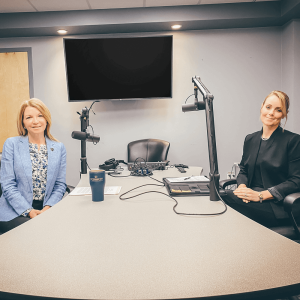
Wednesday Aug 10, 2022
Wednesday Aug 10, 2022
Dr. Kelly Price is an award-winning faculty member in the College of Business and Technology and a two-time graduate of ETSU. In 2014, she helped launch our new M.S. program in Digital Marketing and continues to serve as one of the primary faculty for the program.
Podcast Transcript:
[Music]
Dr. Kelly Price
And it It prepares them for the new jobs that are coming, the ones that aren't even really there yet, have been invented yet, right um, because those are happening all the time. And it prepares them for that working environment where they can take what they've learned with us, such as the analytics or whatever, and place it directly into their job, right then, right now. [Music]
Provost Kimberly D. McCorkle
Hi, I'm Kimberly McCorkle, Provost and Senior Vice President for Academics at East Tennessee State University. From the moment I arrived on this campus, I've been inspired by our faculty, their passion for what they do, their belief in the power of higher education, and the way that they are transforming the lives of their students. This podcast is dedicated to them, our incredible faculty at ETSU. Hear their stories as they tell us why I teach.
In this episode, we will talk with Dr. Kelly Price from the ETSU College of Business and Technology. Dr. Price is a two-time graduate of ETSU and helped lead the creation of our highly popular master's program in digital marketing. She's also a three-time recipient of the College of Business and Technology Excellence in Teaching Award. Enjoy the show.
Dr. Price, thank you for joining me today. Did you ever imagine when you were a student here at ETSU that you would return as a faculty member and lead one of our most popular graduate programs?
Dr. Kelly Price
It's so great to be here with you today, Dr. McCorkle. What an honor it is to get to sit and talk with you about something that I love so much. But to be totally honest, no. I was too busy as an undergraduate anyway with my classes, in my sorority. I was in Sigma Kappa while I was here, and my friends and all of that stuff. But ETSU was such a great place. It is such a great place to be for a student. So, to be honest, no, I didn't imagine I was going to be a faculty member. But I did know even back then in my youthful days that I had wonderful professors here, and they've stuck with me for years. Um, so I'm very lucky. I even just moved forward a little bit on that, the two professors that were my favorite, I got to work with them recently. One retired, but I'm still working with one, but I get to work alongside of two of my favorite professors I had as an undergraduate. So is that crazy? Yes, it's awesome.
Provost Kimberly D. McCorkle
I like to start my podcast out with the same question for every guest. Take me back to your first day of teaching at ETSU as a faculty member. Looking back on that day, what is one piece of advice that you would have given yourself?
Dr. Kelly Price
I think this is such a fascinating question because it really makes you reminisce and think and reflect about my first day. I haven't thought about my first day in a long time, but it's been what, 15 years or so now. So I'll use a golf analogy. Do you play golf?
Provost Kimberly D. McCorkle
No, I wish.
Dr. Kelly Price
You roller blade? Is that right? Yeah. I would totally break my neck if I did that.
Provost Kimberly D. McCorkle
But yeah I didn't know you should try it. I bet you'd be really good at it.
Dr. Kelly Price
But I'll use a golf analogy that you know golf is such a mental game, and you can go out and play, and you hit a certain shot on one day, and then you go back the next day, same shot, but it's a little bit different. The LIE may be different, the weather may be different. So you're standing in the same spot, but it's still a little bit of a different shot than it was yesterday. And when you're faced with that shot you either are going to play it safe or you're going to play the risky play, you know which one are you going to do. And no matter what though you're still playing by the rules. You still have rules that you got to go with. So I think the advice that I would have given myself would have been a piece of advice: that you still have to play by the rules, do what you're supposed to, play the lie you have though, and do the best you can in that position. And as my mom, who is a golfer as well, will say, just go for the flag. Go for the flag every time. And so that's how I would have probably said to myself, just just go for the flag. Go for the flag.
Provost Kimberly D. McCorkle
That's great.
Let's go back to the year 2014. That's when we launched our digital marketing program, and at the time there were not a lot of programs that were focused specifically on undergraduate digital marketing. So talk to us about how the program started, what the goals were, and also how it has evolved.
Dr. Kelly Price
Sure. Back in 2014, I was so lucky because our Dean at the time, her name was Linda Garo, and she had the vision and was just a real innovator, and she was a mentor to me. She kind of took me under her wing a little bit, and I learned a lot from her. And she asked me to direct it. Now little did I know 15 years later after she left and retired um that I would still you know be be moving on with this. But we had very little undergraduate or graduate Pro curriculum at all in our department. But we started to look around and ask, uh, the community members, practitioners in the industry: if you could hire a digital marketing professional, what would they need to know? And that's where it started.
And so our goals ended up being to provide a curriculum that was innovative and new. Um we wanted to prepare students for a fast-paced digital marketing environment because that's what it is, it's changing all the time, and provide um and produce actually dynamic and knowledgeable graduate. So it's evolved over time. We started out what takes a couple years to get a program off the ground, so we went through all that and in 2014 we launched in the fall. And over time we've added classes, we've removed classes. We have moved fairly recently, actually, to a seven-week format from full semesters to seven weeks, which has been wildly successful. So we're always continuing to re-evaluate our program. It's great.
Provost Kimberly D. McCorkle
Yeah tell us about how you converted your courses to a 7-week format. Sounds like that was challenging.
Dr. Kelly Price
It was it was. Um we started the program with full semesters, but we realized that our students, you know one of the things is they wanted to either go through the program as most efficiently they could or plus we're seeing that as a trend in higher education anyway of these abbreviated courses. And I've done a lot of research on it. I've made some presentations on it, and the research is just showing that students are finding a lot of satisfaction in these swe courses. They're not less rigorous, they're not less quality, but as an instructor as a teacher, I had to really think about, okay, I'm moving 14 weeks into seven. The big mistake that a lot of people will make is I'm going to take everything I had in 14 and squish it into seven and we are going to cover every last thing right. And that just can't happen. You have to really think about what's important and what you want to give them and scale it correctly yeah. It's been a benefit for us as faculty that we're able to also have time to do some research, but it's also beneficial for the students to be really focused in that seven-week course and then to be able to move on. And it does help them. Not everybody because the schedule's different, our program is flexible like that, but they have a little more control over how many courses they want to finish in a semester, plus one more last thing that's really good from an administrator standpoint is that our students don't have to start in August. There's another touch point about halfway through October that they can come in, and that's awesome, ’cause my my kid has soccer all the way through, you know, whenever I've got a heavy schedule at work, can I come in in October? Yes, you can do that. So it's been beneficial all around. I've heard some faculty reflect that it helps them improve their course when they redesign it that way. Absolutely, absolutely, it's made it more concise, more organized, and it's just been wonderful. Yeah, I love a seven format.
Provost Kimberly D. McCorkle
So many of us have our own social media accounts, we shop online, but in digital marketing, it seems that there is more focus on helping students not just use their social media, but a focus on how to elevate their brand strategically by using data and best practices. There's a big difference, right?
Dr. Kelly Price
Well, I'm sure, well, I mean, I've seen you on social media, and how you use it, um, and I think it's done really well to promote the university, but yeah, but as an individual consumer, it's a little bit different. And so yeah but social media we have a course on social media social media and the brand and I teach it it's a lot of fun but social media is just one tool in in the whole digital marketing toolbox that it's it's fun to understand the analytics. So now here's where my consumer behaviorist is going to come out because that's my background, my Ph.D. is in human ecology, and human ecology has to do with how humans react to their environments, whether it's man-made or manufactured or whatever physical, but we have to understand the how and the why of consumers. And so social like I said data is great, but we need to understand who is generating those numbers and why they are generating those numbers um so yeah there's a big difference and social media can be a pretty dark place sometimes but it's also very useful in a branding sense.
Provost Kimberly D. McCorkle
So teaching online became highly prevalent during the pandemic but your digital marketing program is taught 100% online and has been all of the courses you teach are online, so I would love to hear your thoughts about online teaching what are the best practices and how do you keep students engaged?
Dr. Kelly Price
I love this question because I'm the biggest cheerleader for online ed that has ever been. Now if you went back and talked to me several years ago ’cause see I talk taught on ground for years and when they said you know why don't you try online I was like no I can't I don't want to do that I my students and here we are and you know all this type of stuff yeah but took the leap of faith and did it and I absolutely love it. It's a challenge, but there's so much to it. You know I've heard a lot of the hesitancy of online education it's not as good it's not as rigorous but the research just doesn't say that. It says it's at least as good if not better, but it is a challenge, but you know you've got to be organized online and have clear objectives, things like that. But I tell you the one thing that has been probably the biggest reason that I love online education that you have to have is professor presence. It's not good enough to go into a class and build it and hit go and then just sit back see that's why a lot of people think well online educators um sit around in their pajamas all day. No, no, no, no, no., we don't do that. But yes, we interact on discussion boards, and I make a lot of audios so that the students can hear my voice, and that's important for every student they get in my class. Anyway, my students get personalized feedback, and I write on their assignments, "Oh this is really cool. Thanks so much. Dr. P.” You know, so they know that I've had my eyes on their papers. And so you've got to have that professional or the professor presence to make that interaction. It can happen online. I've seen it over and over. In fact, I know my students almost better online because I know their kids and their jobs and their whatever. And you even have people, students online, who will talk more to you than they ever would have in a physical room. Those boundaries are just gone. Yeah, that engagement that they have with the faculty member is heavy, and they will call you or talk to you at 10 o'clock at night. They will send you the email, so you got to be prepared for that.
Provost Kimberly D. McCorkle
As you said, online teaching is challenging and effortful, so what advice do you have for faculty who are new to the method this method of teaching?
Dr. Kelly Price
Yeah, and like I said a second ago it's um it was it was tough for me, and I know a lot of my even my own colleagues had a you know a tough time when we went to the pandemic and we had to switch, and they had to switch that class over spring break pretty much, and I just oh I I totally understand that, so I understand why that was tough. But yeah as far as moving forward, you got to have patience. You have to have patience with the students, and you have to have patience with yourself because you'll make mistakes I promise. I have uploaded the wrong syllabus to the wrong semester, and I mean, it's just a nightmare, and the dates are wrong, but you know, you fix it. And to really listen to that feedback that they give you. I had just recently a student give me some feedback, Dr Price I had of course they're anonymous but I had you for this class and and you made audio transcripts of everything why didn't you do it on this class and I was like I don't know but I'm really glad you said that it lets me know that it's worth it. So went back and did all of that. So, um, yeah, just a little patience will take you a long way.
Provost Kimberly D. McCorkle
That's great advice.
I want to go back to your digital marketing program. I would imagine that employers are looking for people with digital marketing expertise, especially now, as you can probably imagine, most any industry needs digital marketing, and the jobs are out there, and and it's a strong job market for our students right now. So yes um it it it's it's something that can be used anywhere. So what kind of students are you looking for to be part of this program?
Dr. Kelly Price
Well, we're looking for really any student who has the desire to learn more about digital marketing. As I said, we get students from all over the place, education, food, and sports, health care, because they all need them. But some of our students, and this is fascinating, are making huge jumps. Like I talked to a potential student the other day who's going to be in our program who was a middle school English teacher wow. And you know public added is tough right now, and she's just ready to, but she was doing her social media for her school. She said I really love this, and I'd really like to move forward and I've got the skill set. She could do this for education, you know, hire it or whatever. So we're accepting her into our program and we're excited about it. It's an attractive program very attractive yeah.
Provost Kimberly D. McCorkle
Tell us a bit more about what your program prepares students to do.
Dr. Kelly Price
Sure. At this time, most of our students, not all of them, but most of them, are professional working full-time workers, and so they have, as I said before, jobs and families and things like that, so they're trying to fit in education. So I'm so glad we get to offer a product like this from ETSU that is 100% online that is quote doable for them. They can fit it in. And it prepares them even as working professionals for whatever may come next. Some of them come back to update their skills. Some of them just sort of hold it in their back pocket until they're ready to use it all kinds of reasons. And it prepares them for the new jobs that are coming, the ones that aren't even really there yet, have been invented yet, right, because those are happening all the time. And it prepares them for that working environment, where they can take what they've learned with us, such as the analytics or whatever, and place it directly into their job right then, right now, and right now, yeah, yeah.
Provost Kimberly D. McCorkle
Do you have a Capstone course in your program?
Dr. Kelly Price
We do. It is taken at the very end of the program, and generally what happens is, um, my colleague Dr. Shemwell, we're such a good team, um, he's my partner in crime in this degree program, and he's been here a long time. He was one of the professors I mentioned that I had as an undergraduate he's been a mentor to me for years. But he's generally the one who oversees this and the student and and he will collaborate generally with something at their workplace. They're working on something that's practical and, quote, real-world, you know, as we say in academia, non-academic, and they're able to take that forward and use it.
Provost Kimberly D. McCorkle
What is your favorite course to teach?
Dr. Kelly Price
My students will 100% know the answer to this if they listen. Consumer Behavior. I come from a consumer background and with human ecology and consumer sciences and it's Consumer Behavior. The way I tell them is, is there another course in digital marketing or marketing that you could have without the consumer? Everybody goes oh no. I'm like, so I've got a really good argument for why everybody in the world needs to take Consumer Behavior. We are one it's relatable. A lot of my students will say, " Oh, that's what I've been doing, we're putting a name to what you do every day, that's why something like The Price is Right has been on for a hundred years, because everybody understands or has a relationship with price, it's consumerism. And consumerism will sometimes get a bad rap you know and but consumerism can be a wonderful thing as well but we have to understand the why yeah behind those numbers there is a person somewhere with motivations and attitudes and all those types of things of why they are buying something and those generate the analytics so me and my qualitative self and the quantitative colleagues I have we get to have some good debates on I say but why are they doing this you know I drive them just a little crazy but consumer behavior is just my passion I just love it it's great.
Provost Kimberly D. McCorkle
It sounds like such a fun course.
Dr. Kelly Price
Oh, it's fascinating, it's a little bit of psychology, it's the psychology side of marketing, really interesting, yes.
Provost Kimberly D. McCorkle
What led you to want to become a faculty member?
Dr. Kelly Price
That's so funny because I I didn't know I was going to be I remember this it's amazing it it's in my mind so vividly when I was in my graduate program here in the master's program in communication I was sitting in Warf pickle it was Dr Roberts and many people will remember him and his communication research course and I just remember sitting there going it just hit me I'm like I've got to go on I've got to go get my PhD it just hit me and I could go back to that room right now exactly where I sat W and remembering that plus I come from a family I know a lot of your other your other guests have said this as well but I come from family of Educators a lot of teachers we have five Ph.D.s in my family we're getting ready to produce another one um my brother is a graduate of ETSU in history and he went on my mom is an ELPA graduate my dad went here and my sister-in-law teaches here so we're all over the place Thanksgiving can get very interesting one of my uh Ph.D. uncles is an astrophysicist so I don't know if you would call it interesting or boring but when we get together it's it's something and we all have you know goofy t-shirts on and things like that awesome yeah so it was a little bit of Fate I think so I would say so.
Provost Kimberly D. McCorkle
The last question I have for every guest: what impact do you hope your students will make on the world?
Dr. Kelly Price
That is such a hopeful question isn't it? And we need that right now. My I've always said that my purpose as an educator is to help my students find theirs, find their purpose, and I truly believe that I am a facilitator to them that I can get them started. Here's some knowledge now run with it. I just hope that they will find and I can help them move on to find their purpose in this world and to be happy doing it. I'm not here to make their lives stressful, get in their way, stop them, any of those things. I'm here to make sure that you find your purpose and be happy and it just really comes down to that for me.
Provost Kimberly D. McCorkle
That's great, so inspiring. Thank you.
Thank you for listening to Why I Teach. For more information on Dr. Price or this podcast series visit the ETSU Provost website at etsu.edu/provost. You can follow me on Twitter at ETSU Provost, and if you enjoyed this episode, please take a moment to like and subscribe to Why I Teach wherever you listen to your podcasts.
[Music]
[Music]
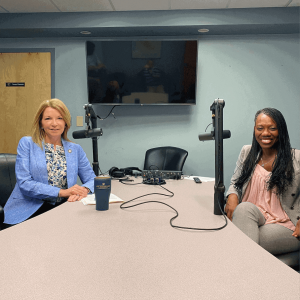
Wednesday Jul 13, 2022
Wednesday Jul 13, 2022
Dr. Cerrone Foster first heard about ETSU when she was a summer research fellow in the Ronald McNair Program. Now, she is a highly respected faculty member in Biological Sciences and a true champion for student success.
Provost Kimberly D. McCorkle
Hi, I'm Kimberly McCorkle, provost and senior vice president for academics at East Tennessee State University. From the moment I arrived on this campus, I've been inspired by our faculty, their passion for what they do, their belief in the power of higher education and the way they are transforming the lives of their students. This podcast is dedicated to them: Our incredible faculty at ETSU. Hear their stories as they tell us why I teach.
In this episode, we will talk with Dr. Cerrone Foster from the ETSU Department of Biological Sciences. Dr. Foster came to this campus several years ago while an undergraduate for a summer research fellowship. Now she calls ETSU Home, and a couple of years ago she was listed among 100 inspiring black scientists in America by the science blog Crosstalk. Enjoy the show.
Dr. Foster, thank you for joining me today. I want to begin by talking about our McNair program, which prepare students for graduate school. You were a student in New Jersey when you first heard about the program here at ETSU. Will you walk us through what happened?
Dr. Cerrone Foster
Sure. I was in my junior year at the College of New Jersey, and I had an advisor who handed me a flier for the Ronald McNair program at ETSU; and someone gave it to him, so then he gave it to me. He thought that this program would be perfect for me. I did not know where Johnson City was located, so I pulled out a map to see where it was. But we thought that it would be a great experience to go to another institution for the summer, as well as engage in undergraduate research. And so I applied and I was accepted.
And the coordinator for the program at the time, Mrs. Leslie Glover, she picked me up from the airport with the warm, welcoming greeting. And so that was my first introduction to ETSU and Johnson City, and it was perfect. And while I was here over the summer, I met so many other people here: Mr. Steve Ellis, who was in the College of Medicine, but now with pharmacy; Dr. Dorothy Dobbins is now retired but worked at the College of Medicine, and I think sociology; and then the students that I met as well that were ETSU students that were part of the program were also just warm and welcoming. And all of those individuals– we're still close. This was summer 2000. So 22 years later we still have a great relationship. And I actually talked with some of them just a few days ago and will see a few of them over the weekend. And so it was just a really great experience that I had.
And then of course, my mentor can't forget him, Dr. Scott Champion. His teaching and his style of mentoring is literally ingrained in who I am and how I mentor and teach my students. And he and I still keep in touch as well. So that was– it was a very transformational and awesome experience that summer.
Provost Kimberly D. McCorkle
That's wonderful.
I like to start my podcast with the same question for every guest: Take me back to your first day of teaching at ETSU as a faculty member. Looking back to that day, what's one piece of advice that you would have given yourself?
Dr. Cerrone Foster
Well, less is more. So doing a lot less. As a professor, teaching an introductory course is usually a set curriculum that you need to cover. And it– it was a lot, it was a lot of information. And so then you couple that with students from different educational backgrounds and then poor study skills. It was just rough. And so I wish I would have learned that it's OK to cut some things out (which I ended up doing, you know, after that first year).
So worked with the department, even Amy Johnson with the QEP at the time, and just redesigning the courses. And so all of that helped to redesign the course and the content. And then we were able to focus on study skills; building skills, building the confidence that students needed, and then transforming the content in a way where they still got the foundational pieces of information. But those skills became more important because then they were able to pick up a lot of the content that I thought that they were going to miss. And so, less is more, and finding the right balance, and how I teach was– was– I wish would have known that.
Provost Kimberly D. McCorkle
Excellent advice.
Tell us about your faculty role in biological sciences. What courses do you teach?
Dr. Cerrone Foster
So my initial appointment began in 2011– 2011 as a lecturer and then in 2016 I began the Assistant Professor Tenure track and received tenure and promoted to Associate Professor in 2021, and so I teach introductory biology one for majors. It's part of a– is the first course in a three-sequence intro course for students and then I also teach a course called supervised teaching. And in the past I taught an upper level biochemistry laboratory course.
Provost Kimberly D. McCorkle
So you also prepare graduate students who are going to become teachers.
Dr. Cerrone Foster
Yes. And so the biology one laboratory, it's a component of the course but it's taught by our master's students and so many of them are working towards– going to apply for PhD programs or they can go into teaching as well at a community college or even at some undergraduate campuses. But I work with them on teaching pedagogy, the strategies in the classroom. They prepare their lectures, they prepare their exams and grade their exams. And so I work with them and those skills.
And then also because they're first year master's students many of these students are just graduating from college. And so they were once themselves, just a few years ago, sitting in that same seat. And so it's a daunting task for a new master's student. And so they– it's overwhelming sometimes. And so it's important that we work with them as a department and in helping them navigate that transition to teaching.
Provost Kimberly D. McCorkle
You were telling us earlier that you didn't jump directly into a tenure track position right after finishing your Ph.D. Talk about where you were when you made the decision to become a college professor.
Dr. Cerrone Foster
Oh, yes. In the classroom!
So it wasn't until I actually got into the classroom doing the thing that I realized that this is for me. And so at the end of my post-doc, I was still weighing options for my career path, which I finished my post-doc over at Quillen in the Department of Biomedical Sciences in 2011, so I was still weighing options and what I wanted to do. And the college professor was not one of those options actually.
And so I enjoyed teaching because I, as a Ph.D. student, I was a teaching assistant in the biology department actually. And then I also taught at Northeast State for a year as an adjunct faculty when I was a Ph.D. student. So I enjoyed it but quite hadn't thought that I wanted to do a tenure track position, research lab. Everything that I'm doing now, I had not thought that I wanted to do that.
So I saw the lecturer position and I applied as sort of a transition period to give me some downtime to think, OK, well, I could use this downtime to think about next steps, figure out where I was going to go next. But boy, was I surprised that when I stepped in that classroom that first semester there and the relationships that I built with students watching them grow, maybe struggle at first, but then to see them grow and then working and serving with faculty on campus, all of that coupled together just kind of captured my heart.
And I love people. I'll talk to anyone and so I love being on a college campus. It reminded me of when I was in college as well. And so all of those things together, of been around on a college campus, working with students, and then still I was still involved with my research as well, so that after a while it was evident that this is what I'm called to do. And that this is where I'm supposed to be.
Provost Kimberly D. McCorkle
That's great.
Science can be intimidating for students, and I know that ETSU is a popular destination for students who are seeking careers. Many of these students likely end up in your biology 1110 lecture course. Overall, how many students do you have in this course? And can you estimate how many of those are first-time-in-college freshman?
Dr. Cerrone Foster
Yes. So I teach two sections of biology 1110, and typically about maybe 200 to 250 in each section. And that has changed over the years. So a total of, you know, I think 400, so 450 to maybe 500 students total that I've had kind of average over the years. It's been less of course lately since the pandemic, but this is just the fall semester.
And then typically it's about 70% of those students are first-time freshmen. So you can think maybe 300, 350 students, and the spring it's less, we have about a hundred students in that class and most of those students are upper level students that are not biology majors. Many of these students are pre-med, pre-nursing, pre-pharmacy or pre-health-sciences. So the grade that they will earn will matter later on when they're applying to these graduate programs.
Provost Kimberly D. McCorkle
What are the critical studies skills that students need to learn in order to be successful in these courses?
Dr. Cerrone Foster
Yes, you are absolutely right. And so critical reading and critical thinking are absolutely pivotal in this course. Data analysis and application of the content as well, particularly to real world problems that they're going to be solving in their careers, I would say, are major skills that they need for some of the majors and careers that you mentioned.
Provost Kimberly D. McCorkle
You've also done research on student retention. Talk with us about that work.
Dr. Cerrone Foster
Yes, so after my first year, actually, during that first year teaching, I noticed that students were struggling with the skills that I just mentioned and so in talking with the students, many of them talked about that their high school preparation just lacked a lot of these skills. And then it was varied across the board. You have so many students, so you had varied experiences, and then it was also affecting their motivation and their success in the course.
And so I really just felt compelled that I needed to do something. And I think that's that scientist in me, that when there's a problem or there's a question at hand you want to fix it, and you find answers to those questions to be able to solve the problem. So that's what I did.
I received some grants from the Tennessee Board of Regents to do a sort of course to revitalization and implement some things, and then also a grant from Pearson Biology to do some changes. And a few of those, the most notable, we're seeing some– some dramatic changes, great changes, rather, was revising the course content where we were using case studies and sort of this flipped classroom model where students read and do questions ahead of time to prepare. When we come to class, we're problem solving we're applying it.
And I could think of one example where we talked about the opioid epidemic and we took a topic from biology and applied it to drug transport, but had the students write a reflection on their lives and their careers and how what they're learning and what they're doing can intertwined with how they could fix the opioid epidemic in their in their communities. And many of them even shared stories of how their communities and families have been devastated by this. And so it was just really transformational for students to see purpose in what they were learning in the classroom.
And we saw that, you know, being able to learn in this manner, we had a decrease in the failure rate in the class. And then students also were able to to do well on higher-level cognitive questions on Bloom's taxonomy.
I've worked with Ray Mohseni in Department of Chemistry where we merged some of our content or we synched our content with chemistry and biology. And then we used the Flint, Michigan Water Crisis as sort of a backdrop to teach both biology and chemistry. So students who were in our classes at the same time were seeing this example, seeing the chemistry side of it, but then the biology side of it, literally during the same week of classes.
And then Ray in his chemistry class saw that there was a 7% increase in the– the students take the ACS chemistry final sort of as their final exam. And so this is a national standard exam, but the students had a 7% increase than previous years on this exam.
And so we're seeing that you can get results and that students can do well. You just need to work with them and teach them the skills that they need. We do a lot of metacognitive strategies, teaching students to see: "how do I learn?" and to reflect on those and then looking at growth mindset in the classroom.
I partnered with the CFAA. My class was the first class to introduce a supplemental instruction and so that was a great experience. And now several classes on campus are using it and it is absolutely pivotal for my class.
I'm working with Florida Atlantic International University as well as Auburn University on reading primary scientific literature and how students are engaging with scientific journals.
Provost Kimberly D. McCorkle
Speaking of research, you were recently named Associate Director for Undergraduate Research in our Honors College. Congratulations. Tell us about this new role.
Dr. Cerrone Foster
Yes, thank you so much. I am really excited about this new role. It really encompasses everything that I love and that I'm passionate about. And one of the main roles is to increase the number of students participating in undergraduate research and creative activities across campus in all disciplines, and then also assisting faculty on how to create these mentor research experiences or creative experiences for students as well.
It's important because students who engage in undergraduate research have higher retention, greater persistence toward graduation, and a stronger sense of belonging. They are also better prepared for graduate school and careers.
Provost Kimberly D. McCorkle
With hundreds of students in your courses and this new role, how do you find time to continue your own research?
Dr. Cerrone Foster
I do. I currently have a grant from the American Heart Association and I'm studying the impacts of estrogen loss and aging on heart failure. It's a tight balance, but I get it done. My students help, and we work as a team with calendars and organization systems. It all connects.
Provost Kimberly D. McCorkle
When I opened the podcast, I referenced the Crosstalk listing naming you among the 100 inspiring Black scientists. Will you tell us a little more about that?
Dr. Cerrone Foster
Yes. It was an honor. I think about the Black scientists who came before me who did not have the freedoms I have today. I stand on their shoulders. I am also the first person in my family to attend college and earn a Ph.D., so I did not have many role models in science growing up.
But I had teachers who saw something in me early on and encouraged me to pursue science. I have been doing science since I was 12 years old. And I also recognize the importance of representation in STEM, because students need to see people who look like them in these fields.
Provost Kimberly D. McCorkle
The last question for every guest: What impact do you hope your students will make on the world?
Dr. Cerrone Foster
I teach a seminar called "Movers and Shakers: Becoming Students of Impact and Influence." I tell students they are next in line to lead the world. They have a responsibility to use what they have learned to make change, speak up when something is wrong, and help improve society.
Provost Kimberly D. McCorkle
Thank you, Dr. Foster. We are so glad that you made the decision to come to ETSU for our McNair program when you were still an undergraduate student. It was a transformative moment for you and for ETSU.
Thanks for listening to Why I Teach.
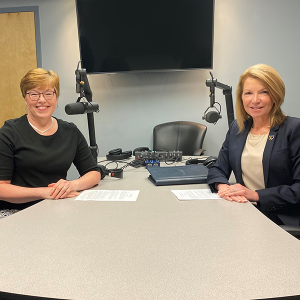
Tuesday Jun 28, 2022
Tuesday Jun 28, 2022
From teaching dosage calculations to understanding the intense demands of working on the critical care unit, Rhonda Brodrick from the College of Nursing is inspiring the next generation of nursing professionals.
Podcast Transcript:
Professor Rhonda Brodrick
And we would let them– we would have them watch it.
And I said: I want you to look at the teamwork and the communication.
These are skills that you didn't have when you were first semester, but now that you're fifth semester, look how far you've come.
And it was really great to be able to let them watch themselves and to see the growth that had happened over the last two and a half years.
Provost Kimberly D. McCorkle
Hi, I'm Kimberly McCorkle, Provost and Senior Vice President for Academics at East Tennessee State University.
From the moment I arrived on this campus, I have been inspired by our faculty, their passion for what they do, their belief in the power of higher education, and the way they are transforming the lives of their students.
This podcast is dedicated to them: Our incredible faculty at ETSU. Hear their stories as they tell us why I teach.
In this episode, we will talk with Rhonda Brodrick, an award-winning faculty member from the ETSU College of Nursing, and hear what it has been like teaching nursing students while working in the intensive care unit during COVID. Enjoy the show.
Professor Brodrick, welcome and thank you for joining us today.
A question that I always ask nursing faculty members: When did you first know that you wanted to be a nurse?
Professor Rhonda Brodrick
Well, first, thank you for having me. You know, that's an interesting question. My– my project this summer is, uh, is that I'm cleaning out drawers and doing all that accumulation stuff; and so I actually ran across a– a paper that I had done in elementary school, and apparently it was a paper about two career choices. And so I had written about a registered nurse and mortuary science. So it apparently was on my radar very early in life. I guess I'm a little thankful that I went the nursing route, rather than the mortuary science route – not that there's anything wrong with mortuary science – but my family's full of nurses and teachers. So I had an aunt who meant the world to me and she inspired me. She and her friend inspired me to be a nurse. So I think from a very early age, nursing was where I was destined to be.
Provost Kimberly D. McCorkle
I love it. And you were inspired to be a nurse.
I start this podcast with the same question for every guest: Take me back to your first day of teaching at ETSU as a faculty member. Looking back on that day, what is one piece of advice that you would have given yourself?
Professor Rhonda Brodrick
Oh, I was– I was so nervous. I think my piece of advice would have been just to relax. I think my biggest fear was that somebody would ask a question that I wouldn't know the answer to. And I've learned over the years that it's OK to say, I don't know. As I tell my students the way you say I don't know is key. There's a way that you can say, I don't know, which means: "I don't know and I don't care to find out." And then there's a way that you can say, I don't know, and it means: "I don't know, but let me see if I can find the answer for you." So, you know, learning to s– learning it was OK to say I don't know was– it is has been a good thing.
Provost Kimberly D. McCorkle
That's great advice. So tell me about the courses– courses that you teach at ETSU, and when did you first join the faculty?
Professor Rhonda Brodrick
I joined the faculty in the early 1990s. I taught here for about five years. Then I left. I went back into practice for five years. My coworkers at the time called it my sabbatical. Then I came back and I have been back since.
In most semesters – I guess when I first started teaching I taught more at the foundations level; their– their early semesters in the program. My background is med-surg, and so I tell the students I'm great if it's adult medical issues, I'm not really great if it's women in labor and kids in the hospital. But I tend to teach early in the program, and then in the last several years, I have taught their final clinical experience. So early in the program, I teach dosage calculations, which is where the students learn to calculate medication doses for all types of medicine that they'll administer. My other course I teach primarily in is Adult Care III: Practicum, and these are students that are going to graduate at the end of that semester. And so we're usually on the high acuity med-surg units over at the hospitals.
Provost Kimberly D. McCorkle
Well, I would imagine that your students are a bit nervous when they first come into the intensive care unit. How do you navigate helping ease their anxieties, but at the same time reminding them of the seriousness of the important work that's done in the critical care unit?
Professor Rhonda Brodrick
What I've learned is it's important to focus on the student because your students are different. I have students that are overwhelmed and intimidated by the complexity of the patients. I have other students that at times can be a little overconfident – and not that they're not incredibly bright students, they are; they oftentimes have teched and done– and had jobs in ICU, and they've seen so much, which is great in terms of experience – there's still a lot they have to learn. So when I approach the students, I try to look at where they are and to get a grasp. The first couple weeks of any clinical is trying to figure out where they are in terms of what they know and then looking at where are you now and what can I do to help you level up to wherever you need to get to.
So for the students that maybe are overwhelmed and intimidated, it's taking some of that pressure off in terms of – there's no way you're going to figure all this out in one or two days on this unit, it takes years for these nurses to get this level of expertise, so let's see what we can get out of today. If we learn a few things today, we can come back next week and learn a few more things.
For the student that is overconfident, sometimes it's asking questions that they may not know the answer to and helping them see that there– there are more things to learn. There's always something to learn. It's always interesting to me when a student says they're bored in clinical, because there's just– there's always something to learn. Even having been a nurse over 30 years, when I go in for any clinical, I'm still learning something new. There's new medications, there's new technology, and even people skills in terms of communication, in terms of management, leadership, I just can't imagine being bored on the unit.
Provost Kimberly D. McCorkle
Tell us what is a typical day like for students in a nursing clinical? I hear that your day starts most days before 8 a.m.
Professor Rhonda Brodrick
Way before 8 a.m. Shift– Our students, when they go to clinical, they do– in most cases they do a full shift, just like what the nurses do. So shift change for most of our hospitals in this area is at 6:30 in the morning. So usually we want to have a little bit of time with the student before we get them up to the units, but it's also important to get them to the unit before the nurse receives report. It's professional courtesy, in terms of, it's– it's hard for the nurses to get report and then to have to go back and try to catch a student up. So the students are usually there somewhere around six in the morning. For faculty, we are usually there around 5:30 in the morning. So those are very early mornings on our, you know, on our days. We go at 5:30 to go to the units to see what's going on in the units, to make sure that things are appropriate for a student to be there on the unit, and that type of stuff.
So our students come at 6:30, they receive report with their nurses, and then it really depends on the day. They usually are directed to work with certain patients on that unit, so there's tremendous variety in terms of what they may encounter during the day. And I think that's what makes teaching... challenging, I guess, is the word; because you don't know when you go in in the morning what you're going to have in terms of that patient combination, so it's a lot of you thinking on your feet in terms of what the students are doing, and then in terms of helping your students work with those patients.
Provost Kimberly D. McCorkle
What has it been like working in the critical care unit during the pandemic?
Professor Rhonda Brodrick
Hard. I think that... it's just hard. The patients are are so– when we were at the height of COVID, the patients were so sick. And it was– it was interesting in that it wasn't always... you had elderly patients that you would expect to be very sick with COVID that did fine, you had patients that were very young that you would have expected not to have a problem and they didn't do as well. The patients that were in the intensive– in the COVID intensive care units were really, really tremendously sick. I'm sure probably most people have seen those pictures in the news or in the magazines where, you know, you've got, you know, six or eight I.V. pumps outside the room and the nurses are all garbed out, and we had that here.
Provost Kimberly D. McCorkle
So you have been teaching at ETSU for over two decades. How has the way you teach changed, but what's remained the same?
Professor Rhonda Brodrick
I think the methods of teaching have changed. I did undergraduate here at ETSU, so I'm an ETSU– ETSU nurse, but I did my graduate work... When I was doing my graduate work, word processors had just come on the scene. So there were no handheld devices and there was very little technology. So I always tell the students I'm "PT," pre-technology, so you have to be patient with me, because it takes me time to get there. I– I joke with them, I say, OK, I've already been through like, you know, 78s, and 35s, and all the LP's, and then we went to eight-track, and then we went to cassette, and you know, and we've done CDs and we're doing DVDs, and, so, I'm... The technology is just amazing.
It's amazing in the sense that the students have access. They have so much at their fingertips now. And it's– it's so much easier to get to. You know, when I was here as a student – and this is nothing related to ETSU, but it was what– what it was – when you got your research topic, you went to the library and you pulled those great books off the shelf, and you had to look up all your words in the book, and then you would go and you would look... It would give you some references and you'd go look to see if your library even had that journal, and you prayed the whole time, oh, please, oh, please let them have the journal. And then you would go to the stacks and get the journal, only to find that somebody had torn those pages out of your journal.
So I love technology in the sense that I don't have to do that anymore. It's so easy to– to, you know, do your data searches from home in your PJ's. So in that sense, technology is great. I think COVID challenged us in so many ways, in terms of, we had to figure out ways that the students could keep learning when we were– we– when we were blocked out of hospitals for that period of time. And so the technology in terms of ways that we can teach has improved tremendously.
With that huge technology leap, though, our students are responsible for so much more information and there's so much out there that sometimes I feel like it can be a little overwhelming for our students. You know, you can get lost in the technology trying to figure out what you're trying to do.
So, technology, methodology... I came into teaching with practice– I had a lot of nursing practice, I didn't have any– I hadn't had any background in nursing education. So I've learned a lot by trial and error, by making mistakes and having, um, and some successes through the years to learn really how to be a teacher. I am eternally thankful for the nurses that mentored me in the hospital and that mentored me when I came here. They were phenomenal, and they really... it was such a blessing to have that person that you could go to and say, I have no idea what to do with this. And– And you got, you know, you had some of that really gave you good advice.
What hasn't changed for me is the motivation to teach. And, and, and my heart's the same in that I really want my students to be successful. It's so important to me, not that they just graduate, but they graduate at a level where they can be successful.
Something I'll never forget in graduate school was one of the professors was talking to the class, to our class of students, and the professor said to us that we were like, 10th or 12th priority on his list. And having been in academia now, I– I guess I understand it a little bit better, because at this institution I'm sure he had to generate a lot of scholarly activity and all of that stuff; but he basically said his research, his scholarship and all of that came ahead of his teaching responsibility. And I remember sitting there thinking, man, I paid a lot of money to come to this school, to be 10th or 12th priority on somebody's list. And I never wanted my students to feel that way. You know, I really try to show up and give them 100% so that they know that they're high on my priority list. I care. I mean, you know, if I'm not doing something well, I want to know if there is something I'm doing. Sometimes you think you know what works, as a faculty member, but, you know, sometimes what you think's working is actually not what is most beneficial for your students. So when they take the time to give me that feedback, it really means a lot.
Provost Kimberly D. McCorkle
Tell us a bit about how you use simulations in teaching.
Professor Rhonda Brodrick
I'm glad you brought that up, because you asked how methodology had changed; and simulation is a great new type of technology that we're able to use with the students, we used building 60, Bishop Hall, to do some simulation with our– our fifth semester students that were getting ready to graduate. And unfortunately with COVID, the spacing guidelines and that kind of stopped our simulation process for a while; but the students really enjoyed simulation. Before COVID, we were doing – In– in my clinical – we were doing six different simulations with the students. And so it was really interesting to have them in the sim lab and to be able to set up experiences and to take the pressure off of them being with a real patient, but at the same time to explore and have to think through, what would I do if this happened? How can I put this– these pieces of information together to understand what's going on, what's happening with my patient, and how do I make appropriate decisions?
And there's– there was so much variety in what we were able to do. We could do anything from a skills refresher, which never hurts for nurses; even practicing nurses have to go back and do skills fairs, to make sure that they stay competent in their skills. But it also gave us an opportunity to provide patient scenarios that they may not necessarily see. We had patient scenarios related to burn patients, we had patients that were having cardiac issues, and it allowed us to show the students what they might see if they needed– what they might have to do in terms of how to manipulate the monitors if they were... needed to cardio– cardiovert a patient, or if they needed to attach a patient to a pacemaker, a temporary pacemaker.
One of the... a couple of them that the students really appreciated, we did mock Code Blue, and, which, we would basically call the code, we would have the students come in, and the students would run the code; and they really came to appreciate how difficult it is to do CPR for 2 minutes straight before you can change off. We also in that scenario would take them through... our codes weren't always successful, and we would walk them through, we would– we would, if we could, we would have a family, someone acting as the family member at the bedside, and we would bring the family member to the bedside, and the students would– we would continue until the students had to address with the family member that they had done everything that they knew to do, and it hadn't been successful. We also did a disaster drill where ETSU had been hit by a tornado, and we basically had a group of students come in and triage, do the first set of triage.
So it's from a faculty perspective, it's fun, you get to be creative. From the students' side of it, though, they really liked the ability to be able to think through issues and problems and have that time that you don't always get at the bedside, but... and to figure out what was going on with the patient. And then that sense of accomplishment when they did figure out, and they knew what to do, and they made appropriate decisions, that was a real confidence booster for them.
And one of the things that I like about simulation as a teaching method is that it allows students the opportunity to get immediate feedback, to review how they acted and then to have feedback from the faculty member. Now, the challenge for that from a faculty side is, in simulation, they always tell you whatever amount of time you spend in simulation, you spend double that amount of time in debriefing. And the hard thing for faculty is– is learning to keep your mouth closed. You have to– you really want to... If you're talking in debriefing, it's– you're not debriefing, you're not giving them the chance. So learning how to get them to do the talking, to get them to do the thinking, you know.
And in the code sim, what was– I always enjoyed that debriefing because what was... I would always ask them at the end, if you– if we had given you this scenario your first semester in nursing school, would you– what would you have done? And you know, a lot of the students say, I would have just cried, or I would have quit; just quit and never come back. And I said, so you know, the purpose of this isn't to win the Code Blue Award. We are not, you know... You don't win the code Blue Award until you've done 100 codes. We're not there. But I want you to look at the at yourselves on the screen – because we would we would video it, we didn't tell them we were videoing it, but we would – and we would let them watch it. And I said, I want you to look at the teamwork and the communication. These are skills that you didn't have when you were first semester, but now that you're fifth semester, look how far you've come. And it was really great to be able to let them watch themselves and to see the growth that had happened over the last two and a half years.
Provost Kimberly D. McCorkle
Yeah. Thank you.
Tell us what advice you have for someone who's considering a career in nursing.
Professor Rhonda Brodrick
Think it through. Yeah. There are... It's– it's a great profession. And, you know, nursing has– has been a blessing for me, and it's given me so many opportunities, and nursing is a profession that will give you amazing opportunities. You know, there are jobs available. There is so much– so much flexibility within nursing. You can change your career path without having to go back and get another degree. There's a tremendous need for nursing now, and there will continue to be a tremendous need for nursing moving forward.
All of that said, I think you need to understand that it's going to take a whole lot of hard work to get that degree. And the hard work is not going to stop there. You know, the salaries can– are good, you know, and like I said, the opportunities are good, but you're going to work hard and you're going to have those days. It's– it's an amazing– it's– it's an amazing amount of responsibility because when you go in to work, you really are holding people's lives in their hands, in your hands. The decisions you make are important.
Provost Kimberly D. McCorkle
Yeah.
I really appreciate the way you've described your approach to teaching. So can you share with us what are some of the most rewarding moments that you've experienced in your role as a teacher?
Professor Rhonda Brodrick
Well, I love my students. You know, just having a smile or running into a student that I've had before or receiving an email about, I just thought about you today, or I remember when you were teach– we were teaching– you were teaching dosage and calc, and I've never had to worry about my math, and I just really appreciate the time that you spent.
The notes from the students – one thing that Dr. Nolan does at graduation that I've always really liked was he always takes time to– to make that appeal for students to take the time just to send a note. And over the years, I have a stack of notes and I really... I don't throw those away. They're in my office. When I do have those days where I think, Oh, man, is this really what... it's just been one of those days, but, you know, I'll pull those cards out and look to see, you know, to read those notes, to remember why I do what I do.
But I think the other thing that meant a whole lot to me was I graduated from ETSU on ETSU's 75th anniversary year. The centennial year, they had a... they went to the colleges on campus and they asked students to nominate a faculty member and I can't remember if they called it like... Anyway, it was a way for the students to recognize a faculty that had meant something. And I– I got that award for the College of Nursing, but I got it on the hundredth anniversary. And so it was kind of neat to look at from, you know, in 25 years I had actually come back to my school and, you know, was making a difference, and that meant a lot.
Provost Kimberly D. McCorkle
So meaningful. Congratulations. Thank you.
So the last question I like to ask every guest is: What impact do you hope your students will make on the world?
Professor Rhonda Brodrick
That's such a hard question. There's so much. There's– there are so many opportunities for nurses to make a difference, whether it's at the patient– with the patient at the bedside. Within a facility. Um, you know, our students are incredibly talented. The profession itself, our students are so different. When I look back over the last 30 years, the nursing profession, I don't think I could have envisioned the nursing profession being the way it is today.
And I think for the students, one– one way I– one thing I say to them is in terms of technology, because now we have students that have grown up with technology, and I'm kind of excited to see where these students will take technology. Maybe it'll become more intuitive, in terms of working with patients at the bedside, and less of a distraction, I think there's a lot of potential there.
But for me, our students have so much potential to meet whatever they choose to do – and they're all different, and they're all going to have different strengths – but whatever they choose to do, I just want them to do their best, and I want them to do it with integrity, to be willing to make those hard decisions, you know, to stand up when everybody else is backing down. But if they're able– you know, if they do that, they will make change, and they'll make positive change.
Provost Kimberly D. McCorkle
Thank you, Rhonda. It has been a pleasure having you. And I thank you for all you do for our students and for our health care system. You truly made a difference at ETSU and positively impacted your students, and we're so fortunate to have you on our faculty.
Thanks for listening to "Why I teach." For more information on Professor Brodrick or this podcast series, visit the ETSU Provost website at ETSU dot edu slash provost. You can follow me on Twitter @ETSUProvost, and if you enjoy this episode, please take a moment to like and subscribe to "Why I Teach" wherever you listen to your podcasts.