Wednesday Jul 13, 2022
Episode 04: Dr. Cerrone Foster
Dr. Cerrone Foster first heard about ETSU when she was a summer research fellow in the Ronald McNair Program. Now, she is a highly respected faculty member in Biological Sciences and a true champion for student success.
Provost Kimberly D. McCorkle
Hi, I'm Kimberly McCorkle, provost and senior vice president for academics at East Tennessee State University. From the moment I arrived on this campus, I've been inspired by our faculty, their passion for what they do, their belief in the power of higher education and the way they are transforming the lives of their students. This podcast is dedicated to them: Our incredible faculty at ETSU. Hear their stories as they tell us why I teach.
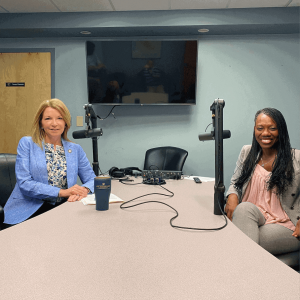
In this episode, we will talk with Dr. Cerrone Foster from the ETSU Department of Biological Sciences. Dr. Foster came to this campus several years ago while an undergraduate for a summer research fellowship. Now she calls ETSU Home, and a couple of years ago she was listed among 100 inspiring black scientists in America by the science blog Crosstalk. Enjoy the show.
Dr. Foster, thank you for joining me today. I want to begin by talking about our McNair program, which prepare students for graduate school. You were a student in New Jersey when you first heard about the program here at ETSU. Will you walk us through what happened?
Dr. Cerrone Foster
Sure. I was in my junior year at the College of New Jersey, and I had an advisor who handed me a flier for the Ronald McNair program at ETSU; and someone gave it to him, so then he gave it to me. He thought that this program would be perfect for me. I did not know where Johnson City was located, so I pulled out a map to see where it was. But we thought that it would be a great experience to go to another institution for the summer, as well as engage in undergraduate research. And so I applied and I was accepted.
And the coordinator for the program at the time, Mrs. Leslie Glover, she picked me up from the airport with the warm, welcoming greeting. And so that was my first introduction to ETSU and Johnson City, and it was perfect. And while I was here over the summer, I met so many other people here: Mr. Steve Ellis, who was in the College of Medicine, but now with pharmacy; Dr. Dorothy Dobbins is now retired but worked at the College of Medicine, and I think sociology; and then the students that I met as well that were ETSU students that were part of the program were also just warm and welcoming. And all of those individuals– we're still close. This was summer 2000. So 22 years later we still have a great relationship. And I actually talked with some of them just a few days ago and will see a few of them over the weekend. And so it was just a really great experience that I had.
And then of course, my mentor can't forget him, Dr. Scott Champion. His teaching and his style of mentoring is literally ingrained in who I am and how I mentor and teach my students. And he and I still keep in touch as well. So that was– it was a very transformational and awesome experience that summer.
Provost Kimberly D. McCorkle
That's wonderful.
I like to start my podcast with the same question for every guest: Take me back to your first day of teaching at ETSU as a faculty member. Looking back to that day, what's one piece of advice that you would have given yourself?
Dr. Cerrone Foster
Well, less is more. So doing a lot less. As a professor, teaching an introductory course is usually a set curriculum that you need to cover. And it– it was a lot, it was a lot of information. And so then you couple that with students from different educational backgrounds and then poor study skills. It was just rough. And so I wish I would have learned that it's OK to cut some things out (which I ended up doing, you know, after that first year).
So worked with the department, even Amy Johnson with the QEP at the time, and just redesigning the courses. And so all of that helped to redesign the course and the content. And then we were able to focus on study skills; building skills, building the confidence that students needed, and then transforming the content in a way where they still got the foundational pieces of information. But those skills became more important because then they were able to pick up a lot of the content that I thought that they were going to miss. And so, less is more, and finding the right balance, and how I teach was– was– I wish would have known that.
Provost Kimberly D. McCorkle
Excellent advice.
Tell us about your faculty role in biological sciences. What courses do you teach?
Dr. Cerrone Foster
So my initial appointment began in 2011– 2011 as a lecturer and then in 2016 I began the Assistant Professor Tenure track and received tenure and promoted to Associate Professor in 2021, and so I teach introductory biology one for majors. It's part of a– is the first course in a three-sequence intro course for students and then I also teach a course called supervised teaching. And in the past I taught an upper level biochemistry laboratory course.
Provost Kimberly D. McCorkle
So you also prepare graduate students who are going to become teachers.
Dr. Cerrone Foster
Yes. And so the biology one laboratory, it's a component of the course but it's taught by our master's students and so many of them are working towards– going to apply for PhD programs or they can go into teaching as well at a community college or even at some undergraduate campuses. But I work with them on teaching pedagogy, the strategies in the classroom. They prepare their lectures, they prepare their exams and grade their exams. And so I work with them and those skills.
And then also because they're first year master's students many of these students are just graduating from college. And so they were once themselves, just a few years ago, sitting in that same seat. And so it's a daunting task for a new master's student. And so they– it's overwhelming sometimes. And so it's important that we work with them as a department and in helping them navigate that transition to teaching.
Provost Kimberly D. McCorkle
You were telling us earlier that you didn't jump directly into a tenure track position right after finishing your Ph.D. Talk about where you were when you made the decision to become a college professor.
Dr. Cerrone Foster
Oh, yes. In the classroom!
So it wasn't until I actually got into the classroom doing the thing that I realized that this is for me. And so at the end of my post-doc, I was still weighing options for my career path, which I finished my post-doc over at Quillen in the Department of Biomedical Sciences in 2011, so I was still weighing options and what I wanted to do. And the college professor was not one of those options actually.
And so I enjoyed teaching because I, as a Ph.D. student, I was a teaching assistant in the biology department actually. And then I also taught at Northeast State for a year as an adjunct faculty when I was a Ph.D. student. So I enjoyed it but quite hadn't thought that I wanted to do a tenure track position, research lab. Everything that I'm doing now, I had not thought that I wanted to do that.
So I saw the lecturer position and I applied as sort of a transition period to give me some downtime to think, OK, well, I could use this downtime to think about next steps, figure out where I was going to go next. But boy, was I surprised that when I stepped in that classroom that first semester there and the relationships that I built with students watching them grow, maybe struggle at first, but then to see them grow and then working and serving with faculty on campus, all of that coupled together just kind of captured my heart.
And I love people. I'll talk to anyone and so I love being on a college campus. It reminded me of when I was in college as well. And so all of those things together, of been around on a college campus, working with students, and then still I was still involved with my research as well, so that after a while it was evident that this is what I'm called to do. And that this is where I'm supposed to be.
Provost Kimberly D. McCorkle
That's great.
Science can be intimidating for students, and I know that ETSU is a popular destination for students who are seeking careers. Many of these students likely end up in your biology 1110 lecture course. Overall, how many students do you have in this course? And can you estimate how many of those are first-time-in-college freshman?
Dr. Cerrone Foster
Yes. So I teach two sections of biology 1110, and typically about maybe 200 to 250 in each section. And that has changed over the years. So a total of, you know, I think 400, so 450 to maybe 500 students total that I've had kind of average over the years. It's been less of course lately since the pandemic, but this is just the fall semester.
And then typically it's about 70% of those students are first-time freshmen. So you can think maybe 300, 350 students, and the spring it's less, we have about a hundred students in that class and most of those students are upper level students that are not biology majors. Many of these students are pre-med, pre-nursing, pre-pharmacy or pre-health-sciences. So the grade that they will earn will matter later on when they're applying to these graduate programs.
Provost Kimberly D. McCorkle
What are the critical studies skills that students need to learn in order to be successful in these courses?
Dr. Cerrone Foster
Yes, you are absolutely right. And so critical reading and critical thinking are absolutely pivotal in this course. Data analysis and application of the content as well, particularly to real world problems that they're going to be solving in their careers, I would say, are major skills that they need for some of the majors and careers that you mentioned.
Provost Kimberly D. McCorkle
You've also done research on student retention. Talk with us about that work.
Dr. Cerrone Foster
Yes, so after my first year, actually, during that first year teaching, I noticed that students were struggling with the skills that I just mentioned and so in talking with the students, many of them talked about that their high school preparation just lacked a lot of these skills. And then it was varied across the board. You have so many students, so you had varied experiences, and then it was also affecting their motivation and their success in the course.
And so I really just felt compelled that I needed to do something. And I think that's that scientist in me, that when there's a problem or there's a question at hand you want to fix it, and you find answers to those questions to be able to solve the problem. So that's what I did.
I received some grants from the Tennessee Board of Regents to do a sort of course to revitalization and implement some things, and then also a grant from Pearson Biology to do some changes. And a few of those, the most notable, we're seeing some– some dramatic changes, great changes, rather, was revising the course content where we were using case studies and sort of this flipped classroom model where students read and do questions ahead of time to prepare. When we come to class, we're problem solving we're applying it.
And I could think of one example where we talked about the opioid epidemic and we took a topic from biology and applied it to drug transport, but had the students write a reflection on their lives and their careers and how what they're learning and what they're doing can intertwined with how they could fix the opioid epidemic in their in their communities. And many of them even shared stories of how their communities and families have been devastated by this. And so it was just really transformational for students to see purpose in what they were learning in the classroom.
And we saw that, you know, being able to learn in this manner, we had a decrease in the failure rate in the class. And then students also were able to to do well on higher-level cognitive questions on Bloom's taxonomy.
I've worked with Ray Mohseni in Department of Chemistry where we merged some of our content or we synched our content with chemistry and biology. And then we used the Flint, Michigan Water Crisis as sort of a backdrop to teach both biology and chemistry. So students who were in our classes at the same time were seeing this example, seeing the chemistry side of it, but then the biology side of it, literally during the same week of classes.
And then Ray in his chemistry class saw that there was a 7% increase in the– the students take the ACS chemistry final sort of as their final exam. And so this is a national standard exam, but the students had a 7% increase than previous years on this exam.
And so we're seeing that you can get results and that students can do well. You just need to work with them and teach them the skills that they need. We do a lot of metacognitive strategies, teaching students to see: "how do I learn?" and to reflect on those and then looking at growth mindset in the classroom.
I partnered with the CFAA. My class was the first class to introduce a supplemental instruction and so that was a great experience. And now several classes on campus are using it and it is absolutely pivotal for my class.
I'm working with Florida Atlantic International University as well as Auburn University on reading primary scientific literature and how students are engaging with scientific journals.
Provost Kimberly D. McCorkle
Speaking of research, you were recently named Associate Director for Undergraduate Research in our Honors College. Congratulations. Tell us about this new role.
Dr. Cerrone Foster
Yes, thank you so much. I am really excited about this new role. It really encompasses everything that I love and that I'm passionate about. And one of the main roles is to increase the number of students participating in undergraduate research and creative activities across campus in all disciplines, and then also assisting faculty on how to create these mentor research experiences or creative experiences for students as well.
It's important because students who engage in undergraduate research have higher retention, greater persistence toward graduation, and a stronger sense of belonging. They are also better prepared for graduate school and careers.
Provost Kimberly D. McCorkle
With hundreds of students in your courses and this new role, how do you find time to continue your own research?
Dr. Cerrone Foster
I do. I currently have a grant from the American Heart Association and I'm studying the impacts of estrogen loss and aging on heart failure. It's a tight balance, but I get it done. My students help, and we work as a team with calendars and organization systems. It all connects.
Provost Kimberly D. McCorkle
When I opened the podcast, I referenced the Crosstalk listing naming you among the 100 inspiring Black scientists. Will you tell us a little more about that?
Dr. Cerrone Foster
Yes. It was an honor. I think about the Black scientists who came before me who did not have the freedoms I have today. I stand on their shoulders. I am also the first person in my family to attend college and earn a Ph.D., so I did not have many role models in science growing up.
But I had teachers who saw something in me early on and encouraged me to pursue science. I have been doing science since I was 12 years old. And I also recognize the importance of representation in STEM, because students need to see people who look like them in these fields.
Provost Kimberly D. McCorkle
The last question for every guest: What impact do you hope your students will make on the world?
Dr. Cerrone Foster
I teach a seminar called "Movers and Shakers: Becoming Students of Impact and Influence." I tell students they are next in line to lead the world. They have a responsibility to use what they have learned to make change, speak up when something is wrong, and help improve society.
Provost Kimberly D. McCorkle
Thank you, Dr. Foster. We are so glad that you made the decision to come to ETSU for our McNair program when you were still an undergraduate student. It was a transformative moment for you and for ETSU.
Thanks for listening to Why I Teach.