Why I Teach: Conversations with ETSU Faculty
This podcast celebrates the faculty of East Tennessee State University by amplifying their stories. Faculty guests discuss why they are passionate about teaching and share what impact they hope their students will make on the world. The podcast is hosted by Dr. Kimberly D. McCorkle, ETSU Provost and Senior Vice President for Academic Affairs. Music for this podcast was composed by ETSU Professor Martin Walters.
Listen on:



Episodes
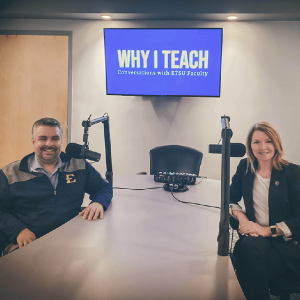
Apr 17, 2026
Apr 17, 2026
26 min
Mathew Desjardins, a member of the College of Business and Technology, is overseeing ETSU's innovative new BlueSky Tennessee Institute. This groundbreaking program provides Tennessee students the opportunity to earn a bachelor's degree in computing and a job offer at BlueCross in just over two years.
Podcast Transcript:
Professor Mathew Desjardins
Because the end goal is when they are done with our degree in 27 months and they graduate and they shake your hand and they shake Dr. Noland's hand at graduation, they leave with a job offer.
[Music]
Provost Kimberly D. McCorkle
Hi, I'm Kimberly McCorkle, Provost and Senior Vice President for Academics at East Tennessee State University. From the moment I arrived on this campus, I have been inspired by our faculty, their passion for what they do, their belief in the power of higher education, and the way they are transforming the lives of our students. This podcast is dedicated to them, our incredible faculty at ETSU. Hear their stories as they tell us, "Why I Teach."
In this episode, we will talk with Mathew Desjardins from the ETSU College of Business and Technology. Matthew is part of our Computing faculty and is currently overseeing our Blue Sky Tennessee Institute. Enjoy the show.
Professor Desjardins, welcome to our show. It's a pleasure to see you here today. First, I have to ask, did you drive the Tesla over today?
Professor Mathew Desjardins
I did drive the Tesla over today. Well, actually last night. I tried to come in the night before to get ready for an early day. So it's an interesting drive with a Tesla. You got to kind of let it go, its own control. But I, I trust it completely. It gets me from Chattanooga to here almost every week.
Provost Kimberly D. McCorkle
Now, well, I, I like how the Tesla is featured in, in a lot of what you do and the work that you do, so maybe we'll have a chance to talk more about that.
Professor Mathew Desjardins
Yeah, that'll be great.
Provost Kimberly D. McCorkle
I like to start my podcast out with the same question for every guest: Take me back to your first day of teaching at ETSU as a faculty member. Looking back on that day, what's one piece of advice that you would have given yourself?
Professor Mathew Desjardins
Man, I remember my first day teaching. Dr. Kelly Price, a former faculty member in the department, she gave me a chance to, as a graduate student, to teach for her, and at that moment, I was like, "Yeah, this is what I want to do." She really encouraged me to get to where I want, but I was kind of strict, I won't lie. You know, when you're first teaching, you're like, oh, oh man, all my other teachers were strict, right? I have to be strict. So if I can go back to Old Matt or Young Matt, I guess, I would be like: Matt, give them some slack. It's okay. They're students. Remember how it was to be a student. So that would be my one major advice. This is where you should be, yeah, but definitely give them a little more leeway because students go through a lot, and we forget that, I think sometimes.
Provost Kimberly D. McCorkle
Something I learned about you recently is that when you first attended as a college as an undergraduate student, things didn't go according to plan. You've been open about sharing the story. Would you tell us a little bit about that?
Professor Mathew Desjardins
Yeah. I came to school traditionally, right. Every student thinks, okay, you got to go to high school, then you come right out of high school and you're supposed to go to college. One major piece of advice is to listen to your mom. I should have listened to my mom. I left high school, coming to college, and I wanted to go into business. I, I love business; it's actually part of what I do in my current career in Computing. But my mom was like, "No, you're a Computing person. You do everything Computing, you have this very logical mindset." But I was like, "No, Mom. I want to go into business. I know better." So long story is I came to school, and business was not my thing. I don't think it was business or the classes. I think it was just my mindset. Some students don't realize the importance in higher education, and I didn't. I had no idea that I thought I knew better than everyone else. I thought that I can come and make my own life. I wanted to make money, so I ended up actually failing out my first three semesters, and I ended up coming back to ETSU because I wanted to better myself. But I also wanted to provide my knowledge to others and to give the opportunity to students to be like, okay, this is not for me. And now when I hear a student say that, I was like, well, I don't think that's the thing; it's let's find what it is for you. Maybe you made the same mistake I did. Maybe you ended up picking the wrong major. Maybe you just didn't connect with students; maybe you just need someone to say, hey, you can actually do this. I love my parents; they just didn't know or understand what college is. College is a full-time job; it's a job in its own, and if we come in the mentality like, hey, as faculty members we can help those students learn that school is a full-time job, that school takes a commitment, and school's not supposed to be easy. Nothing of value is supposed to be easy, and that's what I learned over those 10 years before I came back.
Provost Kimberly D. McCorkle
It sounds like those prior experiences really shaped you as a faculty member and shaped the way that you approach your students now.
Professor Mathew Desjardins
Absolutely. I always say I wish I didn't do that gap, but without that gap I wouldn't be the person I am today.
Provost Kimberly D. McCorkle
Yeah. I've heard you say many times that you learn as much from your students as they learn from you. Can you tell us a little bit more about that?
Professor Mathew Desjardins
Absolutely. I have amazing alumni, but I have a long list of these students that really inspire me to do better, anywhere from doing more research to improve my skills, introducing me to new topics, so these students push me. They challenge me to try new things. They challenge me to understand that, hey, they're human. But I also, through them, show them that faculty members are human, too. And so we have lives, we have interests. I'm down to go to a football game with the students. I had one of the Blue Sky students up here last weekend for the football game. Even though it was dreary, rainy, we still had a good time, 'cause I think allowing students to see that we're both human and understand that we want the same thing—to better each other. And so I learn that from my students, and every time I get in front of a classroom it's not me telling them what my knowledge is; it's also me taking a moment to let them tell me their knowledge and what they have passions for. Creating a learning community, it sounds like that's it. I don't have this like teacher-student; I have more of like, hey, I'm a guide. So I have this knowledge that I want to share to you, and let me guide you through these challenges of what life is called and see if we can figure out what is your best pathway. I used Dr. Dula a lot and you probably have heard Dr. Dula from many people around here, but Dr. Dula in one of his lectures he says college or a degree doesn't make you better; a degree just opens more doors. And I want to take that spirit of what I had when I had Dr. Dula and his lectures that I still watch to today about how a degree just opens doors, and I want to spread that knowledge. For me, the students are opening doors for me as we go through.
Provost Kimberly D. McCorkle
That's fantastic.
So you work in a field, computing, that is constantly changing. How do you stay abreast of all the changes in your field?
Professor Mathew Desjardins
Our field changes daily. I feel like I talk with our faculty, I'm like, hey, this just happened or hey, this just happened. I would say definitely my colleagues—I want to thank every single person that I've worked with and now in the past—their knowledge that they passed on to me that our field is changing is what allows me to keep changing. I'm a person that doesn't like stagnation, so I definitely, I think I'm definitely in the right field because learning new things every day, seeing new challenges, changing our curriculum almost semesterly—you know, we have to change what we do, what we teach, what we are learning ourselves. So definitely our faculty, but our students—I think our students bring so much nuance. They come and they're like, hey, I heard this or hey, I play this or hey, I want to build the next self-driving car, right? And so we get these ideas from our faculty, we get these ideas from our students, and I think the combination of those two is what allows me to stay current to the point now where I love our curriculum development. So, you know, I'm definitely involved with our development at both the college and our department, but also at the University. So I like curriculum, for us, is what drives students to want to come to us, and I think curriculum is just as much like technology. In all of our curriculum, I know there's many changes that are coming through the university, which is a good thing. It means that we all as faculty are staying current and wanting new changes.
Provost Kimberly D. McCorkle
So it's important to keep the curriculum relevant to help serve students and their future goals, right?
Professor Mathew Desjardins
Absolutely, and I love that here at ETSU we have a range of everything, and what's really nice though is Computing is kind of central to it all. I always challenge my students: I'm like, all right, Computing is involved with everything—find me something that there's not a need for someone in Computing. You know, we're sitting here in a recording studio and there's a computer that's recording us and managing all this, and so from recording to rocket science to medical schools—you know, the robot over in Quillen—I think there's a chance for us to always be part of everything that's going on.
Provost Kimberly D. McCorkle
Yeah.
So I want to shift gears a little bit. This is a momentous fall as we're launching a wonderful new initiative, our Blue Sky Tennessee Institute. So you have been spending a lot of time in Chattanooga recently helping to launch that Institute. Please tell us about the Institute.
Professor Mathew Desjardins
Yes. The Blue Sky Tennessee Institute—and I'll—Blue Sky has been my life since 2019, actually even before then. So Blue Sky is Blue Cross Blue Shield wanting to build our workforce development. I mean, they put a request out to Tennessee universities saying, listen, we have this need, and their need is tech people, and we want to partner with some institution to provide these ready people to come and work for them. So in short, Blue Cross Blue Shield of Tennessee has a shortage of tech people. You wouldn't know that an insurance company actually has the majority of their employees in technology, and they need those people to keep the business going, and they were like, hey, let's see if we can get a partner to produce the needs. So Blue Cross Blue Shield has been an amazing partners. I want to really stress that because they did a lot of the legwork. They said, okay, we need to internally look at our business and actually know what we need from our employees, right? And so, you know, I think a lot of times we as faculty look at learning outcomes for students, but we don't really do well translating what learning outcomes look like into what an actual business needs from that—sort of the core competencies of the workforce, right? And so, like, you know, we say a student when they can leave they can defend cyber security, but in a business they like, can you actually handle an attack? Can you identify an attack? And so trying to map what they need versus what is being done in schools, they did the leg work to that. They hired a company to help them identify what these core things they needed. When they put that out here, the Department of Computing, with thanks to Dr. Noland and Dr. Pittarese, Dr. Bennett, and Mr. Hendrix, we all together put together a proposal to Blue Cross Blue Shield saying, hey, these are the courses and here's the things we can actually do for you, and here's where we're going to need your help a little bit. The help turns into internships. So these students—they're going through our program—so they're going through a traditional Computing degree; they're doing the information systems concentration. So it's a degree that any student here on Main Campus can do. The only thing we did a little bit different is they're not getting the same breaks; we're ensuring all classes are lining up in the prerequisite order, right? So they're going fall, winter, spring, summer. They get a couple breaks. They're going to have a little bit of winter break, but they'll have to do just their online winter course, so they'll be doing one online. They'll get spring break. They'll get a little time in the summer, but it's just kind of continuous for 27 months.
Provost Kimberly D. McCorkle
An accelerated process.
Professor Mathew Desjardins
It is. It's, you know, and sometimes we think accelerated as we're shortening credentials or we're trying to reduce the requirements, but they're getting the same education. It's the same time length; we're just ensuring that everything happens one after the other, right? They're also getting professional development. So again, going back to our amazing partners with Blue Cross, they are getting professional development, so the students are getting mentors from both their executive leadership team—so if someone at a vice president level or higher is actually mentoring them, someone actually has their CEO as a mentor giving them advice on how to go through—but then they're also getting what IT members, so the actual information technology folks that are in the workplace as mentors too. And so not only are they getting our education, they're getting professional experience, professional development. Because the end goal is when they are done with our degree in 27 months and they graduate and they shake your hand and they shake Dr. Noland's hand at graduation, they leave with a job offer from Blue Cross Blue Shield.
Provost Kimberly D. McCorkle
Wow.
Professor Mathew Desjardins
And instead of having to, like, figure out what they need to do over, you know, a year—'cause Blue Cross says it takes about a year for a student to transition from graduation to actual workforce—they've been doing this now for 27 months, so hopefully that time is much reduced, shortened.
Provost Kimberly D. McCorkle
So I am also very interested in the processes that you've built in to support students along the way. Can you tell us a little bit about the student support?
Professor Mathew Desjardins
Absolutely. Student support is number one. I'm a number one advocate for students, and which made me a very ideal candidate to go down there and represent ETSU in this partnership. I put students one, the department two, the university three, me last—but you know what's best for the students. Our students are our customers. Our students are our people that are coming to us wanting this knowledge, and so we need to do what's best for them. But we have other support. So not only me, we have the entire University supporting us. I have everyone from student life and enrollment; they have been down there many times. I can't thank them enough for all the work they're doing. Dedra Johnson in the CFAA having tutors ready on hand—she's been amazing support in that. But going back to our amazing partners, they hired a Student Success Specialist, so Melissa Graham—she's a Blue Cross Blue Shield employee. She works for the Blue Sky program. She's a former K–12 counselor, and so she knows what a traditional student coming out of high school would need. So she's looking at it from, you know, she's the academic support from ETSU and all of the services we offer—we got that—but Melissa is also coming in behind for crisis management alongside our Counseling Center. So she's identifying and meeting with these students, you know, every other week saying, hey, what's going on. Blue Cross is supporting them financially, you know, so this first cohort has a full last-dollar scholarship, right, which is really supportive. You know, money is not the most important thing, but it does make a burden on students which could cause stress, so some of our students can't live at home while they're doing this. So Blue Cross Blue Shield stepped up and said, hey, we can help with that. Our community foundations—the Benwood Foundation and the Community Chest of Chattanooga—have put in money towards this to help support these students, whether that's for food. All their books are being covered, all of their supplies; they're getting a laptop. These students have so much financial support. They're getting crisis management. They're getting social interaction by our cohort model, where it's a little bit different. You know, the people who are listening to this are like, oh man, this sounds amazing—how are you getting it done? Well, we put through some restrictions, right? So they're here treating it as a job, right? So they're in class 9 to 3. Do I teach that whole time? No. I teach my normal time, but then we have general education that's online, so we give them online time blocks. We have people come in for tutoring and support. We changed higher education slightly. You know, it's not the you-build-your-schedule-try-to-get-everything-in-on-like-a-two-hour-time-and-if-you-don't thing. We're very hybrid K–12 but with all the college courses built in around it. So it's fantastic.
Provost Kimberly D. McCorkle
What's the interest been among prospective students and their families?
Professor Mathew Desjardins
So we're in the process of interviewing for our next cohort of students, right? So we got 32 students, and let me—maybe this will put in perspective—we were originally only wanting to do 15, and the out—we had ended up last year having 96 people apply. Out of those 96 we chose 32.
Provost Kimberly D. McCorkle
Wow. So that was really, really amazing return—there's strong interest, absolutely, from the local community around Chattanooga and beyond.
Professor Mathew Desjardins
Absolutely. This year we're about 10 times larger in interest, so the initial applications coming in are about 10 times from what we were last year. The questions, the amount of tours and interviews that we've been doing with students and talking with students—it's grown exponentially.
Provost Kimberly D. McCorkle
That's fantastic.
Professor Mathew Desjardins
And I really do believe this is, you know, it might not be for everyone, and we do an interview process because we want to select the best candidates. And the best candidate is not academic; the best candidate is do they have an interest in our field, do they want leadership potential, do they have some interest in Computing. Because a lot of people think Computing is one thing and Computing's not another thing, and so we ask these interviews and we want, you know, if a student says, "Hey, I want to come to this program but I also want to do marching band," well, we don't have a marching band down in Chattanooga, so let's see if we can get you up to main campus and join our marching band up here because that would be a better experience for them. We don't just say yes to everyone. We take the best candidate that wants to complete something in 27 months and get a different college experience—a good one—but it'll be different. But if they want a traditional one, we try to get them up here. We have a student right now for whom it was better to go the traditional path, and we got him up here and he's loving it and he's killing it. And I love that it was best for him, and he's going to be a good case to say, hey, if we do this for this type of student, you know, we can see a good outcome for those. That's great. You help them with other kinds of off-ramps. Any student that I get to interact with, whether they get taught by me or they get taught by someone else—we need a better workforce; we need better people. Our future is in our students. Our future is not us—no offense—it's not us. Our future is who we're teaching. And if we can, you know, set a good foundation and a good groundwork for them to want to do exactly what I'm doing, then I did my job.
Provost Kimberly D. McCorkle
What's been the most impactful part of this experience for you?
Professor Mathew Desjardins
Oh man, the students. I mean, that's such a—oh, he's going to say the students—no, it really is the students. Dr. Noland recently came by and visited with Trustee Grisham, and those two people are just amazing people and I want to thank them very much for coming down. But you know, they were asking, I was like, why did you come into this program? Why did you do this? And every single one of the students was like, well, we really like the 27 months. You know, that was definitely a drive for them, but they liked that it was close by; they liked that it was ETSU because we are not a nameless institution, which is great, right? But they said the family, right? And for the past few days I've been hearing Dr. Noland talk about family. I've been hearing other faculty talk about family and staff members talk about family, and it's something that I talk about all the time: ETSU is a family. So I would say the most impactful is growing our family—being able to have these 32 students. I have a different interaction with these 32 students than I've had with any of my students ever. I could make those close interactions with a few of my students in the past, but I have these students five days a week, you know, eight hours. Some of those students are there from 8 in the morning till 11:00 at night; they don't want to leave, you know. And being able to go out to dinner with them and their families or go to lunch with them just to have a side conversation—I played a video game the other day with them—the interaction between these students has made me a better person. And so my biggest impact in this whole experience is being able to interact with these students on a different level that I think some of our faculty miss. I can build those personal relationships and I, I love it. I love every part of it.
Provost Kimberly D. McCorkle
I read on your social media recently that this has been the highlight of your teaching career so far.
Professor Mathew Desjardins
It has. I love teaching. You know, I told Dr. Countermine, the former chair of our department—he was the one who initially hired me into ETSU and I thank him for that—and that was a highlight in my career at that moment. And every time I teach it was always a highlight, and a highlight, and I love teaching. Last year, you know, seeing some of my students who had gone through the pandemic and didn't see them for almost a year and then got to see them and graduate—just that excitement of graduating. Well, I saw that excitement when I went to these 32 Blue Sky students' high school graduations. I walked in and they're like, "You came," and I was like, "Absolutely, congratulations, you came through high school." So now in 27 months we'll do this all over again, but it'll be blue and gold, you know, and they were really excited. And that moment where I had the ability to impact just one student—yeah—or now 32 students—a chance to get the degree that they want, a career that they want, a pathway in life that they want. Really, when I wake up every morning it's not, "Oh, I have to go to work," it's, "I can't wait to get to work," and that experience has been really great for me.
Provost Kimberly D. McCorkle
Well, your enthusiasm and excitement are evident. It also reminds me of a book that many of us have read over the last year, which is called Relationship Rich Education. It talks about the impact that these kinds of relationships and experiences have on student success, and it really highlights the importance of the student and faculty relationship and feeling like the student knows that he or she can rely on a faculty member to help sort of be that support system to get them through and the impact that that has on student success.
The last question I have for every guest: what impact do you hope your students will make on the world?
Professor Mathew Desjardins
Oh, that's a really deep question. You know I think students if students can just find what they're truly passionate about I found my passion and I don't plan on that passion Ever Changing uh I just want that passion to grow so if a student can find their passion they will naturally leave their mark on the world so if a student can go in and take the same passion I have to whatever they want to do whether that's in Computing whether that's in photography as fun or building a self-driving car or boating or just having a family if they can take the same passion that I'm trying to express to them and just know that people are people and we all are human and if they can go to the world like that I think that would be a what I would love my students to to leave with. It's great.
Provost Kimberly D. McCorkle
Thank you, Mathew. This is truly an exciting time for you, for the Blue Sky Institute, and for our Computing program at ETSU. Thank you for all you do for our students, and I wish you all the best for a successful wonderful fall semester.
Thank you for listening to Why I Teach. For more information on Professor Desjardins, the Blue Sky Institute, or this podcast series, visit the ETSU Provost website at etsu.edu. Or you can follow me on Twitter at ETSU Provost, and if you enjoyed this episode, please take a moment to like and subscribe to Why I Teach wherever you listen to podcasts. [Music]

Mar 16, 2026
Mar 16, 2026
18 min
Provost Dr. Kimberly D. McCorkle sits down with Dr. Randy Wykoff, founding dean of the ETSU College of Public Health, to reflect on his decades of leadership, teaching, and service. From building Tennessee’s first accredited school of public health to preparing students for real-world challenges through hands-on learning and community engagement, Dr. Wykoff shares lessons from a career dedicated to improving health across Appalachia and beyond — just months before his retirement.
Find out more:
ETSU College of Public Health: https://www.etsu.edu/cph/?utm_campaign=College-of-Public-Health
Podcast transcript:
Dr. Randy WykoffWe believe from the beginning that we had to be world-class. I think it's critical for students to see how what they've learned works in the community. So all of our public health students, environmental health students, health admin students have to do an internship. And that's basically a semester-long opportunity for them to take what they've learned and see, "Oh, wait a minute, this really does work. I really can go out and help this agency do what they're doing."
Dr. Kimberly D. McCorkleHi, I'm Kimberly McCorkle, Provost and Senior Vice President for Academic Affairs at East Tennessee State University. From the moment I arrived on this campus, I have been inspired by our faculty, their passion for what they do, their belief in the power of higher education, and the way they are transforming the lives of their students.
This podcast is dedicated to them, our incredible faculty at ETSU. Hear their stories as they tell us "Why I Teach."
In this episode, I speak with Dr. Randy Wykoff, the founding dean of the ETSU College of Public Health and the longest-serving dean of public health in the United States. Under his leadership, the college became the first accredited school of public health in Tennessee and central Appalachia and has tripled its enrollment since 2006. During his tenure, the college has secured more than $50 million in research funding and earned national recognition for teaching, research, and community service. A Tennessee Health Care Hall of Fame inductee and recipient of the U.S. Surgeon General's Medallion, Dr. Wykoff has made a lasting impact on public health education, and practice across the region.
Earlier this year, he announced his plans to retire at the end of the 2025-26 academic year. So before he retires, I wanted to make sure to feature his wisdom and his insights on "Why I Teach."
Enjoy the show.
Dr. Kimberly D. McCorkleDr. Wykoff, welcome to the show. This is a bittersweet episode for me as we're just a few short months from your retirement, which seems like a good time for reflection.
You've spent more than two decades leading the College of Public Health. What originally drew you to public health, and what ultimately brought you to ETSU?
Dr. Randy WykoffNo, that's a great question. Thank you for having me today. I always tell the students that your career isn't a river. It doesn't always flow in the same direction. So I started out to be a tropical pediatrician. That was my goal. That's what I ... I'd lived in Africa as a kid, and I planned on going back. And so I went to med school, did a pediatric residency, did a residency in preventive medicine and tropical medicine. I got a certificate of knowledge in tropical medicine. I got a master's in public health in tropical medicine.
And in order to go to med school, I took out a National Health Service Corps scholarship. And after interviewing at various places, for reasons that I don't quite understand, they sent me to run six county health departments in South Carolina. So two aspects of my career happened at once: one, shifting from medicine to public health, and the other was into a leadership position. So after four years, I left that and went to the FDA, where I spent a decade. I spent some time on Capitol Hill and then went to an international nonprofit. And when it became clear to me that I needed to move on from the nonprofit, I had no academic experience. I had no published research. I had no funding. So I thought, "Why not become a dean of public health?" And I saw the ETSU ad, and I had never been in East Tennessee, other than briefly to travel through it. And my wife said, "Well, if we're going to live in Tennessee, we have to live on a lake." And I said, "There are no lakes in East Tennessee." That's how little I knew about it. So that's what brought me here. I just happened to see a job. I don't know that I was qualified for it, but they gave it to me. So that's it.
Dr. Kimberly D. McCorkleWhen you look back at the early days of the college, what was your vision for what it could become?
Dr. Randy WykoffWell, when we were accredited, we were the 43rd school in the country. And we were the newest, the smallest, the least well-known, and actually the least respected by at least one metric. And we realized that we had to do something different. We weren't going to be Johns Hopkins South, right? We had to figure out a way that we could be small but world-class. And if you want, I'll talk about the hotel analogy and how that played out. But we believed from the beginning that we had to be world-class, because we had to compete with these other 42 schools. All but one of them was at a large private institution or a state land grant institution.
Two things I did that I'm kind of proud of.
One was the hotel analogy, which was this idea that schools of public health are like hotels. Your five-star hotel has a gold elevator and doorman and uniform and a Cartier distributor and a Michelin star restaurant – more than you could possibly use in any one hotel stay and at a premium price. But large schools of public health were like that. Then your mid-sized schools of public health are like conference hotels. Good facilities, nice part of town, one nice restaurant. And your small schools of public health are like Motel 6s. They have clean washcloths. They have soap in those little plastic containers. They meet all the minimum accreditation requirements. But no matter how well you run a Motel 6, it's still a Motel 6. So our idea was there's actually three ways you can be small in the hospitality industry and be world-class. One is a bed-and-breakfast, which is about relationships. One is an adventure, like a barefoot cruise or base camp. And the other is a destination, like a safari camp. And we thought, okay, we can be all three of those. We can be one that's really known for how we treat students and how we treat each other, one that allows students to do things they wouldn't do anywhere else, and then promote Appalachia. Don't hide from it, promote it. It makes us unique and different. So that was the one thing.
The other thing I did that I think was the only other thing I'm proud of, I've always had this idea that once someone shows you they can do their job, the best thing you can do is let them do whatever else they can do. And you see that you see people just absolutely go well beyond what their job description is if you empower them to do things. And that's worked really well for us, especially as a small school. We had to have people that could step up and do things that we didn't expect.
Dr. Kimberly D. McCorkleThat's great. Well, two of the secrets to the success.
Dr. Randy WykoffThat's right. That's all there is.
Dr. Kimberly D. McCorkleThe College of Public Health has been nationally recognized for its innovative curriculum and teaching. How do you help students connect what they learn in the classroom with real-world health challenges?
Dr. Randy WykoffI think public health is somewhat unique in that while it is an academic field, it's an applied field. And so the students from the beginning know that they're going to learn skills that will be relevant in the workplace. And my personal theory has always been that when I'm teaching, my job is to prepare the students for the career that I had. None of them will have that career. But whatever I've learned on the way is what I should be preparing them for, because anything else is a little bit artificial on my part. I know a theoretical approach, but if I talk about here's how federal advisory committees work, here's how you work with media, the skills that I had to learn along the way.
Dr. Kimberly D. McCorkleWhat teaching approaches have you found most effective when preparing students to work in communities across Appalachia and beyond?
Dr. Randy WykoffI think it's critical for students to see how what they've learned works in the community. So all of our public health students, environmental health students, health admin students, have to do an internship. And that's basically a semester-long opportunity for them to take what they've learned and see, "Oh, wait a minute. This really does work. I really can go out and help this agency do what they're doing." So that's important.
And then what we do at Valleybrook is, again, it's applied skills. When we're teaching students how to make a water filter or a water pump, they're probably thinking initially, "I'm never going to do this in the rest of my life." But the reality is what we're teaching them is the process, the logistics, the ability to take what you've got and get an outcome that you need. And that's really important in public health, especially when you get to disaster response and things like that.
Dr. Kimberly D. McCorkleAs someone who's mentored faculty as well as students, and since public health professionals are educators in their own right, what advice do you give educators who want to become effective teachers?
Dr. Randy WykoffThat's a great question. I used to look at all the SAIs (course evaluations), and I discovered that there were three things that you always see in a positive SAI and two things that you always see in a negative SAI. The three things are know the material, care about students, enthusiastic. Everybody knows their material. If you don't care about students, you probably shouldn't be in a higher ed. And if you're not enthusiastic, you're not thinking about how cool what you're doing is. On the downside, the two that come out are disorganized and unfair. Usually unfair is, "I didn't get any grades before midterm, and now I have no way to get my grade back up," and then disorganized is what it is.
But in the College of Public Health, we have great faculty. We've won the teaching award, I think, five times. It's a real pleasure to watch people take their own natural approach to life and apply it in the classroom. You have people that are very systematic. I don't know if I can mention names, like Patrick Brown with POGIL (Process-Oriented Guided Inquiry Learning). He's very systematic. We have others who are very hands-on and applied, like Mike Stoots. And we have others that are old-school, that get up and lecture, others who have interactive. But that's less important than knows the material, cares about the student, and is enthusiastic. Anyone who can do those things works out.
Dr. Kimberly D. McCorkleI'll mention that right after we record this podcast, you're headed to your own class that you teach.
Dr. Randy WykoffI am.
Dr. Kimberly D. McCorkleYeah. I'm assuming you use those approaches in the classes that you continue to teach.
Dr. Randy WykoffI do. And what I've tried – I co-teach it with Hadii Mamudu. And what we try to do is he teaches leadership from sort of the academic side. What's the literature show? I try to walk students through, again, the career that I've had. And the whole idea is to teach the application of the skills through doing. So that's my general approach.
Dr. Kimberly D. McCorkleIt's great that you continue to teach.
Dr. Randy WykoffYeah.
Dr. Kimberly D. McCorkleOh, yeah.
Dr. Randy WykoffI mean, you'd be crazy to be at an institution of higher ed and not do it, right? That's the great payback, is dealing with students.
Dr. Kimberly D. McCorkleAbsolutely.
Dr. Randy WykoffNot that I don't like dealing with everyone else, but students are the high point. They're the highlight.
Dr. Kimberly D. McCorkleThat's right.
During the COVID-19 pandemic, you helped lead the creation of educational videos and public outreach. In many ways, that was teaching on a community scale. What did that experience teach you about educating the public?
Dr. Randy WykoffI think it reinforced something that is in public health and in a lot of fields. You have to speak the truth. Speak as you know it and recognize when things are unknown or evolving or changing. But with COVID, there was so much information going out. Some of it was accurate. Some of it wasn't. So I just tried to use my updates to say, this is what I believe is true at this point now.
Dr. Kimberly D. McCorkleI think that was the way I first got to know you was through your videos, through COVID.
Dr. Randy WykoffYes.
Dr. Kimberly D. McCorkleDo you want to tell us what the tagline was for those?
Dr. Randy WykoffWell, that was "The Most Interesting Dean."
Dr. Kimberly D. McCorkleThat one.
Dr. Randy WykoffYeah, that was, again, it was an effort to make the messaging more fun. And what we discovered was that that ad campaign had ended in 2016. And there were a whole lot of students who had no idea what I was doing. And one of the people who works for me was like, "Why are you talking in that funny accent?" But the idea was make it entertaining, get the message out in a way that isn't offensive to people.
Dr. Kimberly D. McCorkleYeah, it drew people in.
Dr. Randy WykoffYeah.
Dr. Kimberly D. McCorkleAnd you were the most interesting dean in the world.
Dr. Randy WykoffFor a few short weeks.
Dr. Kimberly D. McCorkleAs you prepare to retire, what reflections do you have about the impact teaching has had on your own career and life?
Dr. Randy WykoffOh, it's been, I can't think of a better way to end your career than teaching. You're taking everything that you've learned and you're passing it on to a new generation. It's incredibly rewarding. It gets a little bit awkward because my dad said that when I became Dean, my jokes would be a lot funnier. And it is a little bit awkward that people accord you this status above and beyond what you feel you've earned. And I think teaching does keep you humble a little bit because you're sitting there and every time you're teaching, you're thinking, “What don't I know about this subject? Why am I comfortable talking about this issue?” And the same with the weekly updates. I almost always have to do some research. I can't just spontaneously do them. But it's incredible. It's incredibly rewarding to be a teacher.
And it's amazing to be at a place like ETSU that has focused on this community. I talk to other deans at other schools, and many of them have no real deep relationship with their region the way we do. The President says it all the time. We were created in 1911. And we went from education to business to health to the arts. We really touch everything that matters in this region. And in public health, that's what it is. Public health is everything that helps people live healthier, more productive lives. And I wouldn't want to be a dean anywhere else. And especially at a place that values esoteric research over the difference that you make in your community.
Dr. Kimberly D. McCorkleFinally, looking back, what do you hope your former students remember the most about learning from you?
Dr. Randy WykoffI hope that they are progressively proud to have come out of ETSU. I think five, 10, 15 years from now, a lot of the hierarchy in higher ed will be falling away as people start really looking at quality and realizing that ETSU really is an exceptional place. I hope they're proud of that. I hope they believe that they were prepared for a meaningful career. And I hope some of them become wealthy benefactors in 40 years. We often say that. We're creating alums for 40 years from now. I'm not opposed to alums giving back right away. It's important that they feel that they got a good education, that prepared them for the workforce, and that they can say with pride, "Hey, I went to ETSU."
Dr. Kimberly D. McCorkleDr. Wykoff, thank you for joining me and for sharing your reflections on teaching, leadership, and public health. Your commitment to education and service has had a profound impact on ETSU, on your students, and on communities throughout our region and state. We're going to miss you.
Dr. Randy WykoffWell, thank you. I'm glad I'm going to stay around. I'll just have a different relationship with the university.
Dr. Kimberly D. McCorkleThanks for listening to "Why I Teach." For more information about Dr. Wykoff, the College of Public Health, or this podcast series, visit the ETSU Provost website at etsu.edu/provost. You can follow me on social media at ETSU Provost. And if you enjoyed this episode, please take a moment to like and subscribe to "Why I Teach" wherever you listen to podcasts.

Feb 21, 2026
Feb 21, 2026
16 min
In this episode of “Why I Teach,” Dr. Kimberly D. McCorkle, Provost and Senior Vice President for Academic Affairs at East Tennessee State University (ETSU), sits down with Dr. Kevin E. O’Donnell, Professor of English and recipient of the 2024 Stephen L. Fisher Award for Excellence in Teaching from the Appalachian Studies Association. With more than 30 years of experience teaching literature, composition, and environmental writing, Dr. O’Donnell shares insights on storytelling, writing pedagogy, the impact of technology in the classroom, and the power of honesty in writing. He also discusses teaching The Anthropocene Reviewed by John Green, Appalachian literature such as Serena by Ron Rash, and his upcoming book, The Woodlands of the Mind: Rambles Through Campus Forests.
Find out more:
ETSU Common Read: https://www.etsu.edu/provost/common-read.php
ETSU Festival of Ideas: https://www.etsu.edu/festival/
ETSU College of Arts and Sciences: https://www.etsu.edu/cas/ Podcast Transcript:
[Music]
Dr. Kevin O’Donnell
I love John Green's writing for one thing. It's really accessible. His voice draws you in. He starts with these quirky topics. He'll be writing about Super Mario Kart. Within a few pages, he's talking about community and luck versus skill, and these bigger issues.
Dr. Kimberly D. McCorkle
Hi, I'm Kimberly McCorkle, Provost and Senior Vice President for Academic Affairs at East Tennessee State University. From the moment I arrived on this campus, I have been inspired by our faculty, their passion for what they do, their belief in the power of higher education, and the way they are transforming the lives of their students.
This podcast is dedicated to them: Our incredible faculty at ETSU. Hear their stories as they tell us why I teach.
In this episode, we will sit down with Dr. Kevin E. O'Donnell, Professor of English and recipient of the 2024 Stephen L. Fisher Award for Excellence in Teaching from the Appalachian Studies Association.
A native of Northeast Ohio, Dr. O'Donnell earned his Ph.D. from the University of Wisconsin, Milwaukee and has taught at ETSU for more than 30 years. His courses include Advanced Composition, American Literature, Literary Nonfiction, and Environmental Writing. He's the author of numerous publications, including Seekers of Scenery: Travel Writing from Southern Appalachia, co-authored with Helen Hollingsworth.
This year, he looks forward to the release of a new book, co-written with his ETSU colleague, Dr. Scott Honeycutt, titled The Woodlands of the Mind: Rambles Through Campus Forests.
Enjoy the show. Dr. O'Donnell, welcome to the show.
I start my podcast with the same question for every guest. Take me back to your first day as a faculty member at ETSU, and looking back on that day, what is one piece of advice that you would have given yourself?
Dr. Kevin O’Donnell
Well, it's a great question. I have to think back and see if I can remember 30 years. It's half a lifetime ago, you know. But if I could give myself advice, I would say, young Kevin, trust the process.
With writing, it's so challenging. You get papers from the students, especially in the first-year classes on the first day. And they've got all kinds of issues, and the first thing you see are the problems when you read them, and you want to fix everything. But just trust the process. You know, if they've got 15 weeks, if they get four or five good writing experiences, including revision and feedback, and over the course of 15 weeks, you can do a lot.
Yeah. Thank you.
Dr. Kimberly D. McCorkle
Reflecting on your 30-plus years in the classroom here, how has your approach to teaching literature and composition changed over the years?
Dr. Kevin O’Donnell
Yeah, that's kind of a related question. I don't think my philosophy has changed, but a lot of the technology has changed.
I mean, I kind of developed the belief in grad school that you learn to write by having an audience, writing for audiences. But 30 years ago, typically, students would print one copy, and if you were lucky, you could circulate it, do some group work and stuff, but you couldn't publish it.
And then with the development of the internet, making easier access to the internet available, I started publishing my students' work on the web, and then they started publishing their own, and you get it out in front of an audience a lot more. And that's great for writing pedagogy.
And then multimedia, doing this kind of stuff, like the Whisper Room over in... We were talking about that earlier over in the Innovation Commons.
Yeah.
I've had my students doing that, so that's part of writing now, I think, is multimedia. You can't just think of it as words on a page. Typically, anything, it's words on a screen, and then the spoken word component, recording.
So that's changed how I teach a lot. I'll have my students do an audio piece and then post it on YouTube, say. That's what they did last semester.
They must enjoy that.
Dr. Kevin O’Donnell
The response to it was great.
Dr. Kimberly D. McCorkle
How do you see the connection between storytelling and how we understand our environment, culture, and region?
Dr. Kevin O’Donnell
Yeah, storytelling, I mean, it's... You could argue that all understanding is narrative. Like, people understand things in terms of people in places doing things, which is character-setting-plot, you know?
So with the Environmental Studies minor, there's a required course that's environmental writing. We get students who are being trained in science, like biologists, who take that minor, and they come in and read some environmental literature, and you've got these science writers using narrative to make sense of the science.
So I think it's a crucial component.
Dr. Kimberly D. McCorkle
Which literary work or author has been especially rewarding for you to teach over the years, and why?
Dr. Kevin O’Donnell
Yeah, I love that question. There's been a lot of them.
I'm teaching a book this semester, a 2008 novel by Ron Rash called Serena, which is a super well-written, super fun novel, but it takes place in Haywood County, North Carolina, in the 1920s when the Smokies were being logged.
So it's set against the backdrop of this huge natural resource extraction story that shaped Appalachia, the logging of the great Appalachian forest. But it's also really dramatic. It's got these tightly written chapters. There's some great villains and some shocking murders, and it's a great book.
And Ron Rash is coming to our literary festival in April.
Dr. Kimberly D. McCorkle
Fantastic.
Dr. Kevin O’Donnell
So students are reading that novel, and I've taught that four or five times over the years, and it's a great, great book for an environmental writing class.
Dr. Kimberly D. McCorkle
Is he a regional author?
Dr. Kevin O’Donnell
He's at Western Carolina. He's down in Cullowhee. He's probably about ready to retire, but he grew up in upstate South Carolina. And yeah, he's a great writer.
Dr. Kimberly D. McCorkle
It must be great for students to connect to a book that's about the region.
Dr. Kevin O’Donnell
Yeah, and a lot of students didn't know the story that it tells, and people know the area, recognize places where scenes take place. Yeah, so it's great. That's a good one.
Dr. Kimberly D. McCorkle
Earlier this year, you presented an outstanding lecture to kick off this year's Common Read, The Anthropocene Reviewed by John Green.
What about that book resonated with you, and why do you think it was a good fit for ETSU's campus community?
Dr. Kevin O’Donnell
Yeah, I think it was a great fit, or it seems to be getting a good response from students. And part of it, for 15 years or more, I was a fan of the Vlogbrothers. They do their YouTube science stuff. And the format is, it's basically the essay format. You've got two, 3,000 words.
I love John Green's writing, for one thing. It's really accessible. His voice draws you in. And he starts with these quirky topics. Like he'll be writing about Super Mario Kart. And within a few pages, he's talking about community and luck versus skill and these bigger issues.
And so I like that they're inviting, these essays are inviting and they draw you in. They're really accessible. You can read one in 15 minutes. And the five-star review format is kind of fun. Like that, my students want to write those. You give that as a writing assignment. Here's an essay, you're going to make it ostensibly a review of something. That you're going to give five stars. So your job is to evaluate. Students like it. So I think it was a good choice. I'm excited about him.
Dr. Kimberly D. McCorkle
That's great, yeah.
I know, as you said, a lot of students are excited. They've connected to his work for a long time. Students who've said he taught them what they know about history, for instance.
As you know, we are excited to be able to welcome John Green to campus in just a few days to speak at the ETSU Festival of Ideas.
From your experience, how does engaging with an author and hearing them talk about their work deepen students' connections to a text compared to just reading it in a classroom?
Dr. Kevin O’Donnell
Yeah, I think it's a big deal. It can change your relationship to the text. It sure humanizes it, you know?
One thing about reading, even if you're reading for a class, reading seems like a really solitary activity. You go to your quiet space and you're sitting by yourself. But then these students are going to come together and see hundreds of other people who have also connected with the same text and see the author.
It just makes it very visceral, the sense of how social reading is, even though it feels solitary in some ways it is, but it's a deeply social act.
And I think one of the things I'm excited about is it's fun seeing other people who are excited about writing that you're excited about.
Dr. Kimberly D. McCorkle
Right, yeah. Feels like you're in a community of readers when you watch an author talk about their work.
Dr. Kevin O’Donnell
Right.
Yeah, yeah.
Dr. Kimberly D. McCorkle
As I mentioned in the introduction, you have a book coming out this year. Will you please share a preview of The Woodlands of the Mind and a bit about what inspired you and Dr. Honeycutt to write the book?
Dr. Kevin O’Donnell
Yeah, thanks for asking about that. So it was really inspired by the ETSU campus. We've got, well, you know about University Woods south of the railroad bypass there. We've got 30 acres of, couple dozen at least ancient oak trees up there. And it's a really special place.
And Scott Honeycutt and I, for years we'd been taking our students over there to do classrooms and to do awareness stuff and to do walks. And back in 2018, I think it was before COVID, we wrote a small grant and brought an author to class, author to campus rather, Joan Maloof, who is a biologist from Maryland who's also written some very good books, including one that Scott and I are fans of called "Among the Ancients" where she goes around and visits different old, remnant old growth forests and writes about them, but also writes about regional history and natural history.
So we brought her to campus. It turns out she's the founding director of the Old-Growth Forest Network. And long story short, she came to campus, did a public nature walk with people over in the woods and then did a talk in the evening at the old East Tennessee Room and generated a lot of excitement, which led to us forming an ad-hoc committee to see if we can get the University Woods to be part of the Old-Growth Forest Network. As a community forest, Dr. Noland, our awesome president, was very supportive of this.
So long story short, later that spring, Joan came back on her own dime for a dedication ceremony we did where Dr. Noland spoke and read a little poem on some other people, and we designated it as a community forest.
So that experience, Scott and I to look around and it turns out a lot of universities have often old-growth remnants, which are rare attached to their property, partly because of the history of universities and land use, especially in the East.
So we started learning about these places. So we thought, well, no one's written about this. So we've selected 15 places from Rome up to Maine, some small colleges, some bigger schools, like Virginia Tech and Penn State. And we split them up and we went around and wrote, kind of inspired by Joan Maloof, these travel essays with history, natural history, and we package them together and sent our proposal to the University of Georgia Press, and the editor called us back the next day and said she wanted to publish it.
Dr. Kimberly D. McCorkle
Congratulations.
Dr. Kevin O’Donnell
Yeah, thanks.
Dr. Kimberly D. McCorkle
Look forward to reading it.
Dr. Kevin O’Donnell
Awesome.
Dr. Kimberly D. McCorkle
What books do you have on your to-read pile and do you have any favorite books or authors that you'd recommend for consideration for future common reads at ETSU?
Dr. Kevin O’Donnell
Right.
Yeah, my to-read pile is pretty big and half of them I never get to. I own a lot of books I've never read.
I'm glad to hear that it makes me feel less guilty.
But something about owning them, I hope that maybe I'll soak up. I don't know.
And even better if you put them on your bedside table to look at you, yes, yeah.
Dr. Kevin O’Donnell
Yes, one I was thinking about that I read recently is Beth Macy who is, she wrote a book called Dopesick that the Hulu miniseries starring Michael Keaton was based on, was pretty much directly from that book. And it's a great book.
But more recently in the fall, she came out with a book called Paper Girl. It's sort of a memoir she tells about growing up underprivileged in rural Ohio and then goes back there now and finds a version of herself and to look at how kids don't have the same opportunities, basically, young people.
And in the process she's also talking about being a journalist and how people respond or don't respond to journalism and conspiracy theorizing has sort of moved into the vacuum where journalism has moved out of and which sounds all serious, but it's a fun book and it got a lot of attention in the fall. That one, she lives down at Roanoke.
Dr. Kimberly D. McCorkle
Interesting.
Dr. Kevin O’Donnell
We should get her up here.
That would be a good one.
But my dream author would be Elizabeth Kolbert. She's a New Yorker magazine writer who probably about 10 years ago she published a book called The Sixth Extinction which won the Pulitzer Prize for general nonfiction which is an amazing book.
It's about the planet that is currently undergoing a major extinction event, which is a grim topic. But she writes these essays where she goes around and talks to people and they're really engaging. She's the best science writer I know and she's a best seller. I think there'd be enthusiasm about her. She's got a new book, which is a collection of her New Yorker essays.
So Elizabeth Kolbert--I don't know if we could get her. I don't know if she does campus visits but she'd be a good get.
Dr. Kimberly D. McCorkle
Great suggestions.
Dr. Kevin O’Donnell
Yeah.
Dr. Kimberly D. McCorkle
Finally, what impact do you hope you've made on your students?
Dr. Kevin O’Donnell
Gosh, that's a big one. Been thinking about that a lot now that I'm 30 years into this. I would hope when my students leave my class they understand that good writing is about honesty.
Because I think students come in and when they're supposed to do academic writing they feel like they need to adopt this persona that's the voice of authority. And they don't feel confident in that authority. So they put on a role. And that, as much as anything, leads to tangled sentences and unclear writing. But if you can be honest about your relationship to your material and your audience, and in a simple way, not like deep profound, doesn't have to be deep profound honesty, but that's honesty is what good writing is about. That's, I would hope students would leave my class with that understanding.
Dr. Kimberly D. McCorkle
Dr. O'Donnell, it's been a pleasure speaking with you. Thank you for your thoughtful reflections on teaching, literature, and the Common Read experience. Thank you for the way you engage your students with literature. I'm looking forward to adding your new book to my reading list this year.
Thanks for listening to "Why I Teach." For more information about Dr. O'Donnell, the College of Arts and Sciences, or this podcast series, visit the ETSU Provost website at etsu.edu slash Provost. You can follow me on social media at ETSU Provost. And if you enjoyed this episode, please take a moment to like and subscribe to "Why I Teach" wherever you listen to podcasts.
(soft music)

Jan 22, 2026
Jan 22, 2026
13 min
In this episode of Why I Teach, Provost Kimberly D. McCorkle sits down with Dr. Aaron Polichnowski, associate professor in the Department of Biomedical Sciences at ETSU’s Quillen College of Medicine and recipient of the university’s 2025 Distinguished Faculty Award in Research. A nationally recognized expert in hypertension and chronic kidney disease, Dr. Polichnowski shares how curiosity-driven research, teaching medical students, and mentoring future scientists are deeply interconnected—and why helping students ask the right questions is at the heart of his work.
Listen to more episodes of “Why I Teach,” where Dr. Kimberly D. McCorkle explores stories of impact and success of ETSU faculty. Subscribe at https://why-i-teach-conversation-with-etsu-faculty.podbean.com/.
ETSU College of Medicine: https://www.etsu.edu/com/
Department of Biomedical Sciences: https://www.etsu.edu/com/dbms/
ETSU Health: www.etsuhealth.org
Podcast transcript:
Dr. Aaron Polichnowski
I like explaining how it is rewarding to be able to ask a question that no one else has asked, to design an experiment, collect interpret data, and maybe shed some light on some pathophysiological process that we didn't have a clue about before. So that is a really rewarding process.
Dr. Kimberly D. McCorkle
Hi, I'm Kimberly McCorkle, Provost and Senior Vice President for Academic Affairs at East Tennessee State University.
From the moment I arrived on this campus, I have been inspired by our faculty, their passion for what they do, their belief in the power of higher education, and the way they are transforming the lives of their students. This podcast is dedicated to them, our incredible faculty at ETSU. Hear their stories as they tell us "Why I Teach."
In this episode, we will talk with Dr. Aaron Polichnowski. Dr. Polichnowski is an associate professor in the Department of Biomedical Sciences at ETSU's Quillen College of Medicine and the recipient of the university's 2025 Distinguished Faculty Award in Research.
Dr. Polichnowski is nationally recognized for his work on hypertension and chronic kidney disease. His studies have advanced understanding of how blood pressure, genetics, and environmental factors influence kidney injury and disease progression. In addition to securing nearly $2 million in external research funding, Dr. Polichnowski is deeply committed to mentoring future scientists and physicians and has directed ETSU's Medical Student Summer Research Program since 2017.
Today, he joins us to share not only what he studies, but why he teaches. Enjoy the show.
Dr. Polichnowski, welcome to the show. I start my podcast with the same question for every guest. Take me back to your first day of teaching at ETSU as a faculty member. And looking back on that day, what is one piece of advice that you would have given yourself?
Dr. Aaron Polichnowski
Well, first, Provost McCorkle, thank you for having me. I'm excited to be here.
I would actually tell myself two things if I had to go back to my first day of teaching medical students here at Quillen.
One, I'm not going to know the answer to every question they ask, and it's not going to be perfect. One of the things that I've really appreciated with the opportunity to teach medical students is they ask really good questions that push me, that push my boundaries of knowledge. I learn something new every year from the questions they ask, and I don't know the answer to all of them. So that's something I would tell myself is to relax and just let that happen.
And not being perfect -- I think a lot of us in research tend to be a little bit of a perfectionist. And like everything else, teaching is a learning process. You get better at it each year. And so I would just tell myself again, relax, just enjoy the process.
Dr. Kimberly D. McCorkle
Thank you. Great advice. You built a nationally recognized research program in kidney physiology and disease. What originally drew you to teaching alongside research, and how do you think the two inform each other?
Dr. Aaron Polichnowski
It's a good question. And I would actually say I think it was probably my experience teaching fellow classmates when I was an undergrad student that probably drew me into research, because it's such a logical process when trying to understand something. So I do think it was my passion for learning overall that got me excited. I had a strong interest in teaching fellow classmates material we were learning, especially when it came to how the human body works.
Dr. Kimberly D. McCorkle
And that was as an undergraduate.
Dr. Aaron Polichnowski
As an undergraduate, yeah. But the two very much go hand in hand. Running a research lab is like running a small business. How successful your lab is is going to be how successful your team is. And a lot of that is training and teaching. Teaching them why we do this research; how to do things appropriately, correctly; following a process; teaching them techniques.
And on the other side of the coin, being a researcher makes me a better teacher. I think one of the things that I like doing for medical students is providing a logical process. When I see something in a textbook that's not very clear to me, I will try to make those links for students. And my knowledge in research, I think, makes it easier for me to do that. But they really do go hand-in-hand, in my opinion. And the research makes you a better teacher in all places. For sure, yeah.
Dr. Kimberly D. McCorkle
You mentor students at every level, from undergraduate to medical students and early career scientists. What do you see as your responsibility as a mentor, and what do you hope students gain from working in your lab?
Dr. Aaron Polichnowski
My role as a mentor is going to depend a bit on the level of the student, undergrad, medical, someone who wants to do a Ph.D. But what I want to convey to all students is the importance, as a mentor, I think it does depend on the level of the student, the undergraduate, medical, someone who wants to do a Ph.D. But for all students, I want to convey to them the importance of what I'm doing in the lab and how it may impact patient populations, especially in this region; the importance of what I do, why I do it.
But also the research process, I think it is this black box for a lot of people, including students. And so I like explaining how it is rewarding to be able to ask a question that no one else has asked, to design an experiment, collect interpret data, and maybe shed some light on some pathophysiological process that we didn't have a clue about before. So that is a really rewarding process.
On the other hand, it's also very complex. Business research has a lot of moving parts. It can be frustrating. It's a slow process. A lot of the experiments we do, you're not going to lead to some groundbreaking result. They're going to be what we call negative data. And it's hard to interpret or determine where to go from results based on that study. But it's all part of the process.
And the last thing I like to tell students is the value of collaboration. I would not be where I am today without collaborators here at ETSU, other institutions, and importantly, the mentors that I had. I mean, I'm so grateful that I picked labs that I did. And it was not all that happened on purpose, some of it by chance. But I am very fortunate that I worked with people I worked with. I got just spectacular training, especially in my postdoc career. I worked with clinician scientists. They were nephrologists, but also basic scientists. And that really helped me view research from a basic science to clinical perspective, translation perspective. I mean, they were asking big questions that the results could directly impact patient care.
Dr. Kimberly D. McCorkle
Your research bridges basic science with real-world clinical implications. How do you help students see the connection between what they're learning in the classroom and its impact on patient care?
Dr. Aaron Polichnowski
This is one of the most rewarding aspects of teaching for me. Physiology is what I'm trained in, and physiology is medicine. So, you know, I think I mentioned before that if I read a textbook that I assign them, you know, I give them a section of a textbook to read. And if something's not clear to me, it's certainly not going to be clear to them.
And so my knowledge of physiology research, physiology concepts, I like to illustrate things with graphs. I like to help students with their understanding and what they need to know when it comes to treating patients. And I think that's the beauty of physiology. A lot of what I teach is very translatable. That's going to be knowledge that they will absolutely use when they're treating patients. So very rewarding part of my job.
Dr. Kimberly D. McCorkle
You said that fascination with the kidney’s complexity hooked you early in your career. How do you spark that same sense of curiosity and discovery in your students?
Dr. Aaron Polichnowski
Yeah, in different ways. You know, I will frequently tell students, "Here's what we're doing in the lab, and this is why it matters." And again, another thing, nice thing about physiology. A lot of the things that I do in my lab are things that when we go to our annual physical, we're going to get, you know, in the report, blood pressure, indices of kidney function, indices of kidney disease progression. A lot of the things I measure in my lab are exactly what's measured with patient, you know, the patient care world. Other things I like telling students that there are things that happen, you know, to the body in different procedures that we still don't have a great understanding about.
I mean, for example, when someone donates a kidney, the remaining kidney in them will take over about 70% of the kidney that was donated, not 100. What are the signals that tell the kidney to stop growing? What are the signals that tell the kidney to start growing? These are things we've known for a long time, but we don't have a good understanding.
And it's those type of big picture things that I like telling students that you can go read literature about this and see what other people think about it.
And the last thing is getting back to textbooks. You know, a lot of what's written in textbooks, you know, you gain a lot of knowledge from it, but it's not all fact. It's based on research that was interpreted by different people, and it may not be based on solid data. So drilling down through references and textbooks or papers and really pushing yourself to have a better understanding of why the statement is made in the textbook. I mean, those are all things you can do. I think it's just a curiosity-driven aspect of my job that I like.
Dr. Kimberly D. McCorkle
What is one piece of advice you would share with students who are considering careers in research, medicine, or academic science?
Dr. Aaron Polichnowski
Yeah, and this spans everybody. Be passionate about what you're doing. You're going to be doing it for the rest of your life. If it's research, if it's academic science, if it's medicine, patient, you're going to be doing it for a long time. So be passionate about it. Take what you do very seriously. Go about your job in the correct way. Learn from what you've been taught.
But don't take yourself too seriously. Be humble. Don't develop a big ego. And especially in research, I mean, everybody in research is wrong a lot of the time, but you still see people with big egos and stuff. And I think it's very important to be humble, and that allows me with my collaborators to push each other, to challenge each other when we're trying to interpret data and to not feel like you're right all the time.
Dr. Kimberly D. McCorkle
Finally, what impact do you hope you've had on your students?
Dr. Aaron Polichnowski
Yeah, I play a small part in training of medical students. For example, I hope they look back on my lectures and say, "Yeah, Dr. Polichnowski played a small part, but he was a really important part of me being successful in medical school."
That's really all I can ask for. I mean, you know, it's with a Ph.D. student, I hope they go on and have a great career in research.
I hope I provide them with all the skills that are necessary to have a career.
But I teach a lot of medical students, and I get them for mainly the first, second year, and I get to primarily teach physiology to them, but also get to help them get involved in research. I just hope they look back and say, "Yeah, he maybe played a small but very important part in me being successful here."
Dr. Kimberly D. McCorkle
Aaron, thank you so much for joining us today and for sharing your time, your insights, and your passion for both research and teaching. Your commitment to discovery, mentorship, and student success truly reflects the spirit of ETSU and the heart of why we teach. We are grateful for the impact you make on your students, your field, and our university.
Thank you for listening to “Why I Teach.” For more information about Dr. Polichnowski, the Quillen College of Medicine, or this podcast series, visit the ETSU Provost website at etsu.edu/provost. You can follow me on social media @ETSUProvost. And if you enjoyed this episode, please take a moment to like and subscribe to "Why I Teach" wherever you listen to podcasts.

Aug 21, 2025
Aug 21, 2025
27 min
Join ETSU Provost Dr. Kimberly D. McCorkle in this inspiring episode of the “Why I Teach” podcast as she speaks with Dr. Kyle Leister, Assistant Professor and Program Director of ETSU’s new Master of Science in Orthotics and Prosthetics program – the first in Tennessee and one of only 14 nationwide. Dr. Leister shares his unique journey into rehabilitative medicine – from treating NHL athletes with the Pittsburgh Penguins to working on Paramount Studios' medical team – as well as his passion for student mentorship and the human side of prosthetic and orthotic care.
Listen to more episodes of “Why I Teach,” where Dr. Kimberly D. McCorkle explores stories of impact and success of ETSU faculty. Subscribe at https://why-i-teach-conversation-with-etsu-faculty.podbean.com/.
Other resources:
ETSU College of Health Sciences: https://www.etsu.edu/chs/
ETSU School of Clinical Sciences: https://www.etsu.edu/chs/clinical-science/default.php
ETSU Master of Science in Orthotics and Prosthetics: https://www.etsu.edu/chs/rehabilitative-sciences/orthotics-prosthetics/default.php
ETSU Health: www.etsuhealth.org
Podcast transcript:
Dr. Kyle Leister
Probably the most important part of this question is why orthotics and prosthetics at ETSU. And I think that we can tie that directly back to ETSU's mission statement, the ability to be able to serve the people of the region and beyond.
Dr. Kimberly D. McCorkle
Hi, I'm Kimberly McCorkle, Provost and Senior Vice President for Academic Affairs at East Tennessee State University.
From the moment I arrived on this campus, I have been inspired by our faculty, their passion for what they do, their belief in the power of higher education, and the way they are transforming the lives of their students.
This podcast is dedicated to them, our incredible faculty at ETSU. Hear their stories as they tell us "Why I Teach."
In this episode, we will talk with Dr. Kyle Leister.
Dr. Leister serves as Assistant Professor and Program Director of the Orthotics and Prosthetics Master's Program at East Tennessee State University.
One of just a handful of experts in the world holding both a clinical certification in orthotics and prosthetics and a doctoral degree, he brings a uniquely broad background to his role.
Originally from Pittsburgh, his academic and professional journey has taken him from serving the Pittsburgh Penguins as an athletic trainer, to working on the medical team on Paramount Pictures' lot, to earning degrees from Northwestern University, University of Houston, and finally a Ph.D. from Syracuse University.
Since joining ETSU in 2023, Dr. Leister has spearheaded the launch of the university's M.S. in Orthotics and Prosthetics, the first such program in Tennessee and only the 14th nationwide.
Under his leadership, the Karl Fillauer Learning Center opened in June 2024, outfitted with leading-edge fabrication labs and collaborative clinical facilities at the Quillen VA campus.
Enjoy the show.
Dr. Leister, welcome to the show.
I start my podcast with the same question for every guest. Take me back to your first day of teaching at ETSU as a faculty member. And looking back on that day, what is one piece of advice you would have given yourself?
Dr. Kyle Leister
So first of all, thank you for having me and allowing me to be a part of this. I listen to a lot of podcasts. This is actually the first time I've ever been a part of one. So thank you very much for that.
Jumping right into your first question. So this is actually pretty fresh on my mind because it wasn't that long ago that we finally had students in our program and that I had the opportunity to actually get in front of them.
So that day is actually pretty fresh. So I remember waking up that morning, making sure that my shirt looked good, that my socks matched my jacket, and I was ready to go out there and literally deliver the State of the Union address. I had my slides memorized, my coffee, the whole deal.
So I went in and I was really focused on the time of making sure that I was nailing all my slides. I was providing all the information that the students would need.
But in retrospect, I may have been forgetting about that collaborative nature, that connection that I needed to be building with the students, especially as a new program and their first time going, a lot of them going from undergrad into the master's level of learning.
So while it was a valuable experience, and I think that I hopefully did a good job despite probably sweating through my shirt there at 9 o'clock in the morning, the valuable lesson that I learned from that was that it's more about the collaboration and the connection that you're building with those students, rather than the information and the depth of that information that you're trying to provide right off the bat.
That will certainly come by being able to establish that initial connection is something that if I could rewind the hands of time, I would have told myself, "Try to be a little bit more focused on that than some esoteric statistic that a student may never remember whenever they go into clinical practice."
So that was probably the biggest lesson that I learned and something that I wish that I could inform myself if I could rewind the hands of time.
Dr. Kimberly D. McCorkle
That's excellent insight.
Dr. Kyle Leister
Yeah, thank you.
Dr. Kimberly D. McCorkle
You've had such a fascinating journey from working with the Pittsburgh Penguins to movie sets in Hollywood. What led you from athletic training to orthotics and prosthetics?
Dr. Kyle Leister
Yes, so I'm sure there are listeners out there that just heard you read that description are wondering what the connections are. Yes, and it certainly is a nonlinear road that I've taken to get where I am right now.
There are some central driving factors that have been present in all of my educational experiences and my clinical experiences along the way.
So starting out first with my experience with the Pittsburgh Penguins, I graduated from Duquesne University in 2009 with an undergraduate degree in athletic training, as you mentioned, and I was fortunate enough that my first job right out of undergrad was with the Pittsburgh Penguins.
I'm not sure how many hockey fans we have here in this part of Tennessee, but in Pittsburgh, hockey is huge. I grew up being a huge hockey fan, playing hockey and enjoying everything about the sport.
To be able to land a job with a professional hockey team was a big deal. That was made even sweeter by the fact that we ended up winning the Stanley Cup in the 2008-2009 season, and it was Sidney Crosby's first Stanley Cup victory.
Those of you who don't know Sidney, he's widely regarded as one of the best hockey players of all time. So to be a part of that and seeing the determination and the grit and the collaboration between the players was wonderful. It was truly inspiring.
During that time, the theme that kind of became apparent to me was that no matter who you are, whether you're performing at the highest possible level, where these professional athletes were, or an individual who may have a sprained knee or something like that in your everyday daily life, there's this common link that if something is wrong, it's disrupting your ability to perform.
We want to do everything that we can to get back to that baseline, back to that homeostasis.
So after wrapping up my time with the Penguins, I moved out west and was performing a similar role on Paramount Pictures' lot. So I was working with a lot of the talent and the executives on that lot in a medical capacity. They had everything that you could imagine on that lot.
Again, the theme remained the same, that any sort of disruption to our everyday lives in terms of injury, illness, or disability – that becomes paramount.
So that fact became really, really interesting to me and something that I wanted to dive into deeper and explore at a deeper level.
And that's where the human connection of orthotics and prosthetics came in around that same time is being able to work with these individuals that are performing at the most highest level. What happens whenever you have somebody that's got a profound disability and needs to get back to their baseline?
So it's that human factor that really drew me into orthotics and prosthetics initially. And then once I got into the field, I realized that there's this whole other realm to it. It's the fabrication. It's the material science. It's the physics behind these devices work that really kept me in the field of orthotics and prosthetics.
So I think that that was kind of a roundabout way of answering your question, but I hope I touched all of those points that you were looking to have addressed.
Dr. Kimberly D. McCorkle
Absolutely.
And what fascinating experiences to have just out of undergrad.
Dr. Kyle Leister
Absolutely.
Dr. Kimberly D. McCorkle
Orthotics and prosthetics is such a specialized field. For those who aren't familiar, can you explain what these professionals do and why their work is so important?
Dr. Kyle Leister
Yeah, absolutely. And I think the best way to sort of start out this discussion is providing some sort of an operational definition for what is an orthosis versus what is a prosthesis. And that'll sort of set the stage.
So in the practice of orthotics, we are really designing devices, whether they're custom or off-the-shelf or custom fit to the patient, that are really designed in order to supplement a weakened or injured or a deformed body segment. So the key word is that the body segment is still there.
That differs from prosthetics, where we're trying to craft a custom device in order to replace a missing or a deficient limb. So that's the big distinguishing factor.
We use similar biomechanical principles to guide our decisions, both in orthotics and prosthetics. But really the difference lies in is the limb there and just deformed or weakened or needing some sort of support, then we think orthotics.
Or is a limb absent, do we need to replace that limb or supplement that limb? Then we think about prosthetics.
So the reason why I feel this work is so important is because as orthotists-prosthetists, we are very often faced with a patient that has just gone through one of the most traumatic things that a human could ever encounter, whether it's a mother and a father that just gave birth to a child that has cerebral palsy
Yeah.
and needs an orthosis in order to be able to learn how to walk properly and remain mobile or a patient that just lost their limb, whether it was through trauma or some sort of a surgical procedure, we're being tasked with being able to manage that patient, as well as their caregivers, through this incredibly difficult time through an intervention that we're directly applying to them.
Another thing that I think that's interesting and important about what we do is that orthotics and prosthetics is a field that we get instant gratification for the devices that we provide.
We can immediately see that the tangible, the measurable outcomes that we're able to provide our patients, whether it's a patient coming in in a wheelchair and then being able to get up and walk out of that clinic because of a prosthesis that we've been able to provide them, or a patient with a spinal cord that just wants to be able to stand up and do the dishes by themselves.
We can design and fabricate devices that are able to facilitate that for the individuals, and that's instant gratification whenever we see that it works properly.
Dr. Kimberly D. McCorkle
Thank you for that.
So we recently received the excellent news that ETSU's Orthotics and Prosthetics Program received full accreditation by the Commission on Accreditation of Allied Health Education Programs.
Congratulations.
Our program is the first of its kind in Tennessee.
What inspired the creation of this program and why now?
Dr. Kyle Leister
Yeah, absolutely. That's a great question. And first and foremost, I mean, getting the initial accreditation was certainly a labor of love.
Going into it just to provide a background of how the accreditation process works in O&P, students who graduate from either an MPO, a Master's of Prosthetics or Orthotics, or an MSOP, Master's of Science in Orthotics and Prosthetics, must graduate from an accredited program.
So that means that if we don't have that accreditation and we make it through the two years of the program and the students matriculate and go off to do their residencies, they're not eligible to sit for their boards.
So there was a great deal of, I don't want to call it pressure, but responsibility on my part to make sure that that happened for the sake of my students. It meant a lot that our initial 10 students had the faith in me that I was going to be able to do that and get that done well in time for them to be able to graduate.
And that was really my motivation to make sure that I did it at the highest possible level in collaboration with the rest of my faculty as well as ETSU leadership.
So now on to the second part of your question, the why, which is probably the most important part of this question is why orthotics and prosthetics at ETSU.
And I think that we can tie that directly back to ETSU's mission statement, the ability to be able to serve the people of the region and beyond.
So if we look at the evidence base, we're consistently seeing that people are living longer, which is going to result in the need for orthotic or prosthetic intervention just due to the natural progression of age and pathophysiology that comes along with that.
But we're also seeing a rise in metabolic diseases, things like type 2 diabetes and peripheral vascular disease, which are the number one cause for amputation in a lot of the patients that we see.
As a result, the demand for our services is currently far outweighing the supply.
That's compounded even further in the fact of where we live in the eastern part of Tennessee, which is considered more rural than a lot of the other city centers that may have multiple O&P clinics for patients to be able to travel to in order to get their services.
So I think, and I've heard this quite a few times in my time here, that this program was created to be a very mission-centric program.
And I think that what that means is this program was created to give us the opportunity to sort of allow our students to go out into the community and be able to provide this service at a high level. And it's our job to make sure that we're training them in order to do that.
So I think that answers the why question. Why is this program part of ETSU?
And I think that by the time our first cohort graduates and then beyond, we're going to be able to serve that mission.
Dr. Kimberly D. McCorkle
So tell us a bit more about what it's like to build a program like this from the ground up.
Dr. Kyle Leister
Yeah, yeah.
So in short, it's not an easy thing to do. And I can provide a little bit more context behind that. So looking at my timeline, rewinding the clock almost two years from now. So I finished my Ph.D. in, or I defended my dissertation on August 15, 2023.
By August 20th, I had my whole life packed up, including my wife and at the time a three-year-old and a six-month-old child driving from New York to Tennessee.
And by August 29, I was in my office staring at this big, empty space wondering, what am I doing?
And I would be lying to say that I was 100% confident that I was going to come in and be able to knock this out of the park on my first try. Again, fortunately, I had people behind me that were willing to support me. Dr. Jeff Snodgrass, who's the current dean of the College of Health Sciences, who was instrumental to this. Dr. Lynn Williams was also a great help during this process.
I've been in the field of orthotics and prosthetics for quite a while now. I've worked in a lot of different clinical scenarios, a lot of different clinics and laboratories. But those laboratories have always just been there. I never had to really worry about how to build a lab. What tools do we absolutely need? What equipment needs to be there? So that was probably the biggest hurdle that I needed to first overcome.
Based on that, one of the things that I learned during my Ph.D. training and my time in clinic was by definition, the Ph.D. teaches you how to think. And when you realize that you don't know an answer to, it also teaches you how to go find those answers and be able to apply what's already been done to your scenario or your situation.
And while I didn't know exactly what I was going to do right off the bat, I had the skills necessary and the resources necessary to build what we have right now. And I'm very, very grateful for all the support that we've had all the way from the top at ETSU in order to build and establish the program here at East Tennessee State University.
Dr. Kimberly D. McCorkle
Well, it's amazing to think that what you've done in under two years, yeah, that's congratulations again.
Dr. Kyle Leister
It's pretty wild to think about that in retrospect, you know, going from, again, walking in with very little established with the curriculum, the students, the faculty, the lab space, to go from that to now having, you know, 10 very, very ambitious students in the seats progressing through this program. It is pretty wild to think about that.
Our current cohort, we have students coming from across the country to be a part of this, to be a part of the program and what ETSU has to offer. It all started with an interview for most of the students. And I think after that initial interview, they were all sold on the ETSU community as well as our program.
Dr. Kimberly D. McCorkle
So you also have the opportunity to be housed on the VA campus. Can you tell us a bit about how that location may assist in program development?
Dr. Kyle Leister
Yeah, the VA, we look at that as being a very, very valuable asset to us and our program. So the VA, not just in a clinical standpoint, has a lot of great opportunities from a research perspective. So being able to collaborate with them in terms of patient care and research is an avenue that we definitely look to explore and very fertile ground for us. I mean, we could be in the physical therapy and the rehabilitation space within the VA in under a 10-minute walk. So we really are looking to build upon that relationship.
Dr. Kimberly D. McCorkle
ETSU's O&P program also shares a building with our occupational therapy and physical therapy programs, creating a space that's ideally suited for interprofessional education.
How will ETSU's approach to interprofessional education benefit our O&P students?
Dr. Kyle Leister
So that's a great question. And in my time in this role, I've already given quite a few tours to prospective students, parents, people that are interested to see what we're seeing, what we're doing in our building and in our department.
And one of the ways that I always start off my tours is right there in the lobby where we've got the O&P center to my right and the OTD, the occupational therapy program, on my left, and the PT program running directly above us. And that's where I always start my conversation, letting people know how unique and advantageous this is to have all three programs under one roof in such close proximity.
Going back to my experience as a clinician, I worked in the clinic for about eight years before entering academia, and it was almost a daily basis that I was working with an occupational therapist or a physical therapist. And while most of the time those conversations and those relationships were great, there were instances where I found myself thinking, "I wish that we could be speaking the same language. We're all in it for the same reason, to make sure that our patients are getting optimal treatment and optimal care." But there always, not I don't want to say always, but there were times where I felt that there were disconnects between the three professions that again are very, very closely related.
I see this as an opportunity now to narrow that gap, to make sure right off the bat that our students are working with the physical therapists, are working with the occupational therapists, so that when they go out into clinical practice, we are all speaking the same language. So not only does it align with this idea of multidisciplinary care and interprofessional education, but it's going to certainly translate to whenever our students go out into clinical practice, as well as the students in these other programs go out into clinical practice.
Dr. Kimberly D. McCorkle
With all the technological advances like 3D printing and AI, how is the field of orthotics and prosthetics evolving?
Dr. Kyle Leister
I think the short answer to that question is it's evolving very rapidly. A lot of the ways that it's evolving, we're well set up to be able to expose our students to this new technology.
The first thing that you mentioned was 3D printing. Our laboratory space, whenever we were designing the initial layout, we wanted to make sure that we had an ample room, an ample space for additive manufacturing or scanning, 3D printing, and then manufacturing a device that can be provided to a patient in an educational standpoint.
3D printing, while it's not necessarily a novel technology, the things that have been coming a long way are the materials. I remember earlier on in my career when 3D printing was really starting to take off, a lot of the applications were mainly reserved for our upper extremity individuals, specifically because we didn't have materials that were robust enough to allow a patient to consistently weight bear through. For the upper extremity application, we don't necessarily have to worry about those materials failing and resulting in an injury or a fall. Well, that's all changed. We now have materials that are certainly robust enough to allow for a patient to be able to utilize as a definitive prosthesis.
The sort of evolution that we're seeing now with 3D printing is that we're in a position now that our materials are commensurate with a lot of different amputee activity levels. That gives us the opportunity to be able to get in there, take a digital impression of the patient's residual limb or body segment, and then be able to print a socket and kind of cut out a lot of the extra fabrication time that typically is more of a laborious task that results in a lot of waste, a lot of things that can really slow the process. We're seeing a trend now that additive manufacturing is becoming a lot more prevalent in the field of orthotics and prosthetics.
Interestingly enough, I was recently at a conference in Stockholm, a global orthotics and prosthetics conference, and I was sitting in a keynote, one of the keynote lectures, which focused on osteointegration, which is another technique that while it's been, I don't want to say commonplace, but it's been more common in European countries and places like Australia, it's starting to show a lot more in the United States as well. So in osteointegration, I'll back up one more time, the bane of every prosthetist's existence is getting that comfortable socket fit. The socket is the connection between the patient and the machine. It doesn't matter if we have the most state-of-the-art technology that the patient is walking on in terms of a microprocessor knee unit or a microprocessor foot unit. If we don't get that socket interface done and done at a high level and comfortable, that's just going to be a very, very expensive paperweight for the patient.
So osteointegration is a technique where an insert or an implant is actually placed inside the long bone of the residual limb. So say if a patient has an amputation above the knee, that insert would go into the thigh bone or the femur bone, exit the residual limb, and allows an amputee then to be able to attach distal componentry right onto that insert or that implant that's exiting their skin. This completely forgoes the need for that socket. Now, there's still a great use for the prosthetist in order to be able to manage that type of patient from an alignment and a biomechanical standpoint. But this is technology that, while maybe more prevalent in other parts of the world, is definitely making a presence here in the United States more common in something that our students need to know about.
Dr. Kimberly D. McCorkle
That's great. What about AI?
Dr. Kyle Leister
So AI definitely plays a role in orthotics and prosthetics too. And the way that I look at AI is that I want it to be our friend rather than our foe. And one of the best ways that I think that we can harness that energy and that technology is by allowing it to be able to be a part of our clinical documentation strategies. So by doing this, and of course, obviously checking whatever it's putting out, it allows the clinician then to have more one-on-one time with that individual. Because a big part of their day no longer needs to be in front of a computer in an office typing up clinical summaries. That's one way that we're leveraging AI in orthotics and prosthetics. And I think that's probably pretty similar across the board in medicine.
Specifically for the opportunity to be able to decrease on the computer work and being in front of a computer in more time in front of the patient, the tools that AI is able to provide us.
Dr. Kimberly D. McCorkle
For students or listeners interested in health sciences, what advice would you give them about finding a meaningful path in a specialized field like yours?
Dr. Kyle Leister
So I think the best way would be for the students to ask their own questions. Obviously, what we do is not as apparent as what a physical therapist or an occupational would do. an occupational therapist would do. We're not as widespread out there. I think in the entire field, we maybe have 3,000 practicing clinicians in the United States. So as a result, students that may be aware of this field need to do a lot of their own research to determine if this is the path that they want to go through.
Another way that I would recommend is reaching out to your local clinician, seeing if you can get into the clinical practice and do some shadowing hours. You don't know until you're actually in there what the day in the life of the orthotist-prosthetist looks like. One of the things that's very unique about our field is that not only are we working with amputees or individuals with limb loss or limb difference, we're also working with a myriad of individuals with a lot of different pathologies that are treated with orthotics. So being able to decipher the difference between orthotics and prosthetics and asking those questions is probably the best way to start.
Dr. Kimberly D. McCorkle
Finally, what impact do you hope you've made on your students?
Dr. Kyle Leister
So I think that story is still yet to be written, considering how new we are as a program. But I think if I were to answer that question right now, so new into this role and with such a new program, I just hope that I'm able to relay how excited I am to be a part of the greater picture and be able to have the opportunity to train the next generation of O&P clinicians.
I love this field very much. I take what I do very, very seriously. And I hope that my students are able to realize that whenever I'm trying to relay these concepts over to them. I want them to know that there will be difficult days. And what we do is very challenging. To be able to be a competent orthotist-prosthetist, you have to know a lot. And I hope that they know that I'm going to be there with them every step along the way.
Dr. Kimberly D. McCorkle
Dr. Leister, thank you so much for joining us today on "Why I Teach." Launching a new program in a short amount of time is no small feat. I sincerely appreciate your work and wish you well as you begin your fall semester.
Thanks for listening to "Why I Teach." For more information about Dr. Leister, the College of Health Sciences, or this podcast series, visit the ETSU Provost website at etsu.edu/provost. You can follow me on social media @ETSUProvost. And if you enjoyed this episode, please take a moment to like and subscribe to "Why I Teach" wherever you listen to podcasts.
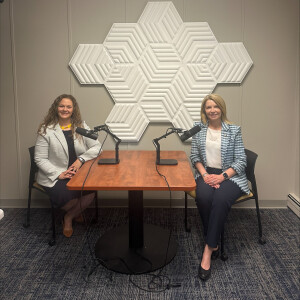
May 7, 2025
May 7, 2025
18 min
In this inspiring episode of Why I Teach, Dr. Christy Lawson, a trauma, critical care, and acute care surgeon at ETSU’s Quillen College of Medicine, reflects on her journey from a rural community in Georgia to the operating room and classroom. Blending stories of family, mentorship, and personal growth, Dr. Lawson reveals how formative experiences—from learning through storytelling with her grandfather to assisting in surgery during a mission trip in Honduras—ignited her passion for medicine and teaching. She discusses the emotional complexities of surgical training, the power of individualized mentorship, and the importance of nurturing students as whole people.
ETSU Quillen College of Medicine: https://www.etsu.edu/com/
ETSU Health: www.etsuhealth.org
ETSU Department of Surgery: https://www.etsu.edu/com/surgery/
ETSU Great Lecture Series: https://www.etsu.edu/etsu-news/2025/01-january/great-lectures-feature-handy-herrmann-lawson.php
Transcript:
Dr. Christy Lawson
Just knowing people is one of the most important parts of teaching. When you know them as an individual, you can help them tap into the things that renew them.
Provost Dr. Kimberly D. McCorkle
Hi, I'm Kimberly McCorkle, Provost and Senior Vice President for Academic Affairs at East Tennessee State University. From the moment I arrived on this campus, I have been inspired by our faculty, their passion for what they do, their belief in the power of higher education, and the way they are transforming the lives of their students. This podcast is dedicated to them, our incredible faculty at ETSU. Hear their stories as they tell us "Why I Teach."
In this episode, we will talk with Dr. Christy Lawson. Dr. Lawson is a trauma, critical care, and acute care surgeon and professor of surgery at ETSU Quillen College of Medicine. She was born in Ringgold, Georgia, and grew up learning the values of faith, integrity, hard work, drive, passion, and service to others from her family. Her mother went back to nursing school when she was in high school, and she remembers doing her homework during night school anatomy classes. This influence, a few key teachers, and a strategically placed surgical mission project in Honduras inspired her to work hard and open the horizon of medical school.
Dr. Lawson obtained her college degree at Berry College, and then attended the Medical College of Georgia before landing in surgical residency at the University of Tennessee in Knoxville. She trained there for residency and fellowship, and spent the first several years of her surgical practice there prior to moving to Johnson City and finding her home at ETSU in 2018.
She was recently part of the ETSU Great Lecture Series, which is a celebration of our amazing faculty who have recently been promoted to full professor. Her lecture was inspirational, and I really look forward to my conversation with her today. Enjoy the show!
Dr. Lawson, welcome to the show. I start my podcast with the same question for every guest. Take me back to your first day of teaching at ETSU as a faculty member. Looking back on that day, what's one piece of advice that you would have given yourself?
Dr. Christy Lawson
That first day was so different than anything that I'd really experienced before. And I was nervous because I'd never really left the place that I trained. And I think I would have told myself to just be myself and to not compare, because I think that was the hardest part for me, was coming in, not knowing what to expect and sort of comparing it to what I had done in the past. The students are different. The environment was different. The patients were different. The people that I worked with were different. And so I think that would have probably been what I would have told myself. Just take a breath. Don't compare and be yourself.
Provost Dr. Kimberly D. McCorkle
Yeah. Great advice. Let's start with your story. You grew up in Ringgold, Georgia, with a powerful example of service in your family. Can you share how those early experiences shaped your decision to pursue medicine and ultimately teaching?
Dr. Christy Lawson
Actually, teaching came first before medicine. I grew up in a very rural farm community. My grandfather had cattle. I was sent to dig post holes for punishment. So that's kind of how I grew up. My grandfather was my first teacher. I remember walking with him through the farm and he was a great oral storyteller. And I don't think I identified storytelling as teaching then, but it was a way that he kind of would talk through things with us. He would teach us how to do things. He would teach us the names of livestock, how to take care of them, the names of the trees that we saw. And over the course of years, just walking with my grandfather through the farm and doing hard work with him, I learned that storytelling was teaching in that I love knowledge.
And so honestly, that was really where it started for me. In high school, I had some fantastic teachers who were really able to see my potential, because while I loved knowledge, I didn't love school, and they saw that I was sort of floundering, and that I would read paperbacks under my desk. And I had a chemistry teacher in particular, who was just excellent at seeing the potential in individual students and pulling it out of the individual. And it wasn't this cookie cutter, "This is what you have to learn." And that really hit home for me -- that individualized learning. And so from that point forward, I just wanted to learn.
And so I went to school pursuing zoology. I love being outside and I love my love of trees and flowers and plants and animals and living things came from my grandfather, and found myself in science classes. And then my mom wanted me to have a career that actually had an income, because I was going to do grant writing and research on Steller sea lions. And she said, "You know, how about you go with me to Honduras and learn some things about surgery or medicine?" And so I went with them on a surgical trip, and I was a first assist in surgery in San Pedro Sula, with a surgeon who actually graduated from Quillen and did his residency here at ETSU. And then I was hooked. I was like, "I can do this forever. This is really what I could do with my life." And that's kind of how I found my way into medicine -- sort of like an afterthought.
Provost Dr. Kimberly D. McCorkle
That's great. How old were you when you went to Honduras?
Dr. Christy Lawson
I was 19. So I was a junior in college, and one of my roommates had been working on med school applications, and it wasn't until after that trip that I thought maybe I could do this. And fortunately, all the prereqs that science had given me positioned me well for med school. All I had to do is take physics.
Provost Dr. Kimberly D. McCorkle
Oh, that's all?
Dr. Christy Lawson
That's all. It almost killed the career dreams, right?
Provost Dr. Kimberly D. McCorkle
Thank you. You were recently featured in the ETSU Great Lecture Series where you talked about the power of mentorship. Will you share with us some of those powerful mentorship moments you've experienced throughout your career, either as the mentor or the mentee?
Dr. Christy Lawson
There are just so many of these. This is really what compels me the most about teaching is the relationships that you get to develop, both with the people who teach you, as well as the people that you teach.
My greatest surgical mentor was my program director and chairman when I was a resident, Mitch Goldman. And he was one of those teachers, too, that could see you as an individual and know what it took to motivate you. And I know I had a trouble with confidence. And so he had this unique way of sort of sitting back in the background and letting me do things, and then would insert himself when he knew that I needed help. But he always watched, and he was always there. And so just having that support in the background, knowing that he believed in me, that mattered to me so much, and that really helped me build the confidence that I needed to be a good surgeon.
I remember on a Saturday he was busy, he was doing paperwork, I was running around seeing patients, and I didn't know the answer to a question. And rather than reprimand me, like so many of my other faculty did, he called me to his office and I thought, "Well, this is it. I'm about to get fired." And I go up there and he sat me down and he opened a textbook, and he shared with me his knowledge of what I had gotten wrong, and he taught me how to think about it in a different way. And I will never forget that day. It was Saturday at like 2:00 in the afternoon. And at first, I was thinking about how busy I was and how much I had left to do. But him taking that 15 minutes out of his day to teach me was really impactful.
And then one of my students – this was probably my favorite mentee moment -- she was a resident, and she came in, very young. She was younger than everybody else, so it was a little bit like a fish out of water. And so we sort of bonded over that. And she became a really good friend over the course of her training; went into trauma and critical care; left UT and went to UT Southwestern, where she did fellowship; and then one of my current residents, who's about to graduate, did an elective with her in practice. And I have this picture of me and her -- her name is Sneha Bhat -- I have a picture of us operating doing an abdominal wall reconstruction together. And then 10 years later, she sends me a picture of her doing the same operation with my current resident. So for me, that was just a really neat, full-circle moment.
Provost Dr. Kimberly D. McCorkle
Yeah. Well, speaking of that, I thought one of the most powerful parts of you the day you were delivering the lecture was having some of your mentors in the room.
Dr. Christy Lawson
Yeah. For me as well. It was really neat to see that they came to hear me speak. And that, to me, means a lot about our relationship.
Provost Dr. Kimberly D. McCorkle
Yeah, that was nice. I also appreciated your perspective on work-life balance. As a surgeon and an educator, you have both a demanding and a rewarding career. What advice do you have for our students or resident physicians who are just beginning their careers in medicine?
Dr. Christy Lawson
This is really hard and was very challenging for me. Medical careers can be all-consuming. It's almost what we're taught to feel about them. It's a calling. It's not just a career. This is part of your identity. It's very easy and insidious to find your identity in your career. All of us struggle with that.
And so, I think my advice to them would be, remember what your priorities are. Yes, your priority is to learn how to take great care of patients, how to be an excellent physician, and to learn the vast amount of information that you have to do, have to learn, to be able to do that well. But also, if you set your priorities and your intentions when you start and you make sure that you stay true to who you are and what is the most valuable thing to you, that will help.
And balance is a myth. Some days it's always going to be tilted one way or the other. So, there are days where I don't see my kids because I'm on call for 24 hours. They know that I love them. I kiss them before I leave, and then I tell them I'll see them the next day after school. They know Mom works hard and takes care of patients, and they're always, they always know that I'll be back. And then the next day when I'm off and I'm post-call and I may be tired, but I'm all there. So wherever I am, I have to be all there. And so when I'm with my kids, they have to know that they're the most important thing to me in that moment. And I think keeping that intention, whether I'm at work or whether I'm at home, that I'm 100% where I am, I think that's helped me.
Provost Dr. Kimberly D. McCorkle
Yeah, that's great advice. Thank you. When you're teaching students or resident physicians, what do you most hope they take away from your example or your lessons?
Dr. Christy Lawson
Honestly, I hope they take hope away from it. Our world is hard. What we do is hard. The environment around us is difficult to navigate sometimes. There's always emotions and fears or concerns or what ifs swirling around, and that interplays with us in all areas of our life. And so if you can have hope, not only that what you're doing for your patients brings hope to them, how you're teaching the students around you brings hope for their future, how you live your life gives you hope for that it's going to be better, that you're going to be able to make an impact, that you're going to be able to make a difference -- I think if they can take that away, then I've done the calling that I've been called to do, and I think that's the most important thing.
Provost Dr. Kimberly D. McCorkle
Are there any "Aha!" moments you've seen in your students that have really stuck with you?
Dr. Christy Lawson
I love this question. There's so many "Aha!" moments when you teach. especially when you're doing new skills acquisition. But for me, watching the process work for residents is amazing. They come in, new doctors, they've been doctors for five minutes, and they're learning all of this new information -- how to take care of patients, how to see them, who to operate on, who not operate on, the science of surgery, the bureaucracy of medicine, how to navigate a system. And then they go to the operating room, and at first it's just they're so excited to be there, but they have no idea what they're doing. And then watching that process unfold over five years and then getting to operate with a chief, like they're a partner, where you just operate in companionable silence. It's very rare that I have to move their hands or help them see something in a different way. They can just do it on their own. And watching that excitement turn into pride and a sense of accomplishment and ownership -- that, to me is the neatest part about training surgeons.
Provost Dr. Kimberly D. McCorkle
It's great. How do you prepare students to navigate the challenges of medicine and surgery?
Dr. Christy Lawson
There are several things that go into this. The first is like we just talked about -- the "Aha!" moment, watching someone develop the necessary skills and competence to be able to work in this high-stakes area. So one of it is just making sure they have the foundation, the knowledge base, the technical skills -- all of those things become muscle memory. Having that foundational background is really, really important, because invariably, we are all going to do something, whether it's by active omission or active commission, to hurt someone. And that is really, really difficult to deal with emotionally. We are all humans, and we are frail, and we make mistakes. So having that foundation, that background knowledge, is critical and why it's so important to be a good teacher of both surgical science and medicine in general.
But beyond that, helping them figure out how to deal with that inevitability, how to handle stress, how to navigate the complex emotions of mistakes and medicine, of the stress of the job, of the changes that we all have to face and navigate, even the frustrations that a system that doesn't know the knowledge that you know, that tells you how to practice medicine -- all of that is very stressful.
And so figuring out what it is about each student that they can tap into that helps with stress relief is super important, and that goes along with mentorship. Just knowing people is one of the most important parts of teaching. When you know them as an individual, you can help them tap into the things that renew them. For me, it's prayer, meditation, my family, and exercise. For somebody else, it might look completely different. And so being able to kind of help them figure that out for themselves, to give them the tools to deal with this long term will help not only them in the immediate time while they're my students, but also keep them in their careers for forever. Because you don't want a burnout. Burnout's a very, very high risk for our career.
Provost Dr. Kimberly D. McCorkle
As you know, the Quillen College of Medicine was recently recognized as second in the nation for medical schools, with the most graduates practicing in underserved areas. In what ways do you see Quillen preparing our students to make an impact in this area?
Dr. Christy Lawson
This is the Quillen identity. This is who we are. And I love that about ETSU and Quillen College of Medicine. You find that vein of wanting to serve the underserved in pretty much any group of people that teach or work at Quillen, that or ETSU that you talk to you -- that vein of wanting to serve sort of bonds us together and brings us together as a family, and so that becomes our identity. When you see things like Remote Area Medical, when you see volunteer projects like during the Helene disaster, the global impact that we're able to have through the surgical fellowships and the work that Dr. Wood and Dr. Feltis are doing with the international medical work, you watch how that really changes the way people treat patients. The knowledge that people come from austere areas, that they have limited access to care, learning how to navigate fear of health care -- there's a lot of distrust, especially in Appalachia, about organized health care, really organized anything -- and so seeing how our residents really lean into that, and a lot of our residents and students come here because of that identity as well. They have a strong desire to serve underserved. And so, Quillen has done a fantastic job of identifying that as who they are, and that that's a core belief, and seeing that translated into real time and how it really impacts and interplays in patient care has been really amazing.
Provost Dr. Kimberly D. McCorkle
Yeah. Finally, what impact do you hope you've made on your students?
Dr. Christy Lawson
This is difficult for me to answer because I just want to have made some impact to make them the best version of who they are. I think in the history of surgical training, we've tried very hard to make people fit a certain mold. And you come in and you sort of sublimate or subjugate who you are so that you can fit a certain type. And surgeons have a type, right? Where there's a typecast, there's a generalization of the angry surgeon or the surgeon that's a workaholic, or the surgeon that that eats, breathes and sleeps the operating room and doesn't care about anything outside it. And that's not true. Inherently, we are deeply passionate people, very driven. We do care about all aspects of patient care. We tend to be stressed. And so I think that comes forward with that, that mentality of anger or short-tempered.
And so what I hope to impact the most is creating whole people, because I think when we are the best versions of who we are designed to be and we're humans, then we're better at our job. No matter what job we do, when we remember who we are, and we're able to really plug back into what feeds our soul or what is most important to us, and we're able to prioritize and not just be our jobs, we're better at our jobs. And that's what I hope. I hope to be able to make that kind of impact on my students, and also on the surgical field as a whole.
Provost Dr. Kimberly D. McCorkle
Doctor Lawson, thank you so much for joining us on "Why I Teach." It's truly been an honor to hear more about your journey and the incredible impact you're making here at ETSU.
Thanks for listening to "Why I Teach." For more information about Dr. Lawson, the Quillen College of Medicine, or this podcast series, visit the ETSU Provost website at etsu.edu/provost. You can follow me on social media @ETSUProvost. And if you enjoyed this episode, please take a moment to like and subscribe to "Why I Teach" wherever you listen to podcasts.
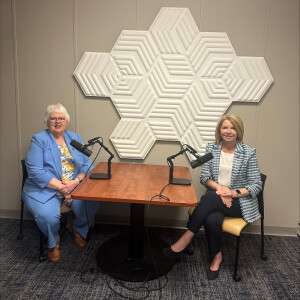
Apr 11, 2025
Apr 11, 2025
20 min
In this episode of “Why I Teach,” Dr. Flo Weierbach, a seasoned nurse and professor at East Tennessee State University’s College of Nursing, talks with Provost Kimberly D. McCorkle about her journey from providing direct care to teaching the next generation of nurses. With over 40 years of experience, Dr. Weierbach discusses her research on caregiver health, the challenges of rural health care, and the importance of interprofessional education for nurses. She also provides a snapshot of her experience with the Nurse Narratives Initiative.
Transcript:
Dr. Flo Weierbach
So when I think about what's most important that I want my students to learn is: how to be kind, how to share, how to listen, and how to meet people where they're at.
Provost Dr. Kimberly D. McCorkle
Hi, I'm Kimberly McCorkle, Provost and Senior Vice President for Academic Affairs at East Tennessee State University. From the moment I arrived on this campus, I have been inspired by our faculty, their passion for what they do, their belief in the power of higher education, and the way they are transforming the lives of their students. This podcast is dedicated to them, our incredible faculty at ETSU.
Hear their stories as they tell us "Why I Teach."
In this episode, we will talk with Doctor Flo Weierbach. Dr. Weierbach is a Registered Nurse and professor at East Tennessee State University's College of Nursing. She has over 40 years of nursing experience in providing direct care to individuals and their families in community settings. She has served as the nurse on multiple interprofessional health care teams and has conducted research focused on caregiver health.
Upon completion of her Ph.D., she completed a one-year postdoctoral fellowship focusing on rural communities and chronic health conditions of rural residents at the University of Nebraska Medical Center. Additionally, she was a Rural Health Fellow from 2012 through 2013 for the National Rural Health Association, a member of the American Nurses Association Public Health Scope and Standards Workgroup, and as the founding president of the Rural Nurse Organization Appalachian Region Tri-State Chapter.
Enjoy the show. Dr. Weierbach, welcome to the show.
I start my podcast with the same question for every guest. Take me back to your first day of teaching at ETSU as a faculty member, and looking back on that day, what is one piece of advice that you would have given yourself?
Dr. Flo Weierbach
I think the biggest thing I would say is that I need to relax. When I first entered the building, it was hard to find my office, and I was like, "Where is this?" It’s not what I remembered. And the first day I was in the classroom, I left my jacket in the classroom. So I would say, relax.
Provost Dr. Kimberly D. McCorkle
Yes, always great advice.
You've had an extensive career in nursing with over 40 years of experience. What first drew you to the field, and how has that passion for nursing evolved over the years?
Dr. Flo Weierbach
My mother was a nurse, and she always wanted me to be a nurse. I didn't want to be a nurse, but I was working in a nursing home, going to the community college for a different degree, and recognized how important it was that I was there. And I knew I could do more as a nurse than as an aide.
Over the years, I've evolved to discover and to care for people where they live. When I left the hospital after about eight years, after I got my bachelor's degree, I never looked back. I’ve been in the hospital since then, but very infrequently. So I would say really meeting people where they’re at.
Provost Dr. Kimberly D. McCorkle
What inspired you to transition from direct care to teaching at ETSU College of Nursing?
Dr. Flo Weierbach
I, like I said before, when I was in the hospital, it was one at a time that I was providing care for. Then I moved into the community setting, and it was a family home. Then I further moved into our community action, and it was the community.
What pushed me to teach was the ability to impact students so that they could provide care to individuals, families, and communities.
Provost Dr. Kimberly D. McCorkle
Your research is focused on caregivers, especially those caring for individuals with chronic health conditions. What inspired you to dive into this area and how has this research impacted your teaching?
Dr. Flo Weierbach
When I first moved out of the hospital, I entered the home health arena and at that time it was not like it was now, and we provided care for everyone. And over that decade, things changed and it was harder to do it.
When I was in my Ph.D. program, I was talking to a coworker from Home Health and she
Dr. Flo Weierbach
said to me, "Go find out what people need in the community." That led me to my dissertation work, which told me what I already knew, but I didn’t know I knew in that way. The caregivers were the most important thing.
Yeah, but at the same time, what I saw was that caregivers would die, and we wouldn’t know what to do with their loved ones. Yeah, and that was the call. I hated the absolute most.
And all the caregiving work at that time was around stress. So I decided to look at it differently and to look at it through health and through physiological, physical health and mental health. So that’s kind of like what led me to that. I developed a model. I tested the model. When I tested the model, we saw changes over time in both mental and physical health, which was a little unusual. We weren’t expecting that.
How it's been able to impact my teaching is I teach a graduate-level theory concepts to our master students, and both with, and with our PhD students, that I met her. I've been able to show them how a model works and how to develop a model.
So I think that's how I've been able to use that with my teaching.
Provost Dr. Kimberly D. McCorkle
Well, I imagine this is an area of research that's interesting as well to students.
Dr. Flo Weierbach
I think it is. I think what's interesting, too, is demonstrating how important the community is, demonstrating how important it is that we address health holistically. And in addressing health holistically, we are looking at the entire person, and the model includes four components to health being attitudes and beliefs. So why are we doing it? Why are we providing care?
Oh, it involves tasks that we do as caregivers, such as bathing or feeding or grocery shopping, and involves needs that we have as caregivers, such as help with the lawn, help with finances. And then it also addresses what we as caregivers do for ourselves to maintain healthy. Do we eat healthy? Do we exercise?
And what was most surprising when I looked at it was how important spiritual care was.
Provost Dr. Kimberly D. McCorkle
You were recently able to participate in a wonderful project called the Nurse Narratives Initiative. Will you please share what that project is all about? And a bit about your experience with it?
So the Nurse Narratives project is, it's very interesting, I love it. It brings the arts into the classroom, and it also brings storytelling into the classroom and allows nurses to share our stories about memorable events that have happened throughout her career.
I know for myself, when I was trying to decide on which story I, after 40 years, I have a lot of stories. It was challenging to think about it, and it was also challenging to think about what did I want to emphasize?
So I finally settled on a story that was a home health story that involved very few visits, and I highlighted one aspect of a visit. But it really demonstrates what nurses bring to the table on the farm. It talked about skills. It talked about relationship building. It talked about what you can do with not a lot of resources. And it talked about a health outcome, both for the individual that I was providing care for and also for the husband. Yeah.
Provost Dr. Kimberly D. McCorkle
So I understand that many of your colleagues in the college have also participated in the project.
Dr. Flo Weierbach
Yes. And that that was also lots of fun to be able to work with people that I've not worked with in the past.
I really have enjoyed that aspect of it. Feel like I learned from them and they learned from me. And the team is just, the nurse narrative team is so good at getting us to focus on what was most important.
Yes. I really enjoyed the first kind of presentation of that, and I'm looking forward to hearing more of the narratives. It's great.
Provost Dr. Kimberly D. McCorkle
What type of work are you currently doing now at ETSU?
Dr. Flo Weierbach
So currently in addition to teaching... So I teach across programs. I teach undergraduate community health, which I just absolutely love. It's great fun to see students realize that there's health care outside of a hospital setting.
I teach graduate master students and then Ph.D. students, but in addition to that, I've been doing some research work. We had a legislative meeting last August with the Tennessee Nurses Association, District Five. And out of that, a topic came up that the legislators were interested in and that was looking at workplace violence for nurses.
Yeah, nasty topic for real, and at the same time, workplace well-being has become very important. So a bunch of us that are nursing faculty, we are working with the Tennessee Center for Nursing Advancement on a research project identifying well-being and workplace violence in the state, which is just phenomenal.
We've contacted the legislators that are there. They are interested in it. They want to know what's going on. They can't do anything with policy until they know what's going on. So I'm really proud of that work.
We have a Ph.D. student working with us. And then the other that I've been working with is the ALS clinic I've been working with. And the social worker and I have been working on a project looking at my health model for caregivers, using secondary data to identify needs of caregivers.
Those are two fun projects, along with the continual work that I'm doing with the Interprofessional Education Center with Dr. Brian Cross. In addition to the work that I'm currently doing with interprofessional practice, I'm also working with the team to develop a pilot study that will hopefully be funded.
We're going to put it in probably late summer, early fall, addressing frailty and elders. And that's an interdisciplinary team involving two disciplines out of the College of Health Sciences, the College of Pharmacy, the College of Public Health, and myself.
So excited about that. I love doing interprofessional work.
So lots of fun stuff in addition to teaching. Oh, it's great.
I look forward to hearing about those projects.
Provost Dr. Kimberly D. McCorkle
Rural communities often face unique health challenges. What are some of the most pressing issues you've encountered in rural health care, and how is ETSU preparing our nursing students to deal with those challenges?
Dr. Flo Weierbach
I think the biggest challenge I've seen is transportation. Access is always important, but if you have a health care center in a rural place, that's great. But if there's no transportation, they can't get there. So I would say transportation, and along with transportation, is the regionalization of specialties. If people have to drive long distances, they probably don't know where they're going. They're a little scared of the big city, even though this is not a big city, they're a little scared of it.
And there are ways that we can bring people into the community, and bring health care into the community through churches, through work in clubs. And I would like to see a little bit more of that, that we reach people where they're at instead of making people come to us. But I would say the biggest challenge I see is transportation. And then right next to that is what we consider to be deserts. We see food deserts where there are no grocery stores. And we also see pharmacy deserts where there's no pharmacy.
Provost Dr. Kimberly D. McCorkle
And I've observed that our students tend to be very interested in working to address those challenges.
Dr. Flo Weierbach
Yes, they do. We've had students, undergraduate students in some of our distant clinic sites for the College of Nursing, and it's my understanding we have that again. A few years ago, we had our graduate FNP students, we had some scholarships that addressed that.
A lot of our students want to work in their communities. We have a graduate course right now that clearly addresses underserved communities and underserved populations, which have been a focus of the college in our state for a long time.
Provost Dr. Kimberly D. McCorkle
The College of Nursing also maintains a number of nurse-led clinics in rural communities. Can you tell us a bit about that work?
Dr. Flo Weierbach
So our clinics are phenomenal. A couple of years ago, I was the project director for a HRSA grant and we took our senior undergraduate students during their clinical practicum, the last course they take, and we put them into the clinics. The students loved it. They shadowed the nurse. No, they didn’t shadow. They were the nurse. Oh, in the clinics, the clinics embraced them.
The outcomes that we had from that were phenomenal. Our NCLEX pass rates were higher than the class average. And some of the other programs that had this grant, they cherry-picked their students. We didn’t. We just had some really great students. They wanted to be in the program. They wanted to do the rural work. And what's more important is we've had great outcomes out of that.
So we had, I can't remember exactly how many students that were in that program. But I do know that our outcomes are: We've had at least two FNPs, who have stayed in rural practice and at least one, if not 2 or 3, that went into our Family Partnership program. Our Nurse Family Partnership Program is an evidence-based program that helps at-risk mothers with newborns.
And they follow, the nurse, follows the mother and the child up until two years of age. We have the largest rural footprint in the country with that program. Yeah, our clinic, we're just phenomenal. We have our master students in there. Oh, our psychiatric mental health program, we always have a lot of students that are interested in that.
It allows us to have placement for our students and allows them to look at it in a professional team, especially those that are in the Johnson City area who serve the homeless population at the Day Center. And after our community center, because there are large interprofessional teams in those areas.
Provost Dr. Kimberly D. McCorkle
How do you teach nursing students the importance of working in teams, especially in rural or underserved settings?
Dr. Flo Weierbach
I already mentioned the interprofessional education that we do. Our nursing students, our undergraduate students, work with the on-ground model of interprofessional education, which is our team-based. So not only are they learning about how to work in teams, but they're also in a team.
Then for our graduate students, we have an asynchronous, completely online model. Again, they're working in teams. Yeah. Oh, and we also encourage our students to attend the ALS clinic with me. Which is awesome when they do, because not only are they seeing a team of professionals practicing, but there's also other students there. So they learn that also.
So, all of our clinics focus on teamwork. Oh, and we focus heavily on teamwork within our graduate program, which is what I have more experience with than our undergraduate.
For our Ph.D. students, we have them work on research teams. And I know the research teams that I work with are interprofessional. I just also finished up and I'm finishing up a project that involved three different colleges at the university: Arts and Sciences, the Appalachian Center, Clemmer College, and Nursing. We looked at the role of the school nurse along with Public Health, because we included vaping, around the transition from middle school to high school.
Interesting. Yeah. So IP is really woven throughout the curriculum of nursing, isn't it? Yeah, it is. And we're increasing that, bringing more of our students on board and looking at how we can include everyone in the college.
In the fall, we are going to take our nursing education students, our graduate nursing education students, and have them work with faculty in the IPE program to mentor them, to demonstrate how to teach IPE.
Provost Dr. Kimberly D. McCorkle
That's great. Yeah, I had not heard about that. Really interesting.
Dr. Flo Weierbach
Yeah. We've piloted this year with some of our public health students and the public health faculty, but we're going to roll it out in the fall. I'm one of the IPE liaisons.
Provost Dr. Kimberly D. McCorkle
Fantastic.
Finally, what impact do you hope you've made on your students?
Dr. Flo Weierbach
Gosh, I think that this was one of the most challenging questions for me. Yeah. As a nurse, I think the most important thing to do is to listen and be present.
So when I think about what's most important that I want my students to learn, it is: how to be kind, how to share, how to listen, and how to meet people where they're at because not everyone is at the same place. But if we can, as nurses, figure out where they're at, we can meet their needs.
Provost Dr. Kimberly D. McCorkle
Dr. Weierbach, thank you so much for joining us today on "Why I Teach." Your wealth of knowledge and dedication to nursing, caregiving, and rural health is truly inspiring, and it's clear that your work has made a profound impact on both the communities you serve and the students you mentor.
Thanks for listening to "Why I Teach." For more information about Dr. Weierbach, the College of Nursing, or this podcast series, visit the ETSU Provost website at ETSU.edu/Provost.
You can follow me on social media at ETSU Provost. And if you enjoyed this episode, please take a moment to like and subscribe to "Why I Teach" wherever you listen to podcasts.
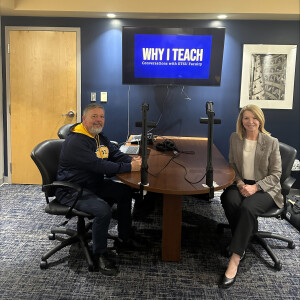
Feb 4, 2025
Feb 4, 2025
23 min
In this episode, Provost Kimberly D. McCorkle talks with Dr. Joe Moore, Director of Athletics Bands, Associate Director of Bands, and Associate Professor of Music, about the incredible ETSU Marching Bucs. In 2014, Dr. Moore was tasked with revitalizing the Marching Bucs, which had been dissolved a decade earlier. Under his leadership, the band has grown in both size and prestige. In 2024, the marching band became the first collegiate marching band from Tennessee in over 60 years invited to march in the Macy’s Thanksgiving Day Parade.
Transcript:
Dr. Joe Moore
So, I actually began applying in 2019. 2020, they did not have the parade. It was virtual because of COVID, and then continued applying and, then got the word that we were selected.
Dr. Kimberly D. McCorkle
Hi, I'm Kimberly McCorkle, Provost and Senior Vice President for Academic Affairs at East Tennessee State University.
From the moment I arrived on this campus, I have been inspired by our faculty, their passion for what they do, their belief in the power of higher education, and the way they are transforming the lives of their students.
This podcast is dedicated to them, our incredible faculty at ETSU.
Hear their stories as they tell us “Why I Teach.”
In this episode, we will talk with Dr. Joe Moore, Director of Athletic Bands, Associate Director of Bands, and Associate Professor of Music.
Dr. Moore joined the ETSU faculty in 2014 and was tasked with revitalizing the Marching Bucs, which had been dissolved a decade earlier.
Under Dr. Moore's leadership, the group has enjoyed explosive, exponential growth year-to-year, from a membership of 165 students in its 2015 debut season to well over 300 active members at present, continually and consecutively breaking the record for the largest band in ETSU history.
Along with a surge in membership, the Marching Bucs have quickly established themselves as a premier marching arts organization with national recognition.
The group was chosen to represent the state of Tennessee in the 2024 Macy's Thanksgiving Day Parade, the first time a collegiate band from Tennessee has been featured in over 60 years.
Enjoy the show.
Dr. Moore, welcome to the show.
I start my podcast with the same question for every guest. Take me back to your first day of teaching at ETSU as a faculty member and looking back on that day, what is one piece of advice you would have given yourself?
Dr. Joe Moore
Thank you for having me. Yeah.
I remember at first feeling a little overwhelmed with the idea of totally starting a program from scratch, basically because it had been dormant for so long.
But what I would go back and tell myself now is enjoy the process, document the process. I think I was so fixated on the goal that I didn't always appreciate and enjoy the stepping stones along the way.
You know, talking with students for the first time who were excited about the program starting back, and they were sharing their stories with me and things like that.
So, I think just if I could go back and just soak all of that in rather than being fixated on creating a product.
Dr. Kimberly D. McCorkle
Well, I have been looking forward to having you here. What a year.
The ETSU Marching Bucs just had what I would call a historic season. I had the privilege of cheering on the band at the Macy's Thanksgiving Day Parade. I know from an observer's perspective, it was exhilarating.
So, I can only imagine what it must have been like to be leading your students along this journey.
Will you share the story of how the band was selected to perform in the Macy's Thanksgiving Day Parade? What was the process like for you and the students?
Dr. Joe Moore
Sure.
I've watched the Macy's Parade as long as I can remember. Growing up, my family knew we couldn't have Thanksgiving dinner until after the parade was over.
When I joined band, I thought, oh, that would be really nice to be in it someday. And then I became a band director, and I thought, oh, I would love to have a group in it someday. And so, it kind of progressed. And then I guess I had sort of put that idea on hold for a long time.
And, then when I came to ETSU and I started enjoying the work ethic of the band and seeing the progress they were making and I just realized it was almost like a duh moment.
It's like you should apply for Macy's.
And so, I began applying for it. It's a very stringent process. There are, there are worldwide performance opportunities for bands. But usually if you've got the money then you can go. In fact, we were actually invited to come and march in the Lord Mayor's New Year's Day Parade in London. But I had knew I had applied for Macy's and so I was like, oh, I'm going to wait and see if Macy's works out.
So I actually began applying in 2019. 2020, they did not have the parade. It was virtual because of COVID. And then continued applying and, then got the word that we were selected and, you know, we had to provide videos. We had to provide photographs with the band of, of each uniform, of each different section, letters of recommendation from people in the marching arts, a band resume.
It was a pretty extensive process. And then in 2023, usually they had said they would let people know, you know, by February. And, you know, February came and went. And then it was March, and I just resigned myself. Okay, we haven't been chosen.
And I got a message from the coordinator of the parade asking if I could do a Teams meeting with them. And I thought, I've messed something up on the application, or I left something out or something.
And so we had the Teams meeting, and this was in early March, and, you know, it was a very pleasant meeting. And he just, he was asking things about the band and, and there were things I'd already answered on the application. So I was a little confused why he was asking those.
And then he started talking about the band and, asked me about some things I included things like, you know, during, during the COVID shutdown, we actually had band members, we formed a whole ensemble to go play for the shift change at the hospital for the health care workers.
You know, I talked about, you know, our engagement with our audiences, like, in the Christmas parade. You know, that we don't just, I mean, we're disciplined and we're regimented, but we let our kids interact with the audience because I think that's important.
And, and he started talking about things like that, and, you know, how much that mattered. You know, the things beyond just the musical things.
And then he started talking about, the videos that we had submitted, of our halftime shows. And he liked that our shows told a story, that they engaged the crowd so that the crowd wasn't always just spectators, but actually participants, you know, they were drawn in and, and he explained that, you know, a lot of people look at Herald Square as what Macy's Parade, the Macy's Parade is, but that's actually at the end of a two and a half mile parade route where millions of people are lining the streets.
And he said it's very important to us that those people are entertained. And, you know, and he said, we like what you all do. And he offered the invitation for us to be in the 2024 parade.
Dr. Kimberly D. McCorkle
Wow. So as the director, how did you prepare the band for such a high-profile performance?
Dr. Joe Moore
It was pretty intense. They, they knew the significance of it.
We, and, of course, we don't practice during the summers or anything. So really, we could not start practicing until this past August when we came in at the end of the, end of the month for band camp.
I knew that endurance would be something we would have to work on because you know, other than the Christmas parade, we don't really do parades. And, the Johnson City Parade
And so, I knew endurance and, you know, and of course, you never know what the weather's going to be. I looked through literally decades of YouTube videos, and the weather was everything from sunny to almost blizzard conditions.
So we knew we, we couldn't anticipate that. And I knew it would be a long time of playing along the parade route. They actually have a rule that, you know, you can only do percussion cadence in between songs for so long because they don't want the audience, you know, a little further down to not hear music.
And so, I wrote our fall show a little more difficult music, a little more demand on their playing. We had more demand in the, in the marching to try to build that endurance up for the parade and also, thematically, I knew I wanted to do something that would make people happy, would make them smile.
And so, I chose the theme of "Happy Together." And our show was all about happiness.
And, actually, I wrote it so that the first minute and 15 seconds, which is what we're allotted of our show, is what we would do in Herald Square.
Some of the kids initially had said, you know, oh, they didn't want to get burned out on it, but, but then I talked to, you know, other people and they say, they said, you know, towards Thanksgiving, you know, they're getting ready for finals and they're tired and to have to learn something brand new.
It's not necessarily, you know, maybe the best idea. And, you know, I talked about it and as I mentioned, with my own self, wanted to make sure that when I started here that I was sort of in the moment.
I wanted the kids to not be stressed about a performance, not be stressed about learning something new this year.
I wanted them to be able to enjoy being on that street, looking up at the skyscrapers and seeing people cheering for them. I wanted them to be relaxed and confident enough that they could soak all that in.
Dr. Kimberly D. McCorkle
So this was the performance that you gave during the football games throughout the fall semester leading up?
Dr. Joe Moore
Yes.
Dr. Kimberly D. McCorkle
Yes. That's great. Dr. Moore, do you want to tell us about some of your favorite memories from the parade?
Dr. Joe Moore
Sure. There are so many, a couple that stand out.
I, along with Timothy Loman, who's our Associate Director and our head drum major, Matthew Jones, were invited to a luncheon with the Macy's committee on Tuesday, the week of the parade.
And during the course of that, and I didn't know this existed or happened, we were actually presented with an award, called the Rollie Award.
And it, the purpose of it is to recognize people or organizations that exemplify the spirit of the parade. And I thought that was a great testament to our kids, that they're not just, you know, musicians or good marchers, but that it's an overall spirit and how they contribute to the audience and just lifting people up.
Of course, the performance itself. It was horrible weather and we, we were moving along at breakneck speed and, I was worried by the time I got to Herald Square that, you know, that we might be tired or distracted, and I didn't actually get to see the performance because they funneled us behind the cameras, but when I was able to get beyond that and they turned the corner off of Herald Square, I could tell from their faces how well they had done.
How well they, you know, they knew they had given their very best and that, that was amazing to me and, and just the opportunity to then share Thanksgiving dinner with them that night and as many as there were, it still was like having dinner with my family. It's really special.
Dr. Kimberly D. McCorkle
Yes. And, and I'll say, objectively, we all knew that they were the best band. I mean, it was fantastic. Someone asked about the decision that that you made, sort of for them not to wear protective, you know, kind of from the rain protection from the rain that really stood out, that they were just marching in this in the rain. And they did so well, did not seem to be impacted by it.
Dr. Joe Moore
Yeah. Macy's actually, I'm sorry, NBC actually does not allow you to wear raincoats on camera. And you know, there was if we had ponchos there would be nowhere to, to dump 360 ponchos on the side of the road before we turned into Herald Square. And so, I knew the weather forecast going into. All along, I've been looking for a couple of weeks and it, you know, it always changes. But it had been consistent that Thursday it was going to rain. And so, I was talking to the kids about it. And so, I just looked at them and I said “What rain?” And I think we adopted that attitude “What rain?” We, you know we want to perform. We have a job to do. We're going to do it. And yeah. Yeah. They just, they were soaked. That’s the wettest I’ve ever been in my life. So yes, they, they were so resilient.
Dr. Kimberly D. McCorkle
Yes. It's fantastic. So marching bands often have a reputation for fostering a strong sense of camaraderie. How do you build and maintain that sense of community within the band, especially in a university environment?
Dr. Joe Moore
I was actually asked that question when I interviewed for the position here.
Dr. Kimberly D. McCorkle
Really?
Dr. Joe Moore
And I taught high school for 16 years, taught high school band and the thing that I recognized is, for instance, a high school student may have an English teacher their ninth-grade year, and they never have that teacher again. With band, they have the same teacher all four years. And they spent a lot of time before school and after school and on weekends practicing and going to competitions. And so, there's a sense of family and whether it's a band or a choir, an orchestra, you know, when you have that common goal of performance and you're spending time working together, it naturally develops into a family atmosphere.
And I wanted to establish that here right away. I wanted the students to feel like they had something to be a part of, that they could belong to. And that they were proud of.
And even with the growth of the organization, we still really foster that sense of family. And so, I think that's what draws students. And I think that's what keeps students here. If it was only a recruitment, we would only have freshmen in the band. They would drop out their sophomore year. But we have students who have been in band their entire college career.
And we actually had a few students who delayed their graduation this year so they could go to Macy's.
Dr. Kimberly D. McCorkle
I heard about that. Yes. In your experience, how does participation in the marching band contribute to students' personal and academic growth beyond music?
Dr. Joe Moore
It's absolutely an organization that teaches teamwork as well as independence, self-discipline, and being part of a team, working towards a goal, the give and take, dynamics of working with other people, people of different ability levels. You know, sometimes you have to mentor other students and your peers, and one thing that I love is seeing leadership qualities develop within a student who may not have exhibited those otherwise.
The thing is, you know, with some organizations, there are like starters who are the elite, and that's who performs or plays, and the others are kind of on the sideline. But in band, everybody's a starter. There's nobody on the sideline. And so, they get that opportunity. They get the opportunity to perform. Maybe they would be too shy to do it on their own, but when they're part of a group, they get that chance to experience a standing ovation or, and so I think it just prepares them for many things, you know, not only academically, like organizing their time and things like that, but just in life, and I really hope we help make better citizens.
Dr. Kimberly D. McCorkle
Yes, it's always fascinating when you look at over 300 students in band, and they represent all of the disciplines across campus. How does that sort of come together when you're working with that many students who are from a variety of disciplines?
Dr. Joe Moore
It's always the challenge at the start of a year, because not only are they from a variety of disciplines, but they all come from different high schools and each high school has their own style and way they do things. And so, we have, you know, usually we come out of a week of band camp and then have a football game. So, we have to transform all these different thoughts and ideas and styles into a cohesive unit. But, they just have such a great work ethic and attitude, and they want the group. They want to be a part of something successful. They want to be a part of something good. And they realize it depends on them.
You know, if a student in a class doesn't do well on a test, it only affects that student. It doesn't affect the class. But someone in a performing ensemble, if they don't do well, yeah, it affects everybody else. And they can feel that.
Dr. Kimberly D. McCorkle
Yes. What is the most fulfilling part of your work as a professor and a director of bands?
Dr. Joe Moore
Seeing them develop, as musicians, obviously, seeing them develop as leaders, seeing them develop as people. Every year, our first meeting in band camp, I talk to the students about that college is a chance for them to reinvent themselves. You know, I'll say, okay, if you're shy, we don't know that. Reinvent yourself. And, and I've seen students do that and they will come back and they'll bring that back to my memory. Remember when you said, you know, when I talked to them about how, how far they've come and.
And so that, that's really satisfying. And then just people appreciating the group, you know, the audiences and spectators and alumni, and, and people just giving praise to the kids. I love that.
Dr. Kimberly D. McCorkle
That's nice. Yeah. Well, it brings up another question to the thing that people talk about a lot is the dedication of band parents. Talk about the dedication of the parents to the band, especially the Marching Bucs.
Dr. Joe Moore
You know, in high school they have band booster organizations where the, you know, the parents help with fitting uniforms and work concession stands and fundraising and, and you know we don't have that here. You know, a lot of the students are far away from their families, but, we have found, it's really difficult, for parents just to turn that off and understandably so. I mean, my parents couldn't. I mean, my parents even, in my adult career would drive. I was teaching high school in Georgia. They would drive 4.5 hours to come to a concert because they just missed it.
And so, we find that especially when we start in band camp, of posting pictures on social media, they are so happy to see pictures of their, their child, of their student, you know, and then, I think a significant amount of football ticket holders are actually band parents who, who come and support. They want to see their students. You know, they will, sometimes I'll get an email that says, you know, we're driving in from, you know, six hours away. We want to make sure we catch the pregame show. What time will it start? And so, their support is absolutely still there.
Dr. Kimberly D. McCorkle
Yes. That's great. Finally, what impact do you hope you've had on your students?
Dr. Joe Moore
Sometimes I, I tell them I'm giving them homework and they look at me at the end of a practice. I'll say, if somebody has crossed your mind lately, I want you to go call them. Or if you haven't talked to your grandparents lately, I want you to go do that. Put down your phone and smile at somebody walking across campus. Or hold a door for somebody. Basically just be good people. Even. And I hope that that resonates and sticks with them.
Because they're great people. But, you know, sometimes we're so isolated, you know, staring at our phone or, you know, we, we don't have to interact with human beings. We can order everything online. We can have food delivered, groceries delivered, go through a drive-through or just watch Netflix. And I'm really, I really try to push them to, to engage more, just engage with people out.
Dr. Kimberly D. McCorkle
Thank you, Joe. I will never forget seeing our ETSU Marching Bucs in the parade. I appreciate the vision, the dedication, the hard work that it took to get to this national stage and to receive this national recognition. And I look forward to continuing to watching the band grow.
Thank you for listening to “Why I Teach.” For more information about Dr. Moore, the College of Arts and Sciences, or this podcast series, visit the ETSU provost's website at ETSU dot edu slash provost.
You can follow me on social media at ETSU Provost. And if you enjoyed this episode, please take a moment to like and subscribe to “Why I Teach” wherever You Listen to podcasts.
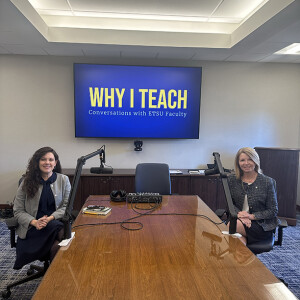
Dec 12, 2024
Dec 12, 2024
27 min
In this episode, Provost Kimberly D. McCorkle talks with Dr. Melanie B. Richards, interim director of ETSU’s new School of Marketing and Media, about how her experience in the corporate world led to a career in academia – and how she is harnessing that experience to make sure her students get hands-on, project-based learning opportunities in her classroom. Dr. Richards also discusses how she incorporates AI in her instruction and recommends a book that she has used to guide her research and teaching in this area: Co-Intelligence: Living and Working with AI by Ethan Mollick.
Listen to more episodes of Why I Teach, where Dr. Kimberly D. McCorkle explores stories of impact and success of ETSU faculty. Subscribe at https://why-i-teach-conversation-with-etsu-faculty.podbean.com/.
Dr. Richards’ Bio: https://www.etsu.edu/cbat/media-communication/facstaff/richardsm.php
ETSU’s Master of Arts in Brand and Media Strategy: https://www.etsu.edu/cbat/media-communication/academics/graduate-programs/brand-strategy.php
School of Marketing and Media News: https://www.etsu.edu/etsu-news/schools/marketing-media.php/
ETSU’s Approach to Community-Engaged Learning: https://www.etsu.edu/teaching/teaching_community/cel_qep.php
Transcript:
Dr. Melanie B. Richards
I hope that students leave my classroom with technical skills, critical thought ability, problem-solving, and creativity in how they approach problems, and that ability to make ethical decisions. But beyond that, I really hope that my students know that I care about them.
Provost Kimberly D. McCorkle
Hi. I'm Kimberly McCorkle, Provost and Senior Vice President for Academic Affairs at East Tennessee State University. From the moment I arrived on this campus, I have been inspired by our faculty, their passion for what they do, their belief in the power of higher education, and the way they are transforming the lives of their students. This podcast is dedicated to them: our incredible faculty at ETSU. Hear their stories as they tell us "Why I Teach."
In this episode, we will talk with Dr. Melanie B. Richards. Dr. Richards is an associate professor in the ETSU Department of Media and Communications Brand Communication program. This fall, she was appointed interim director of ETSU's new School of Marketing and Media. She also serves as the graduate program coordinator for the Master of Arts in Brand Media Strategy.
She's been working in the research, analytics, and account planning world for over 20 years, and prior to ETSU, spent the majority of her career working for both Fortune 500 companies and major nonprofit organizations in various marketing leadership roles. Her academic research primarily focuses on brand experience, particularly regarding the intersection of AI and other new technologies, and on the scholarship of teaching and learning. She's the co-author of the department's published Experiential Approach to Teaching and Student Learning: The Applied Marketing and Media Education Norm. She's also published a breadth of research regarding cost-based communication, public health communication, and intergenerational communication and dynamics in the workplace. Enjoy the show.
Dr. Richards, welcome to the show.
I start my podcast with the same question for every guest. Take me back to your first day of teaching at ETSU as a faculty member, and looking back on that day, what is one piece of advice that you would have given yourself?
Dr. Melanie B. Richards
Well, first of all, thank you for having me, Provost McCorkle. I'm really excited about this opportunity to share my experiences and kind of what I've learned over the time that I've been here at ETSU. So when I reflect back on my first day at ETSU about eight and a half years ago, I remember feeling a great sense of imposter syndrome.
At the time, I had had a generous amount of industry experience. I had led teams in the workforce, but teaching felt like a very different kind of challenge. And I knew that I didn't have the wealth of experience that many of my colleagues had in the classroom. I was very focused on getting my syllabus perfect and trying to practice and practice these different pedagogical strategies and being able to deliver those really effectively. I critically kind of looked at everything I was doing and really thought about, you know, where could I be doing better? And I worried a lot about that.
I think too much when I should have just gone in and, if I could go back and tell myself to do this, focused on the relationship building. Because that's the same in the classroom as it is in a professional work environment. If I had focused on that and built those connections, created an environment where students want to be there and want to learn, empowered them to do that, supported that learning, and gave myself the flexibility to adapt as needed—I think that first semester would have gone even smoother than it did.
Fortunately, I had a lot of wonderful students that gave me a lot of grace as I made those adaptations, and I think that it went well in the end. But if I had started with that footing, I think it could have gone even better.
Provost Kimberly D. McCorkle
Thank you for that. That's a great story and a reminder about relationship building and how important that is to teaching.
Dr. Melanie B. Richards
Right.
Provost Kimberly D. McCorkle
What inspired you to transition from the corporate world to academia?
Dr. Melanie B. Richards
So my favorite part of my industry role, no matter which position I was in, was always the mentoring aspect. So building a team and then mentoring those individuals to be able to achieve their professional goals and develop their skill set and really hone their craft. And I wanted to really dig into that even more. And I felt like teaching gave me that opportunity to do that to this next generation of marketing and media professionals that we see coming into the program.
And I really feel like it has given me that ability to empower those students to be able to mentor them, both with the knowledge and skill set, but then also that ethical responsibility that I think they need to have in place as they're going into the industry. And enabled them to make a meaningful difference in their career, in their lives, and in the world around them.
Provost Kimberly D. McCorkle
So tell us a bit more about how you incorporate the extensive industry experience into your teaching methods.
Dr. Melanie B. Richards
So my industry experience is pretty critical, I would say, in the approach that I take when I'm teaching. There is kind of the basic application, so I'll bring in examples from my career, from the American Cancer Society, Teach for America, Delta Airlines, different stops I've had along the way, and talk to students about here's how we approach this problem or how we developed this understanding of our audience. When we were confronted with this situation at those different organizations, and I do that, you know, in my typical discussions with students, and as we're thinking about how do we apply different principles?
I typically teach our research and analytics courses at both the undergraduate and the graduate level. So I can actually bring in examples of where we've applied different kinds of research in those industries' roles, and talk about the challenges that those helped to inform and solve.
The other way I incorporate my industry experience is through the development of two learning models that I've been very fortunate to work with some great colleagues and develop while I've been at ETSU. The first was the Applied Marketing and Media Education Norm, which I developed with Dr. Stephen Marshall, and that was early in my career at ETSU, when I first came here. And then more recently, I co-developed the Artificial Intelligence for Service Learning and Experiential Education Model with Dr. Chelsea Dubay.
And so both of those incorporate industry partnerships within our approach to experiential education. And so I'm able to bring in not just my historical experience, but very current experience working with industry partners into what the students are working on as far as projects in the classroom.
Provost Kimberly D. McCorkle
That's great. And do these models then kind of work across the department? So are your colleagues kind of using those as well?
Dr. Melanie B. Richards
Yes. And broader, is what we're seeing now, which is really exciting. So the Applied Marketing and Media Education Norm is our department's general approach to how we partner with regional organizations and community organizations, and how we teach students in an applied way, very practical, hands-on skill set. But in that environment where they're facing challenges that may not be on your creative brief and they're having to navigate and adapt to those, we see that model being applied across a lot of courses within our curriculum, which is exciting.
And then the Artificial Intelligence for Service Learning and Experiential Education Model, we call it, is also being adopted more broadly, which is exciting to see across the School of Marketing and Media and across the broader college as well.
Provost Kimberly D. McCorkle
It's great.
So as mentioned and as you know, the recent academic restructure that was implemented this year, as part of that, ETSU created a school structure in several colleges. So you're now serving as the interim director of the new School of Marketing and Media. I know you're excited about interdisciplinary student learning opportunities across departments, as you just said, and that this school will help facilitate some of that, the ability to be able to do that.
Will you tell us about some of these opportunities that you're most excited about with the school structure?
Dr. Melanie B. Richards
Yes. So, as you referenced, those interdisciplinary student opportunities, and faculty opportunities, are extremely exciting to me. I think we're seeing that start to play out in a few different ways.
Project-based learning, as I mentioned, is a very core part of our department's approach, but it's also a very core part of the other two departments that are in the school in their approach to learning.
So, within the school, we have the Department of Media and Communication, the Department of Digital Media, and the Department of Marketing.
All three of those areas have very exciting opportunities to work with different regional partners together. So that's what we're starting to see happen a little bit more.
We have plans in place to create a more formal student agency to be able to help support those partnerships in a more formalized way with deep subject matter expertise and skill sets.
So you may be working with a cross-disciplinary team of marketing students, digital media students, and media and communications students. Or you may have a more focused engagement with specific students with certain skill sets.
But we want to bring that offering to the region to better support our community organizations, our business partners, and to be able to do so in a way where they don't have to go to Knoxville or go to Nashville to find an agency partner that is going to be able to support what they're looking for, for their organization.
They can do it right here in their own backyard. We're developing those students' experience for their portfolios, and we're meeting the organization's needs at the same time. So I'm very excited about that opportunity.
Another thing we were looking at, too, is to increase our national competition presence. We already have a great student team that works together, from digital media and media and communication for the National Student Advertising Competition.
We want to bring in more marketing students into that opportunity. And we're also looking at offerings from the American Marketing Association as far as competitions they offer, where that cross-disciplinary team would do really, really well.
So those are a couple opportunities that we're very excited about, and I'm looking forward to building out more in the spring.
Provost Kimberly D. McCorkle
I'm just thrilled to hear about all of that. I know there is a lot of excitement across the campus about this new school, and I think adding all of those opportunities across these departments that have already been so strong and very student-focused, I think will be really beneficial.
Dr. Melanie B. Richards
Yeah. Thank you.
Provost Kimberly D. McCorkle
So you've been doing work around AI and its impact on teaching. What challenges and opportunities do you see with AI technology in the classroom?
Dr. Melanie B. Richards
So I know when we came in, I had asked you if you had heard of this book that I'm holding here. It's Co-Intelligence by Ethan Mollick. I'm a big fan of Dr. Mollick's work. He's at the Wharton School in Pennsylvania, and he suggests four principles to how we should work with AI.
So, when Dr. Dubay and I were developing our model for education within the classroom, we leaned into a lot of what Dr. Mollick had suggested.
First is invite AI to the table. So, let's not be afraid. Let's dig in.
And in my daily practice, when I'm working, I typically have ChatGPT 4 open the entire time. I use it as a brainstorming partner, for idea generation, for evolving work that I'm currently putting forward.
Really it is that kind of thought partner and also a provider for critical feedback that I can then incorporate and edit.
So I ask students to do the same thing.
I also have built, because I didn't have course assistance in a human way, I've built course assistance in a chat-based way for my courses.
So I will load my course documentation into a chat portal, where I basically have created a private environment that students can engage with any questions they may have on my syllabi.
Questions they may have on my course content. And that's a resource to students that may be a little bit easier to engage with and more comfortable in a conversational way for them to engage with.
I've also asked students to bring it into project incorporation, again, to that, invite AI to the table.
We talk about how can we be applying AI as we're developing better research questions, or we're thinking about application of different methodologies.
How could AI potentially help us with qualitative content analysis? We look into those applications and how can we maybe do things better or differently, but still in an ethical way as we move forward?
Mollick's second rule is still to be the human in the loop. So we talk a lot about that.
When we talk about ethical application of AI, it's not just I'm going to set it and forget it.
And that oversight, his other two roles as far as AI is to assign AI a role.
So we talk a lot about the formal term, which is prompt engineering, and how to effectively treat AI like a human while keeping in mind that it's not. Ask it questions and give it direction that is well-informed and gets to what we want to see as far as outputs.
The other thing I remind students is his last principle, which is that the AI you are using now is the worst you will ever see. Just in the time that he wrote his book, published in early 2024, we've seen so much change and increased capability. What I'm primarily speaking to is what generative AI can do and how it can play a role in our daily lives and our work.
Just keep thinking about that incorporation and be thoughtful about the different ways it may be able to help you in your work and potentially in your life moving forward.
Provost Kimberly D. McCorkle
That's fascinating. A really good overview of ways to use it. What's your student response been so far?
Dr. Melanie B. Richards
They're first a little timid, I think, because they're not sure, "Okay. Wait, is this okay? Am I really being given permission or encouragement even to be able to use these tools?" I think that's because of the way we saw generative AI kind of roll out. The important thing, though, is those ethical guardrails.
That's something actually that Dr. Trena Paulus and I have been doing research on as well. There's a lot of capability that AI gives us, but without being that human in the loop, without really understanding the application, things can go off the rails pretty quickly.
Once students have those ethical guardrails in place and they understand that, yes, it's being encouraged, but we're going to use it in a very principled way—and here's how you do that—then they get really excited.
I had one student I saw at Starbucks, actually at the Culp, the other day, and she said, "Dr. Richards, I assumed you would be okay with this, but I wanted to let you know I did use AI in our qualitative analysis with the community partner data that we were working with. It was de-identified data. I felt good about it, and I think it was really helpful."
I said, "Of course, I'm okay with that. I love that you're exploring that. That's really exciting." We talked about what she had learned and some of the recommendations they were able to make for the partner because of that.
I think students, once they feel like they have permission, are very excited about the potential.
Provost Kimberly D. McCorkle
It's great. Are you assigning the book as part of the class?
Dr. Melanie B. Richards
Yes. I've learned something about myself: that if I really want to read a text, the best way I can do that is to assign it as part of my curriculum. So I did that with that textbook. I assigned it within my graduate course to those students, and then some excerpts for my undergraduates.
As I mentioned to you, I'm excited. I've had the book and have not had a chance to read it yet, but I suspect, based on your good analysis, it might be something we want the campus to engage with.
I think the campus community would really enjoy the text. It's a very approachable read. You could really cover it in a weekend, and I think it's very worthwhile.
Provost Kimberly D. McCorkle
That's great. You're also an advocate for ETSU's Go Beyond the Classroom Community-Engaged Learning Initiative. In what ways do you incorporate community-engaged learning into your classes, and what have been some of the results you've seen so far?
Dr. Melanie B. Richards
Yes, I am a very big proponent of community-engaged learning. I'm originally from this area. I grew up on the border of Carter County and Unicoi County, so I'm deeply entrenched as far as my connections to this community.
If we can serve the community in the work that we're doing, benefit student learning outcomes, and benefit community partners, while providing a really exciting environment for them to learn and improve their engagement with the content and application of their skills, then why wouldn't I want to do that?
I incorporate community-engaged learning in pretty much every course I teach. In all of our research and analytics courses, both at the undergraduate and graduate level within our department, we work with different partners across the community every semester.
Students get the ability to challenge themselves because things don't always go to plan. Sometimes you have to navigate unexpected situations.
One example, just this semester, was when one of our clients we were working with was Main Street Elizabethton. At the very start of the semester, we discussed a project that would do some research into what community members want to see in the downtown area to help revitalize and encourage the growth that they've already had. You know, new business ideas. Are there new dining options, things of that nature? Then Hurricane Helene hit. And so we had to very quickly kind of pivot and understand what the current need was. Did we need to adapt some of the questions that we were going to be asking to be sensitive to the fact that there was this natural disaster that had affected a lot of those community members that we were going to be speaking with their lives very directly? So I think it was a great experience for the students again, to kind of build that flexibility, and have that real-world project experience where they had to navigate some unexpected challenges.
The exciting part of that community-engaged learning experience then came at the end when we were presenting back the results to the client. Where things may have felt a little off the rails to the students in the middle, they saw it all come together at the end. And to watch that recognition as they were presenting and seeing the impact they were having on the community partner, you can't beat that. You can't get that in other types of learning models or pedagogical applications. And so that's why I love it so much and believe it's so impactful on our students.
Provost Kimberly D. McCorkle
That's great. That's a great example. What unique elements does the brand and media strategy program offer to its students? And how do you ensure that it stays relevant in a rapidly-changing industry?
Dr. Melanie B. Richards
Oh, good questions. So, the Brand Media strategy graduate program, I think is unique amongst some of our other offerings within the school and more broadly within the university. We are an on-ground program, primarily very hands-on, very experiential. So students are learning how to develop content at a very high-quality level of expectations. They're shooting and editing brand videos. They're creating digital ads. They're building social media campaigns. They answer real partners' challenges. And so they're developing that, again, content production at a very kind of high level of quality and level of expectations. But they're also getting the theoretical connections as far as why we do what we do and why we are approaching it in certain ways.
We're staying ahead of industry trends, I think, in a few different ways. One I'll highlight specifically is within the research that is coming out of the program. So the program is also unique in that it offers either a capstone experience in a project-based way in the second year or a thesis. So students can choose, you know, which path makes the most sense for their career trajectory. Do they want to go on to a Ph.D. program? Are they wanting to go directly into an industry role? And the research that's being completed by our thesis students is really pushing us, I think, to stay on top of those industry trends.
So just a few examples of current thesis students that I'm chairing right now. I have a student that is looking at virtual reality and augmented reality and application, and how that affects brand perceptions. I have another student who's looking at AI incorporation and content production. And how does that evolve how we potentially teach those methods of content production? It's really exciting because it's a beneficial thing to the students as far as their research output and then where it sets them up for a next stage in their path. But it also helps us as a department because then we can bring those learnings into our curriculum.
Provost Kimberly D. McCorkle
Yeah, it's nice. What's the most fulfilling part of your work as a professor?
Dr. Melanie B. Richards
I believe I would say the growth that happens that you see just over the course of a semester. So I mentioned the Main Street, Elizabethton project earlier, but in any of our community-engaged learning projects that we do, you see the students come in and they're initially a little hesitant, and, you know, if a challenge comes up, they're not sure how to navigate it. And just a little unsure of themselves. But to watch that confidence build as they are applying what they're learning in the class and they are, you know, gaining that self-assurance, and watching them be able then to come to the end of the semester and present that in a very confident way, and know that they are not just applying it to that course, but it's something that will likely stick with them and they can apply broadly in life and in future work environments. That really is exciting to me. And I would say it's the most fulfilling aspect of what I do.
Provost Kimberly D. McCorkle
Finally, what impact do you hope you've made on your students?
Dr. Melanie B. Richards
So I hope that students leave my classroom with technical skills, critical thought ability, problem-solving, and creativity.
The best feeling that I have, from, you know, the experience is when a student comes back to me a year or two later and has just asked to have coffee or says, "Hey, I'm running into this issue within my job. Can you help me think through this?" I love those lifelong connections, and it's something that was kind of unexpected to me coming into this role. How often that would happen.
So that is, I would say, the impact that I hope I have. It's not just the technical aspects or the skill-based aspects or even the critical thought aspects. It's the connection piece and that they feel comfortable coming back to me for that support and guidance along the way. I really want them to know I care about them. And especially, as you know, I was a first-generation student myself. I think that you may not have that in other areas of your life.
So if I can be that to our students and not just while they're in the classroom, but beyond. I want to do that. So that's how I would answer.
Provost Kimberly D. McCorkle
Thank you.
Thank you, Melanie. I enjoyed our conversation today, and I appreciate your deep commitment to community-engaged learning at ETSU and your work and student success.
Thanks for listening to Why I Teach. For more information about Dr. Richards, the College of Business and Technology, or this podcast series, visit the ETSU Provost website at ETSU dot EDU slash Provost. You can follow me on social media at ETSU Provost. And if you enjoyed this episode, please take a moment to like and subscribe to Why I Teach wherever you listen to podcasts.
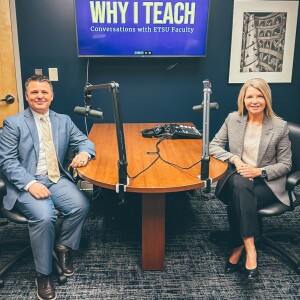
Oct 23, 2024
Oct 23, 2024
22 min
This episode features Dr. Michael Anthony Fowler, Assistant Professor of Art History in the Department of Art and Design at East Tennessee State University. In addition to his work in the classroom, Dr. Fowler is an active collaborator on several international archeological projects and serves as the chair of Johnson City’s Public Art Committee. In this episode, he shares how these experiences impact his teaching, as well as some interesting observations and insights about incorporating hands-on learning and interdisciplinary approaches in his classes.
Podcast Transcript:
Dr. Michael Anthony FowlerI want to create culturally fluent, persuasive, compelling communicators; people with keen eyes who can be discerning; folks who are inquisitive, who value truth, and know how to identify right to make that distinction between fact and fiction.
Dr. Kimberly McCorkleHi. I'm Kimberly McCorkle, Provost and Senior Vice President for Academic Affairs at East Tennessee State University. From the moment I arrived on this campus, I have been inspired by our faculty, their passion for what they do, their belief in the power of higher education, and the way they are transforming the lives of their students. This podcast is dedicated to them, our incredible faculty at ETSU. Hear their stories as they tell us “Why I Teach.”
In this episode, we will talk with Dr. Michael Anthony Fowler. Dr. Fowler is an Assistant Professor of Art History in the Department of Art and Design. He also serves as affiliate faculty in the Classical and Medieval Studies, Religious Studies, and Women's, Gender and Sexuality Studies programs.
An art historian and classical archeologist, Dr. Fowler specializes in the art and material culture of the ancient Mediterranean and West Asia. He has earned master's degrees in several disciplines, including a Master of Theological Studies from Harvard University, an M.A. in classical archeology from Tufts University, and a Master of Arts and Master of Philosophy from Columbia University. He also completed his Ph.D. in art history and archeology from Columbia.
In his teaching, which ranges widely across the history of art, Dr. Fowler is interested in introducing students to the diversity of visual cultures around the globe, and to the critical role that arts continue to play in expressing, shaping, and responding to peoples’ ideals and realities.
Dr. Fowler is also an active collaborator on several international archeological projects. Locally, he is a commissioned member and chair of Johnson City's Public Art Committee, where he assists people with various projects aimed at integrating art into the everyday lives of people in this region, beautifying ETSU’s hometown, and building community through collaboration.
Enjoy the show!
Dr. Fowler, welcome to the show. I start my podcast with the same question for every guest. Take me back to your first day of teaching at ETSU as a faculty member. And looking back on that day, what is one piece of advice that you would have given yourself?
Dr. Michael Anthony FowlerIt's a wonderful question to begin with. And but first, let me just thank you for the invitation to join you today on the podcast. I'm really glad to be here. The piece of advice I would give myself on my first day is actually a piece of advice I would give myself every day of my career to the present and beyond, and that is never to forget how that first day on the job feels. The excitement of introducing new material to students who've never encountered it before, and making sure that enthusiasm and excitement carries over into your fifth, 10th, 15th, 20th year. Because my students respond to that enthusiasm and energy. They see my passion for the subject and it inspires them to want to learn more. And I would say another thing is that a lot of us teach the same courses, you know, several times over our careers, and it can feel a little routine and you can fall into losing that excitement. So trying to maintain that fresh perspective on the material every time you walk in the classroom really helps. And it also helps you remind yourself that, what it's like to learn the material for the first time and making sure you're scaffolding and approaching material from the perspective of a first-time learner in the discipline that we never as experts, lose the novice perspective. So I think that applies equally to my first day on the job, as it does on my current and future days on the job.
Dr. Kimberly McCorkleExcellent. Excellent advice. What initially drew you to the fields of art history and archeology and how did your academic journey evolve across different disciplines like philosophy, religious studies, and classical archeology?
Dr. Michael Anthony Fowler So, I was ultimately, I mean, I arrived at art history and archeology fairly circuitously and late in my academic training. What ultimately drew me to art history and archeology are the kinds of questions that are possible to answer from an art historical, and archeological perspective. Art history preserves. Visual art is humanity’s oldest form of communication that survives. Of course, human beings, our earliest ancestors, tens of thousands of years ago, had other forms of communication: dance, music, language. But art is the most enduring form of that communication that crosses through time, crosses geographic cultural boundaries, and it's nonlinguistic. So it's a really inclusive way of studying those ideals and realities of humanity throughout history in a way that doesn't privilege cultures, that, leave text for, for instance, not every culture is a literate culture. So, if we want to be inclusive and then most, in the broadest sense, to study human beings through our history, I'm really drawn to art is that, that form of communication. And archeology preserves all kinds of information in the archeological record that doesn't necessarily privilege the elites, who on the art historical side, on the literary side, a lot of what our students encounter are things made by and for the more privileged groups throughout human history, and archeology preserves a lot of evidence that permits us to investigate classes of people, groups of people who might otherwise have been, unacknowledged or more difficult to identify in the more elite forms of material culture.
Dr. Kimberly McCorkle Oh, thank you for sharing that. I understand that you co-designed a study abroad course in Greece that combines art history, design, and cultural heritage management. How do you think that experiential learning in a real-world setting changes the way that students understand and engage with art history?
Dr. Michael Anthony Fowler Fowler: So traditionally, when I went through my art historical training, art history has this rap for being relatively passive, sitting in very dim, dark rooms with slides being projected. And why I liked getting students out abroad in Greece is partly that it reminds students that art and architecture are contextual, that they're embedded in spaces and cultural context, and getting them to actually move around and within these different spaces and actually get a first-hand experience of how actually art and architecture, archeology, is part of the lived experience of people. But also the class was designed around concrete case studies that were presenting not just mock problems for students to solve, but these are actual problems that still confront the fields of cultural heritage and museum studies as it concerns how do we make our sites, our museums, our monuments more accessible in the sense of physically accessible, accessible to different kinds of bodies, but also accessible, I mean, I should say inclusive in the sense of, what stories are they telling? What kinds of meaning might these different collections, might these different buildings have for folks? So it's enlisting students in making art history and archeology, architectural history, more accessible, more inclusive, but with those real-world problems that they're solving, it's also reminding them that, like, art history is all around them and that these fields have really concrete skills that they can actually apply in the real world, and it reminds them that actually art history is this big, broad field, and there's actually a lot of opportunity on the horizon for them.
Dr. Kimberly McCorkle In addition to Greece, have you taken students to other cities, even cities in the U.S.?
Dr. Michael Anthony Fowler I do make a habit of taking students on field trips to all kinds of museums where I can get -- usually I do really long drives to museums within five, six hours of the campus. So we've been to museums in Southwest Virginia, Middle Tennessee, North Carolina. We have a trip coming up soon to Atlanta to go to the Carlos Museum. So that's also part of this, getting students in proximity to art. Right? So that's not represented flat with pixels on a screen, but actually being in a space where you get a sense of the magnitude of an object, you get a sense of the way that that object aesthetically impacts you. But, why I like the study abroad, is that there can be that tactile, kinetic kind of spatial dimension that museums, for as much as I love them for preserving and presenting objects from all around the world in a convenient place, there's really nothing that replaces environments where you're actually moving within and interacting in ways that more approximates the ways in which art historical objects were actually used and experienced through history.
Dr. Kimberly McCorkle So you use other creative teaching methods like student exhibitions and problem-solving in art and design. What advice do you have for faculty who are looking to bring more hands-on learning and interdisciplinary approaches into their own classrooms?
Dr. Michael Anthony Fowler So I'll start with the hands-on learning. And I would say to start small or that it doesn’t have to be big, right? So, your question referenced my mounting of a collaborative class exhibition at the William King Museum, which, of course, is a really large project that required a year out of planning, a lot of scaffolding, a lot of different stages. But that’s, of course, a really highly visible and impactful way of getting students to experiment and apply their knowledge. And of course, gets actually a CV line and exposure for their work out of the process. It doesn’t have to be that big. It can be small, right, projects, experiments, hands-on exercises that you integrate into the classroom. For instance, I have small-scale museum reproductions of objects that I will occasionally incorporate into the classroom for people to handle and pass around because, again, I spoke about the tactility, the sense of scale, the sense of weight, and it’s different to interact with an object like that and answer questions about it when it’s not this out-scaled, enormous, digitized thing on a screen, so that’s an example of something that’s small that can make an impact. And I would say also to make time for hands-on learning. It’s going -- to do it well, it requires some of your time in your lesson plan, and a lot of us came up pedagogically being trained that content delivery is so important, but skill development and opportunities for application and knowledge transfer are also important, too, and so you have to take time if you’re going to plan a bigger project, but you also have to create time in your lesson plan and be okay with the idea that maybe you’re going to deliver a little bit less content, but the payoff is that the students are probably going to retain the knowledge better when they have a tactile, hands-on way of actually learning the material.
As far as the interdisciplinary approaches are concerned, a lot of folks, myself included, although I did have a really interdisciplinary background, which you referenced, earlier in the podcast, but a lot of folks come up through their training, graduate school, where we get increasingly narrow in and specialize in a field and in some cases even a subfield or subdiscipline thereof, and so being interdisciplinary can be daunting, challenging, scary, for professors, for instructors who are trying to incorporate material, theories, methods from areas that they were not necessarily trained in. So it’s, it can be -- so part of is the advice is, is to take that courageous leap to incorporate, interdisciplinary training, knowing that it’s going to take some time to get familiar with some of those materials. You’re going to make mistakes. You’re going to need to iterate, through that and to decide what kinds of materials work best, but also, we’re blessed for being in a university that has so many different departments with those areas of expertise, and I have leveraged the knowledge and expertise of colleagues in social sciences and humanities for advice on what readings might be relevant or cognate or complementary to the goals that I have from the art, historical or archeological perspective. So, also draw upon the expertise of your colleagues.
Dr. Kimberly McCorkleThose are such good tips. It's true. In your bio, I read that you're an active collaborator on several international archaeological projects, and you also serve as the chair of the local Public Arts Committee. How does this work outside the classroom impact your teaching?
Dr. Michael Anthony FowlerSo for the archaeological one, I'll point out briefly that I have encouraged students who are interested in hands-on training in the field to accompany me to Greece, and in fact, I have taken a student in a recent summer using an undergraduate research grant that she won to accompany me to Greece to actually get that kind of training that you just -- you can teach archaeological theory, you can teach archaeological method, but you can't really understand the process of actually excavating and how archaeologists approach studying a site unless you're actually on the site. So I do try to get students who are interested abroad with me, whether it's in the context of the course that we already discussed or even in those more personalized internship capacities.
As far as public art is concerned, we -- public art has two different ways of actually putting art in public space. One of them is our own sponsored programs that we identify, we plan and develop and execute, and the other are community-initiated projects, where any individual or group, constituency in the community can come to the Public Art Community Committee and present an idea that they have, and we can either consult them and help them along independently, or it could be something that we adopt and we actually shepherd along.
So in one of my classes "The Monument in History," the students are tasked -- their project is to design a monument to a person, a cause, or an idea to be set up in a particular context, and they have to go through several stages of the project where they're doing the research, they're doing the design, they're making considerations about the different kinds of constituencies in the community that might be interacting with the monument, and they have to present it to the class at the end of the semester and be questioned.
So in some ways, the project and the monument in history, even though we're not really doing monuments in the public art realm, we tend to steer away from that for a variety of reasons, but that process of getting students in a class to practice what a proposal development for a public-facing object would actually be like. So it's simulating, again, that process and by then they've gone through a lot of theoretical readings about the various dimensions of monuments, the various pitfalls, problems, opportunities of monuments in history, and so they're applying all of that knowledge, and really, I can see them thinking critically about all of the various ways that actually putting something in public space is a really gratifying but challenging task if you're really doing it sensitively, inclusively, thoughtfully.
Dr. Kimberly McCorkleSo, what's your favorite class to teach?
Dr. Michael Anthony FowlerI would say usually I joke and say all of them, because one of the things that my job is required here, being one of a cohort of three art historians, is being a generalist, which of course kind of resonates with my previous discussion about interdisciplinarity, is that I came here as an expert in ancient Greek and West Asian art, and in archaeology, but I teach everything from prehistory to 1750 roughly, and all around the world, and I've had to acquire that facility. So, through that process, I really learned to love and appreciate the various classes that I teach, but I will say I do have a soft spot for thematic classes, classes that take a concept or a phenomenon in human history, like monument building, which cuts across time and space. I teach a class on violence in the visual arts -- violence, another human phenomenon that has been with our species for a very, very long time, and is where we have violent media all over the place, so it allows me to approach an important issue or theme using case studies from a variety of historical and cultural contexts, so it gets students to think about an idea of ways in which cultures and contexts relate to one another, but also developing an appreciation for understanding, appreciating diversity is not just about finding similarity. It's also being comfortable with and appreciating and embracing differences. Right, so distinctions are also important in comparative method.
Dr. Kimberly McCorkle How has your teaching style evolved over time and what continues to inspire you in the classroom today?
Dr. Michael Anthony Fowler I would say my teaching style has pretty much remained constant. I tend to be, I don't have the "sage on the stage" approach, even in a lecture format class. I make time for questions, discussions, breakouts, activities of different kinds. I would say my teaching has evolved a lot with respect to content and assessment. Content, although I still teach these very conventional art historical organizations of time into periods or to geographic or cultural context, I just referenced the thematic classes that I really like teaching, and part of why I like teaching them is it's pushing back and breaking out of the mold of a particular way of approaching art history, where we put these boundaries and silos around different people and their art and their architecture, and it creates these kind of arbitrary divisions, when in reality, the world, even in the ancient world, is a globalized, interconnected place where cultures are mutually influencing one another through a variety of contacts.
So these thematic classes allow us to embrace the permeability of those kinds of taxonomic boundaries that get set up in the discipline and enable us to think on a kind of anthropological, more human level about issues that I think my students are also thinking about. Right. We're in a time where we're debating as a society what kinds of monuments should represent us, what monuments may be out-of-date and need to be revisited. Violence, right, is something we're living right in a world where we've got a lot of conflict happening around the world. So, students are really drawn to those issues and getting them to think about how humanity has dealt with, has explored those over time is really helpful.
Assessment-wise, I've moved away from the traditional research essay. That is not to say that I don't incorporate research and scholarly writing into my assignments. I still think that is a critical skill that students need to develop here. But I don't think a lot of my students are necessarily going to exit the university in careers or jobs where that's going to be the primary form of the product that they're going to produce. So I've referenced the exhibitions, the monument designs. I have students curate exhibitions. Next semester when I teach "Art in Appalachia," we're going to be in the Reece Museum, making use of the teaching collection, but also engaging in training on how to how to actually catalog, photograph, examine objects from a curatorial perspective. So I try to use those writing and research skills, but to channel them towards a variety of activities that represent things that different career tracks actually require. So they do, can actually speak to a job interview and say, "Actually, in one of my classes, I've done cataloging," or "I've actually mocked -- created a mock exhibition on a topic," right?
Dr. Kimberly McCorkleI'm certain students find those relevant and also helpful.
Dr. Michael Anthony FowlerYeah, I -- the feedback I get suggest that's the case.
Dr. Kimberly McCorkleThat's great. Finally, what impact do you hope you've made on your students?
Dr. Michael Anthony FowlerI hope, I mean, I would say I'm a first-generation student, came from a, you know, working middle-class family, and so I see a lot of my own background and experience in the students that I have in the classroom. And so that really is one of the major draws to higher ed for me is how transformative it can be for folks. So the impact I really hope that I can help students get to where they want to be, right, and to approach my teaching and mentorship in a personalized, individualized way so that it's not a kind of one-size-fits-all. Yeah. On a broader-scale impact, I want students -- I want to create culturally fluent, persuasive, compelling communicators; people with keen eyes who can be discerning; folks who are inquisitive, who value truth, and know how to identify, right, to make that distinction between fact and fiction. And I think these are really important not only for being an active and productive contributor to and member of a 21st century workforce, but it's critically important to promoting institutions and values in a democratic society. So I'd say good citizens is also something I hope I'm helping impact.
Dr. Kimberly McCorkleNice. Thank you, Dr. Fowler. I've really enjoyed learning about the scope of what you do, the ways that you've developed your teaching craft, and how your work impacts your teaching and your students. Thank you so much for your contributions at ETSU, and also to our community for your work with the Johnson City Public Art Committee. Thanks for listening to “Why I Teach.” For more information about Dr. Fowler, the Department of Art and Design, or this podcast series, visit the ETSU Provost website at ETSU dot edu slash provost. You can follow me on social media at ETSUProvost. And, if you enjoyed this episode, please take a moment to like and subscribe to “Why I Teach” wherever you listen to podcasts.