Tuesday Jun 28, 2022
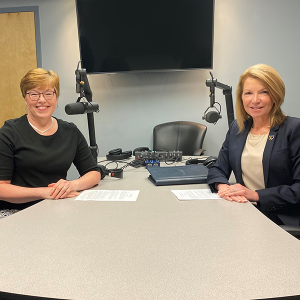
Episode 03: Rhonda Brodrick
From teaching dosage calculations to understanding the intense demands of working on the critical care unit, Rhonda Brodrick from the College of Nursing is inspiring the next generation of nursing professionals.
Podcast Transcript:
Professor Rhonda Brodrick
And we would let them– we would have them watch it.
And I said: I want you to look at the teamwork and the communication.
These are skills that you didn't have when you were first semester, but now that you're fifth semester, look how far you've come.
And it was really great to be able to let them watch themselves and to see the growth that had happened over the last two and a half years.
Provost Kimberly D. McCorkle
Hi, I'm Kimberly McCorkle, Provost and Senior Vice President for Academics at East Tennessee State University.
From the moment I arrived on this campus, I have been inspired by our faculty, their passion for what they do, their belief in the power of higher education, and the way they are transforming the lives of their students.
This podcast is dedicated to them: Our incredible faculty at ETSU. Hear their stories as they tell us why I teach.
In this episode, we will talk with Rhonda Brodrick, an award-winning faculty member from the ETSU College of Nursing, and hear what it has been like teaching nursing students while working in the intensive care unit during COVID. Enjoy the show.
Professor Brodrick, welcome and thank you for joining us today.
A question that I always ask nursing faculty members: When did you first know that you wanted to be a nurse?
Professor Rhonda Brodrick
Well, first, thank you for having me. You know, that's an interesting question. My– my project this summer is, uh, is that I'm cleaning out drawers and doing all that accumulation stuff; and so I actually ran across a– a paper that I had done in elementary school, and apparently it was a paper about two career choices. And so I had written about a registered nurse and mortuary science. So it apparently was on my radar very early in life. I guess I'm a little thankful that I went the nursing route, rather than the mortuary science route – not that there's anything wrong with mortuary science – but my family's full of nurses and teachers. So I had an aunt who meant the world to me and she inspired me. She and her friend inspired me to be a nurse. So I think from a very early age, nursing was where I was destined to be.
Provost Kimberly D. McCorkle
I love it. And you were inspired to be a nurse.
I start this podcast with the same question for every guest: Take me back to your first day of teaching at ETSU as a faculty member. Looking back on that day, what is one piece of advice that you would have given yourself?
Professor Rhonda Brodrick
Oh, I was– I was so nervous. I think my piece of advice would have been just to relax. I think my biggest fear was that somebody would ask a question that I wouldn't know the answer to. And I've learned over the years that it's OK to say, I don't know. As I tell my students the way you say I don't know is key. There's a way that you can say, I don't know, which means: "I don't know and I don't care to find out." And then there's a way that you can say, I don't know, and it means: "I don't know, but let me see if I can find the answer for you." So, you know, learning to s– learning it was OK to say I don't know was– it is has been a good thing.
Provost Kimberly D. McCorkle
That's great advice. So tell me about the courses– courses that you teach at ETSU, and when did you first join the faculty?
Professor Rhonda Brodrick
I joined the faculty in the early 1990s. I taught here for about five years. Then I left. I went back into practice for five years. My coworkers at the time called it my sabbatical. Then I came back and I have been back since.
In most semesters – I guess when I first started teaching I taught more at the foundations level; their– their early semesters in the program. My background is med-surg, and so I tell the students I'm great if it's adult medical issues, I'm not really great if it's women in labor and kids in the hospital. But I tend to teach early in the program, and then in the last several years, I have taught their final clinical experience. So early in the program, I teach dosage calculations, which is where the students learn to calculate medication doses for all types of medicine that they'll administer. My other course I teach primarily in is Adult Care III: Practicum, and these are students that are going to graduate at the end of that semester. And so we're usually on the high acuity med-surg units over at the hospitals.
Provost Kimberly D. McCorkle
Well, I would imagine that your students are a bit nervous when they first come into the intensive care unit. How do you navigate helping ease their anxieties, but at the same time reminding them of the seriousness of the important work that's done in the critical care unit?
Professor Rhonda Brodrick
What I've learned is it's important to focus on the student because your students are different. I have students that are overwhelmed and intimidated by the complexity of the patients. I have other students that at times can be a little overconfident – and not that they're not incredibly bright students, they are; they oftentimes have teched and done– and had jobs in ICU, and they've seen so much, which is great in terms of experience – there's still a lot they have to learn. So when I approach the students, I try to look at where they are and to get a grasp. The first couple weeks of any clinical is trying to figure out where they are in terms of what they know and then looking at where are you now and what can I do to help you level up to wherever you need to get to.
So for the students that maybe are overwhelmed and intimidated, it's taking some of that pressure off in terms of – there's no way you're going to figure all this out in one or two days on this unit, it takes years for these nurses to get this level of expertise, so let's see what we can get out of today. If we learn a few things today, we can come back next week and learn a few more things.
For the student that is overconfident, sometimes it's asking questions that they may not know the answer to and helping them see that there– there are more things to learn. There's always something to learn. It's always interesting to me when a student says they're bored in clinical, because there's just– there's always something to learn. Even having been a nurse over 30 years, when I go in for any clinical, I'm still learning something new. There's new medications, there's new technology, and even people skills in terms of communication, in terms of management, leadership, I just can't imagine being bored on the unit.
Provost Kimberly D. McCorkle
Tell us what is a typical day like for students in a nursing clinical? I hear that your day starts most days before 8 a.m.
Professor Rhonda Brodrick
Way before 8 a.m. Shift– Our students, when they go to clinical, they do– in most cases they do a full shift, just like what the nurses do. So shift change for most of our hospitals in this area is at 6:30 in the morning. So usually we want to have a little bit of time with the student before we get them up to the units, but it's also important to get them to the unit before the nurse receives report. It's professional courtesy, in terms of, it's– it's hard for the nurses to get report and then to have to go back and try to catch a student up. So the students are usually there somewhere around six in the morning. For faculty, we are usually there around 5:30 in the morning. So those are very early mornings on our, you know, on our days. We go at 5:30 to go to the units to see what's going on in the units, to make sure that things are appropriate for a student to be there on the unit, and that type of stuff.
So our students come at 6:30, they receive report with their nurses, and then it really depends on the day. They usually are directed to work with certain patients on that unit, so there's tremendous variety in terms of what they may encounter during the day. And I think that's what makes teaching... challenging, I guess, is the word; because you don't know when you go in in the morning what you're going to have in terms of that patient combination, so it's a lot of you thinking on your feet in terms of what the students are doing, and then in terms of helping your students work with those patients.
Provost Kimberly D. McCorkle
What has it been like working in the critical care unit during the pandemic?
Professor Rhonda Brodrick
Hard. I think that... it's just hard. The patients are are so– when we were at the height of COVID, the patients were so sick. And it was– it was interesting in that it wasn't always... you had elderly patients that you would expect to be very sick with COVID that did fine, you had patients that were very young that you would have expected not to have a problem and they didn't do as well. The patients that were in the intensive– in the COVID intensive care units were really, really tremendously sick. I'm sure probably most people have seen those pictures in the news or in the magazines where, you know, you've got, you know, six or eight I.V. pumps outside the room and the nurses are all garbed out, and we had that here.
Provost Kimberly D. McCorkle
So you have been teaching at ETSU for over two decades. How has the way you teach changed, but what's remained the same?
Professor Rhonda Brodrick
I think the methods of teaching have changed. I did undergraduate here at ETSU, so I'm an ETSU– ETSU nurse, but I did my graduate work... When I was doing my graduate work, word processors had just come on the scene. So there were no handheld devices and there was very little technology. So I always tell the students I'm "PT," pre-technology, so you have to be patient with me, because it takes me time to get there. I– I joke with them, I say, OK, I've already been through like, you know, 78s, and 35s, and all the LP's, and then we went to eight-track, and then we went to cassette, and you know, and we've done CDs and we're doing DVDs, and, so, I'm... The technology is just amazing.
It's amazing in the sense that the students have access. They have so much at their fingertips now. And it's– it's so much easier to get to. You know, when I was here as a student – and this is nothing related to ETSU, but it was what– what it was – when you got your research topic, you went to the library and you pulled those great books off the shelf, and you had to look up all your words in the book, and then you would go and you would look... It would give you some references and you'd go look to see if your library even had that journal, and you prayed the whole time, oh, please, oh, please let them have the journal. And then you would go to the stacks and get the journal, only to find that somebody had torn those pages out of your journal.
So I love technology in the sense that I don't have to do that anymore. It's so easy to– to, you know, do your data searches from home in your PJ's. So in that sense, technology is great. I think COVID challenged us in so many ways, in terms of, we had to figure out ways that the students could keep learning when we were– we– when we were blocked out of hospitals for that period of time. And so the technology in terms of ways that we can teach has improved tremendously.
With that huge technology leap, though, our students are responsible for so much more information and there's so much out there that sometimes I feel like it can be a little overwhelming for our students. You know, you can get lost in the technology trying to figure out what you're trying to do.
So, technology, methodology... I came into teaching with practice– I had a lot of nursing practice, I didn't have any– I hadn't had any background in nursing education. So I've learned a lot by trial and error, by making mistakes and having, um, and some successes through the years to learn really how to be a teacher. I am eternally thankful for the nurses that mentored me in the hospital and that mentored me when I came here. They were phenomenal, and they really... it was such a blessing to have that person that you could go to and say, I have no idea what to do with this. And– And you got, you know, you had some of that really gave you good advice.
What hasn't changed for me is the motivation to teach. And, and, and my heart's the same in that I really want my students to be successful. It's so important to me, not that they just graduate, but they graduate at a level where they can be successful.
Something I'll never forget in graduate school was one of the professors was talking to the class, to our class of students, and the professor said to us that we were like, 10th or 12th priority on his list. And having been in academia now, I– I guess I understand it a little bit better, because at this institution I'm sure he had to generate a lot of scholarly activity and all of that stuff; but he basically said his research, his scholarship and all of that came ahead of his teaching responsibility. And I remember sitting there thinking, man, I paid a lot of money to come to this school, to be 10th or 12th priority on somebody's list. And I never wanted my students to feel that way. You know, I really try to show up and give them 100% so that they know that they're high on my priority list. I care. I mean, you know, if I'm not doing something well, I want to know if there is something I'm doing. Sometimes you think you know what works, as a faculty member, but, you know, sometimes what you think's working is actually not what is most beneficial for your students. So when they take the time to give me that feedback, it really means a lot.
Provost Kimberly D. McCorkle
Tell us a bit about how you use simulations in teaching.
Professor Rhonda Brodrick
I'm glad you brought that up, because you asked how methodology had changed; and simulation is a great new type of technology that we're able to use with the students, we used building 60, Bishop Hall, to do some simulation with our– our fifth semester students that were getting ready to graduate. And unfortunately with COVID, the spacing guidelines and that kind of stopped our simulation process for a while; but the students really enjoyed simulation. Before COVID, we were doing – In– in my clinical – we were doing six different simulations with the students. And so it was really interesting to have them in the sim lab and to be able to set up experiences and to take the pressure off of them being with a real patient, but at the same time to explore and have to think through, what would I do if this happened? How can I put this– these pieces of information together to understand what's going on, what's happening with my patient, and how do I make appropriate decisions?
And there's– there was so much variety in what we were able to do. We could do anything from a skills refresher, which never hurts for nurses; even practicing nurses have to go back and do skills fairs, to make sure that they stay competent in their skills. But it also gave us an opportunity to provide patient scenarios that they may not necessarily see. We had patient scenarios related to burn patients, we had patients that were having cardiac issues, and it allowed us to show the students what they might see if they needed– what they might have to do in terms of how to manipulate the monitors if they were... needed to cardio– cardiovert a patient, or if they needed to attach a patient to a pacemaker, a temporary pacemaker.
One of the... a couple of them that the students really appreciated, we did mock Code Blue, and, which, we would basically call the code, we would have the students come in, and the students would run the code; and they really came to appreciate how difficult it is to do CPR for 2 minutes straight before you can change off. We also in that scenario would take them through... our codes weren't always successful, and we would walk them through, we would– we would, if we could, we would have a family, someone acting as the family member at the bedside, and we would bring the family member to the bedside, and the students would– we would continue until the students had to address with the family member that they had done everything that they knew to do, and it hadn't been successful. We also did a disaster drill where ETSU had been hit by a tornado, and we basically had a group of students come in and triage, do the first set of triage.
So it's from a faculty perspective, it's fun, you get to be creative. From the students' side of it, though, they really liked the ability to be able to think through issues and problems and have that time that you don't always get at the bedside, but... and to figure out what was going on with the patient. And then that sense of accomplishment when they did figure out, and they knew what to do, and they made appropriate decisions, that was a real confidence booster for them.
And one of the things that I like about simulation as a teaching method is that it allows students the opportunity to get immediate feedback, to review how they acted and then to have feedback from the faculty member. Now, the challenge for that from a faculty side is, in simulation, they always tell you whatever amount of time you spend in simulation, you spend double that amount of time in debriefing. And the hard thing for faculty is– is learning to keep your mouth closed. You have to– you really want to... If you're talking in debriefing, it's– you're not debriefing, you're not giving them the chance. So learning how to get them to do the talking, to get them to do the thinking, you know.
And in the code sim, what was– I always enjoyed that debriefing because what was... I would always ask them at the end, if you– if we had given you this scenario your first semester in nursing school, would you– what would you have done? And you know, a lot of the students say, I would have just cried, or I would have quit; just quit and never come back. And I said, so you know, the purpose of this isn't to win the Code Blue Award. We are not, you know... You don't win the code Blue Award until you've done 100 codes. We're not there. But I want you to look at the at yourselves on the screen – because we would we would video it, we didn't tell them we were videoing it, but we would – and we would let them watch it. And I said, I want you to look at the teamwork and the communication. These are skills that you didn't have when you were first semester, but now that you're fifth semester, look how far you've come. And it was really great to be able to let them watch themselves and to see the growth that had happened over the last two and a half years.
Provost Kimberly D. McCorkle
Yeah. Thank you.
Tell us what advice you have for someone who's considering a career in nursing.
Professor Rhonda Brodrick
Think it through. Yeah. There are... It's– it's a great profession. And, you know, nursing has– has been a blessing for me, and it's given me so many opportunities, and nursing is a profession that will give you amazing opportunities. You know, there are jobs available. There is so much– so much flexibility within nursing. You can change your career path without having to go back and get another degree. There's a tremendous need for nursing now, and there will continue to be a tremendous need for nursing moving forward.
All of that said, I think you need to understand that it's going to take a whole lot of hard work to get that degree. And the hard work is not going to stop there. You know, the salaries can– are good, you know, and like I said, the opportunities are good, but you're going to work hard and you're going to have those days. It's– it's an amazing– it's– it's an amazing amount of responsibility because when you go in to work, you really are holding people's lives in their hands, in your hands. The decisions you make are important.
Provost Kimberly D. McCorkle
Yeah.
I really appreciate the way you've described your approach to teaching. So can you share with us what are some of the most rewarding moments that you've experienced in your role as a teacher?
Professor Rhonda Brodrick
Well, I love my students. You know, just having a smile or running into a student that I've had before or receiving an email about, I just thought about you today, or I remember when you were teach– we were teaching– you were teaching dosage and calc, and I've never had to worry about my math, and I just really appreciate the time that you spent.
The notes from the students – one thing that Dr. Nolan does at graduation that I've always really liked was he always takes time to– to make that appeal for students to take the time just to send a note. And over the years, I have a stack of notes and I really... I don't throw those away. They're in my office. When I do have those days where I think, Oh, man, is this really what... it's just been one of those days, but, you know, I'll pull those cards out and look to see, you know, to read those notes, to remember why I do what I do.
But I think the other thing that meant a whole lot to me was I graduated from ETSU on ETSU's 75th anniversary year. The centennial year, they had a... they went to the colleges on campus and they asked students to nominate a faculty member and I can't remember if they called it like... Anyway, it was a way for the students to recognize a faculty that had meant something. And I– I got that award for the College of Nursing, but I got it on the hundredth anniversary. And so it was kind of neat to look at from, you know, in 25 years I had actually come back to my school and, you know, was making a difference, and that meant a lot.
Provost Kimberly D. McCorkle
So meaningful. Congratulations. Thank you.
So the last question I like to ask every guest is: What impact do you hope your students will make on the world?
Professor Rhonda Brodrick
That's such a hard question. There's so much. There's– there are so many opportunities for nurses to make a difference, whether it's at the patient– with the patient at the bedside. Within a facility. Um, you know, our students are incredibly talented. The profession itself, our students are so different. When I look back over the last 30 years, the nursing profession, I don't think I could have envisioned the nursing profession being the way it is today.
And I think for the students, one– one way I– one thing I say to them is in terms of technology, because now we have students that have grown up with technology, and I'm kind of excited to see where these students will take technology. Maybe it'll become more intuitive, in terms of working with patients at the bedside, and less of a distraction, I think there's a lot of potential there.
But for me, our students have so much potential to meet whatever they choose to do – and they're all different, and they're all going to have different strengths – but whatever they choose to do, I just want them to do their best, and I want them to do it with integrity, to be willing to make those hard decisions, you know, to stand up when everybody else is backing down. But if they're able– you know, if they do that, they will make change, and they'll make positive change.
Provost Kimberly D. McCorkle
Thank you, Rhonda. It has been a pleasure having you. And I thank you for all you do for our students and for our health care system. You truly made a difference at ETSU and positively impacted your students, and we're so fortunate to have you on our faculty.
Thanks for listening to "Why I teach." For more information on Professor Brodrick or this podcast series, visit the ETSU Provost website at ETSU dot edu slash provost. You can follow me on Twitter @ETSUProvost, and if you enjoy this episode, please take a moment to like and subscribe to "Why I Teach" wherever you listen to your podcasts.