Thursday May 05, 2022
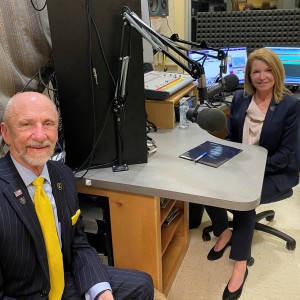
Episode 01: Dr. Tom Kwasigroch
Dr. Tom Kwasigroch is one of the inaugural faculty members at the Quillen College of Medicine. He has taught every medical school student since the school was established. Hear about his passion for medical education and how the instruction of gross anatomy has transformed during the past four decades. He also discusses the Human Anatomical Gifts Program and what it is like for medical students when they meet their first “patient,” which is a cadaver.
Podcast Transcript:
KWASIGROCH: (opening audio clip) The other project that I'm involved in is the Center for Surgical Innovation and Training. We have a unique embalming process. It gives us donors that are very lifelike, allowing our students, our fourth year students, to actually perform surgery. That's not done anywhere. Residents will be able to perform surgery on our donors before they have to do it on me. So, it's pretty selfish on my part.
MCCORKLE:
Hi, I'm Kimberly McCORKLE, provost and senior vice president for Academic Affairs at East Tennessee State University. From the moment I arrived on this campus, I've been inspired by our faculty, their passion for what they do, their belief in the power of higher education, and the way they are transforming the lives of their students. This podcast is dedicated to them: Our incredible faculty at ETSU to hear their stories as they tell us why I teach.
In this episode, we will talk with Dr. Tom Kwasigroch, who was one of the inaugural faculty members at the Quillen College of Medicine. He has served as the school's associate dean, having worked closely with curriculum planning and student affairs and has also taught the gross anatomy course for every class.
Dr. Kwasigroch, welcome to our podcast.
The first time I met you, we both talked about our love for teaching and I also learned that we share a hobby: Rollerblading. So out of curiosity, did you rollerblade here to the station today?
KWASIGROCH: Well, Dr. McCORKLE, first of all, thank you for inviting me to do this. I'm honored to do it. And please call me Kwas. It's just easier to say than Kwasigroch, if you don't mind.
As far as rollerblading here, It's all uphill; so that would have been problematic on the front end.
The other thing is I haven't managed to teach my service dog how to rollerblade.
That's a problem because she's here with me. And the other part of it is I have tried to eliminate all contact sports because of my advanced age. I'm no kid anymore. And so contact sports, things like basketball, I don't play it anymore even though I love it; and every time I try to play it again, it takes me about a month to recover.
So basketball, hockey, which is– I love to– use to love to play hockey, and hockey, like rollerblading, it's– Rollerblading isn't a contact sport, but the contact part of it is you with the ground. So I look upon that as a contact sport as well. So nowadays I do things, I ride my bike a lot, I go to spin class at the CPA, I do things like that, like kind of cross training stuff, and ride safe things, like my golf cart, so– It makes it a lot safer, and I haven't fallen out of that yet. So that's a good thing. So, no, I did not ride the roller blades up here today.
MCCORKLE: Okay. Well, and I did neither, it was too windy today, so there you go. I want to thank you for joining me today, and I want to start the podcast out with the same question for every guest. Would you please take me back to your first day of teaching at the College of Medicine, and looking back on that day: What's one piece of advice that you would have given yourself?
KWASIGROCH: I had the opportunity to be involved in teaching in the military, which I'll talk about probably a little bit later. So I learned very early on that you don't teach. I don't think you teach. You facilitate learning.
And so that's my job, is to facilitate the learning. And I've been involved in athletics my entire life, either as an athlete or as a coach.
And to me, it's much the same as coaching a team of athletes. Your job is to try to improve their skill set.
Try to get them comfortable with what they are doing. Trying to let them realize that teamwork makes the dream work. (I had to get that in there. Everybody would be upset if I didn't.)
But teamwork does make the dream work, and they need to work together to become better at what they do.
The other aspect of it is as far as being a facilitator, and trying to take students that want to know everything, you have to get them to realize that less is more. It's far more effective, far more beneficial to the learner, to get foundational things and get them really, really well, so that they can apply that information, rather than try to learn everything and do it so superficially that they really don't have a strong skill set.
So it doesn't matter who you're teaching. Obviously, I teach medical students. I've also taught physical therapy students. We started that program, what, 27 years ago. So it's the same thing. It's to do our best to try to get them to do their best. That's what I mean by facilitating and, just, help them understand and be passionate about the process.
So that's one of the things that I keep asking the students, are they having fun today, because if they're not there in the wrong place, frankly.
Those are the big things. You know, being a coach, letting them know that less is more, and being a good facilitator.
MCCORKLE: I love the concept of being the facilitator of learning, and I think that describes it so well. As one of the inaugural faculty members at Quillen, you have taught every graduate of the college of medicine, and that is so impressive. And I'm doing the math in my head, and I'm thinking that that's about 2200 graduates. How many of those names might you remember if you saw them today, or saw them face to face, remember having taught them?
KWASIGROCH: I think it's over 2200 now. But nonetheless, your math is still good. I think I remember most. When I get a phone call, or whatever from a student, or if they ask for help, for whatever reason, or if we meet them at various events, occasionally it will take me a minute or two to to make the connection, because whether we like it or not, as time passes, we do look a little different.
Maybe a little weight gain, a little weight loss, a little hair loss or things, things along those lines. But I think that I would remember most of them. Here's an interesting thing that I've learned over the years: When I do get a phone call or an email or some kind of request from a student, I walk down the hallway in our admissions region.
I want to refresh my memory of what they looked like, and what things were like when they were there, and the timeline, and those kinds of things. And here's what's remarkable about our minds: I will walk down the hall and I will usually find the composite of that class, and I will say: That's their class. And then find the individual of concern.
It amazes me how we link the group together, and it also helps me, I think, try to be more effective in what I do with the students, because I try to help them establish that visual image, like I think I have established with their class. So it's a combined thing, and you didn't ask about that, but it is a combined situation, where, I think, we we learn that way, we learn visually.
COVID has been terrible at affecting my ability to really get to know the members of the class, because I see them, I recognize their eyes, but nothing else. And that's a problem. You know, I'm an old guy and, you know, memory is probably not what it used to be, but still, the, you know, the COVID effect, if we talk about all of those things, it is a problem.
So, you know, ten years from now, if I'm trying to figure out who is in the class of 2025 or something like that, it might be a bit of a problem, because I won't recognize them quite so well.
McCORKLE: For most of our graduating classes, the Gross Anatomy course is one of the first classes that they'll take during their first semester, and I would imagine that students arrive on the first day of medical school with some trepidation and anxiety about many things, but about that course. I recall that was certainly the case for me, my first day of law school.
How do you help these students navigate this? So on the one hand, you want them to feel confident that they're going to be successful, but they also need to understand that medical schools is much different than their undergraduate program.
KWASIGROCH: You hit on a lot of things there. The first thing that I do and, you know, as you know, I was the associate dean for student affairs for sixteen years, and so I met them as the first person that introduced them to the college day one, and that kind of thing.
But even outside that, when we walk into the gross lab, the first question I ask them is: Are they excited to be here?
And of course they are. And that's terrific, and that's wonderful, and part of my job is to make sure that excitement continues as– Through all four years, and the rest of their careers. So I do everything I can to maintain that enthusiasm, that excitement. And the second question I ask them is: Are they apprehensive?
And virtually every student will raise their hand or nod or whatever.
And that's definitely understandable, you know, I mention to them that if you didn't raise your hand, if you don't think you're apprehensive, you're not facing reality. So it is a bit of a problem for them when they first come here. The things that are important for me to get across to them is that life is now different.
McCORKLE: Yeah.
KWASIGROCH: I tell them that they are no longer in school. I tell them that this is their first real job. I mean, some of them have worked before, but this is a real job. And in reality, it's probably two full time jobs. And I also tell them that they'd better be ready to change, to make adjustments in their lifestyle, and how they are as a learner, and every aspect of what they do.
This one's a hard one for them to accept, but I think they need to to be aware of what is ahead of them. And in order to get into medical school or law school, or one of these advanced degree situations, you have to be, in med school, in the top 10% of your graduating class.
And most of our students are not only that, but they're higher up, and they're in the top 10% of everything they've done. They've been accomplished athletes, or musicians, or a whole host of things that really has been part of their life.
So they need to embrace that, but they have to realize that 90% of them will no longer be in the top 10% of the class.
McCORKLE: Right.
KWASIGROCH: And, you know, they look at me like I'm from a different planet when I say that, but that is the truth. 90% of you will no longer be in the top 10% of your class, and that that's okay, as long as you are doing your best, and gaining that fundamental knowledge that you build on the rest of your life.
Because medicine does change and you need to be a constant life-long learner and that is one of the main things that we really try to stress is the fact that, yes, you need to get, as I said earlier, that foundational information, and build on it, and be confident of it, but continually add; and a lot of information, we all know, changes in medicine. And if you feel that when you're done with med school, you're done with school, done with learning, you're absolutely wrong as well.
So I think med school, in addition to helping them get that foundational, that initial information that they will build on, it's helping them understand that they're– They really need to organize their life a little differently.
McCORKLE: They're entering a profession.
KWASIGROCH: They are entering a profession. That is very true.
McCORKLE: And you're laying the foundation for a new level of rigor and learning for them that they may not have been accustomed to prior to that.
KWASIGROCH: That's exactly true. And organizing their lives so that they use the time appropriately. I'm not saying they've got to be studying 24/7. They don't. They shouldn't be.
They need to learn how to study efficiently and effectively. And most of us, when we went through undergrad, we weren't terribly efficient and effective. I can tell you that I wasn't, maybe I shouldn't admit this here but, you know, I was more interested in athletics.
I mean, in the back of my head, that's what got me moving forward and excelling and stuff like that was athletics, more than academics. The fortunate thing is I really just happened to go to the right schools, so that it made a difference, in spite of me. That is what they need to understand, is that the rest or the life is a continual improvement process.
And they can do it. They do do it. Some of them have to make some dramatic changes to be more successful and accomplished, but it it amazes me day after day after day, the passion and the drive and the enthusiasm that they bring to the table in this process. So that's that's why working with medical students, working with PT students, is so rewarding.
Because I usually don't have to worry about motivation. I just worry about, you know, kind of staying out of the way. And that facilitating.
MCCORKLE: Facilitating the learning. Yes.
Well, I'm interested in hearing about– More about the gross anatomy course;
so talk with us about how teaching the gross anatomy course has changed over the years, from the first time you taught it in the 1970s to the way that you might teach it now.
KWASIGROCH: It has changed dramatically. And I'll go back to when I took it at Virginia,
when I was a student there, and Gross Anatomy was actually two semesters and it was 200 contact hours in each of those semesters. But we were in class from 8:00 in the morning until 5:00 at night every day and a half a day on Saturday.
You can't do that with, with learners and let them be effective. Back in those days it was, you know, you accept the student body and attrition took its toll on that group of individuals, which I don't think any of us really want to see. So we want to make sure that the people that we get in the seats are the right people.
And we are confident that they can succeed as an undergraduate or in any of our graduate programs.
I think as far as the gross course is concerned, you know, we don't have full contact hours, when I came here, we had close to 200 contact hours, so it was already half the size.
We don't have anywhere near that now, we have about 145 contact hours with the students.
So we all have had to adjust. The amount of information that they really should know hasn't changed, you know, anatomy is anatomy, the head bone still connected to the neck bone, and you've got to know that. So you're right.
When we started, for most of those years, we were the first course that they were exposed to.
And, you know, it helped the students get used to what medicine was about, because one of the things that we tell the students, day one, is they are now working with their first patient and they need to take that seriously, just like any patient that they will see as they progress through their education, or beyond when they get out to be a practitioner, you have to be a very good observer.
You've got to know your information. You have to have a strong knowledge base and you've got to, you know, got to take care of that patient with all of the things they have. So by telling the students day one, this is their first patient, gets them, I think, into the right mindset.
So that's a constant, but things that have changed is– Are things like lectures.
We don't really lecture anymore. Everybody knows lecture is inefficient, and the data says, if you remember 20% of what you hear in a lecture, that's pretty good.
MCCORKLE: Yeah.
KWASIGROCH: And I don't think we want to be that inefficient. If you're only getting 20% of the information, there is a problem there.
So what we have done, we have progressed with a bunch of different steps, but where we are now, where that has gotten us is to a flip classroom where all the learning materials are front ended.
And they can learn those at their own pace, not the pace of my lecture. They can get into it in depth, and there are a variety of things that we have learned about learning over time. We still don't really know how the brain works, but we know that in order to learn things properly, you really have to stretch your mind, you have to engage your mind, you have to take the information that you're trying to learn and use it.
You can't just hope and assume that that information is going to be in there when you need it on an exam, or when you need it with a patient.
So the more you push yourself to recover information that you're trying to learn, the better off you're going to be. And, when we were talking about the composite information, you know, the composite of a student class, trying to create a package, we remember things because we relate them to something else we know. And that's how we remember. The initial learning is repetition. And our job is to build a bunch of repetition into the course, which we have done through the learning materials and through our class activities, that are very engaging. But, so, that's the repetition part of it, and then linking it; so that's where we spend a lot of time, dialog in the classroom, about: You learned this yesterday here's how this relates to this topic that we are discussing today.
So, summary: It's a– It used to be a pretty passive process (Although the gross lab is anything but passive regardless of when you took the course), but every minute of the class, now, every minute is an active engagement with the learning materials.
MCCORKLE: Yes.
KWASIGROCH: And that's what we have to do, is get them to engage with that information, have dialog, be confident in their answers. Even if they're wrong, we can fix that. But if we don't know, if they don't know, what they know, then we can't fix that. So that engagement process is really critical and that's the biggest change, if you will, from where we were, or where I was when I took this, to where we are now.
MCCORKLE: Yeah. So some of our listeners may not know that the gross anatomy course requires medical students to use cadavers.
Can you talk to us about that process for students and getting used to working with cadavers in the classroom? And I would imagine that this is a big step for them.
KWASIGROCH: It is a big step for them. Most students have never dealt with this kind of a learning environment, and many, many of our students are young, and they really haven't had to face death, even in their family situations. So to be able to face this, and approach it from a learning perspective, is a huge adjustment. Some of the students are more uncomfortable in the process than others, and we try to let them know that it is an adjustment. And if and if they feel uncomfortable or whatever, you know, let's talk and let's move around. Let's get out of the lab, and discuss the issue, and work into it slowly.
But I think the thing that affects them from a positive standpoint is the fact that we do discuss the fact that this is their first patient and they really take that seriously. This is not just a learning tool, this is someone just like their mother, just like their father, or their brother, whatever it happens to be; and they have to do their absolute best to take that individual, and learn as much as possible from it.
And the unique thing is, of course, we are all different. We're different on the outside, we're different on the inside. And there's a lot of virtual reality things that are out there, and they're terrific, and they're just great for students that are learning materials, but it does not replace what they get in an active cadaver lab. You just never know what these 21 patients that we see every year are going to present to the students, and our responsibility is to make that real for them, because it is real.
MCCORKLE: Yes. The bodies that are used in the gross anatomy are people who have agreed to have their bodies donated to Quillen for medical education purposes. Can you talk with us about the Human Anatomical Gifts Program, the program that you oversee, and why this is such a special gift that people decide to make?
KWASIGROCH: Well, I can't tell you enough about the importance of that program. When you realize what the learners get from it (And I just touched on that with the kidney and the pancreas), and that the students are learning from community members. These are individuals that have, as you indicated, donated their remains, by a conscious gift. And we've had, as you can probably imagine, everybody in the community, at all levels of society, if you want to use that kind of a term.
We've had politicians, we've had, you know, and I won't go into details because confidentiality is huge, but we've had all phases of individuals in this community. And it's remarkable.
And the family support, when a donor makes that decision that they want to donate their remains, we make sure they understand what goes on and we make sure that the family is supportive of it. And that has to happen in order for that donation to occur.
But when– If– We all talk about in the military that when somebody is killed in combat in the military, they have made the ultimate gift.
MCCORKLE: Yeah.
KWASIGROCH: And I'm prior service, so I get that. But the gift that these individuals make, the number of people that it affects downstream, is unbelievable. And I'm going to throw out a number here, that I think will surprise you, but one individual, one gift, one donor, that 80 of our students learned from.
MCCORKLE: Yes.
KWASIGROCH: Right.
MCCORKLE: Yeah.
KWASIGROCH: From that, each one of those physicians in their lifetime will usually treat between 40,000 and 60,000 patients. So if you think of that one donation by that individual and how– The breadth of that effect downstream, it's unbelievable.
MCCORKLE: An amazing impact.
KWASIGROCH: It is an amazing impact. And we try to let the students, you know, understand that this is a chance of a lifetime, to be able to do this.
And they're obviously very respectful of the process, and, you know, so; we do have rules and regulations in the lab and all that, but those rules and regulations are just incidental, they understand the significance of this gift by individuals in our community, that have donated specifically for physicians, learning physicians, in this community.
MCCORKLE: And at the end of the semester, or the year, the students will hold a memorial service.
KWASIGROCH: That is correct. This is their memorial service that they conduct, that they design. It is not the faculty or the staff that do this. They do it themselves. We provide them information about what this donor had done for a living, you know, whether they were in the military or, you know, some information that doesn't affect confidentiality, and what they died of, and what their age was, and those kinds of things, but minimal information; so that they can connect to these donors as people, like I said, their first patient.
So that's critical. And by the time the course is over, they really have made that connection. They have named their donor, their own name, whatever they have chosen. That's how they interact with that person. When we refer to them, they refer to them by name.
So those things are remarkable. Now, as I said, the memorial service is of their own doing, they design it, they conduct it.
We've had everything you could possibly imagine. Students have written songs and performed various things. They've written poems. They have read scripture. We had one individual who played bagpipes, and that was pretty remarkable in that space and all. And one really stands out in my mind was a young man from, oh, about eight years ago. I'll have to go down the hall and look, make sure. I'm saying about eight years ago.
And he wrote a rap poem, and that's the first time we had anything like that. And when he was done, there was not a dry eye in the house. It was absolutely remarkable. I still have a copy of that, that, just, I pull out periodically, just to remind myself of, you know, the compassion, the understanding, the heartfelt sincerity, from him and all of the other individuals.
It's a remarkable experience.
MCCORKLE: Thank you for sharing that part of medical education with us. I suspect that a lot of people did not realize that happens. So I want I want to talk to you now about teaching a little more, but specifically, would you tell us what led you into the field of teaching?
KWASIGROCH: Well, here we go.
This is a circuitous route. So, growing up, I was going to be a surgeon,
I can't remember when I wasn't going to be a surgeon, let's put it that way. So it's, you know, from as long as I can remember. And I kept reinforcing that, when I graduated from college, from Niagara, I went back to Syracuse, and I worked at Upstate Medical Center, and I worked in the Department of Surgery, and I ran the research lab.
And I trained residents in a variety of skills, in dog labs, and in conjunction with the Department of Anatomy at Upstate Medical Center. And I did that, and I loved every minute of it, and, you know, that really got me in another position, you know, getting ready for going back to school and becoming a surgeon.
And then the military decided they needed me first.
So that was Vietnam time. That's a long time ago. And so, I volunteered for the military and went through officer candidate school, and jump school, and special forces training and all, because I knew I was going to be in combat and I wanted to be as well-trained as I could be.
So when I finished with Special Forces training and had my nice shiny green beret and all that stuff, I reported for my first assignment with the Sixth Special Forces Group, and the colonel that was there said (Some things you never forget), he said: "Oh, I've been waiting for you."
And that didn't sound good to me. I wasn't sure what that meant. So I asked him, what did he mean by that? And he said, well, with your background, we need somebody to teach at the chemical, biological, radiological warfare school. And your background makes you perfect for that assignment.
And I said, with all due respect, colonel, I'm the guy that dropped public speaking after two days in college because I'm going to be a surgeon.
I'm not going to need, you know, this skill set, and I am not the kind of person that you want in in a classroom.
I'm a pretty significant introvert, and stuff like that, and it just wouldn't work.
So anyway, I ended up at the chemical, biological, radiological warfare school.
That's only part of the story. Here's what– Here's the part that really made the difference.
I was so ill prepared for that, that my notes for the first class (And I was teaching two classes that day was I can remember this again, like it was yesterday); the commandant taught at 8:00 and at 9:00, and I was teaching at 10:00 and 11:00. So my notes for the class where word-for-word, everything I was going to say.
So I was just going to read those notes, and I had some audio-visual aids and stuff, but you know, everything else was going to be written down. Word-for-word.
MCCORKLE: Yeah.
KWASIGROCH: So the fortunate thing– Didn't seem so at the time –But the fortunate thing is right before I went on– We had a– This is North Carolina, Fort Bragg, and there was a really severe thunderstorm. The power went out, the room was dark, no audio-visual AIDS, couldn't read my notes, everything went south.
MCCORKLE: Yeah.
KWASIGROCH: And so I asked the commandant: How long can we delay the class before we start again?
And that particular class was all the field grade officers at Fort Bragg, all the generals, all the colonels, of which there are a lot at Fort Bragg. So he said: "You can't delay the class for these folks. We drive on."
So we pulled up the curtains, and opened the doors, and tried to do everything we could to get some light in there, but I could not read my notes. And the only thing I had were some index cards where I just scribbled down an outline, and I got off the stage, and I used my outline, and started doing my best to recover that information that I had word for word on my notes.
And, when– I will tell you that I was pretty excited when I finished, I got a nice round of applause from these people, and the commandant met me afterward and he said: "Boy, you've got a great career in teaching." And I said: I'm going to be a– I'm going to be a surgeon. But it changed my life. It literally changed my life. I, after time doing this, developed a passion for the process.
MCCORKLE: I'm curious then, what led you to the Quillen College of Medicine? And then, beyond that, why did you decide to make this your home for 42-plus-years?
KWASIGROCH: Well, there's another long story.
So after– I had a tough decision about whether or not to stay in the military,
things were going so well there, and I was getting early promotions and all that stuff,
and I thought, well, I could teach at the Uniformed Health Services School in Washington.
So I really did carefully consider whether or not I was going to stay in or get out.
But I wanted to do research. I wanted to do research and birth defects. Again, I can't really explain why, but knowing the number of defects and stuff like that that do exist, and, I just wanted to do that.
And so I didn't think I could do that in the military. And I probably should have thought more about that.
But, you know, there was– That's not fertile ground for that kind of research.
But the University of Virginia was. That was the premier place in the country. That and Cincinnati, at that point in time.
And so I was lucky enough to be accepted to UVA, and I think all of the things that I had done, military-wise and everything like that, really helped get me in that institution.
I think without that it wouldn't have happened. But we had a remarkable program. Everybody that was anybody in birth defects research or developmental biology came through the University of Virginia, and we got a chance to meet those people, and have really rich dialog with them, which, you know, if you're a student like that, and you're involved, it just lights your fires.
So that was pretty remarkable. And then when I was getting ready to decide the next step, you know, whether I would go to NIH, I had that opportunity, or various other things;
but one of the individuals that had come through Virginia, and [I] had nice conversations with,
was Dr. Neubert, and Dr. Neubert was the director of the Institute for Toxicology and Embryonic Pharmacology in Berlin, which was the place in Europe to go for birth defects.
There were a couple of spots in England, but the Institute in Berlin was amazing.
And I told Dr. Neubert when he came, he came to Charlottesville to talk to me about this from Berlin, so, you know, I had to take that seriously. And I said, I don't speak German, I am German, but I don't speak German. And he said: That doesn't matter, everybody speaks English, and you'll be helpful to them.
Anyway, I went to Berlin. A remarkable experience.
All of those people that had come to UVA to speak, or whatever, I get a chance to interact with those folks again in Europe at various meetings. It was just a remarkable experience.
So, fast forward, four years later, after my fellowship was ending, they offered me a job to stay there, which again was a tough decision because I loved it there.
The wall was still up and everything but still, I loved the whole environment, and the enthusiasm, and the dedication to the research and all.
The funding mechanism was a lot different, that was a lot better. But anyway, I felt I had to come back to the U.S. and be closer to my family. I'm from Syracuse, so that doesn't make a whole lot of sense to end up in Tennessee.
But I sent letters to all of the schools in the Southeast, because I wanted to come back to the Southeast. I did not want to go back to Syracuse.
So, bottom line was I had ten job offers at that point in time, after visiting Jefferson, and back to UVA, and Wake, and Duke, and Carolina, etc., all of those places.
So I had a decision to make and of course, at that same time, Quillen was starting and I got a letter inviting me, because the chair of Anatomy was one of those individuals that came through UVA, and I had known him for a long time and he did a sabbatical in Berlin. So I got to know him a whole lot better even there.
And so they wanted me to come here as well.
So, I visited all the places, and I created– Excel didn't exist at that time, but my wife and I created a spreadsheet, and we did all the right things. And frankly, because Quillen was brand new, it wouldn't be high on the list in comparison to some of these other programs.
But I just felt that, you don't get an opportunity to go on the ground floor, and establish a program, and be involved in those kinds of things, in most institutions.
If I went back to UVA, I could never have done the things that I've been able to do here; or Duke, or, you know, Wake, those– Some of those institutions like Wake and Jefferson have subsequently offered offered me jobs over the years, and to get back to your point, 42 years later, I've probably had 10 or 12, well, closer to 10, job opportunities since then.
And I'm still here. For the same reasons. It's an opportunity to do things where people have gotten us to a flip classroom where all the learning materials are front-end. And they can learn those at their own pace, not the pace of my lecture. They can get into it in depth, and there are a variety of things that we have learned about learning over time. We still don't really know how the brain works, but we know that in order to learn things properly, you really have to stretch your mind, you have to engage your mind, you have to take the information that you're trying to learn and use it. You can't just hope and assume that that information is going to be in there when you need it on an exam, or when you need it with a patient. So the more you push yourself to recover information that you're trying to learn, the better off you're going to be. And, when we were talking about the composite information, you know, the composite of a student class, trying to create a package, we remember things because we relate them to something else we know. And that's how we remember. The initial learning is repetition. And our job is to build a bunch of repetition into the course, which we have done through the learning materials and through our class activities, that are very engaging. But, so, that's the repetition part of it, and then linking it; so that's where we spend a lot of time, dialog in the classroom, about: You learned this yesterday here's how this relates to this topic that we are discussing today. So, summary: It's a– It used to be a pretty passive process (Although the gross lab is anything but passive regardless of when you took the course), but every minute of the class, now, every minute is an active engagement with the learning materials.
MCCORKLE: Yes.
KWASIGROCH: And that's what we have to do, is get them to engage with that information, have dialog, be confident in their answers. Even if they're wrong, we can fix that. But if we don't know, if they don't know, what they know, then we can't fix that. So that engagement process is really critical and that's the biggest change, if you will, from where we were, or where I was when I took this, to where we are now.
MCCORKLE: Yeah. So some of our listeners may not know that the gross anatomy course requires medical students to use cadavers. Can you talk to us about that process for students and getting used to working with cadavers in the classroom? And I would imagine that this is a big step for them.
KWASIGROCH: It is a big step for them. Most students have never dealt with this kind of a learning environment, and many, many of our students are young, and they really haven't had to face death, even in their family situations. So to be able to face this, and approach it from a learning perspective, is a huge adjustment. Some of the students are more uncomfortable in the process than others, and we try to let them know that it is an adjustment. And if and if they feel uncomfortable or whatever, you know, let's talk and let's move around. Let's get out of the lab, and discuss the issue, and work into it slowly. But I think the thing that affects them from a positive standpoint is the fact that we do discuss the fact that this is their first patient and they really take that seriously. This is not just a learning tool, this is someone just like their mother, just like their father, or their brother, whatever it happens to be; and they have to do their absolute best to take that individual, and learn as much as possible from it. And the unique thing is, of course, we are all different. We're different on the outside, we're different on the inside. And there's a lot of virtual reality things that are out there, and they're terrific, and they're just great for students that are learning materials, but it does not replace what they get in an active cadaver lab. You just never know what these 21 patients that we see every year are going to present to the students, and our responsibility is to make that real for them, because it is real.
MCCORKLE: Yes. The bodies that are used in the gross anatomy are people who have agreed to have their bodies donated to Quillen for medical education purposes. Can you talk with us about the Human Anatomical Gifts Program, the program that you oversee, and why this is such a special gift that people decide to make?
KWASIGROCH: Well, I can't tell you enough about the importance of that program. When you realize what the learners get from it (And I just touched on that with the kidney and the pancreas), and that the students are learning from community members. These are individuals that have, as you indicated, donated their remains, by a conscious gift. And we've had, as you can probably imagine, everybody in the community, at all levels of society, if you want to use that kind of a term. We've had politicians, we've had, you know, and I won't go into details because confidentiality is huge, but we've had all phases of individuals in this community. And it's remarkable. And the family support, when a donor makes that decision that they want to donate their remains, we make sure they understand what goes on and we make sure that the family is supportive of it. And that has to happen in order for that donation to occur. But when– If– We all talk about in the military that when somebody is killed in combat in the military, they have made the ultimate gift. MCCORKLE: Yeah.
KWASIGROCH: And I'm prior service, so I get that. But the gift that these individuals make, the number of people that it affects downstream, is unbelievable. And I'm going to throw out a number here, that I think will surprise you, but one individual, one gift, one donor, that 80 of our students learned from.
MCCORKLE: Yes.
KWASIGROCH: Right.
MCCORKLE: Yeah.
KWASIGROCH: From that, each one of those physicians in their lifetime will usually treat between 40,000 and 60,000 patients. So if you think of that one donation by that individual and how– The breadth of that effect downstream, it's unbelievable.
MCCORKLE: An amazing impact.
KWASIGROCH: It is an amazing impact. And we try to let the students, you know, understand that this is a chance of a lifetime, to be able to do this. And they're obviously very respectful of the process, and, you know, so; we do have rules and regulations in the lab and all that, but those rules and regulations are just incidental, they understand the significance of this gift by individuals in our community, that have donated specifically for physicians, learning physicians, in this community.
MCCORKLE: And at the end of the semester, or the year, the students will hold a memorial service.
KWASIGROCH: That is correct. This is their memorial service that they conduct, that they design. It is not the faculty or the staff that do this. They do it themselves. We provide them information about what this donor had done for a living, you know, whether they were in the military or, you know, some information that doesn't affect confidentiality, and what they died of, and what their age was, and those kinds of things, but minimal information; so that they can connect to these donors as people, like I said, their first patient. So that's critical. And by the time the course is over, they really have made that connection. They have named their donor, their own name, whatever they have chosen. That's how they interact with that person. When we refer to them, they refer to them by name. So those things are remarkable. Now, as I said, the memorial service is of their own doing, they design it, they conduct it. We've had everything you could possibly imagine. Students have written songs and performed various things. They've written poems. They have read scripture. We had one individual who played bagpipes, and that was pretty remarkable in that space and all. And one really stands out in my mind was a young man from, oh, about eight years ago. I'll have to go down the hall and look, make sure. I'm saying about eight years ago. And he wrote a rap poem, and that's the first time we had anything like that. And when he was done, there was not a dry eye in the house. It was absolutely remarkable. I still have a copy of that, that, just, I pull out periodically, just to remind myself of, you know, the compassion, the understanding, the heartfelt sincerity, from him and all of the other individuals. It's a remarkable experience.
MCCORKLE: Thank you for sharing that part of medical education with us. I suspect that a lot of people did not realize that happens. So I want I want to talk to you now about teaching a little more, but specifically, would you tell us what led you into the field of teaching?
KWASIGROCH: Well, here we go. This is a circuitous route. So, growing up, I was going to be a surgeon, I can't remember when I wasn't going to be a surgeon, let's put it that way. So it's, you know, from as long as I can remember. And I kept reinforcing that, when I graduated from college, from Niagara, I went back to Syracuse, and I worked at Upstate Medical Center, and I worked in the Department of Surgery, and I ran the research lab. And I trained residents in a variety of skills, in dog labs, and in conjunction with the Department of Anatomy at Upstate Medical Center. And I did that, and I loved every minute of it, and, you know, that really got me in another position, you know, getting ready for going back to school and becoming a surgeon. And then the military decided they needed me first. So that was Vietnam time. That's a long time ago. And so, I volunteered for the military and went through officer candidate school, and jump school, and special forces training and all, because I knew I was going to be in combat and I wanted to be as well-trained as I could be. So when I finished with Special Forces training and had my nice shiny green beret and all that stuff, I reported for my first assignment with the Sixth Special Forces Group, and the colonel that was there said (Some things you never forget), he said: "Oh, I've been waiting for you." And that didn't sound good to me. I wasn't sure what that meant. So I asked him, what did he mean by that? And he said, well, with your background, we need somebody to teach at the chemical, biological, radiological warfare school. And your background makes you perfect for that assignment. And I said, with all due respect, colonel, I'm the guy that dropped public speaking after two days in college because I'm going to be a surgeon. I'm not going to need, you know, this skill set, and I am not the kind of person that you want in in a classroom. I'm a pretty significant introvert, and stuff like that, and it just wouldn't work. So anyway, I ended up at the chemical, biological, radiological warfare school. That's only part of the story. Here's what– Here's the part that really made the difference. I was so ill prepared for that, that my notes for the first class (And I was teaching two classes that day was I can remember this again, like it was yesterday); the commandant taught at 8:00 and at 9:00, and I was teaching at 10:00 and 11:00. So my notes for the class where word-for-word, everything I was going to say. So I was just going to read those notes, and I had some audio-visual aids and stuff, but you know, everything else was going to be written down. Word-for-word. So the fortunate thing– Didn't seem so at the time –But the fortunate thing is right before I went on– We had a– This is North Carolina, Fort Bragg, and there was a really severe thunderstorm. The power went out, the room was dark, no audio-visual AIDS, couldn't read my notes, everything went south. And so I asked the commandant: How long can we delay the class before we start again? And that particular class was all the field grade officers at Fort Bragg, all the generals, all the colonels, of which there are a lot at Fort Bragg. So he said: "You can't delay the class for these folks. We drive on." So we pulled up the curtains, and opened the doors, and tried to do everything we could to get some light in there, but I could not read my notes. And the only thing I had were some index cards where I just scribbled down an outline, and I got off the stage, and I used my outline, and started doing my best to recover that information that I had word for word on my notes. And, when– I will tell you that I was pretty excited when I finished, I got a nice round of applause from these people, and the commandant met me afterward and he said: "Boy, you've got a great career in teaching." And I said: I'm going to be a– I'm going to be a surgeon. But it changed my life. It literally changed my life. I, after time doing this, developed a passion for the process.
MCCORKLE: I'm curious then, what led you to the Quillen College of Medicine? And then, beyond that, why did you decide to make this your home for 42-plus-years?
KWASIGROCH: Well, there's another long story. So after– I had a tough decision about whether or not to stay in the military, things were going so well there, and I was getting early promotions and all that stuff, and I thought, well, I could teach at the Uniformed Health Services School in Washington. So I really did carefully consider whether or not I was going to stay in or get out. But I wanted to do research. I wanted to do research and birth defects. Again, I can't really explain why, but knowing the number of defects and stuff like that that do exist, and, I just wanted to do that. And so I didn't think I could do that in the military. And I probably should have thought more about that. But, you know, there was– That's not fertile ground for that kind of research. But the University of Virginia was. That was the premier place in the country. That and Cincinnati, at that point in time. And so I was lucky enough to be accepted to UVA, and I think all of the things that I had done, military-wise and everything like that, really helped get me in that institution. I think without that it wouldn't have happened. But we had a remarkable program. Everybody that was anybody in birth defects research or developmental biology came through the University of Virginia, and we got a chance to meet those people, and have really rich dialog with them, which, you know, if you're a student like that, and you're involved, it just lights your fires. So that was pretty remarkable. And then when I was getting ready to decide the next step, you know, whether I would go to NIH, I had that opportunity, or various other things; but one of the individuals that had come through Virginia, and had nice conversations with, was Dr. Neubert, and Dr. Neubert was the director of the Institute for Toxicology and Embryonic Pharmacology in Berlin, which was the place in Europe to go for birth defects. There were a couple of spots in England, but the Institute in Berlin was amazing. And I told Dr. Neubert when he came, he came to Charlottesville to talk to me about this from Berlin, so, you know, I had to take that seriously. And I said, I don't speak German, I am German, but I don't speak German. And he said: That doesn't matter, everybody speaks English, and you'll be helpful to them. Anyway, I went to Berlin. A remarkable experience. All of those people that had come to UVA to speak, or whatever, I get a chance to interact with those folks again in Europe at various meetings. It was just a remarkable experience. So, fast forward, four years later, after my fellowship was ending, they offered me a job to stay there, which again was a tough decision because I loved it there. The wall was still up and everything but still, I loved the whole environment, and the enthusiasm, and the dedication to the research and all. The funding mechanism was a lot different, that was a lot better. But anyway, I felt I had to come back to the U.S. and be closer to my family. I'm from Syracuse, so that doesn't make a whole lot of sense to end up in Tennessee. But I sent letters to all of the schools in the Southeast, because I wanted to come back to the Southeast. I did not want to go back to Syracuse. So, bottom line was I had ten job offers at that point in time, after visiting Jefferson, and back to UVA, and Wake, and Duke, and Carolina, etc., all of those places. So I had a decision to make and of course, at that same time, Quillen was starting and I got a letter inviting me, because the chair of Anatomy was one of those individuals that came through UVA, and I had known him for a long time and he did a sabbatical in Berlin. So I got to know him a whole lot better even there. And so they wanted me to come here as well. So, I visited all the places, and I created– Excel didn't exist at that time, but my wife and I created a spreadsheet, and we did all the right things. And frankly, because Quillen was brand new, it wouldn't be high on the list in comparison to some of these other programs. But I just felt that, you don't get an opportunity to go on the ground floor, and establish a program, and be involved in those kinds of things, in most institutions. If I went back to UVA, I could never have done the things that I've been able to do here; or Duke, or Wake, those– Some of those institutions like Wake and Jefferson have subsequently offered me jobs over the years, and to get back to your point, 42 years later, I've probably had 10 or 12, well, closer to 10, job opportunities since then. And I'm still here. For the same reasons. It's opportunity to do things where people listen. They don't say: "We don't do that at Duke;" they listen. They're willing to hear. One of those is building the surgical training center that we are in the process of doing. That wouldn't happen at other institute.
MCCORKLE: Dr. Kwasigroch, tell us what you're working on now that you're excited about.
KWASIGROCH: If I could, Dr. McCorkle, I'd like to kind of close the loop. When we first started talking, I talked about why I came to Quillen, and– Essentially against all advice. But the things that I've been able to accomplish, or Quillen has been able to accomplish and I've been involved, have really been exciting over the years. So, some simple things: I had a wonderful research career before I was asked to join the administration and be an assistant dean for curriculum and an associate dean for student affairs. Those things are remarkable, just wonderful experiences that I had with those, as well as my research. And I've been blessed to have numerous teaching awards in the College of Medicine, you know, double digit teaching wards, to be honest. And then two national teaching awards, one from the McCann Foundation and one from Alpha Omega Alpha, the Honor Society. I don't think those things would have been accomplished anywhere else. It just allowed me really to to be myself and be as good as I could be. Other things that have really been exciting to me: I was involved with the design of Stanton Gerber Hall, which is our College of Medicine building, the main one on the VA campus. That was an exciting adventure. Another thing that was incredibly exciting to me was when Stanton Gerber was built, it wasn't built for students. It was built for research. "Students" as far as having having classrooms, but not really student study and those kinds of things. So, the Student Study Center was designed at my dining room table with the architect, six students, a lot of pizza and Diet Coke (Because we went kind of late into the evenings), and a wish list from the entire student body. And if you haven't seen it, you need to come and visit the Student Study Center because it is a unique place and it's got a variety of things that really help support the students regardless of their method of study. So those are things that I don't– I just don't think I would have accomplished anywhere else. So that's why my 43 years here have been so remarkable. And where are we going now? To answer your question: We are redesigning our curriculum. I've been involved with that since the very beginning of this particular process. We're going away from traditional teaching, which is a lot of lecture based, and traditional content like anatomy and physiology, to an integrated, non lecture, kind of curriculum; where students will really be engaged. It's not us talking to them, it's us having conversations with them, and them with each other, about what the information means, in relation to the particular system we're studying, like cardiovascular; so it'll be all of the elements included in there. That's exciting. That puts us in a different category from the educational process, and I think is really important. And going along with that, I've been involved with, for several years, redesigning our teaching spaces; that need to be more modern and fit the kind of teaching methods that we are using as we move forward. And I think that will be transformative also for our students, where we'll be able to gather better in small groups, and have better discussion; and be modular, so we can move those around for other kinds of activities, and hopefully for whatever comes forward in the future. And in the other project that I'm involved in is really a one of a kind for Quillen and ETSU: It's a center for surgical innovation and training. We talked about our donor process and all of that, and we have a unique embalming process that we learned about from the literature; it gives us donors that are very lifelike that we can do unique things with. And I think I mention the fact that we can do physical exam skills and all that with them. But at 2:00 in the morning, literally one morning, I woke up and I said: We're selling ourselves short here. We need to be able to take these donors that are so unique and use them for another objective; and that is allowing our students, our fourth year students, to actually perform surgery. That's not done anywhere. You don't– You observe surgery as a fourth your student, whether it's– Regardless of the discipline, but you never really get the opportunity to be hands-on. And so, this obviously will be with guidance, but students that are headed for general surgery, or orthopedics, or ENT, or OB-GYN, or any procedural discipline, will be able to come into this space, which will be a complete operating room, with all of the bells and whistles that a normal operating room has. And we'll be able to capture videos of that process, that we can then debrief the students, and share with other students, and those kinds of things. Not only will it affect our students, especially fourth year students, but our residents, and all of the residency programs that are procedural that we have. So residents will be able to perform surgery on our donors before they have to do it on me. So that's that's pretty selfish on my part. But if you're a surgeon, and you're going to do a Whipple procedure on somebody like myself, I'd much rather you do it a couple of times in this particular center. And then transform that again into our community physicians: This will give them an opportunity to try a new device that just showed up on the market, before they have to put it into someone like myself that is in need of that particular surgery. So for continuing education things, which are vital, and we do a lot of those in our spaces, so it'll give us that kind of opportunity. And to my knowledge, and we've done a lot of investigating, there's no other institution in the country that has a facility like this for our students, our residents, and our community physicians; where we really can collaborate, and hopefully not only train each other better, but maybe even come up with better ways of accomplishing some objectives through this particular process. So I'm really excited about this for for us, for ETSU and for Quillen. Most importantly, it's for the educational process, but it will be a significant recruitment tool for students, for residents, and for area physicians, faculty or community. So I'm really excited about that one. And when I get those done, then I think I can retire, and enjoy the fact that we've really done a lot since we've been here. And it's been wonderful.
MCCORKLE: Wonderful transformative opportunities for students.
KWASIGROCH: I hope so. I hope so. The deans that I've talked with about this, it's been a process. They've been very supportive. You know, also we do a lot of fundraising. We did a lot of fundraising for the Student Study Center, for example, and hopefully we'll be able to pay for this with the support of the community and other individuals who are out there. So we're working on that, too. So, teamwork does make the dream work. I had to bring that back. Teamwork does make the dream work.
MCCORKLE: Well, I do have a final question, but before I get to the final question, I do want to bring up something that you mentioned earlier. You talked about how you love being a coach. You understand that you coached soccer for years at the University School here on ETSU campus, and one of the students that you coached at University School was Sean Fox, now Dr. Sean Fox, who's actually on the ETSU faculty, and will be my next guest on the next podcast. I'm assuming that you remember Dr. Fox as one of your athletes; so tell us a little bit about that.
KWASIGROCH: Absolutely remember him. You'll have a good podcast from him. He will ramble like I do. I told you, you know, I mentioned that I was in athletics my whole life and I coached soccer a long time, I coached basketball, I coached track, a variety of things, but I started the program, the soccer program at U.H. I was really excited about that. And I got a chance to work with, you know, kids that I knew, and loved every minute of it. And like I said before, it actually improved my teaching skills, because, you know, when I got to that level, and working with folks, a lot of whom hadn't played a lot of soccer, and tried to get them to be the best they can be, and watch them develop and all, it really enhanced my ability to communicate those kinds of things. Sean Fox in particular, was, just an outstanding young man. He was a very, very good athlete, and an outstanding young man. And I knew– I mean, you meet people and you know: This individual is going to do great stuff. And that's what I thought about Sean. Fortunately, I was right about that, for the benefit of ETSU and the benefit of Sean himself. He's just a delightful, gifted individual, and I'm really glad that I had the chance to work with him. And I'm really glad that we have him here.
MCCORKLE: That's great. I love that connection. But I also like the point you made about how coaching is similar to teaching.
KWASIGROCH: Well, it's very similar. It's very similar.
MCCORKLE: So I have one last question, and this is a question I'm going to ask every guest: What impact do you hope your students will make on the world?
KWASIGROCH: Well, there's a tough one. You know, when you train 2200 of those, and the PT students as well, and however many that's been over the years, you do want them to be the best they can be, and make an impact. The things that I tell students though, that I, I think just frankly are most important, you know, we've all been a patient at some point in time, or maybe our parents have, or whatever, and we've seen good, bad, and ugly; and one of the things that really is important to me is that our students treat their patients like people. They don't treat the disease. They treat the person. The disease is what the individual happens to have, but if you don't pay attention to the individual, to the person, there are things that you will not do for them that you should do. You know, I'm dealing with this right now with my sister up in Syracuse, who I just don't think getting good care, for that very reason. They're taking care of symptoms she has and all of that stuff, but they're not taking care of the individual, and so, the other kinds of things that exist are just being ignored, and that's not good. So we, you know, that's really important: That they learn to take care of their patients as if it were their grandmother (Unless they don't like grandma, you know, but I mean, that's another thing). And the other one that's huge, and we all know this is huge, but they have an opportunity, and a responsibility, to try to improve health care. Health care for all. And we know about disparities. We, I mean, that's– All you have to do is go into any hospital, or any setting, and you're going to see it firsthand. And that shouldn't be the way it is. So these folks are, if you will, the boots on the ground, and they can make a difference. And they can make a difference whether it's in their own institution, their own clinic, their community, their state, and beyond. And they can't ignore that. It's a responsibility. But it's an opportunity as well. And they need to embrace both of those. The fact that it is a responsibility, and the fact that it is an opportunity. So if they do nothing else other than provide good health care to the individuals, treating the patient, and then trying to address the health disparities, then I'm a happy camper. And I think, you know, we've done our job at Quillen.
MCCORKLE: Thank you, Tom. It has been wonderful having you. And on behalf of hundreds and hundreds of students who've been in your course and who you have guided during their journey at Quillen and beyond, we want to thank you for being such an amazing and inspiring teacher and mentor. Thanks for listening to "Why I Teach." For more information on Dr. Kwasigroch or this podcast series, visit the ETSU Provost website. You can follow me on Twitter at @ETSUProvost, and if you enjoyed this episode, please take a moment to like and subscribe to the Why I Teach podcast wherever you listen to your podcasts.